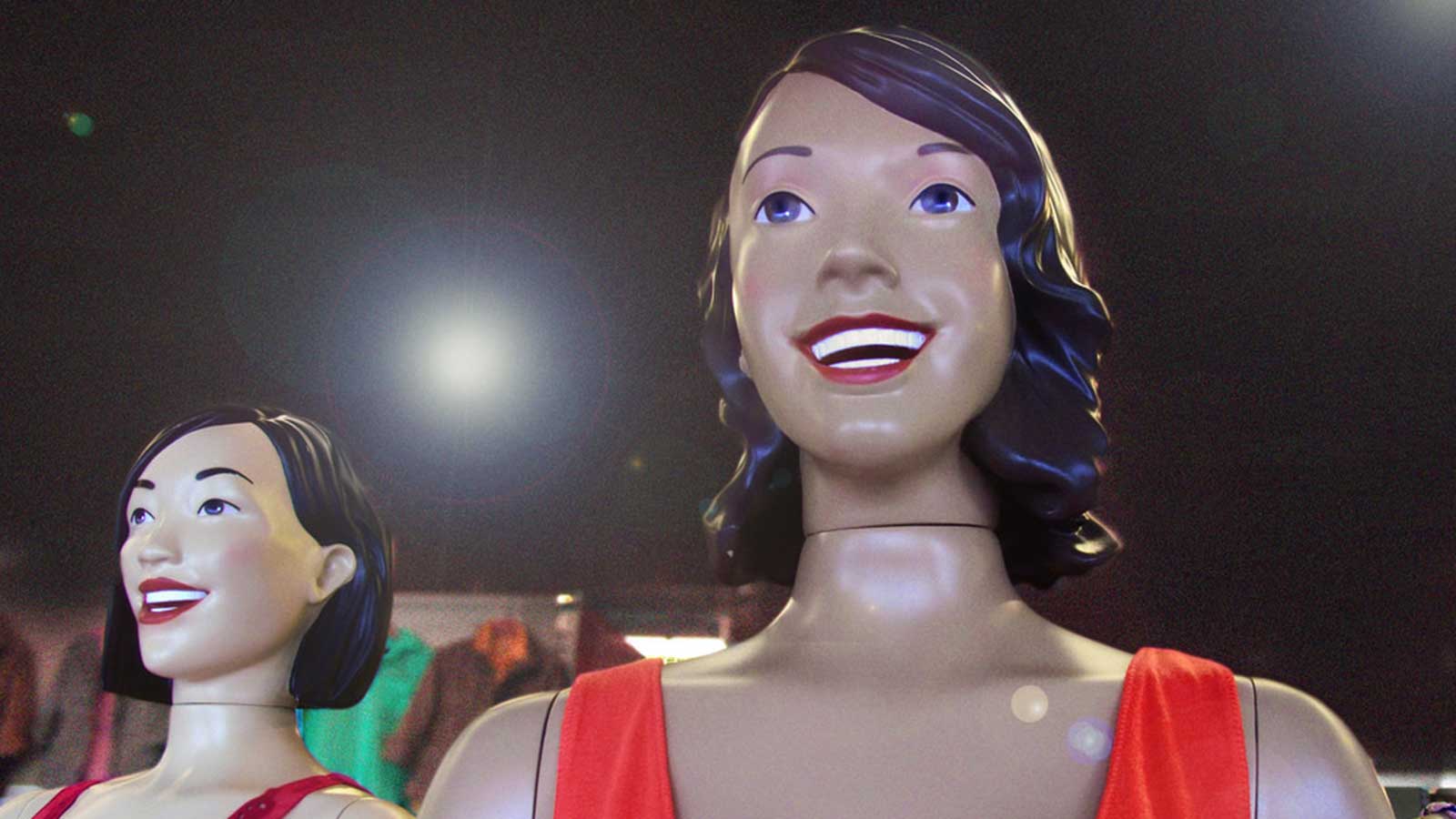
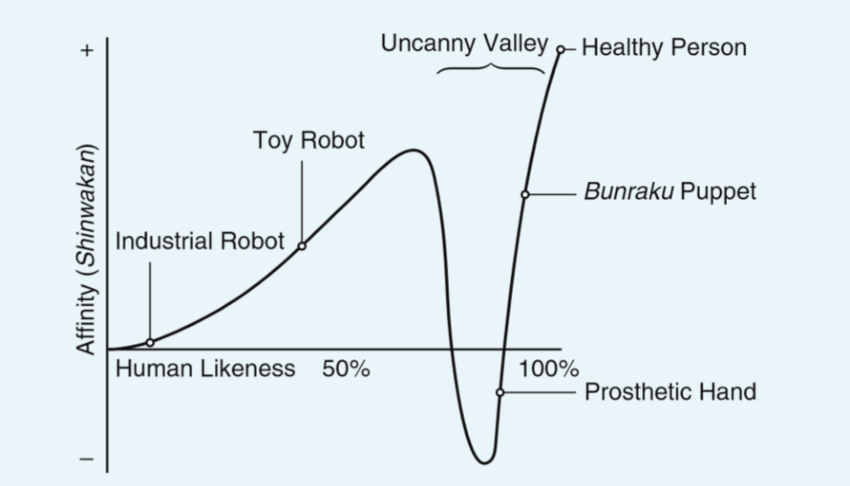
The Uncanny Valley itself is a simple, if interesting, phenomenon.
When plotted on a graph expressing how acceptable a humanlike object is, it can be demonstrated that something not at all like a human is fine and then a perfect replica is again fine… Yet there is a drastic drop off before one of these two things crosses over into the other when something is close yet not quite correct that is immediately off putting to an observer. This rapid dip in the chart into being unacceptable, in between such things as anthropomorphized cuddly toys on one side and actual people on the other, is what is called the Uncanny Valley. In one way it is nothing new, artists explore such evocative things and always have, but it is businesses doing this by accident which popularized the term. Fall into the Uncanny Valley, and your attempt at a cute mascot starts to drive customers away instead of attract them.
The leaps in quality of computer animation have been a great recent example of this. In The Incredibles, the designers went for deliberate abstraction despite the relative grounded nature of the near regular world of humans it depicts and it completely bypasses the Uncanny Valley. We understand exaggerated cartoons, they are their own language able to express things about the characters being created. Then compare that to The Polar Express… An inoffensive enough adaptation of a book into nearly yet not quite human looking characters. The Polar Express got utterly lambasted by a confused and slightly unnerved public as the animation achieved almost perfect people, but the dead eyed simulacra freaked a lot of viewers out.
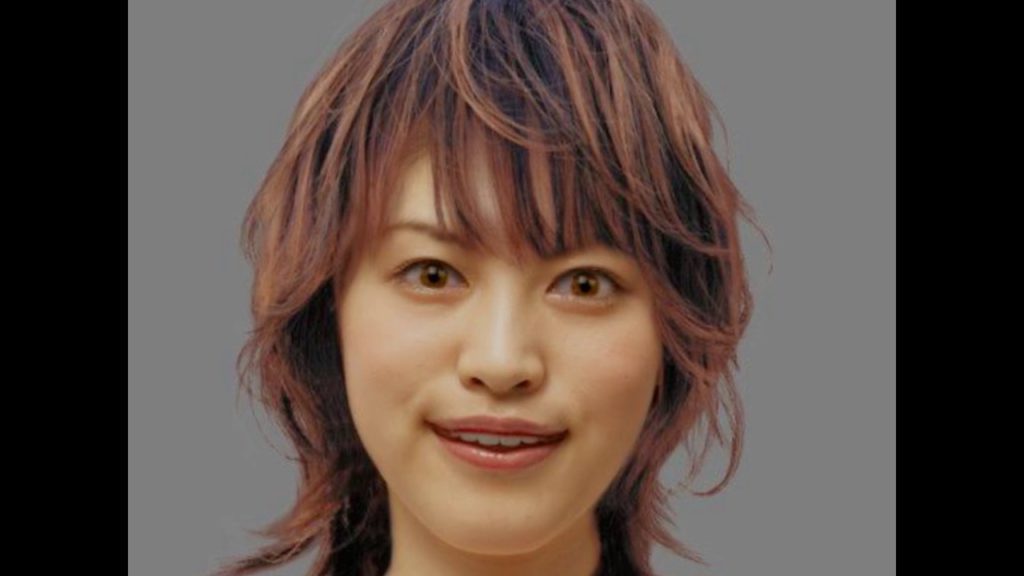
There are competing theories as to why, exactly, this is. Abjection, the rejection of something going against the established order, and Mortality, that corpses are no longer quite human and we have a natural aversion to them, are strong contenders that Defining Fear will be giving their own spotlights in the future. But there is a third theory that could well be linked to ancient anthropology. Homo Sapiens were not the only hominid to evolve, just the only one to survive. There were nine total humanlike species to once walk the earth, most people knowing at the very least of Neanderthals, and currently only a single one surviving.
Us.
We must have outperformed our competing cousins in some way. Direct conflict, surviving environmental hazards they could not, mixing yet genetically outbreeding them, or a mix of all of the above. But as the reflexive Uncanny Valley effect has been noticed thanks to decades of advancing technology, from the dead eyes of CGI near human cartoons to attempts at having a robot with a human face, this opened up a lot of speculation about a possible ingrained phobic response to seeing something very similar to another human yet not quite right.
What danger, exactly, could the other hominids have presented to leave this echoing fear in the very genetics of humans?
There’s even some fun, although far less credible, fantastical speculation of there being a now long gone predator species that either looked like or could appear as if human. That’s more for fiction though, trying to investigateprehistoric evolution through to Homo Sapien dominance is a much more fruitful line of inquiry.
How this fear is exploited in horror movies can be done in several different ways. There’s generally a Venn overlap in these three as we’re breaking down a very fringe aspect of horror into three further sub categories. Even if you should have an example embodying all three at once it will generally be doing so in three different ways.
Doppelganger Literally a double, generally a perfect one. Given that they are a total reproduction of another person they miss the instant visual unease of the Uncanny Valley effect, but their thematic use in horror can be an absolute haymaker to the nerves. Key example: Invasion of the Body Snatchers. Any of the many versions, my personal favourite being the 1978 version.
This predation directly correlates with things found in nature, and the implications of what purpose they are mimicking for. There’s innocuous mimics looking to hide, which really isn’t what this particular anxiety about. It’s very much about creatures that mimic a prey to hunt more effectively. Key example: Mimic by Guillermo Del Toro. I don’t rate the movie as a whole overmuch, but the creature concept and design is a great example of this.

The direct impact of The Uncanny Valley being crossed, although in this case being deliberate for horrific impact rather than being an accident from getting too close to human but not close enough. Key Example: The Pale Lady from Scary Stories to Tell in the Dark. Either the drawing accompanying the original stories, or as a stand out part of the otherwise underwhelming movie adaptation.
Just for fun, some good overlapping examples: Doppleganger & Predation: John Carpenter’s The Thing. Predation & The Uncanny: Junji Ito’s Miss Fuchi, first seen in ‘Rumors’. Doppleganger & The Uncanny: The Other Mother from Neil Gaiman’s Coraline.
More Reviews:
Wings of the Abyss (2025) Film Review – A Candid Glimpse into Japan’s Skating Counterculture
Wings of the Abyss is a 2025 Japanese crime thriller written and directed by Yuki Kobayashi. The director is known for the action thriller Kamikaze Cowboy (2015), the comedy-drama Death…
Synchronic (2020) Film Review: Everyone In The Past Wants To Stab You
Directors Justin Benson and Aaron Moorhead blew me away with the debut film Resolution, an eerie tale marked by a foreboding sense of doom. Their follow-up film, Spring, I will admit being…
![Girl Internet Show: A Kati Kelli Mixtape (2020) Film Review – From The Outside Looking In [Fantastic Fest]](https://www.grimoireofhorror.com/wp-content/uploads/2024/09/Girl-Internet-Showcover-365x180.jpg)
Girl Internet Show: A Kati Kelli Mixtape (2020) Film Review – From The Outside Looking In [Fantastic Fest]
Girl Internet Show: A Kati Kelli Mixtape is a curated mix tape of the work of one Kati Kelli, a YouTube content creator who tragically passed away in 2019 due…
![The Uncle (2022) Film Review – The Best Family Traditions Are Forged Through Fear [Fantastic Fest]](https://www.grimoireofhorror.com/wp-content/uploads/2023/09/The-Uncle-2022-review-365x180.jpg)
The Uncle (2022) Film Review – The Best Family Traditions Are Forged Through Fear [Fantastic Fest]
Opening with an awkward family greeting before a Christmas Celebration, The Uncle is familiar to those who have pushed through awkward gatherings. However, the sinister undertone of the film is…
Boys from County Hell Team Review – Ancient Evil From Ireland
“A crew of hardy road workers, led by a bickering father and son, must survive the night when they accidentally awaken an ancient Irish vampire.” All horror legends begin with…
Alone With You (2021) Film Review – A Metaphysical Nightmare
There are many different types of fears that can fester in the mind, everyone on some level knows what their greatest nightmare is – experiencing such emotions is an unavoidable…
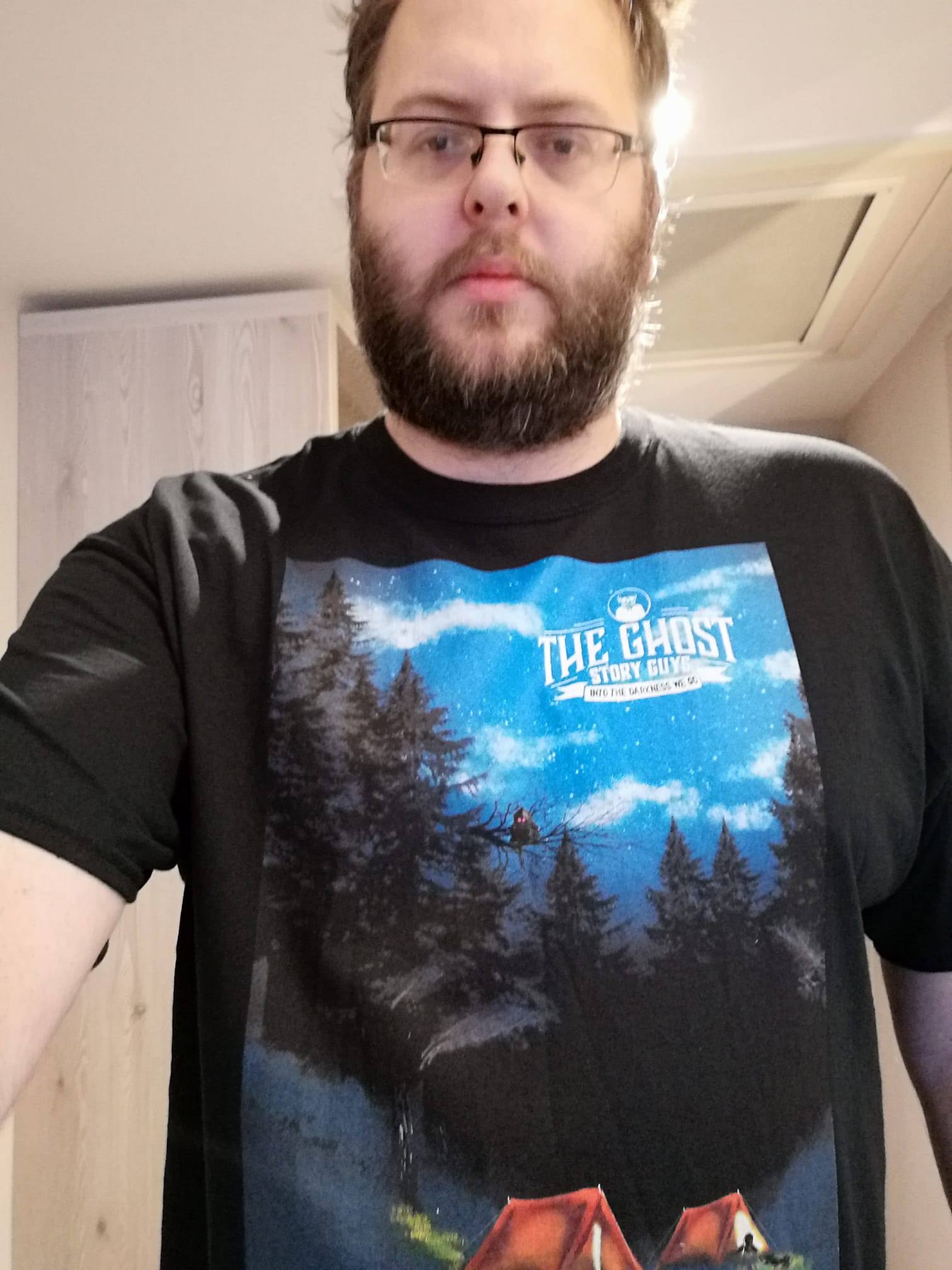
Luke Greensmith is an Editor at the Grimoire of Horror and an active folklorist as well as working in film across a few roles. While this can cover quite a wide range of things, he’s a dedicated horror fan at heart and pretty involved with horror communities both online and local to him. You can find their folklore work on the Ghost Story Guys Podcast, their own LukeLore podcast, and accompanying the artist Wanda Fraser’s Dark Arts series as well as on the Grimoire of Horror itself.