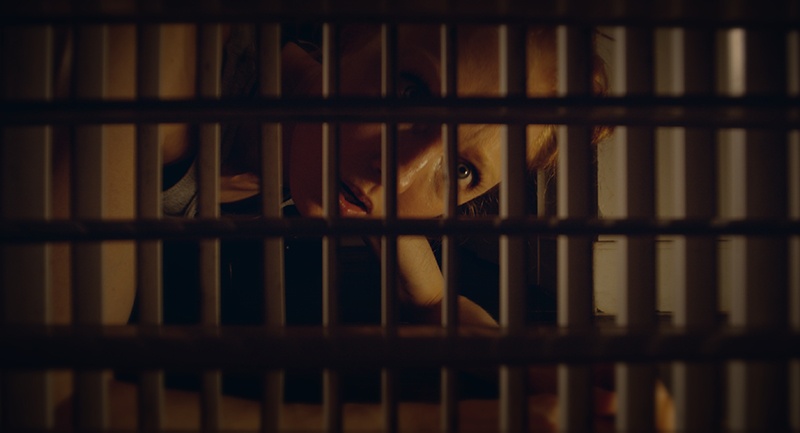




There are many different types of fears that can fester in the mind, everyone on some level knows what their greatest nightmare is – experiencing such emotions is an unavoidable part of the human condition. However, there are fears that are considered universal, ones that, at some point in time, will cross the minds of everyone. Arguably, it would be hard to find a single person not terrified by abandonment or confinement – a fear further resonated by the current global situation. However, things are not all doom and gloom, as fans of cinema have seen a wave of films revolving around such themes; the human spirit proves no crisis will stop people from being inspired into creating art. Certainly, Emily Bennett & Justin Brooks debut feature length film, Alone With You, exists in the space of COVID-era cinema, but to box it into just that would be a disservice to the frightening metaphysical nightmare the duo successfully crafted.
Emily (played by Emily Bennet) is anxiously awaiting for her partner, Emma, to return to their flat after a stint away on business as a photographer. However, a sense of uncertainty starts to make its way into the home as reality begins to slowly warp, and Emily finds she can’t even leave her apartment. Her only company, a woman from next door – whose continual weeping and mockery permeates through a wall, a malicious voice pushing her decent into madness.
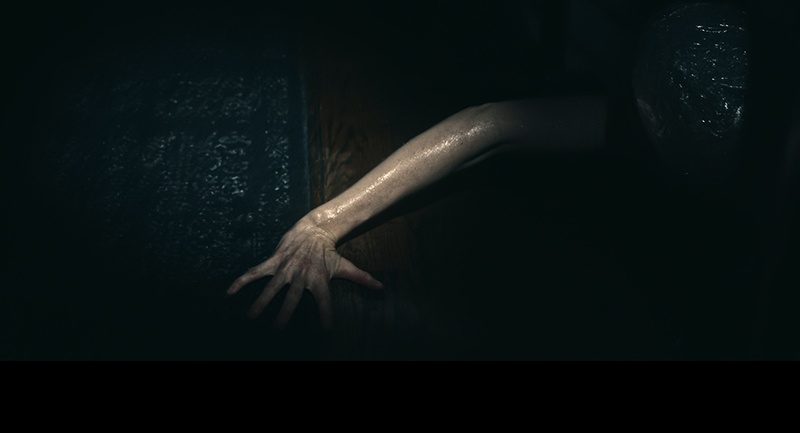
Existing in a constant state of uncertainty and told by an unreliable narrator, Alone With You offers escalating dread as the world around a troubled young woman begins to slowly collapse. The corrosion of reality is cleverly exhibited with slight glitches in reality, losing track of time, stuck in a never-ending night, looping phone calls, and a friend whose conversations seem oddly disconnected from the severity of the situation. As matters begin to escalate, the horrors become a more present and tangible threat. From maniacal laughter coming through the walls that mimics Emily’s every word, and a weird creature existing in the peripheral, there is plenty of more palpable terror to push the troubled woman to the brink. Furthermore, Alone With You slowly unravels the mystery as to why this is happening through lush visual flashbacks – hinting that something deeply sinister is keeping Emily confined.
Adding a deeper layer of fear, there is a disturbing angle to be admired, which will only be appreciated by a few, and that is how closely the production captures the sensation of sleep paralysis (even more specific, to certain sufferers whose experiences differ per person). Notably, Alone With You blurs the lines of reality in a way where objects lie somewhere between the realm of lucid and intangible. There are blurred instances such as looking for a phone to only hear a distorted voice on the other end, vague notions of other figures present, voices breaking down into something otherworldly; all combining to really captures that sense of uncertainty if you are awake or dreaming. Thankfully, these elements are still terrifying without conjuring the demon that is sleep paralysis into analogy. Regardless, the film is certain to add an extra layer of terror to those who have felt the weight of nightmares.

Capturing both terror and confusion, actor Emily Bennet gives viewers a haunting portrait of a woman in mental decline. Other then a brief (and wonderful) cameo from Barbara Crampton as Emily’s mom, a few flashbacks of her lover Emma, and a friend sending video chats, the camera stay center focused on Bennet for the majority of the runtime. This setup, however, does not seem to phase Bennet in the slightest as her acting is free of any sense of uncertainty – it is a riveting performance.
Existing in the realm of metaphysical nightmares, Alone With You resonates a deeply disturbing claustrophobia, taking the confines of a small home and pushing the anxiety down deeper through contorting its protagonist’s sanity. It is a wild trip, and one that audiences need to take – it should hit that wonderful sweet spot of cathartic experience in dealing with modern anxieties while making you squirm in your seat.

We Watched Alone With You as Part of Fantastic Fest 2021

More Festival Coverage
The feature-length debut from director Nicholas Pineda, Infirmary (2026), is a found footage horror film set in a decaying hospital/asylum with a dark past. Here, a young security guard, Edward… David M. Dawson has become a regular face at the Unnamed Footage Festival, with his previous titles Leech and Flesh Game previously screened. Dawson is a difficult creator to pin… Resurfacing from the depths of the 80s, Devil Story is an idyllic pick for 2021 Fantastic Fest, courtesy of the good folks at Vinegar Syndrome. A showcase of inept filmmaking,… “My name is Roxy, but the village girls call me toxic” After explaining how womankind found themselves alone in the land known as ‘After Blue’, we meet Roxy whose introduction… The Harbinger, Andy Mitton’s follow-up to his delightfully creepy Witch in the Window, is, simply put, the most terrifying COVID-era horror film. Dealing with many of Mitton’s signature themes –… Something deadly has begun in the woods as an infectious spore mutates from ‘Patient Zero’ to begin an alarming spread. People are its food source as well as reproduction method,…
Infirmary (2026) Film Review – Found Footage, Atmospheric Dread and Mannequins [Dances with Film NY] (16th)

Zebra Hooves (2026) Film Review – Suffering Through Existence – [Unnamed Footage Festival]

Devil Story (1986) Film Review – What a Lovable Lump of a Man

After Blue (Dirty Paradise) Film Review – An Erotic, Sci-fi, Coming of Age Tale

The Harbinger (2022) Film Review – Don’t Say His Name

The Spore Film Review (2021) – An Apocalyptic Infectious Outbreak