
When About a Place in the Kinki Region (2025) was first announced, I wasn’t able to discern that it was directed by Koji Shiraishi—the announcement came in the form of two poster reveals on my feed, with the description in all Japanese—but when I looked at the poster with the female character’s face on it, I immediately recognized the beloved Miho Kanno from cult classics Tomie (1998) and Eko Eko Azarak (1995), among many others. Kanno-san had not taken a break from acting, but it felt like a long time since I had seen her in the horror genre, so my excitement was solidified. At least, that’s what I thought; imagine my surprise when I realized who would be directing her. A match made in heaven!
Koji Shiraishi has more than earned his high regard in the Japanese horror film industry, with Noroi (2005) being one of the most talked about found footage flicks online (I’m still shocked whenever someone says they didn’t like it, but I accept it!) and his lessor-known titles, such as Welcome to the Occult Forest (2022), slowly gaining well-deserved cult followings. With About a Place in the Kinki Region, Shiraishi-san has opted to adapt a novel of the same name, one I have yet to read, by author Sesuji. A quick Google search will tell you that this novel is presented as a collection of found documents (articles, interviews, internet threads) that piece together a terrifying urban legend from the Kinki region, all of which sounds completely up Shiraishi-san’s (haunted) alley!
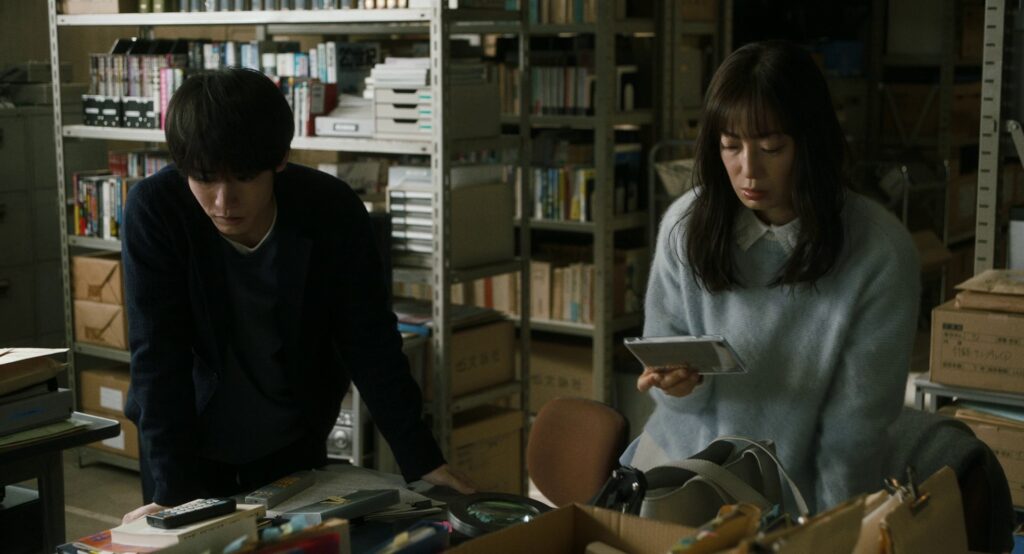
Sayama, a magazine editor for an occult publication called “Super Mystery Magazine”, goes missing right before he is able to publish the new feature he had been working on. His colleague, Ozawa, is tasked with ensuring that the feature is completed, even though Sayama didn’t leave a manuscript behind. What he did leave behind are the materials he was collecting for the piece, such as paper documents, news articles, and video tapes. Ozawa reaches out to Chihiro, a freelance writer with a good reputation among staff, to help him decipher how the various materials connect in order to finish the feature from scratch. However, when the information is pieced together, a horrifying fact about a certain place emerges, leading our duo into something more sinister than they could have imagined.
Unexpectedly, the first act of the film is incredibly fast paced. After a brief setup, we are almost instantly thrown into the mystery as Ozawa and Chihiro race to figure out what Sayama was writing about. They begin by watching some of the video tapes left behind; the first tape is a news report about a young girl who mysteriously disappeared one day, followed by the sudden suicide of her uncle. The second VHS tape shows a group of middle school students who hear a strange low voice calling to them from outside while on a trip. When one of the students talks back to the voice, a few of their peers suddenly begin to collapse. Because the two tapes are dated years apart, the connection between the them is not immediately clear.
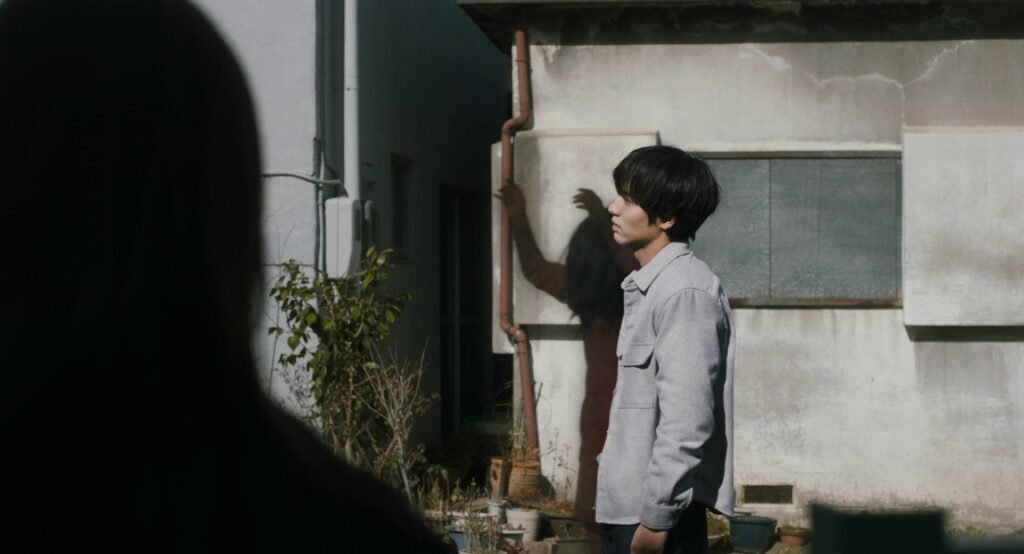
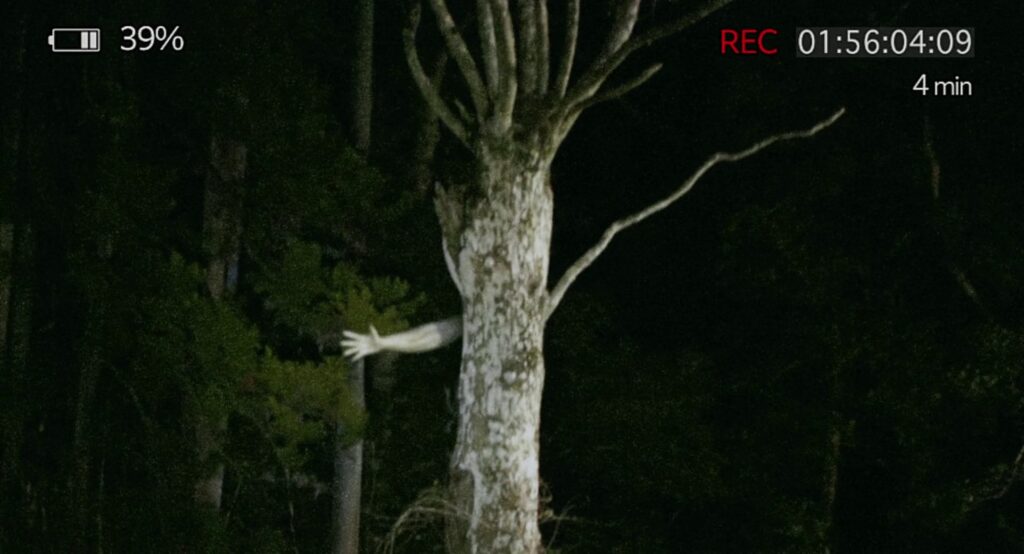
This works to the film’s benefit by not only avoiding dead giveaways, but also by making the audience feel like they’re investigating along with Ozawa and Chihiro. By now, you should know that Shiraishi-san has a special instinctive ability when it comes to found footage, and the tapes featured in Kinki—yes, there are more than two—are no exception to this claim. The grainy quality of each segment feels grimy and raw, echoing some of Shiraishi’s previous work like Ura Horror (2008) and even Noroi, only this time with higher production quality. Usually, bigger budgets tend to eradicate the sense of realism that horrifies us in older films, but Shiraishi manages to strike a satisfying balance between the two.
The non-found-footage scares in the film are also expertly executed though not groundbreaking in any way. Admittedly, they are fairly standard scares for this sub-genre; ghostly hands suddenly grabbing our characters, spectral women with long black hair, creepy children’s drawings found in abandoned places, the works. What makes this familiar imagery effective is not only Shiraishi-san’s finesse as a director, but the implication that the things seen in the video tapes and read in the paper documents are now seemingly bleeding into reality. They also occur at random times, not always at night with a big build-up preceding it, but sometimes during the day while the characters are completing menial tasks.
Although the found footage takes up a large chunk of the film, the incomparable Miho Kanno still gets her chance to shine. She plays a mildly eccentric character who quickly demonstrates her confidence in finishing the feature that Sayama left pending. Ozawa basically says “help” and she’s like “alright I’m putting on this possibly cursed tape then.” You don’t need to be told about her tenure as a writer, she simply demonstrates it. Her counterpart is played by Eiji Akaso—known for playing Ryuga Banjou in Kamen Rider Build (2017-2018)—who I was not familiar with until this film. Neither actor has an exceptionally demanding role, but both of them hit all of the appropriate emotional beats.
Overall, About a Place in the Kinki Region is everything you want from a Koji Shiraishi film. It is perhaps the most Noroi-coded film that Shiraishi-san has released in years, but it never feels derivative and always keeps you on the edge of your seat. Earlier, I mentioned that Shiraishi directing Kanno-san felt like a match made in heaven, but it would be remiss not to include author Sesuji as part of that equation. In fact, that creative alchemy begins with him! Coincidentally, Sesuji’s original novel was just published in English this month by Yen Press, which means you can dive even deeper into the mystery of the Kinki region (something I plan to do as soon as possible!)
More Film Reviews
For years, film festivals have allowed passionate film viewers the ability to enjoy and celebrate the art of film-making from all around the world. In a lot of cases, well-established… Euro-surrealism at its most mind-assailing, as Dave has inherited his father’s run-down and weird Hotel Poseidon. A dilapidated hellscape where logic is frequently suspended attracts the weirdest of the weird,… Straight Outta Kanto here reeling you in with a Third Window Films movie that I can guarantee you won’t be the one who got away… The dictionary defines Fish Story… Featured in JFFH (Japanese Film Fest Hamburg), One Cut in the Life is a poignant drama written, produced, and directed by Shintaro Hachi- a relatively unknown, up-and-coming filmmaker. He stated,… In a career that spanned four decades, prolific novelist Shinji Fujiwara explored a wide range of genres in his work, though is most famed for his 1950s suspense stories. The… Thorns (2023) is an American sci-fi horror film written and directed by Douglas Schulze. Well-versed behind the camera, Douglas is most known as the writer/director of such films as Hellmaster…
Thou’lt Look Back No More; Never, Never, Never, Never, Never. (2021) Film Review

Hotel Poseidon (2021) Film Review – A Day in a Life, in a World Where Nothing Makes Sense
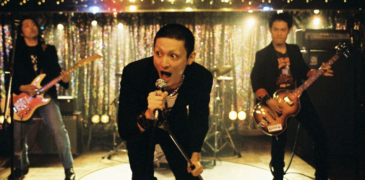
Fish Story (2009) Film Review: An Emotional Masterpiece Highlighting the Importance of Music

One Cut in the Life (2020) Film Review – A Poignant Portrayal of Emotional Stress

Art of Assassination (1969) & The Lady Professional (1971) Film Review – When the Best Man for the Job is a Woman
![Thorns (2023) Film Review – Natural Thorn Killer [FrightFest]](https://www.grimoireofhorror.com/wp-content/uploads/2023/07/Thorns-cover-photo-365x180.jpg)
Thorns (2023) Film Review – Natural Thorn Killer [FrightFest]

Your typical ghoul next door; film enthusiast, horror fanatic, J-horror nerd, aspiring horror host, and all around geek. Will likely be found cuddling with their cat and reading an old smelly book, or stuffing their face with popcorn at the cinema!