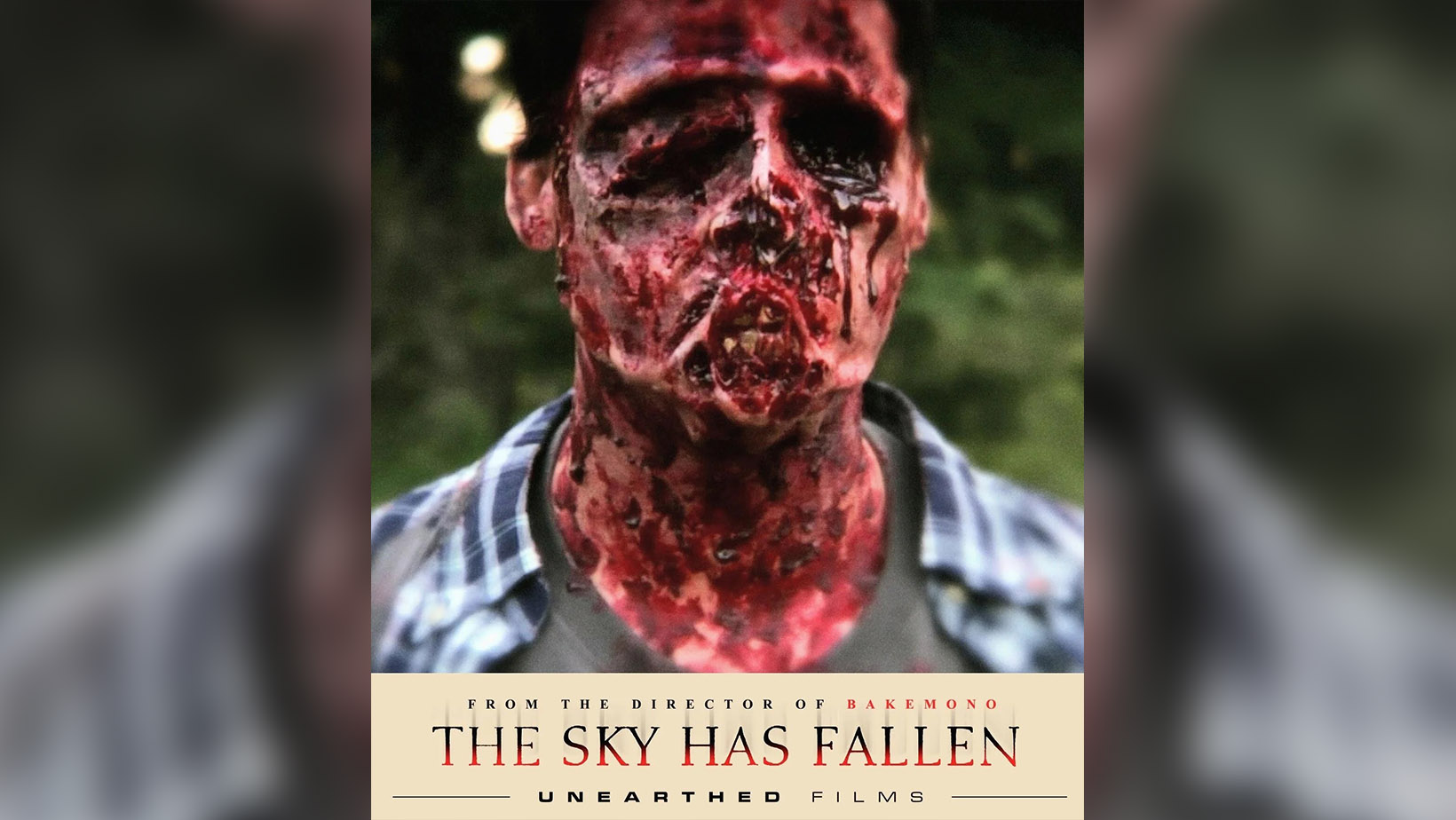





The Sky Has Fallen is a 2009 American body horror film written and directed by Doug Roos. Beginning his career writing and directing short films such as In the Shadows (2006) and Hunted (2007), Doug would go on to break into feature-length films with this film, and would go on to film the horror films Rearranged (currently unreleased) in Shanghai and Bakemono (2023) in Tokyo.
In a post-apocalyptic world, a new disease wipes out almost all of mankind within a couple of hours. Trying to avoid infection, people flee to remote locations, but begin seeing mysterious black figures, carrying away the dead and experimenting on them. Now, Lance and Rachel, two survivors determined to fight back, must kill the leader of these creatures before the remnants of humanity disappear.
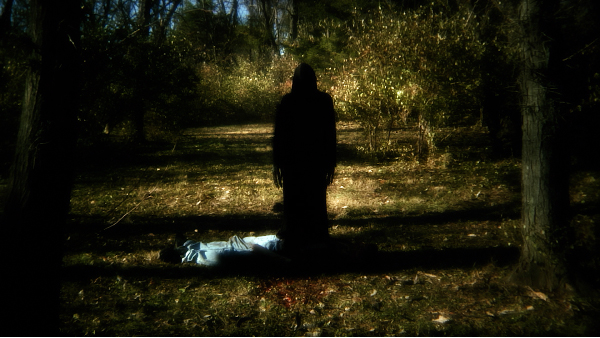
Wasting no time introducing its world-ending cataclysm, The Sky Has Fallen presents a morbidly bleak depiction of a destructive disease that ravages humanity. Being decimated to near extinction, the film explores aspects rarely explored in the genre, such as strong themes of isolation, loneliness, and even PTSD. The psychological strain on the protagonists from the traumatic situations they have endured, as well as their current fears, is developed in great detail. The emotional scars they carry undoubtedly humanise them into actual characters. Additionally, while the film blends many well-established elements, such as Fulci-esque zombie horror, nail-biting revenge thrillers, and post-apocalyptic action films into its narrative, the final product is a refreshingly unique experience rather than a rehash of overused tropes.
With some amazing special effects, The Sky Has Fallen makes good use of its meagre budget to create a viscerally gory experience. The film’s bleak portrayal of a post-apocalyptic pandemic is accomplished using practical means, including the employment of makeup prosthetics. Some shocking visualisations of mass infection are produced by the necrotic flesh dropping from the victims, deep cuts, sewn-up facial orifices, and even some mild tropophobia. The action scenes in the movie are also quite gruesome, with a startling number of disembowelments, beheadings, mutilations, and severe amputations.
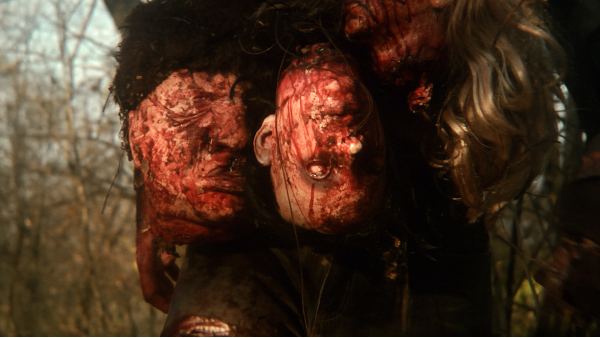
While these effects were clearly created on a budget, the mix of cinematography and kinetic editing certainly heightens their impact. The tight camera angles effortlessly flaunt the grisly facets of the body prosthetics and bloodwork, displaying an exemplary level of detail. Yet, at the same time, this close-up cinematography also controls what the audience can discern, narrowing their field of view to visualise a small fraction of a scene. Similarly, rapid-fire editing further restricts how long the audience can absorb these visuals. This restrictive view allows for a much more lenient, cost-effective approach to the effects, while still providing an adequately gruesome level of violence.
However, one downside of these breakneck cuts is during the action scenes. With lots of frantic movement, these short hard cuts can become slightly disorienting with their rapid succession. With around a second between each cut at its most frantic, the movement captured on screen combined with the camera’s shift can become slightly nauseating after a while. Though this problem only occurs during the fight scenes, and isn’t an issue through the majority of the film.
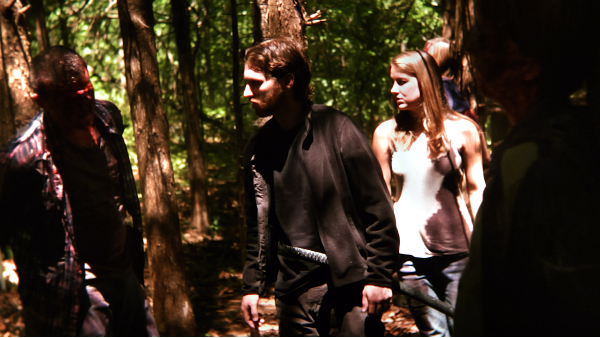
With a very minimal main cast, The Sky Has Fallen focuses on its two main protagonists, Lance and Rachel, played by Carey MacLaren and Laurel Kemper, respectively. While both deliver a sufficient performance, it’s clear they seem fairly inexperienced, with relatively flat performances throughout. However, with the narrative’s exploration of PTSD and the emotional toll such an event would take, their impassiveness actually fits this design fairly well—compounding this element rather than detracting from it.
One of its strongest points outside of its special effects, score, or lack thereof, in The Sky Has Fallen complements its story well. Mostly implimenting ambient noise throughout the most part, the silence harshly punctuates the narrative’s themes of isolation and intensifies them exponentially. Even during intense fight scenes, the majority lack any type of musical accompaniment outside of panting, screaming, blood splatter, and steel striking flesh. What score is utilised is usually classical music, which accentuates more emotional scenes of characters reminiscing about their past experiences.
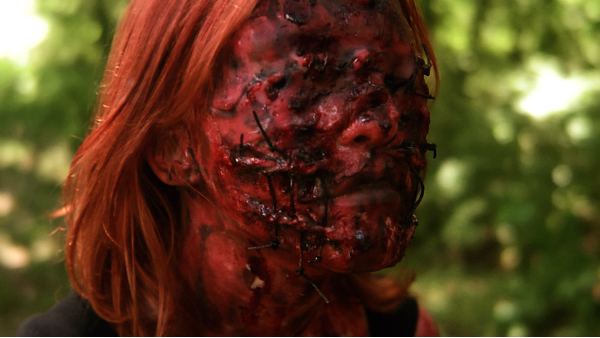
Utilising its budget effectively to create a gripping piece of indie cinema, The Sky Has Fallen is a blood-soaked love letter to the practical special effects of the past. With a captivating narrative, a compelling score, and, of course, copious amounts of gore, the film is a surprisingly solid first feature from writer/director Doug Roos and is sure to resonate with those with a passion for good, old-fashioned special effects.
The Sky Has Fallen (2009) is available to purchase from Unearthed Films’ website here.
More Film Reviews
Night at the Eagle Inn was my first experience with the Bloomquist brothers, but it won’t be my last. If you are looking for a deep psychological thriller, wait… Jonathon Glazer’s latest directorial offering, The Zone of Interest (2023) is an understated, yet powerfully urgent warning of how easily humanity can be lost if we are allowed to lose… There is a good reason why Don’t Look Now so rarely feels like it is a horror film. It is much too concerned with going about its daily business as… Jane (2022), directed and co-written by Sabrina Jaglom, is a supernatural, psychological thriller. Rishi Rajani also joins the writing credits. While Jaglom has a short she directed and production credits… If you ask a casual movie goer to list some classic horror films, a large majority of them will mention Halloween, Friday the 13th, and The Texas Chainsaw Massacre. One… Ari Aster. Jordan Peele. Robert Eggers. These modern-day directors have transformed and elevated current horror trends by pouring clear passion, love, and vision into each film. Danny and Michael Philippou’s…
Night at the Eagle Inn (2021) Film Review – Paranormal Hauntings
The Zone of Interest (2023) Film Review – A Masterful and Urgent Warning for the World
Don’t Look Now (1973) Film Retrospective

Jane (2022) Film Review: Psychological, Supernatural Horror
Deadly Games (1982) Film Review – Low-Key Slasher That Slipped Under the Radar
Talk to Me (2023) Film Review: Psychological Possession Packs a Punch
Hey there, I’m Jim and I’m located in London, UK. I am a Writer and Managing Director here at Grimoire of Horror. A lifelong love of horror and writing has led me down this rabbit hole, allowing me to meet many amazing people and experience some truly original artwork. I specialise in world cinema, manga/graphic novels, and video games but will sometime traverse into the unknown in search of adventure.