





Born in Blue Springs, Missouri, USA, Doug Roos began filmmaking by writing and directing a slew of shorts, including In the Shadows (2006), Betrayed (2007), and Aspiring Artists (2008), before making his feature-length debut, The Sky Has Fallen (2009), at 22. After moving to China, Doug made his second feature-length title, Rearranged, in Shanghai; however, due to unforeseen circumstances, the film remains unreleased at this time. After several years in China, Doug travelled to Japan in hopes of creating his third feature, which production companies told Doug would be nearly impossible to film on a budget there. Yet he persisted and finished making his film Bakemono (2023) despite the odds. Outside of his own films, Doug is a well-versed producer, working on films such as The Girl Who Played Dead (2014), Leviathan: The Story of Hellraiser and Hellbound: Hellraiser II (2015), and Effigy (2024), to name a few.
We were lucky enough to get the chance to chat with Doug Roos about his filmmaking career, his creation process, and his love of Japanese Splatter horror.

Q. Who do you like in Japanese horror, Doug? Any favorite films?
Junichi Yamamoto (‘Meatball Machine‘) and Shinichi Fukazawa (‘Bloody Muscle Bodybuilder in Hell‘ aka the ‘Japanese Evil Dead’). I also love ‘Guzoo: The Thing Forsaken By God Part 1,’ ‘Urotsukidoji,’ ‘Cure,’ ‘Matango,’ ‘Wicked City,’ ‘Cyclops,’ ‘Evil Dead Trap,’ ‘Blood and Ecstasy,’ ‘Biotherapy,’ ‘XX: Beautiful Weapon,’ ‘Onibaba,’ ‘All Night Long,’ etc. I have too many favorites but especially the practical FX ’80s monster movies like ‘Conton,’ ‘Gakidama,’ and the others I already mentioned.
Q. Did you attend film school, or receive training in special effects?
I applied to a film school and got rejected (funnily enough right when I was watching the redux of ‘Apocalypse Now‘) but that just convinced me to make my own indie feature, which became ‘The Sky Has Fallen.’ I didn’t get any training in special effects. I learned by experimenting on my short films and then I had a lot of trouble getting FX artists for my first feature so I ended up doing much of it myself. I always loved practical effects so it was something I dreamed of doing but I didn’t think I could. Then when I had no choice, I did it. ‘Bakemono‘ was the real challenge since I did all the FX on that myself and I had to come up with my own original creature design.
Q. Why do you like to create your own special effects instead of using computer-generated images?
I love practical effects. I grew up in the ’80s so ‘The Thing,’ ‘Aliens,’ ‘The Blob,’ ‘The Terminator,’ ‘An American Werewolf in London,’ etc. are like my gospel. I’m sick of CGI. It often has no weight, no slimy gory texture, and I love the handmade craft behind practical effects. I think it’s better for the actors to have something really there, it’s far better for lighting, I love suit actors, and I love bringing that illusion to life with my own hands. It’s very challenging especially when the blood gets everywhere and it will get everywhere (clean up takes hours) but I love it. I love to be in the suit (I rarely get a chance when I have to film myself but I did a couple times on ‘Bakemono‘ and ‘The Sky Has Fallen‘), I love to puppeteer smaller creatures, I love to do the monster hand work (very tricky when the latex can bend badly and spoil the effect), etc. I especially love gelatin, which is what Dick Smith used a lot (it looks very realistic in close-ups).

Q. Could you tell us about making The Sky Has Fallen? Why do you like to handle all aspects of filmmaking like screenwriting and editing yourself?
I don’t really have a choice since I have no money so this is the only way I can make films (I would love to work with an experienced editor who shares my taste but such a person is very hard to find and definitely not free like me). That said, I do love doing it this way since I feel like it’s a pure form of expression because it’s pretty much all me behind the scenes and the actors. No producer hounding me. No one telling me it’s impossible… well, people always ask, “How the hell are you going to do this?” but I’m an insane idiot so I find a way. No money men telling me what I can or can’t do. I can really try to push boundaries and make something I really believe in with all practical FX. I can tell a story that’s very personal to me, which is what ‘The Sky Has Fallen‘ was (and ‘Rearranged‘ and ‘Bakemono‘ and every movie I’ve made). ‘The Sky Has Fallen‘ is about never giving up no matter how bad it gets. That’s the core of it and you can’t save everyone… people suffer, people die but you have to try. It’s a film I love deeply especially since it was my first feature and it was very difficult to make. I worked for years at Target and Circuit City to raise the money while I was in college. I shot it 20 years [ago] in 2006. ‘Versus‘ was a huge inspiration on it but it’s very different too (‘Versus‘ doesn’t give its female characters much agency, which is sadly too common in Japanese films). I don’t recommend doing everything yourself because it’s an insane amount of work and every movie kind of kills me haha but I love it.
Q. What really scares an audience?
Great question. Lovecraft probably had the best answer on that one… fear of the unknown but everyone is a bit different too like some respond more to real possible threats like serial killers and true crime while others (Japanese in particular) can be scared of ghosts or more supernatural threats or superstitions. I think Maurice Deveareaux was really smart with his film ‘End of the Line‘ to include both human and supernatural threats. ‘Hellraiser‘ does this as well. Yes, the Cenobites can tear your soul apart but Julia will cave your skull in with a hammer to resurrect her dead lover. I think atmosphere is critical and a sense of dread. Something awful can happen at any moment and you know something bad is going to happen but you don’t know when. That’s how you get them. That and misdirection.
Q. How have you been able to make up to fifty movies over the years?
Well, I’m just a producer on those so I haven’t made that many as a director. The latest Japanese monster movie that I finished shooting in May will be my fifth as writer/director/FX artist/editor/etc. I need to make more. On the other films, I’m often just an Associate Producer or Executive Producer so usually I’m just helping them out financially, which speaking as a director, that is still a huge help since I think the biggest hurdle for any movie is getting the money (I couldn’t make my films without crowdfunding) but again I’m not rich so these are mostly small indies. I just think it’s good to support other filmmakers. A lot of directors tend to just focus on their own work, which is understandable but I think it’s nice to help others.

Q. Why did you want to make a documentary?
I love documentaries. ‘Men in Suits‘ is one of my favorite docs (and ‘Overnight‘ about ‘The Boondock Saints‘) and the story for ‘Street Fighting Men‘ just really drew me in but again my part in that was very tiny. In college, I did direct a documentary short film called “Aspiring Artists.” Documentaries are great since people aren’t acting. Ideally, film acting should be real too or at least feel real, but with documentaries, they can just be themselves and then the challenge is just crafting something compelling in editing. ‘Street Fighting Men‘ was originally just focused on one individual who was basically self-policing Detroit when emergency services were cut, which is really a phenomenal story then later it expanded to cover three people but that initial pitch is what interested me.
Q. Tell us about making your web series. What was that experience like?
I was just helping some friends make their web series so those aren’t really mine. I never directed a web series. I’m just an Associate Producer on ‘Shadow Bound‘ by my friend Nathan Shelton who acted in and did FX with me for ‘The Sky Has Fallen.’ I really like that web series and Nathan is a very talented artist so I wanted to support him. I’m also a Co-Producer on ‘Drifter: Lonesome Highway,’ which was done by my friends Jason Brasier and Brittney Greer. These are all very talented, nice people I knew back in Missouri. I think web series are difficult and have their own particular challenges especially on the business side so my focus is just directing features especially practical FX monster movies (I think these are sorely lacking nowadays).
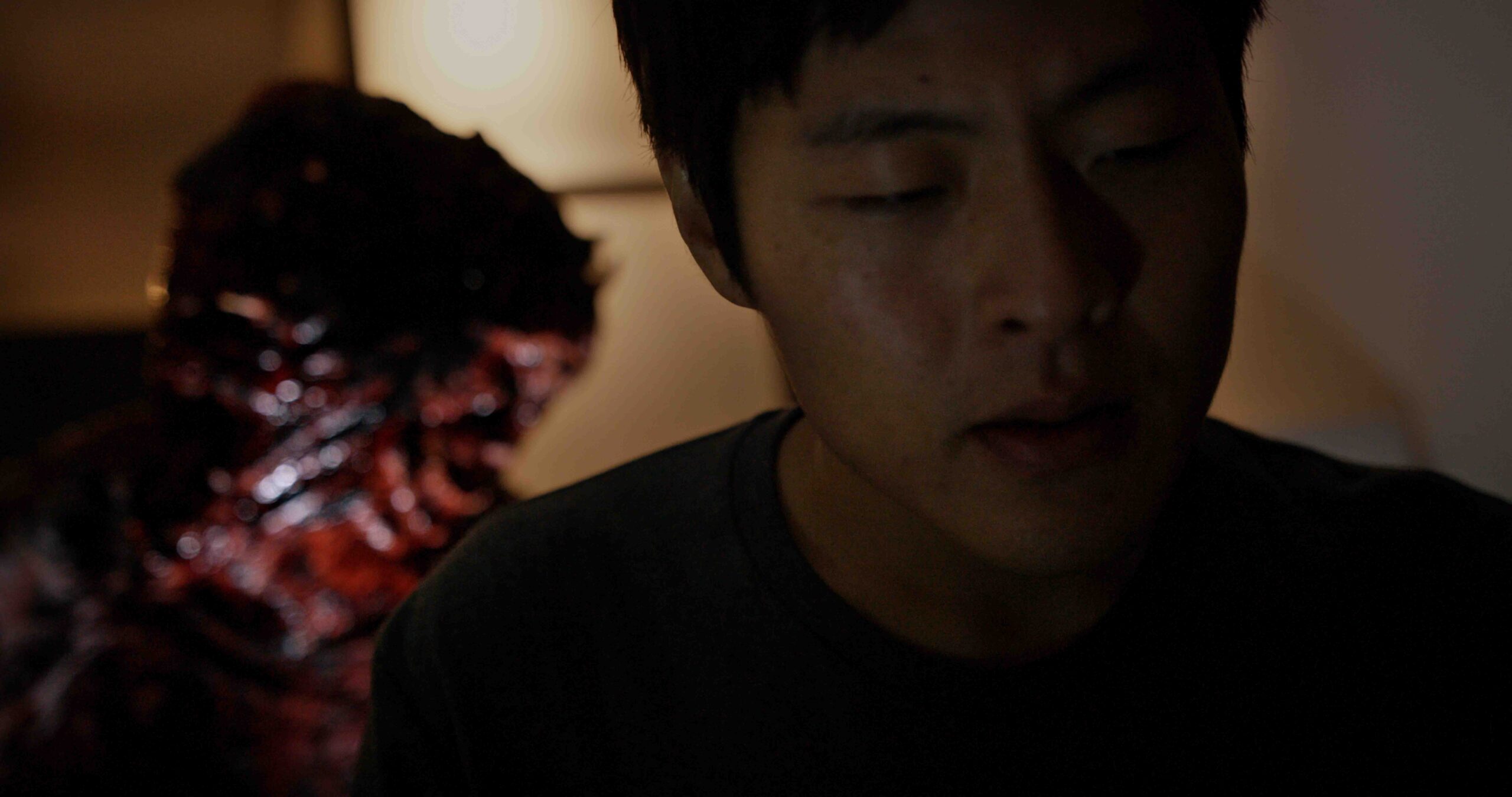
Q. What was it like to win awards for the film Eisis?
I was just the editor on that and my preferred cut was actually overridden haha, which is fine since I’m not the director or producer so it’s not really my film at all but I did like working on that. It was hard since that was also while I was in college and working a full-time job. I was pretty exhausted but my friend Jamie was the DP on it so then he got me involved when they needed an editor. I would never edit again for someone else since they can drastically change your work at the end of the day but I like that film and given all the constraints they had, I think it’s an interesting movie made by a real Green Beret who was a very amazing person (unfortunately he passed away in a tragic accident, which really sucks). For my own movies, I really love monsters except my second feature I made in China called ‘Rearranged,’ which I’ll release later. That was a grounded sci-fi story and basically kind of a divorce movie like ‘Possession.’
Winning awards for ‘The Sky Has Fallen‘ and ‘Bakemono‘ has been really crazy and unexpected. The first time I won Best Feature for ‘The Sky Has Fallen,’ my brother and I were at the festival but we didn’t stay for the awards since we didn’t think I’d win anything then lo and behold, I did. I’m always shocked. When ‘Bakemono‘ won Best Feature, I really couldn’t believe it since the other films were incredible and it was a group of like 20 people who decided, which is crazy to me. That was so amazing. With ‘Bakemono‘ in Germany, I won Best Genre Production and I was on stage with all Japanese [filmmakers] since it was a Japanese film festival so they looked at me like “Why is this white idiot up here?” haha but then I just told them in Japanese, “Congratulations!” It was funny.
Q. Any future plans and projects, Doug?
I have two new Japanese practical FX monster movies on the way. One is sci-fi horror called ‘Subjugation‘ (it’s a mix of ‘The Crow‘ and ‘Wicked City‘ about the stalking problem in Japan), which will be playing at festivals soon and anyone who is interested can still support it here.
There is an exclusive crowdfunding-only version with more nudity, gore, and practical FX plus backers can get their names in the credits. My other new Japanese practical FX monster movie is really insane with 30 JAV actresses very much inspired by ‘Urotsukidoji‘ and the infamous deleted blood orgy of ‘Event Horizon.’ That’s my biggest film to date and I’m going to start crowdfunding it in November. It has already been shot and I’ve almost got the first rough cut done so it’ll be off to festivals next year as well. I’m really excited about both of those.
I’m also developing another practical FX monster movie to shoot either next year or the year after. Can’t stop. I’m insane but the nice response to ‘Bakemono‘ really encouraged me. It even played in theaters for one week in Tokyo, which still blows my mind. Thanks for this nice interview.
This interview was provided to Grimoire of Horror by John Wisniewski
More Interviews
An Interview with Colin Minihan – Director of Coyotes (2025)
Ahead of the UK premiere of COYOTES (2025) at FrightFest Halloween, director Colin Minihan reflects on going for the jugular, the LA wildfires and the joy of working outside the…
An Interview with Justin Powers – Award-Winning Filmmaker
Born in Ft. Smith, Arkansas, USA, Justin Powers is a versatile filmmaker who has worked on multiple aspects of the film creation process. Beginning his career as a grip, Justin…

An Interview with Anastasia Elfman – Screen Actress, Dancer, Choreographer
Raised in Laguna Beach, California, Anastasia Elfman is a stage and screen actress, dancer, choreographer, burlesque artist, as well as make-up/sfx artist, and producer known for her work in such…
Interview With Horror Artist Mark Gagne of Mindmelt Studios – I’ve Always Been Drawn to Dark Imagery and The Paranormal
The work of artist Mark Gagne strongly resonated with me on first impression, particularly the placing of shadow figures into a decayed landscape through photography. ‘Shadow people’, have become a…