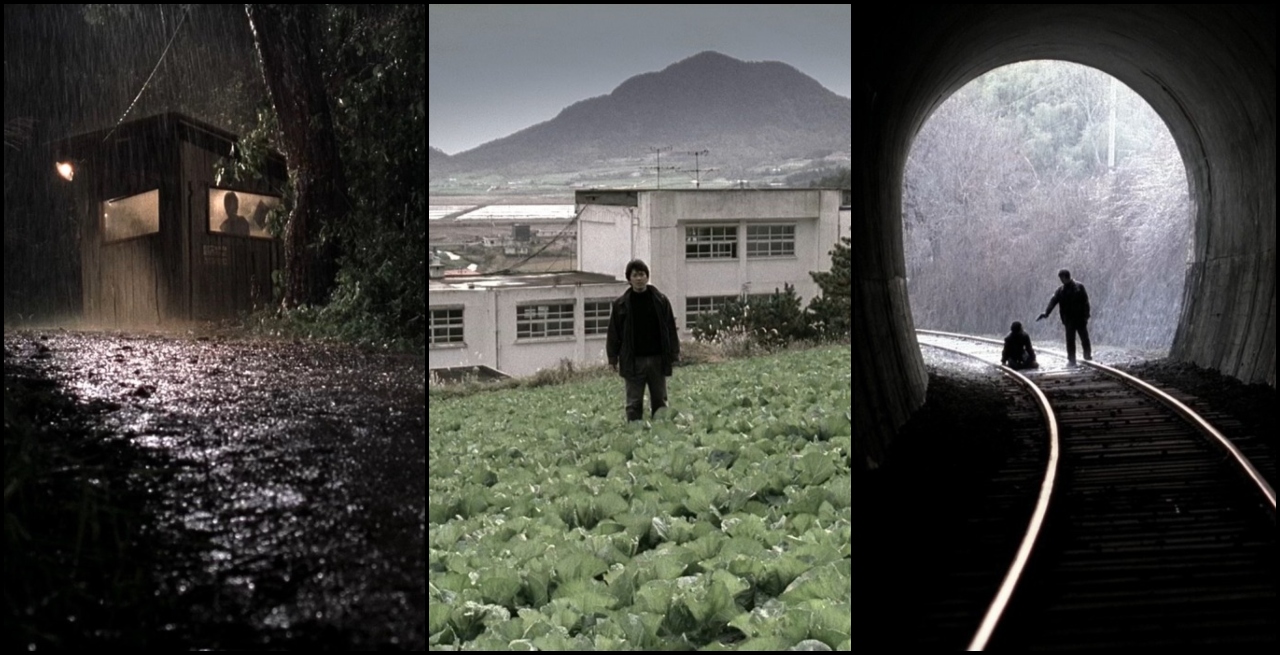





Memories of Murder is a 2003 South Korean thriller that served as Bong Joon-ho’s breakthrough film – it brought him the acclaim to later direct profound films such as ‘Parasite’ as the first non-English film to win ‘Best Picture’ in the Academy awards. The premise is simple as rural police and their antiquated techniques, including a lack of resources such as forensics, are embroiled into the most complex kind of investigation, serial killing, as the ultimate, unprecedented challenge to their authority. Mystified and resorting to desperate means as borderline comedy, such as torturing suspects or following peculiar hunches as eye contact , their powerless position to unveil any answers is clear as an agonizing reality. Here is our film review of Memories of Murder (2013) as a classic amongst Korean cinema.
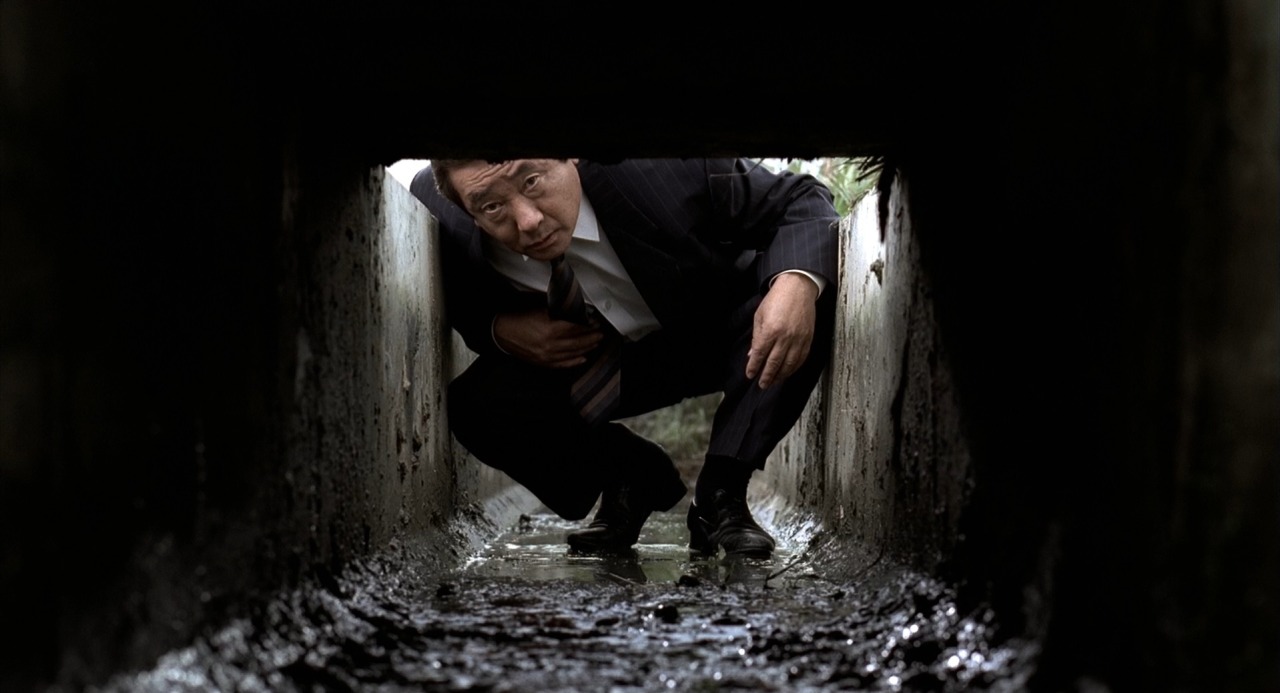
Over the course of the Memories of Murder, a clear pattern emerges as something to potentially manipulate – the killer has a proclivity for women wearing red and stalks victims during rainy weather. No female is safe – the town is in fear and demands police do their duty as the leadership also refuses to provide the necessary manpower to do so in the belief it’ll expose more incompetence. As three core suspects are rashly identified – a mentally disabled man who creepily stalks, a popular churchgoer into deviances and a handsome former soldier – schemes are hatched to ascertain their culpability; few option exist and they feel wholly foolish for no definitive success yet. Bumbling along to discover the real culprit, it is clear without evidence or witnesses, they may need to be less scrupulous in their mission and contradict any traditional mentality.
Inspired from the Hwaseong serial murders between 1986 and 1991, with the perpetrator dubbed the ‘Korean Zodiac Killer’, the case had notoriety in South Korea as a crime spree the nation wasn’t accustomed to experience from their modest crime rates – this was not a Hollywood film or California in the USA. It was the first such event in their national memory and proved traumatic to popular culture. The murders were upwards to fifteen and the full extent has never been determined – South Korea was unprepared to document such an extensive behaviour. The film renewed interest in this ‘cold case’ and the suspect was finally appended in 2019 as the result of DNA testing.
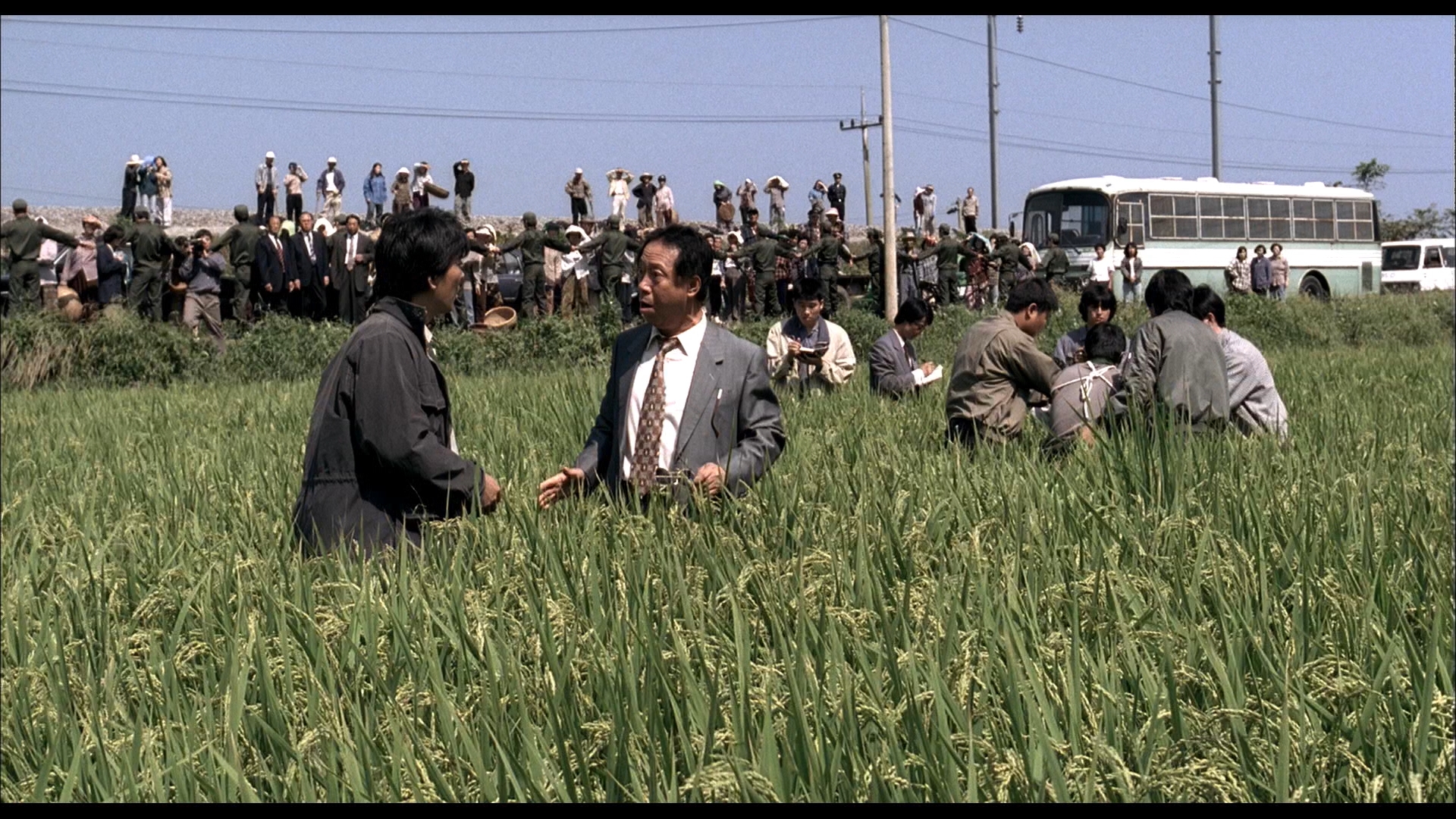
There is an existential torment of little clarity, and the consequences to stereotyping alongside confirmation bias. These all reaffirm a harsh reminder that a majority of such cases are brutally difficult – they need either a massive task force or the fortune of a mistake. Underequipped, untrained and incompetent, the case was hopeless from the start as crime scenes were contaminated and innocent men were interrogated ruthlessly. The crux of their error is all rooted in their flawed idea of the killer – he must be unusual, even extreme in some manner, to commit such dire crime – a deceiving eagerness to frame an easy suspect as done when rounding the most vulnerable, weird man in the proximity to their murders; the truth is too hard and they have to level with simpler notions to comfort themselves in some resolution. However, there’s no unique look to such an aberrant criminal, even an easily observed history of abnormalities: he’s normal as them in all probability and their delusion of seeking a ‘monster’, who physically resembles that prejudice, is amongst their fatal mistakes – ‘the monster looked like you and me’ being a favourite motif of mine.
Filmed beautifully, and acted equally as well, it’s a sombre dark comedy as a subversion to serial killer procedurals – it has none of the grandeur of S7ven as a much more callous reflection to reality with the revelations unfolding. Tonally versatile as a characteristic of the director, with impeccable cinematography doing justice to each scene, Memories of Murder is a poetical film on a community besieged with an insidious crime that exposes a frail society not always ready. Only Roman Polanski’s Chinatown had the psychological impact of the conclusion to this – a particularly cynical reality disturbingly resonating to a harsh truth: monsters don’t look like monsters.
More Film Reviews:
“The relationship between the Dolans and the Lomacks turns sour when one of them leases their land to a natural gas company. The drilling has disastrous results as it unleashes… The Killing Cell falls into familiar tropes and beats of the found-footage genre. Notably, the plot sees a group of friends/paranormal investigators head to an abandoned facility, only to find… Visitors (Complete Edition) is a Japanese 2023 Splatter horror comedy, written and directed by Kenichi Ugana. Beginning his theatrical debut in 2016 with the “Gal film” Ganguro Gals Riot (2016),… As a horror film critic, it’s my job to watch a movie with as little bias as possible and to provide an honest review that hopefully entices potential viewers to… Nighty Night: Midnight Nightmares is a 1986 independent Japanese horror anthology, directed by Hirohisa Kokusho. The film was certainly unrecognized upon its initial release, receiving an extremely limited VHS run… If you ask a casual movie goer to list some classic horror films, a large majority of them will mention Halloween, Friday the 13th, and The Texas Chainsaw Massacre. One…
Unearth (2021) Film Review – Fracking Despair
![The Killing Cell (2025) Film Review – Extreme Found Footage Horror Done Right [Another Hole in the Head Film Festival]](https://www.grimoireofhorror.com/wp-content/uploads/2025/12/The-Killing-Cell-2025-365x180.jpg)
The Killing Cell (2025) Film Review – Extreme Found Footage Horror Done Right [Another Hole in the Head Film Festival]
![Visitors (Complete Edition) (2023) Film Review [Fantastic Fest]](https://www.grimoireofhorror.com/wp-content/uploads/2023/09/Visitors-Complete-Edition-cover-365x180.jpg)
Visitors (Complete Edition) (2023) Film Review [Fantastic Fest]

Night of the Animated Dead (2021) Film Review – Romero is Rolling in His Grave
Nighty Night: Midnight Nightmares (1986) Film Review – Lost Body Horror Film
Deadly Games (1982) Film Review – Low-Key Slasher That Slipped Under the Radar

Some say the countdown begun when the first man spoke, others say it started at the Atomic Age. It’s the Doomsday Clock and we are each a variable to it.
Welcome to Carcosa where Godot lies! Surreality and satire are I.
I put the a(tom)ic into the major bomb. Tom’s the name!