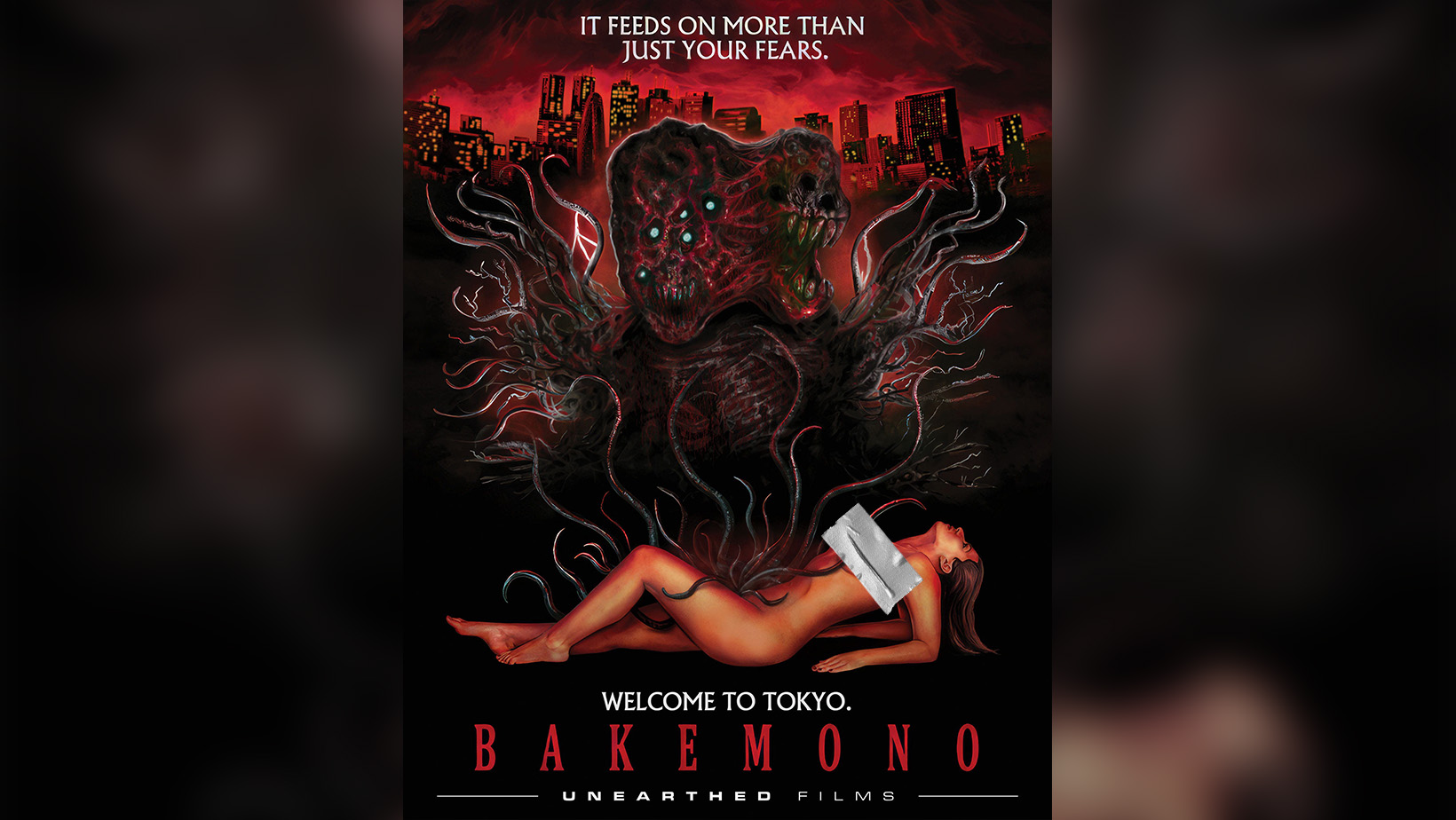





Bakemono is a 2023 joint American-Japanese body-horror film written and directed by Doug Roos. While known for writing and directing a slew of shorts, such as In the Shadows (2006), Betrayed (2007), and We Set Them Free (2016), as well as the feature-length film The Sky Has Fallen (2009), Doug is also a well-versed producer, working on films such as The Girl Who Played Dead (2014), Leviathan: The Story of Hellraiser and Hellbound: Hellraiser II (2015), and Effigy (2024), to name a few.
A multitude of guests visit the same cheap Tokyo apartment at different times, unaware of the gruesome creature waiting for them.
Featuring a narratively fractured story made up of several vignettes, Bakemono oscillates between a number of different interpersonal stories, all connected by their location, the same rented apartment. Rather than show each vignette to completion in sequence, the film explores several of these at a time in a stacked narrative structure—treating the segment’s acts as blocks, building and climaxing simultaneously. While this structure may be slightly jarring at first, exploring multiple accounts this way provides a stronger sense of pacing than the continuous loss of tension caused by the undulation of a sequential narrative. Additionally, while the film seems to lack any overarching story to begin with, a connection between them is slowly drip-fed to the audience—mostly derived from environmental storytelling.
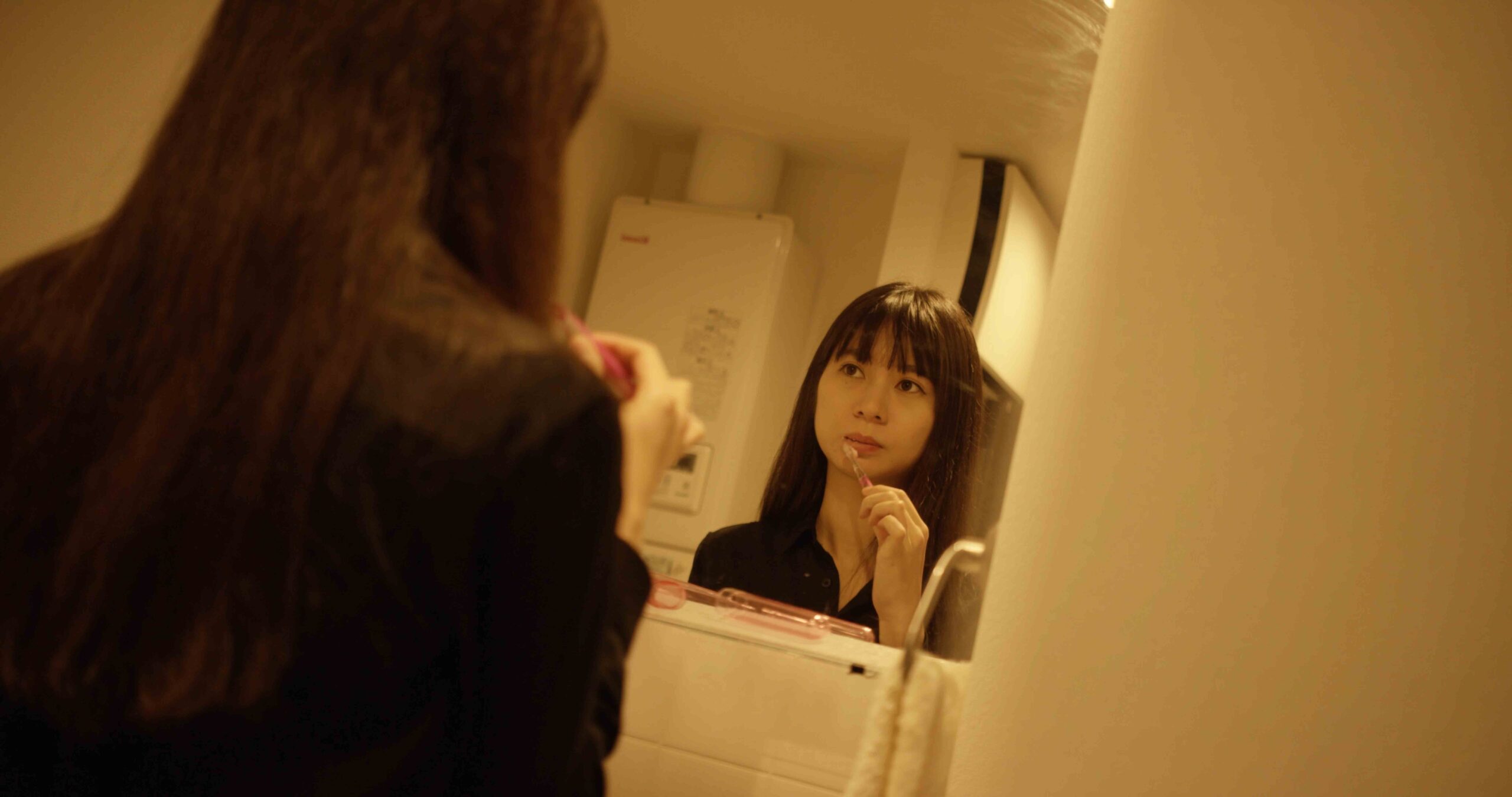
With an incredibly kinetic visual design, the cinematography does much of the heavy lifting in building a tense environment. Full of different styles and techniques, such as several single-take dolly shots, extensive camera movement through pans and tilts, shifts in verticality through high and low angles, and a mix of wide and tight angles, the camera work crafts a claustrophobic, suspenseful environment.
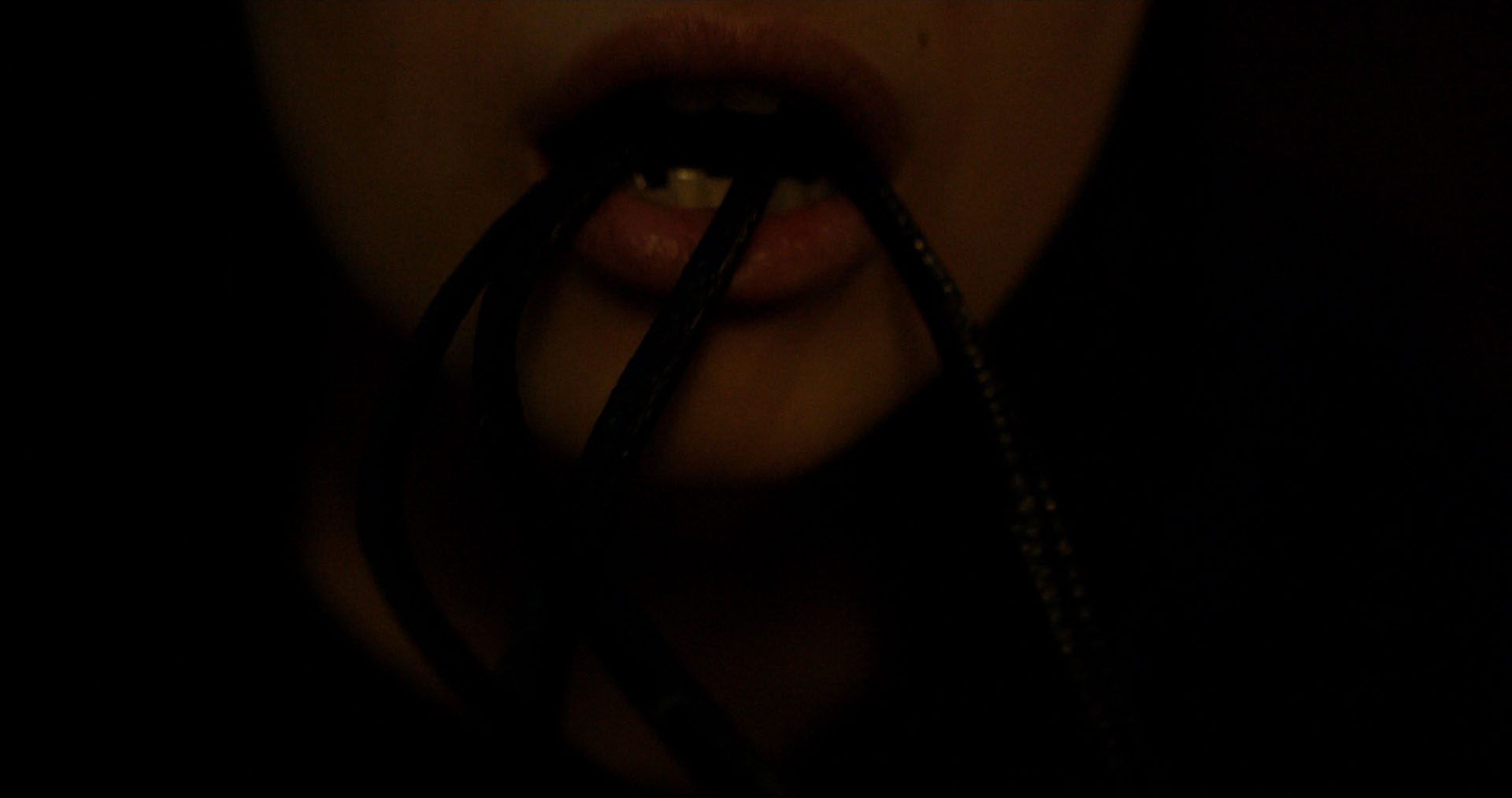
Furthermore, the macro shots effectively both obscure the titular creature and flaunt its visceral design. While these angles offer detailed but limited glimpses of the bakemono, the obfuscation lets the audience piece together what is shown and fill in the blanks—compounding its grotesque design. However, the main drawback of utilising this technique is the need to frequently cut to a different angle, which can be somewhat disorienting during more frantic scenes.
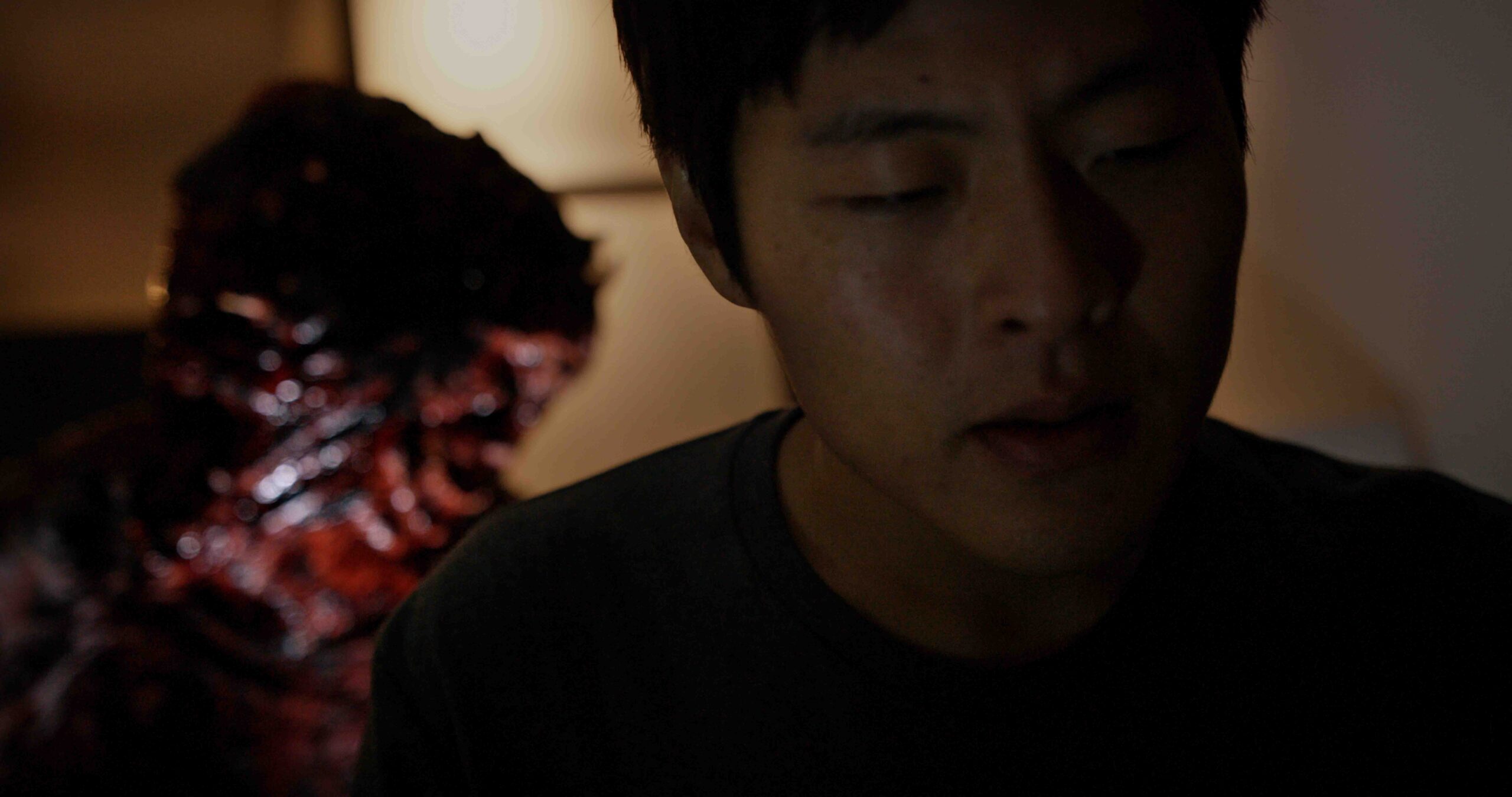
As important as the visuals are, light also plays a large part in Bakemono’s ambience. Creating deep, penetrating shadows, the film uses this to enhance the apartment’s environment—making it feel endless while still maintaining an enclosed, stifling setting. Furthermore, the coloured lighting intuitively represents the emotions experienced during scenes. Utilising typical orange-yellow colouring as a baseline, the lighting can alternate between deep crimson and vivid turquoise depending on the scene’s change in tone.
All achieved through practical means, Bakemono’s special effects offer an incredibly visceral depiction of the creature. Stylised as a humanoid figure comprised of twisted flesh, bone, and sinew in a hellscape of biological degradation, the practical nature of the effects certainly embellishes the gruesome design—further compounded by the cinematography. Moreover, outside the creature design, the film’s depiction of body mutilation is a striking portrayal of extreme violence. From body dismemberment to tentacle attacks (though less like Urotsukidoji [1989] in nature and more like Guzoo: The thing forsaken by God [1986]), the film offers a highly pragmatic visualisation of splanchnic carnage.
Showcasing a fairly large cast of actors from both East and West, the performances in Bakemono can be slightly hit or miss at times. While certain characters provide some weak line delivery here and there, the alternating nature of the vignettes and how they are edited means these characters are never on screen for long and hardly detract from the masterfully crafted atmosphere or tension. However, a standout performance is provided by the apartment’s landlord, Mitsuo, played by Takashi Irie. Though the character doesn’t have a lot of dialogue to begin with, Irie delivers some fantastically expressive characterisation through body language and physical expression.
An effortlessly tense depiction of graphic monster mayhem, Bakemono is an exceptional blend of influences from Eastern and Western cinema to create a one-of-a-kind experience unrivalled by anything else. With its atypical narrative structure, outstanding special effects, and imposing creature design, the film is sure to entice fans of slow-burn J-horror and high-octane splatter horror alike.

Bakemono (2023) is available to purchase from Unearthed Films’ website on September 22nd.
More Extreme Cinema Reviews
Penis, willy, wang, peener, pizdă, dong, knob, kar, member, flesh trumpet, dick, cazzo, pecker, phallus, shlong, 陰茎 (inkei), pikk, plonker, ਪੀਨਿਸ (Pīnisa), John Thomas, trouser snake, etc; however you refer… Dr. Lamb is a 1992 Hong Kong CAT III horror film, written by Kam-Fai Law and directed by Danny Lee and Billy Hin-Shing Tang. The production is based on the… When the found footage genre became fully established in the late 90s with the release of The Blair Witch Project (1999), the cinematic technique was hailed as an inventive, tenable… Confessions of a Serial Killer is a 1985 American horror thriller written and directed by Mark Blair. Surprisingly, the film is the only writer/director credit to Mark’s name, never venturing… I’m sure in one way or another, everyone is at least somewhat familiar with the works of Edgar Allen Poe. From the plethora of film adaptations as well as their… The Guyver is a 1991 American live-action tokusatsu sci-fi horror, written by Jon Purdy, and directed by Screaming Mad George and Steve Wang. The film is an adaptation of the…
Phallacies (2024) Film Review – No Penises Were Harmed in the Making of this Film!
Dr. Lamb (1992) Film Review – A Torrent of Torturous Turbulence

Be My Cat: A Film For Anne (2015) Film Review – Why Is Everybody Afraid Of Love
Confessions of a Serial Killer (1985) Film Review – I’m Super Cearal
Echoes from the Grave Film Review – Modern Retellings of the Classic Works of Poe

The Guyver (1991) Film Review – Early Western Anime Adaptation

Hey there, I’m Jim and I’m located in London, UK. I am a Writer and Managing Director here at Grimoire of Horror. A lifelong love of horror and writing has led me down this rabbit hole, allowing me to meet many amazing people and experience some truly original artwork. I specialise in world cinema, manga/graphic novels, and video games but will sometime traverse into the unknown in search of adventure.