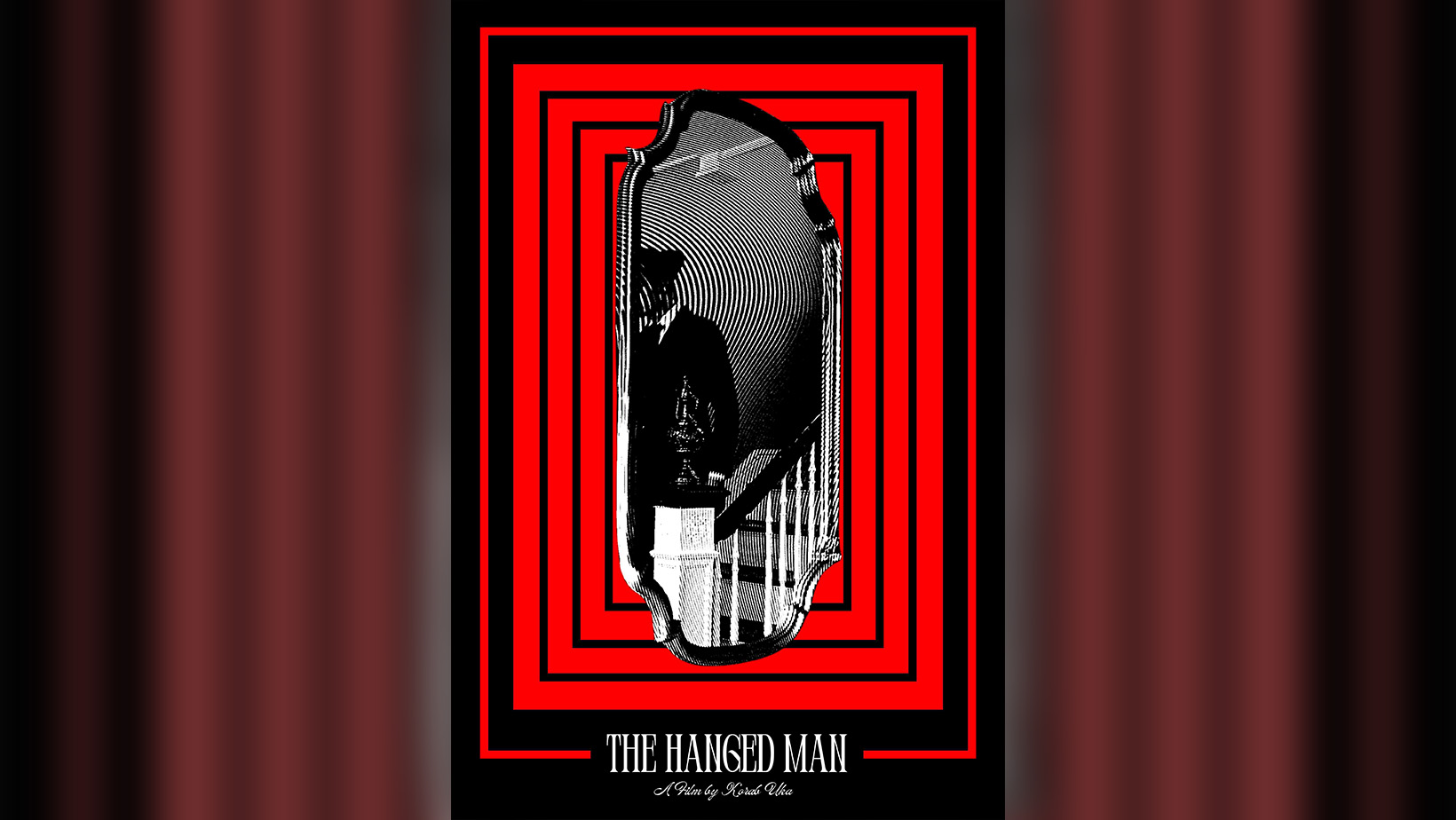





The Hanged Man is a 2025 American horror film written and directed by Korab Uka. A doorman is unexpectedly invited to a dinner at the secluded estate of one of the wealthy families he serves. But as the evening unfolds, he begins to suspect that the invitation wasn’t just an act of kindness.
On a technical and narrative level, The Hanged Man is not a good film. Its ambitions far exceed its execution, and it repeatedly reaches for thematic depth it never quite achieves. And yet—despite my best efforts—it lingered with me long after the credits rolled, not because it was profound or thought-provoking, or even particularly scary, but because it was relentlessly bleak.
Wasting no time with exposition, the film opens on a man crying/laughing, then cuts quickly to an uncomfortable family dinner scene that clearly exists for no other reason than to show the audience what cartoonishly despicable people our main characters are. In attendance at this dinner is the family’s doorman, who we recognize as the man from the opening scene. After a very bizarre meal is served and the conversation turns from mildly bigoted to that of a bunch of out-of-touch racists suffering from severe affluenza, the special guest storms out, understandably horrified by his employers’ behavior. What follows is a fever dream of sickness and depravity with no real purpose other than a high-minded, morally ambiguous ending.

The film’s power lies in its quiet cruelty. Rather than relying on overt shocks, The Hanged Man depicts psychological and sexual abuse in a subdued, matter-of-fact, almost soft way that is deeply uncomfortable to watch. There is no catharsis here, no dramatic framing to soften the blow. The abuse is portrayed as isolating, mundane, and inescapable, which makes it feel disturbingly real. It’s the kind of horror that doesn’t announce itself—it just sits there, heavy and suffocating.
In not being overly violent or gory, The Hanged Man is actually sort of brilliant, though perhaps not intentionally. Films like Salo or 120 Days of Sodom (1975), August Underground’s Mordum(2003) , and A Serbian Film (2010) are so brutal in their depiction of sexual assault, graphic violence, and just general depravity that they tend to only attract viewers looking for the worst of the worst; the most horrific and disturbing films. In not marketing itself as extreme cinema, The Hanged Man attracts viewers looking for more standard horror fare. Viewers who are likely unprepared for how unsettling and upsetting this film truly is, and how deeply it burrows under the skin.
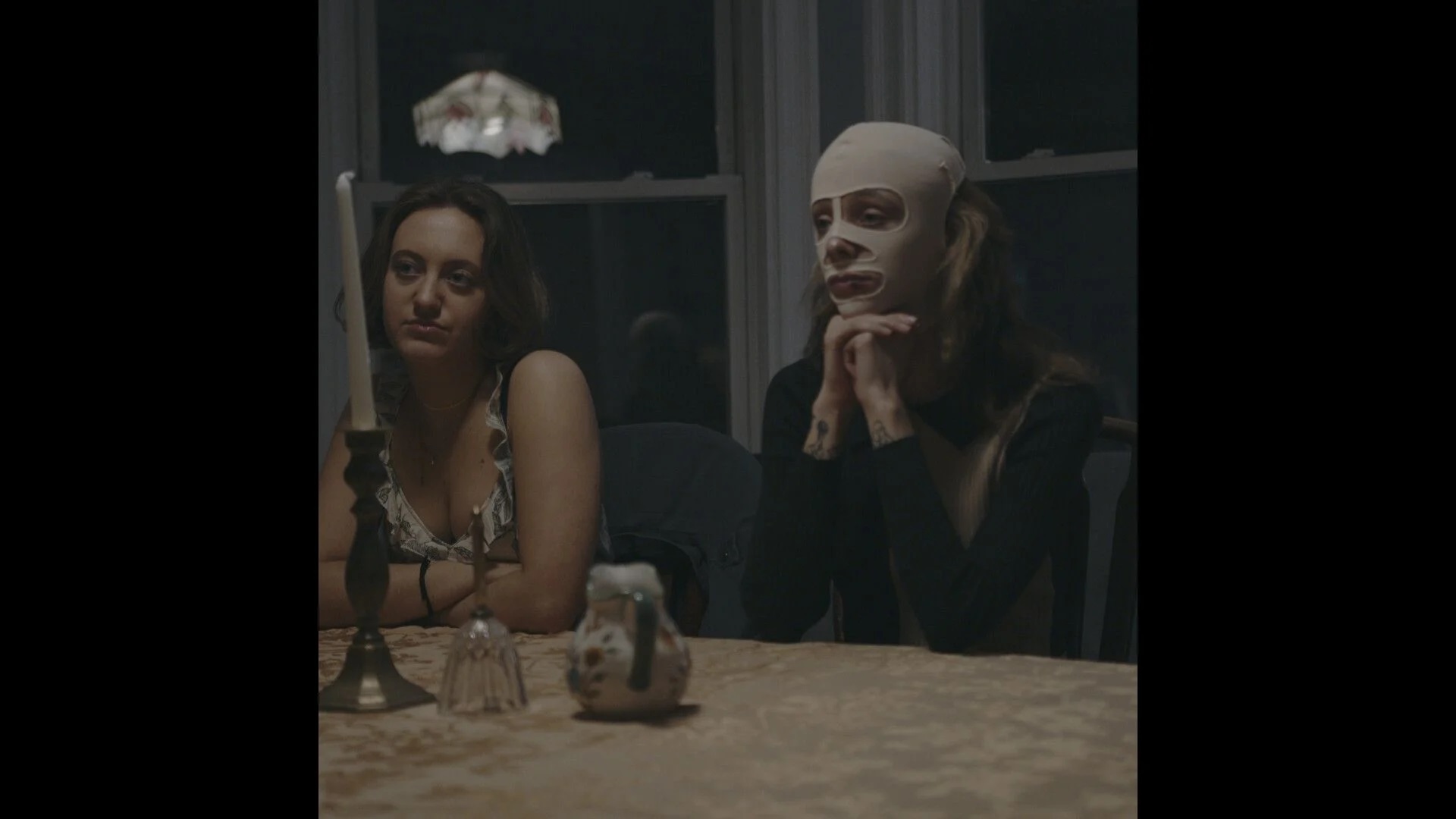
That restraint is also where the film stumbles. The Hanged Man clearly wants to be saying something important about trauma, control, and victimhood, but it never develops those ideas beyond surface-level symbolism and analogies that are punch-you-in-the-face obvious. What it presents as depth often feels more like vagueness, leaving the audience to do emotional heavy lifting that the film itself refuses to commit to.
Still, there’s no denying its effectiveness. This is a movie that worms its way into your brain not through insight, but through atmosphere and emotional attrition. It is grim, joyless, and quietly cruel—and those qualities make it difficult to dismiss entirely. The Hanged Man may not succeed as a thoughtful exploration of its themes, but it does succeed in being profoundly unsettling, the kind of film you wish you could forget and then realize, days later, that you can’t.
We watched The Hanged Man (2025) as part of this year’s Another Hole in the Head Film Festival.
More Film Festival Coverage
After purchasing a 360 camera, an aspiring filmmaker Nina Temich decides that she is going to follow her dream of being a film director. However, a trained dancer from an… The seminal American folk horror film Eyes on Fire has been unavailable on home video for decades. Thankfully, the good people at Severin Films has given the title a 4k… Jewish-themed horror movies are rare but this year’s Fantastic Fest features at least two films that explore the rich and fantastic pantheon of Jewish folklore and the role of kabbalah,… Returning for its 6th year, the Dead Northern Film Festival is back to deliver another top line-up of spooky shorts and features to one of the world’s most haunted cities–York,… By all rights Crabs! seems like it ought to be the sort of film that is a complete joke. Nominally it is about a horde of murderous mutated horseshoe crabs… In the aftermath of the Omega Pandemic, a devastating global catastrophe that has turned citizens into zombie-like monsters, a teenager named Salvador has become the caretaker of his younger siblings,…
Putrefixation: A Video of Nina Temich (2022) Film Review – 360 Degrees of Horror
Eyes of Fire (1983) Film Review – Early Stirrings of Folk Horror
The Offering (2022) Film Review – Hasidic Horrors Haunt a Brooklyn Family

Dead Northern Film Festival (2024) Short Films Day 1 – Scares Aplenty
Crabs! (2021) Film Review – A Love Letter to Classic Monster Movies
![Párvulos (2024) Film Review – Blood is Thicker Than Water [Fantastic Fest 2024]](https://www.grimoireofhorror.com/wp-content/uploads/2024/09/Parvilulos-cover-365x180.jpg)
Párvulos (2024) Film Review – Blood is Thicker Than Water [Fantastic Fest 2024]

As lover of cryptids, literature, and all things horror, I am so excited to be bringing my talents to the Grimoire of Horror. I am a librarian, avid gamer, TTRPG nerd, and a Mothman fangirl. I spent several years screening films for PRIMAA’s Canadian film festival Reel Shorts, and spent some time as an amateur horror filmmaker, competing in the Frantic 48 filmmaking challenge several years in a row. I love anything horror, from true crime to grindhouse to found footage and am especially interested in horror books and movies created by LGBTQIA2S+ and BIPOC as I think we have a fresh take on the genre and a fascinating perspective on what horror can be.