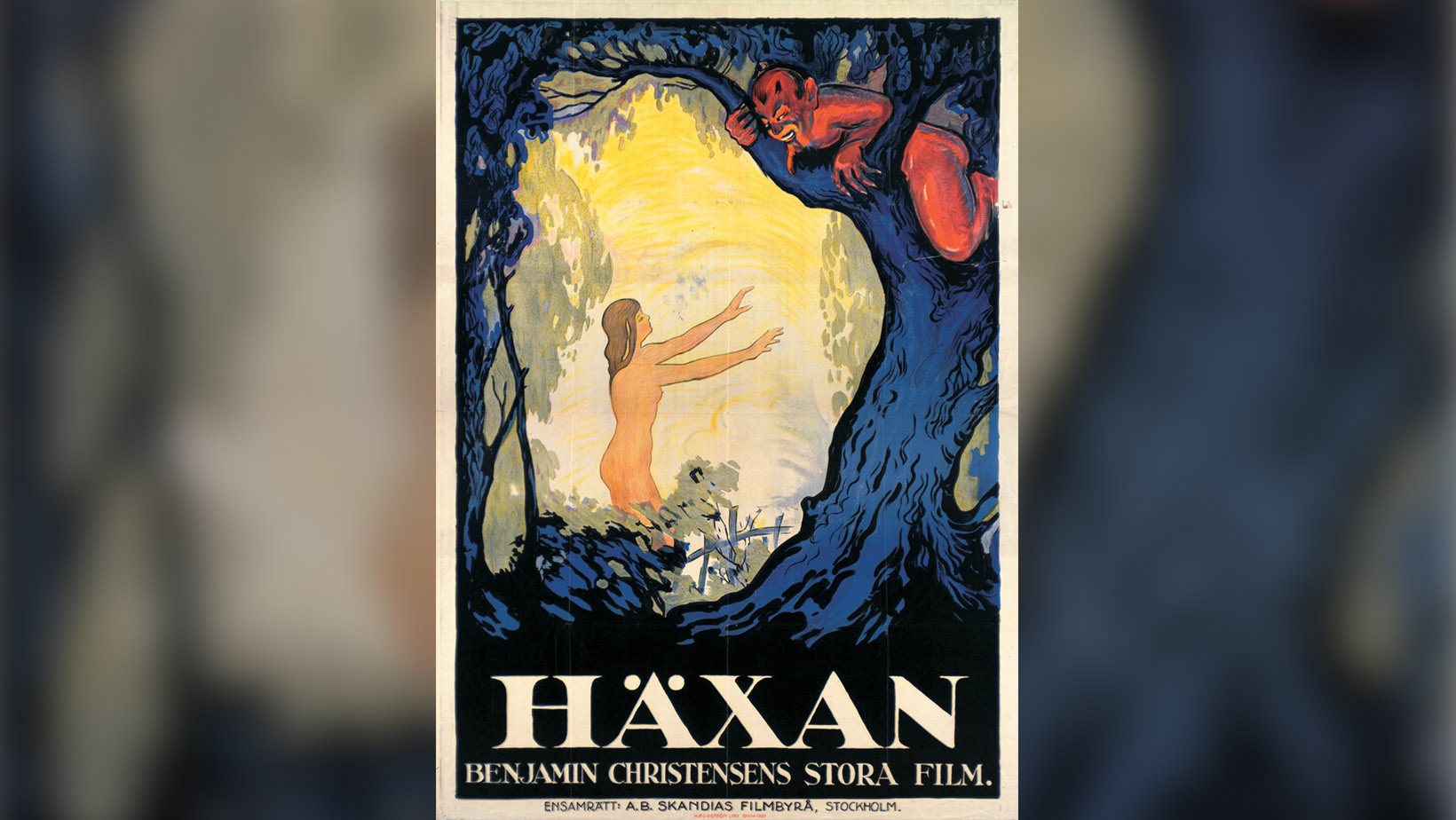





Perhaps you’re looking for something different in a horror film, tired of jump scares and remakes. Perhaps you’re passionate about obscure cinema, revelling in the discovery of something unexpected. Or perhaps you enjoy a bit of history sprinkled in your movies, learning about culture or folklore while being entertained. My choice for today can fill all of these criteria. Please sit back, relax, and enjoy a nice bowl of eye of newt as we examine the 1922 film Haxan: Witchcraft Through the Ages.
A truly unique piece of film history, Haxan is an unflinching look at the history of witch hysteria, the delusional myths surrounding it, and, ultimately, the truth behind the paranoia. Part documentary, part delightful theatrics, the movie takes you on a feverish nightmare trip into the Middle Ages, elucidating how supposed “witches” were perceived in a deeply ignorant and vehemently religious society. It uses dramatisations to portray the experiences of those living in this oppressive climate, and bring to life the outrageously dark (and amusing) rituals the intolerant people of the times actually believed witches engaged in. The Witches’ Sabbat segment is perhaps the most entertaining moment of the film.
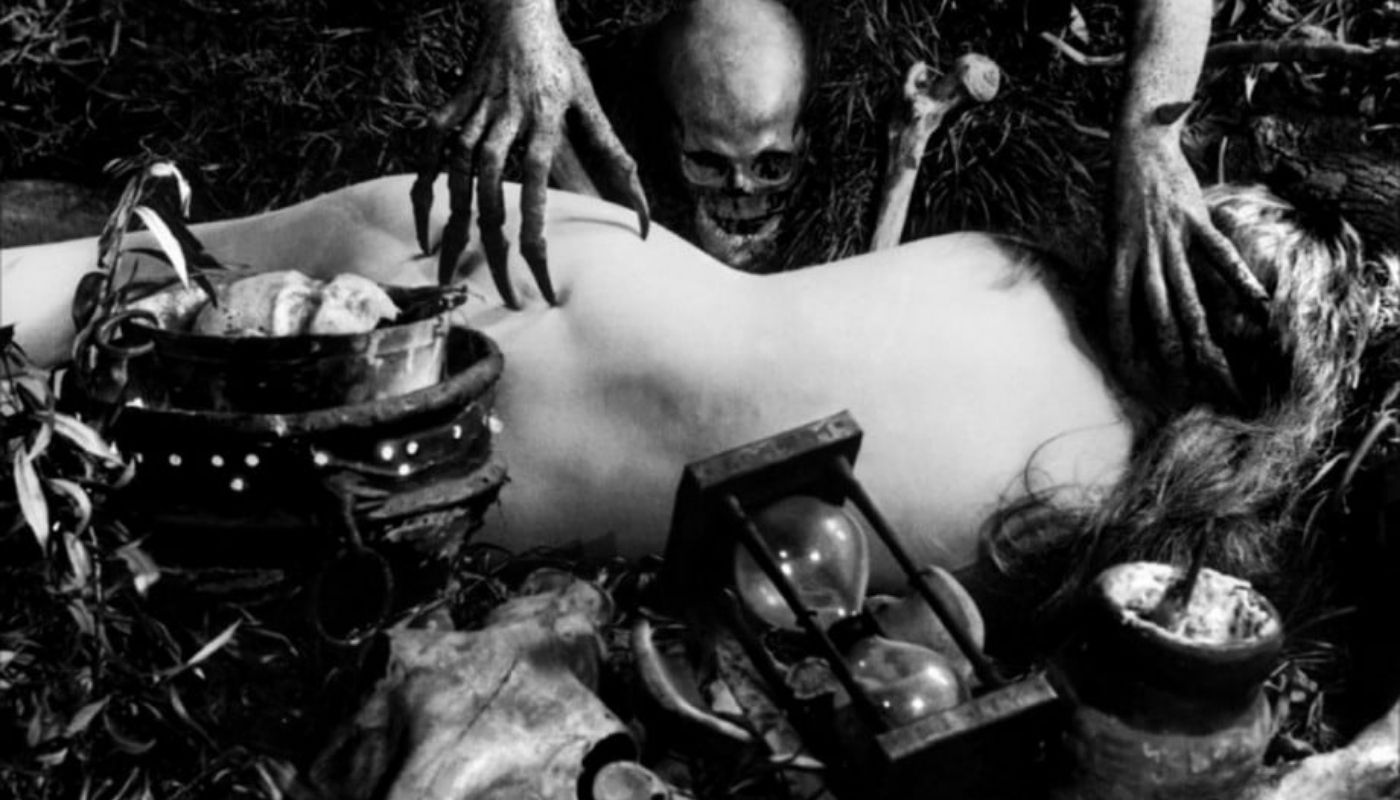
Scenes from this movie frequently pop up in Creepypasta videos and the like. I would venture to say, even if you haven’t seen Haxan, if you’re a fan of horror, you’ve probably seen images or clips from it without knowing the source. Certainly, Haxan is memorable for its imagery. While it is frequently absurd, it gives one the impression of a fever dream. Even its most ostensibly laughable scenes can be disturbing. Haxan makes the viewer feel like they are traversing a strange other world. It’s mad to think that beliefs like the ones depicted were actually pervasive in our history.
Haxan is actually quite innovative technologically. Despite being shot in a studio, the director, Benjamin Christensen, believed that the nocturnal mood would benefit the actors’ performances. Furthermore, to achieve shots of the witches flying over a town, Christensen and the cameraman, Johan Ankerstjerne, filmed a miniature town, which was rotated by a turntable that took several men to operate. Then, 75 actors were shot flying their broomsticks, with a black backdrop, and an airplane motor was used to make the costumes appear to blow in the wind. In order to splice the footage together, Ankerstjerne built a special optical printer specifically for the task. Much care and hard work were put into ensuring that the imagery of Haxan would due justice to the director’s vision. Cameramen were even dispatched to Norway at one point to film the perfect, ominous, stormy skies for the film. On another interesting (and amusing) note, Christensen himself played the Devil in the film, as well as Jesus, and he clearly threw himself into the role with enthusiasm.
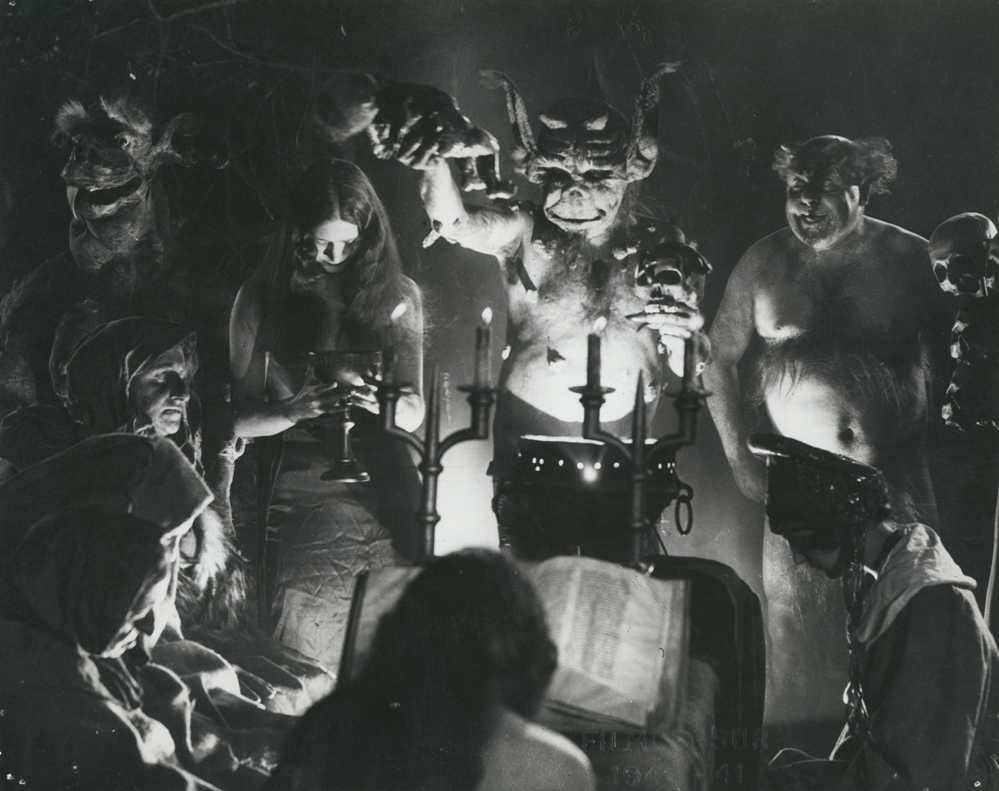
The film is actually remarkably thoughtful for its time, despite its frequent over-the-top theatrics. The narrator sympathizes with the victims of witch hysteria, and by the end, it discusses how this kind of insanity and paranoia stems from ignorance and bigotry. This dissection of the sort of society that wallows in such beliefs and sadism gives the film a satisfying conclusion, with an edifying reminder not to revert to systemic prejudice. We may not hunt witches anymore, but the thoughts and philosophies that lead to such injustices are never truly eradicated.
More Reviews
Science fiction, often preoccupied with technology and artificial beings, can sometimes seem overly intricate, neglecting the mundane facets of life. However, this stereotype is not only unfair but also doesn’t… The film It (2017) surprised me. In fact, I saw it five times due to how much I enjoyed it! Unlike a majority of modern horror films, it focused more… With that title, that font, and that poster, I don’t think there’s any doubt of where this film was going to go. Yes, it is indeed a tongue-in-cheek slasher set in… Deathsport is a 1978 sci-fi action drama, directed by Nicholas Niciphor, with additional shots directed by Allan Arkush, and produced by Roger Corman. The film is a somewhat spiritual successor… The found footage genre has long been a beloved niche among horror fans, staff here included. The format, while restrictive in budget, offers a creative outlet normally representative of a… Weddings can be stressful; add in a drunken blowjob for the groom from a vindictive stranger and an obnoxious employee overstepping social boundaries, and, for couple Shane and Leah, it…![River (2023) Film Review – Down by the River [FrightFest]](https://www.grimoireofhorror.com/wp-content/uploads/2023/08/river-365x180.jpeg)
River (2023) Film Review – Down by the River [FrightFest]
It (2017) Film Review – Reboot of a Stephen King Classic
Totally Killer (2023) Film Review – All Killer, No Filler in this Comedy-Horror Thriller

Deathsport (1978) Film Review – Blood, Boobs, and Bangs
Camping Fun (2020) Short Film Review – Found Footage Frights

Crumb Catcher (2023) Film Review – Believing Your Own Bulls*** is Half the Battle

Eden is a Soong-type android learning to pass as human through studies of pop culture, humor, and dark fantasy. Perhaps one day she will learn to love and pronounce “hyoo-mahn” correctly. She was written analyses of music, video games, comics, and film. You can find her other writings on Vocal and WordPress.