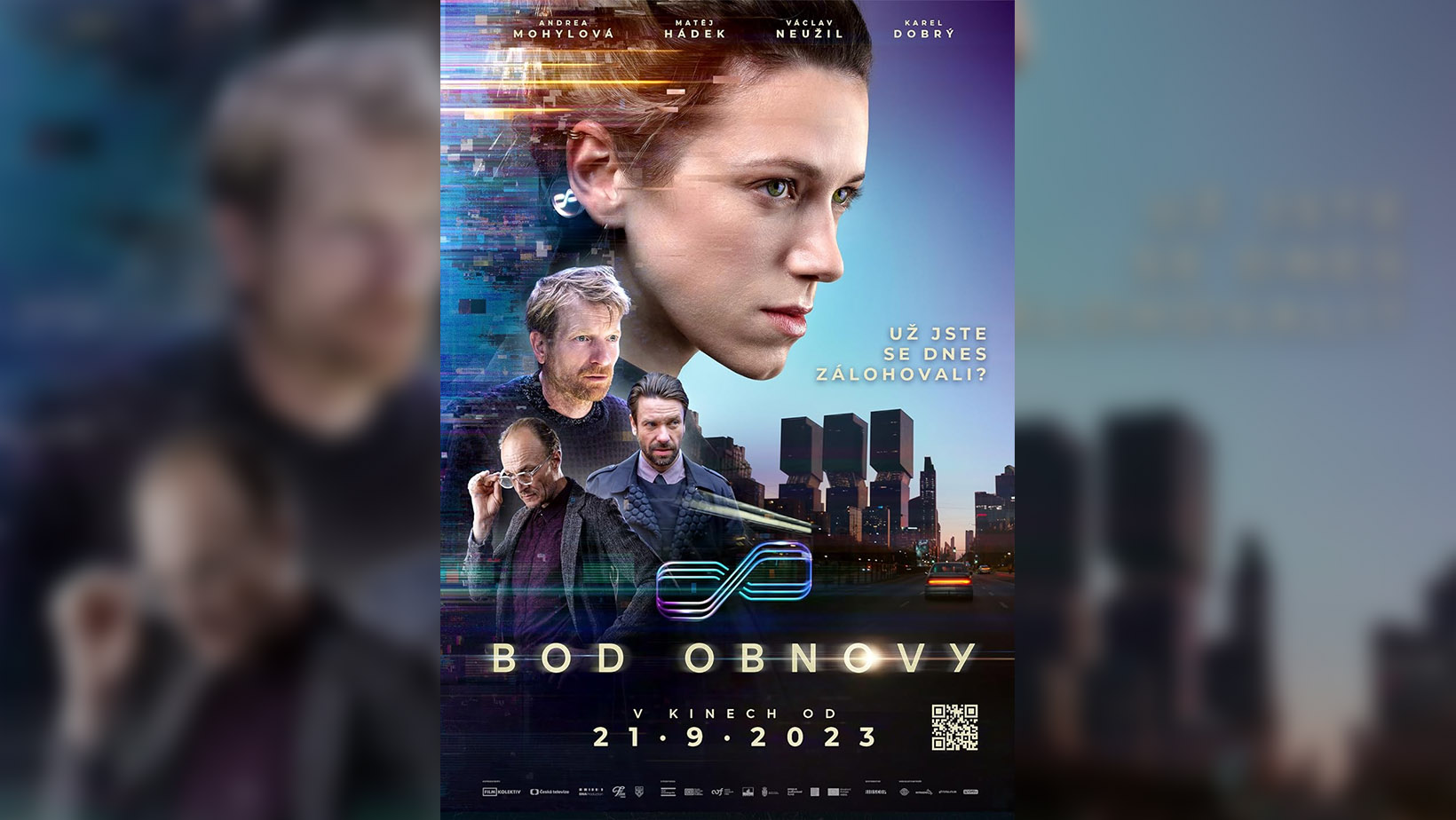




In the not-so-distant future, death is a choice for some.
Robert Holz’s first feature-length film, Restore Point (2023), is a masterpiece, brilliantly capturing the dystopian future that we all fear we are headed toward in a story that feels realistic. While the film is focused on a technological breakthrough that allows humans to reboot themselves after an unnatural death, it also touches on many of the socio-economic issues that we are currently facing, blending the escalating horror of life in 2023 with terrifying potentials that we already seem to be on a collision course with.
Restore Point (Bod Obnovy) is set less than 20 years from now, and no one is arguing about religion anymore. The churches, in fact, are burned or abandoned. We have escalated into a new moral quandary: whether we should be able to beat death or not. Those who choose to take a side do so vehemently, and those who don’t simply live, then die. But just like our current cosmetics and medical procedures designed to keep us young, only the wealthy can afford treatment.
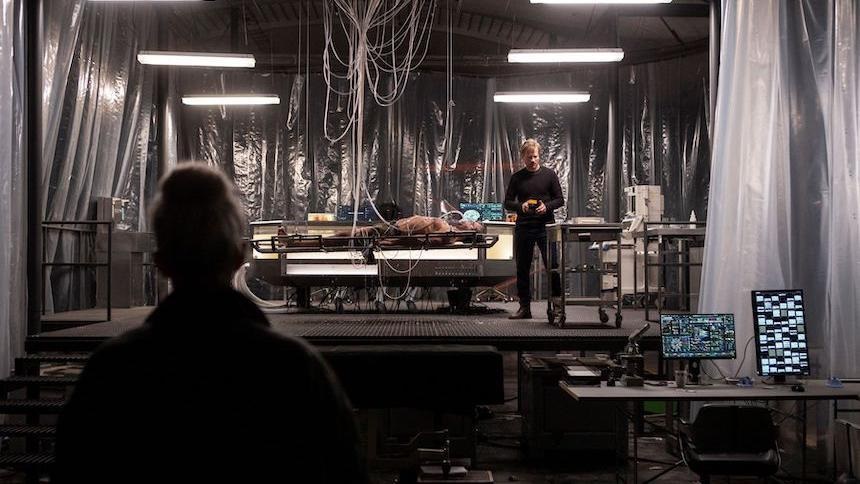
In 2041, centuries-old European cities still stand with their white stone facades towering over busy streets, but the cars are self-driving and the billboards are holograms. Perched between these traditional buildings are huge glass fantastical feats of architecture that defy the laws of physics. People are dressed mostly the same as they are today, but many of them have a double-ringed tattoo on their index finger that works to control their computer screens, and curious patches behind their ears used to mount a quarter-sized disc once a day, or once a week, or as often as they choose. That patch is the dock for their recovery disc, which records their memories and biorhythms as a “restore point”, to be used to reboot their bodies should they suffer an unnatural death.
In Restore Point, humans back up the same way we back up our computers, and carry their restoration discs in a small electronic case in their pockets that reminds them when their last restore point was set. When a couple is found dead in a parking lot without valid restore points saved to revive them, Detective Em Trochinowska (Andrea Mohylova) goes against official orders and investigates the deaths on her own. Her search leads her into the world of the River of Life, a far-right group that murders people indiscriminately to counter the efforts of the Restoration Project. The head of the project, Rohan (Karel Dobry) wants to privatize Restoration, which would strip most people in this economically eroded world of the potential for resurrection. The River of Life believes that restoration is immoral. Detective Trochinowska just wants answers.
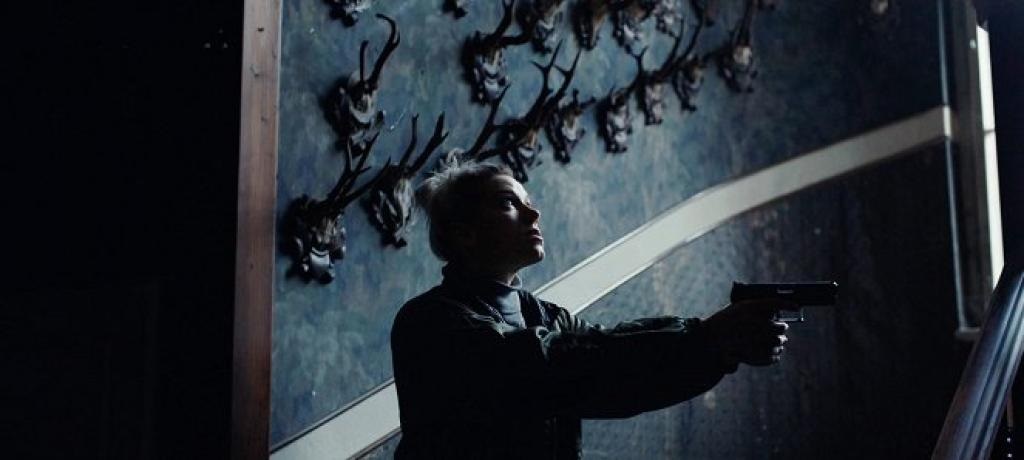
The visual effects in Restore Point are nothing short of stunning and certainly rival those of Film Kolektiv and DNA Production’s brethren in big-budget Hollywood studios. Scenes combine old-school creepy sets (old farmhouses and deserted churches filled with relics) and futuristic holographic people with such finesse that the audience is never asked to use “suspension of disbelief”. So much attention was paid to ensuring there would be no plot holes in the storyline that it flows without the viewer feeling the need to ask questions. The talented cast works well together, but Andrea Mohylova deserves an award for her powerful portrayal of a strong woman facing unbelievable circumstances in a world gone mad. Every detail seems natural, and believable, which is an incredible feat for any film and certainly an indicator of Hloz’s team’s superior skills.
Other reviewers are comparing Restore Point to Blade Runner and Minority Report, and while there are similarities, a better comparison could be to Greg Iles’ “Footprints of God” (novel). We are shown the road we are on here and now, creating ever greater divides between the haves and the have-nots, giving Big Tech more power, and soon our pursuit of immortality will cross a line that will either save us, or damn us all.
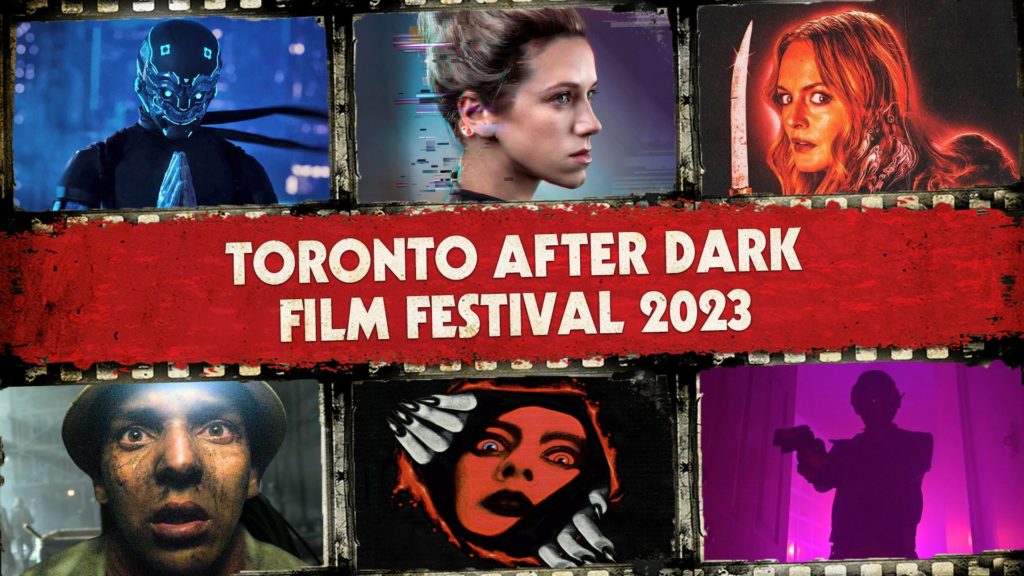
We watched Restore Point (2023) at Toronto After Dark Film Festival 2023.
More Film Festival Coverage

Yellow Dragon’s Village (2021) Film Review – Low Budget Insanity
The strength of the Japanese independent cinema has often rested on its ability to embrace absurdity and bring it together in a distinct yet cohesive manner. Consequently, the intuitive approach…
![The Hanged Man (2025) Film Review [Another Hole in the Head Film Festival]](https://www.grimoireofhorror.com/wp-content/uploads/2025/12/The-Hanged-Man-2025-Cover-365x180.jpg)
The Hanged Man (2025) Film Review [Another Hole in the Head Film Festival]
The Hanged Man is a 2025 American horror film written and directed by Korab Uka. A doorman is unexpectedly invited to a dinner at the secluded estate of one of…
![Frankie, Maniac Woman (2025) Film Review – An Irreverent Punk Scream That Loses Its Voice [Grimmfest 2025]](https://www.grimoireofhorror.com/wp-content/uploads/2025/11/Frankie-Maniac-Woman-2025-cover-365x180.jpg)
Frankie, Maniac Woman (2025) Film Review – An Irreverent Punk Scream That Loses Its Voice [Grimmfest 2025]
Premiering at Grimmfest’s annual horror film festival, Frankie, Maniac Woman (2025), directed and co-written by Pierre Tsigaridis, director of Traumatika (2024), arrives with the promise of a searing indictment of…
![Hunting For The Hag (2023) Film Review [Unnamed Footage Festival 7]](https://www.grimoireofhorror.com/wp-content/uploads/2024/04/Hunting-for-the-Hag-cover-365x180.jpg)
Hunting For The Hag (2023) Film Review [Unnamed Footage Festival 7]
The Woods of Hawthorne, Illinois are Haunted… “I wanted to make a horror movie that toys with your expectations. ‘Hag’ starts as one thing and then morphs into something totally…
The Rage Part II (2023) Film Review – All The Rage (Unnamed Footage Festival 666)
The Rage Part II is a 2023 British zombie horror, written and directed by Joshua Cleave. After studying film and television production at Leeds Metropolitan University, Joshua went on to…
Greywood’s Plot (2020) Film Review – A Low Budget Exercise of Creativity
“You become what you believe” seems to be an enthusiastic phrase until you watch Josh Stifter’s black comedy horror Greywood’s Plot. Born out of a low-budget production and undying devotion…
Kate’s love of all things dark began as a child and deepened when she realized what being an adult meant. She was born with a pencil in her hand and loves nothing more than writing horrific stories to tantalize her inner demons. Kate lives in Hamilton, Ontario Canada with her husband and her boys, stirring up trouble wherever she can.