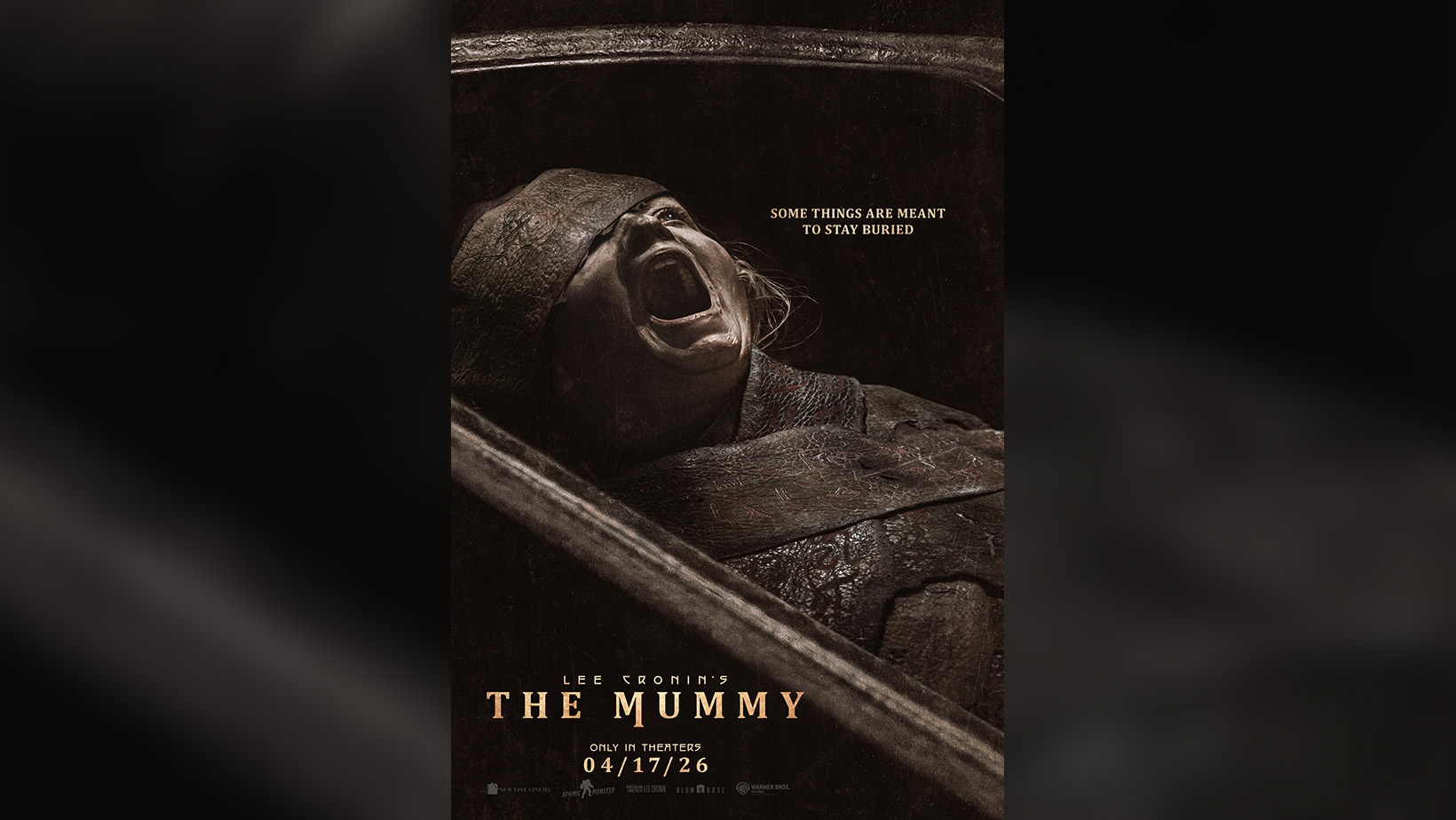

I was initially taken aback by the title of this film—I assumed that Lee Cronin was some prolific filmmaker that I had yet to familiarize myself with, but a quick Google search revealed that he’s a relatively new arrival to the mainstream. He stepped into the spotlight fairly recently by directing Evil Dead Rise back in 2023, but also has a couple of lesser-known titles under his belt, such as the feature-length film The Hole in the Ground (2019), and many shorts and anthology credits, including Ghost Train (2013) and Minutes Past Midnight (2016). Why the title Lee Cronin’s The Mummy, then, for such a fresh face in horror?
For starters, the title certainly helps distinguish this re-imagining from previous Mummy films. My father tagged along with me to see Lee Cronin’s The Mummy at the cinema, but knew nothing about it, not even the full title. When I told him I wanted to go see the new Mummy film, he asked if it was related to the Brendan Fraser films, to which I, of course, responded with no. I’ve also read that, marketing-wise, the title also helps differentiate the film from other upcoming Mummy projects. I guess mummies are coming back in style! While Cronin is not yet a household name, his work on the intense Evil Dead Rise did establish him as a new horror director to look out for.
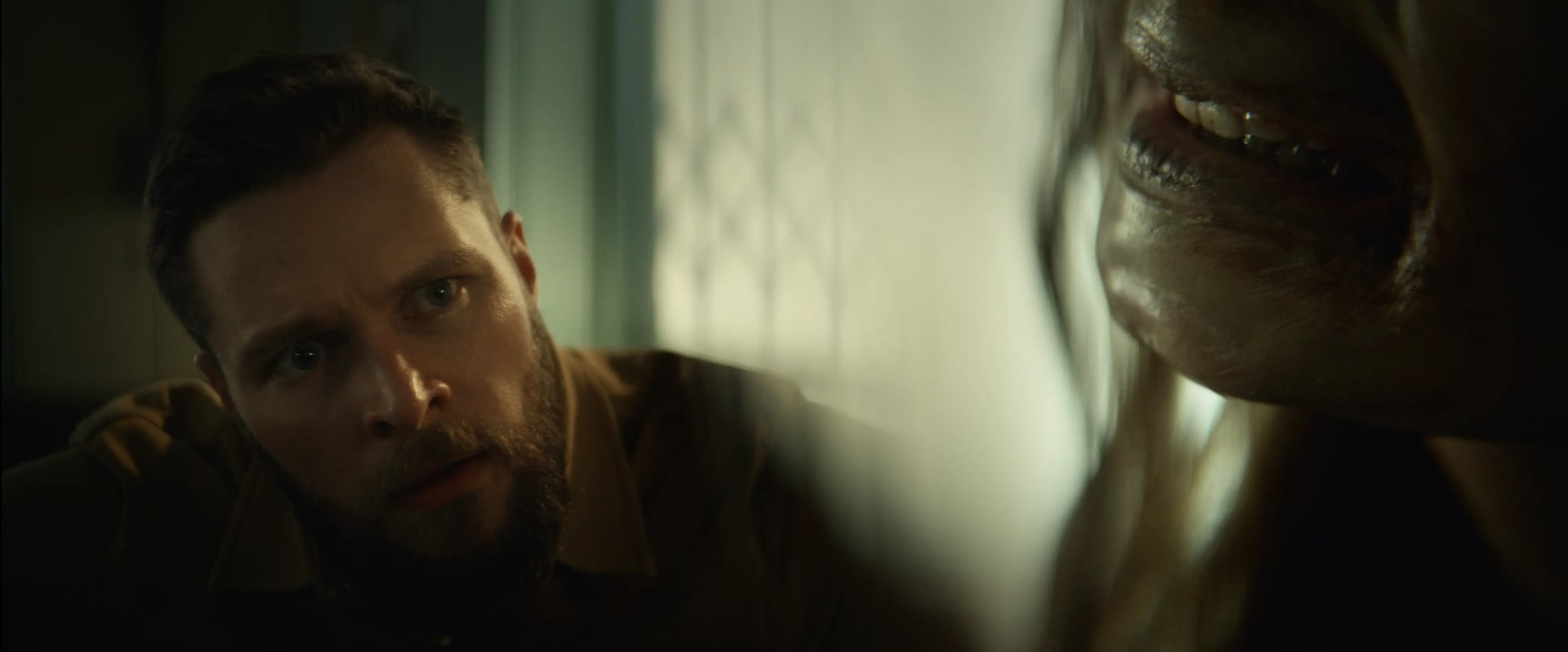
In Lee Cronin’s The Mummy, Katie, the young daughter of a journalist named Charlie Cannon, is kidnapped while the family is living in Cairo on assignment. Eight years later, the Cannon family is shocked when they receive a phone call with the news that Katie is alive and was found inside a three-thousand-year-old sarcophagus, which was discovered inside a cargo plane that crashed. Katie, who is in a catatonic state and habitually self-harms, is moved back home with Charlie, her mother, Larissa, her grandmother, Carmen, and her two siblings, Sebastián and Maud. But what should be a joyful reunion soon turns into a living nightmare as Katie starts to transform into something truly horrifying. Charlie works alongside Detective Dalia Zaki to figure out what happened to Katie.
It’s safe to say that most films ask for a degree of suspended disbelief—and I’m usually more than willing to go along—but this one really tested me in one key area: how quickly the doctors cleared Katie to go home. They release her almost immediately after Charlie and Larissa, who had since been living in Albuquerque, New Mexico, travel back to Cairo to see her. The doctor explains that she is severely malnourished, making her skin and body completely atrophied, but that the best thing for her is to go home to her family. I’m not a doctor, of course, so I can’t speak on the validity of this recommendation; it just seemed like such a strange idea. I might have been more on board with it had they mentioned needing to keep her in the hospital for a couple of weeks to monitor her condition.

When Katie’s behavior begins to progressively transmogrify, Charlie suggests that they seek professional help. Larissa, who has been Katie’s primary caregiver since her return, is offended by this and counters with the assertion that Charlie believes that she cannot take care of her own daughter. Although this is meant to play out like a reasonable moment of contention, I couldn’t help but feel frustrated. Any moment where Katie continued to exhibit uncanny behavior ended up feeling absurd rather than unsettling because of her parents’ reactions. Actors Jack Reynor, who plays Charlie, and Laia Costa, who plays Larissa, do a fine job with their performances and clearly have the necessary range to portray distraught parents. Still, their actions in the script don’t always translate accordingly.
The practical makeup effects on Katie, played by Natalie Grace, were extremely well-done and served as a catalyst for the more gruesome moments in the film. I would no doubt be absolutely horrified to see my child looking so cadaverous if I were a parent. There are plenty of body-horror moments sprinkled throughout the runtime, which play with her physical condition and erratic behavior in ways that will surely have moviegoers squirming in their seats. The film never really pushes the limit of grotesquerie in a way that could turn off casual moviegoers, but it definitely teeters on the line. There were moments that reminded me of The Exorcist (1973), which I’m sure was intentional, and I’m confident that you can make some of those connections yourself just based on what I’ve written so far.

Lee Cronin’s The Mummy generally succeeds in maintaining a sinister atmosphere when it’s not being loud and gruesome, but it also doesn’t shy away from throwing in a bit of humor. The first half is completely devoid of humor, understandably, which makes the comedy in the latter half feel like it came out of left field; that’s not to say that you’ll be cracking up the rest of the film. The jokes are brief and come from one-shot characters that aren’t fully aware of what the Cannon family is dealing with. My favorite moment comes from a funeral scene where two middle-aged women are gossiping over the open casket. It’s incredibly inappropriate and ludicrous, but I was giggling in my seat the entire time! I realized at this point just how much fun Lee Cronin was having with this film, and I was able to just accept the ride for what it is.
The final act does play very much like Evil Dead Rise, but not in a way that feels redundant or derivative. Instead, it feels like part of a bigger universe, whether it’s Lee Cronin’s universe or the Evil Dead universe. While the finale succumbs to the CGI-heavy spectacle typical of modern horror blockbusters, it provides exactly the kind of high-octane experience theater audiences crave. As someone who lives in the desert, I felt a personal connection to the setting. Seeing the landscapes of Cairo and Albuquerque rendered with such cinematic scale was a highlight for me, and I wish that more horror films would take place in the sands! Lee Cronin’s The Mummy is an entertaining supernatural horror film that re-imagines the mummy creature as a deadite who has been locked inside a three-thousand-year-old sarcophagus, but it felt a little too formulaic to fully hit for me personally.
More Film Reviews
Online streamer ‘The Dark Lord of Love’s Park’ interaction with the online world consists of arguing with his chat, drinking himself into a stupor, and performing grotesque tasks for money…. Have you ever had a heart-to-heart with a bartender? I’ve often heard peers joke about how bartenders are basically therapists with a license to sell alcohol, and although I haven’t… Warning to those with mycophobia – this is not the film for you. Gaia is a South African ecological horror film, full of mushroom monsters, skin-crawling body horror and raving… READER WARNING: Ghosts starring in this review may contain an excessive amount of exploding glitter. Konnichiwa! Bonjour! What’s the story, bud!? Straight Outta Kanto here, bringing you a big fat… “You become what you believe” seems to be an enthusiastic phrase until you watch Josh Stifter’s black comedy horror Greywood’s Plot. Born out of a low-budget production and undying devotion… The Curious Dr. Humpp (La Venganza del Sexo) is a 1969 Argentinian sexploitation horror, written and directed by the prolific Emilio Vieyra – well-known for his work grounded in exploitation…![Leech (2024) Film Review – Disturbing Lolcow LARPing [Unnamed Footage Festival]](https://www.grimoireofhorror.com/wp-content/uploads/2025/03/Leech-2024-cover-365x180.jpg)
Leech (2024) Film Review – Disturbing Lolcow LARPing [Unnamed Footage Festival]

Reunion (2021) Film Review – A Cyberpunk Arthouse Drama in the Age of Loneliness
Gaia (2021) Film Review: God is Real, and She’s a Fungus
Sick Nurses (2007) Review – An Absolutely Outrageous EVENT of a Movie
Greywood’s Plot (2020) Film Review – A Low Budget Exercise of Creativity
The Curious Dr. Humpp (1969) Film Review – “Sex dominates the world! And now, I dominate sex!”

Your typical ghoul next door; film enthusiast, horror fanatic, J-horror nerd, aspiring horror host, and all around geek. Will likely be found cuddling with their cat and reading an old smelly book, or stuffing their face with popcorn at the cinema!