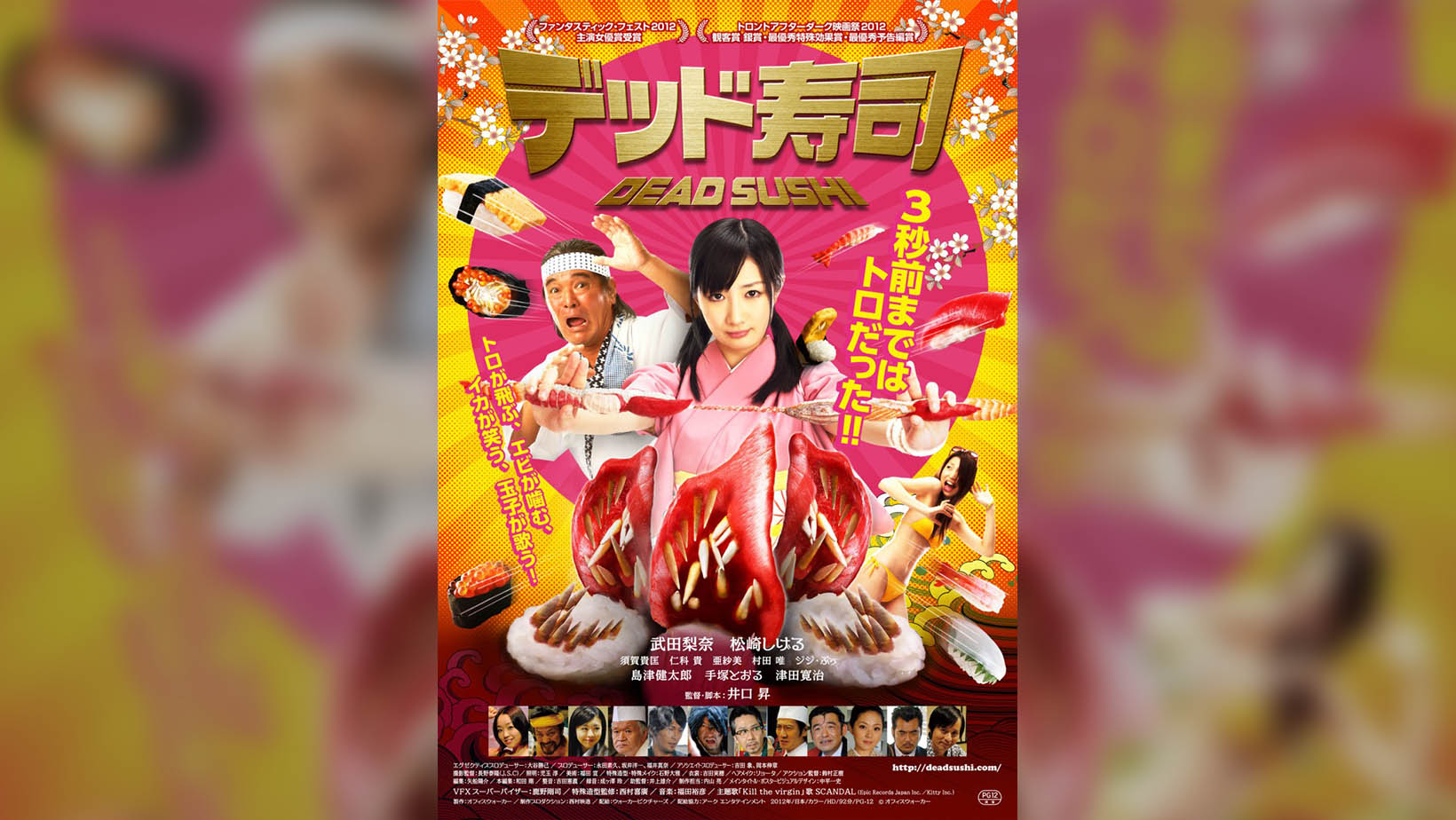





Dead Sushi is a 2012 Japanese splatter horror-comedy film, written and directed by Noboru Iguchi, with additional writing by Makiko Iguchi and Jun Tsugita. Known for his over-the-top blend of gore and comedy, Iguchi is the director behind such classics as The Machine Girl (2008), Robo-Geisha (2009), and Hentai Samurai (2015).
Keiko, the daughter of a legendary sushi chef, runs away from home when his Karate-style regimen becomes too severe. Finding work at a rural hot springs inn, she is ridiculed by the eccentric staff and guests.

From the outset, Dead Sushi fully embraces its absurd narrative concept. Loaded to the brim with slapstick comedy, the film espouses Iguchi’s intrepid lack of seriousness with a straight face—hardly ever acknowledging its campy basis. Though the film’s comedy can be wacky at best and gross-out at worst, this serious approach strengthens its delivery and overall impact. The outlandish scenarios and over-the-top gore, while excessive, deliver a distinct and memorable narrative that few films have been able to surpass.
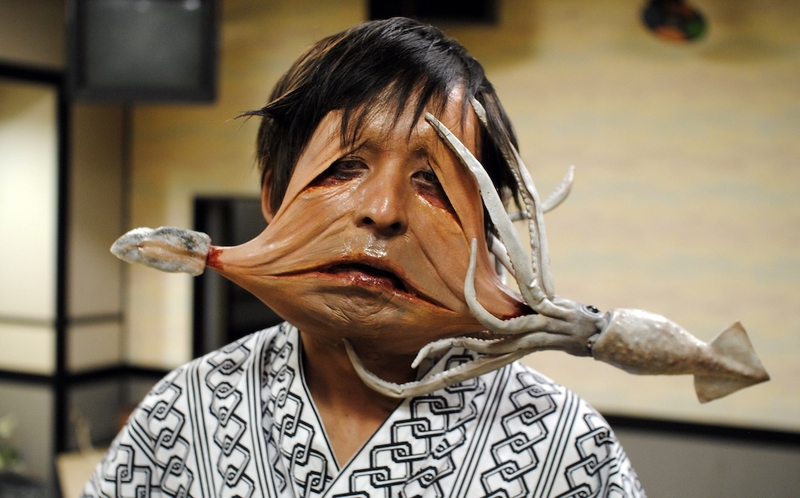
However, one of Dead Sushi’s key strengths lies in its impressive practical effects work. From razor-sharp teeth-sprouting sushi rolls taking chunks out of people, to extreme examples of death and mutilation, Iguchi’s special effects go above and beyond to deliver brutality and comedy in equal measure. The monster design for each type of sushi is fantastic, imparting some incredibly inventive characterisation to inanimate objects—giving each a fairly defined personality. However, the film does also feature numerous examples of CGI effects throughout. From supplementing practical bloodwork to hordes of sushi flying through the air looking for their next victim, the effects look dated even for 2012.
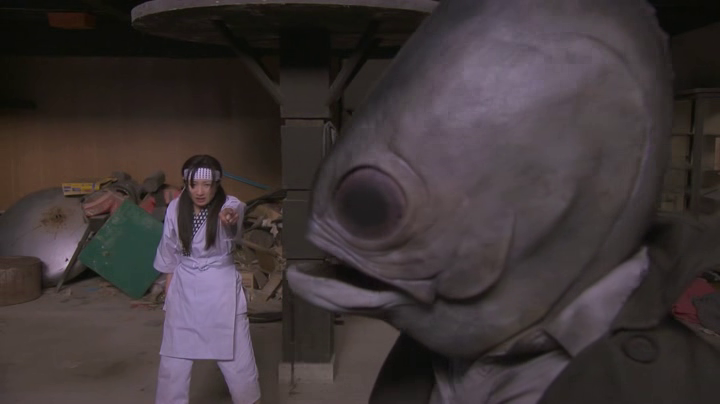
Featuring adequately outlandish acting for such an eccentric narrative, the performances in Dead Sushi are the glue that holds the whole production together. While playing into the absurdity of the narrative, there is never any self-awareness behind the characters or their actions. And while each actor gives a fantastic rendition, the most notable performance comes from Rina Takeda as the protagonist Keiko. Being both a renowned actress and a black belt in Ryukyu Shorin-ryu Karate, her acting and martial arts skills are perfect for the role.
Positives aside, Dead Sushi isn’t without its faults. Suffering from pacing issues at times, certain scenes can drag on too long, such as the infamous raw egg scene, which slows the film’s momentum significantly. With a runtime of 91 minutes, such a thinly plotted narrative should have really been under 80 minutes to keep the pace more consistent.
A delightfully intrepid splatter horror that could only come from Japan, Dead Sushi certainly delivers on its intended insanity. With its preposterous premise, unbridled special effects, and ardent performances, the film is sure to be alluring to anyone who enjoys over-the-top splatter horror and weird Japanese cinema.

More Film Reviews
Seagull (2019) is an oddball revenge story centred on family drama, secrets, and spite. After 8 years of eking out survival on a beach, Rose returns home and the full… The Benefactress: An Exposure of Cinematic Freedom is a 2025 experimental/extreme horror film written and directed by London-based Italian filmmaker Guerrilla Metropolitana. Known for writing, directing, and starring in his… Cocaine Bear is a 2023 American comedy thriller, written by Jimmy Warden and directed by Elizabeth Banks. The film is based on the true story of a drug dealer’s plane… Leo Falcão’s feature film debut Subject (Sujeito Oculto) is a rare genre offering that transcends its format and offers a meditative study of the power of storytelling and life among mythical… Directed by Matthew John Lawrence; Starring Chet Siegel, David Littleton, Ruby McCollister, and Jeff Riddle Uncle Peckerhead follows Judy and her indie punk band’s attempt to have a successful tour…. Girl Internet Show: A Kati Kelli Mixtape is a curated mix tape of the work of one Kati Kelli, a YouTube content creator who tragically passed away in 2019 due…
Seagull (2019) Film Review – Time For Extraordinary Revenge

The Benefactress: An Exposure of Cinematic Freedom (2025) Film Review

Cocaine Bear (2023) Film Review – A Roaringly Good Time

Subject (2022) Movie Review – To Exist Is A Personal Verb
Film Review: Uncle Peckerhead (2020) – Cute Meets Gore
![Girl Internet Show: A Kati Kelli Mixtape (2020) Film Review – From The Outside Looking In [Fantastic Fest]](https://www.grimoireofhorror.com/wp-content/uploads/2024/09/Girl-Internet-Showcover-365x180.jpg)
Girl Internet Show: A Kati Kelli Mixtape (2020) Film Review – From The Outside Looking In [Fantastic Fest]

Hey there, I’m Jim and I’m located in London, UK. I am a Writer and Managing Director here at Grimoire of Horror. A lifelong love of horror and writing has led me down this rabbit hole, allowing me to meet many amazing people and experience some truly original artwork. I specialise in world cinema, manga/graphic novels, and video games but will sometime traverse into the unknown in search of adventure.