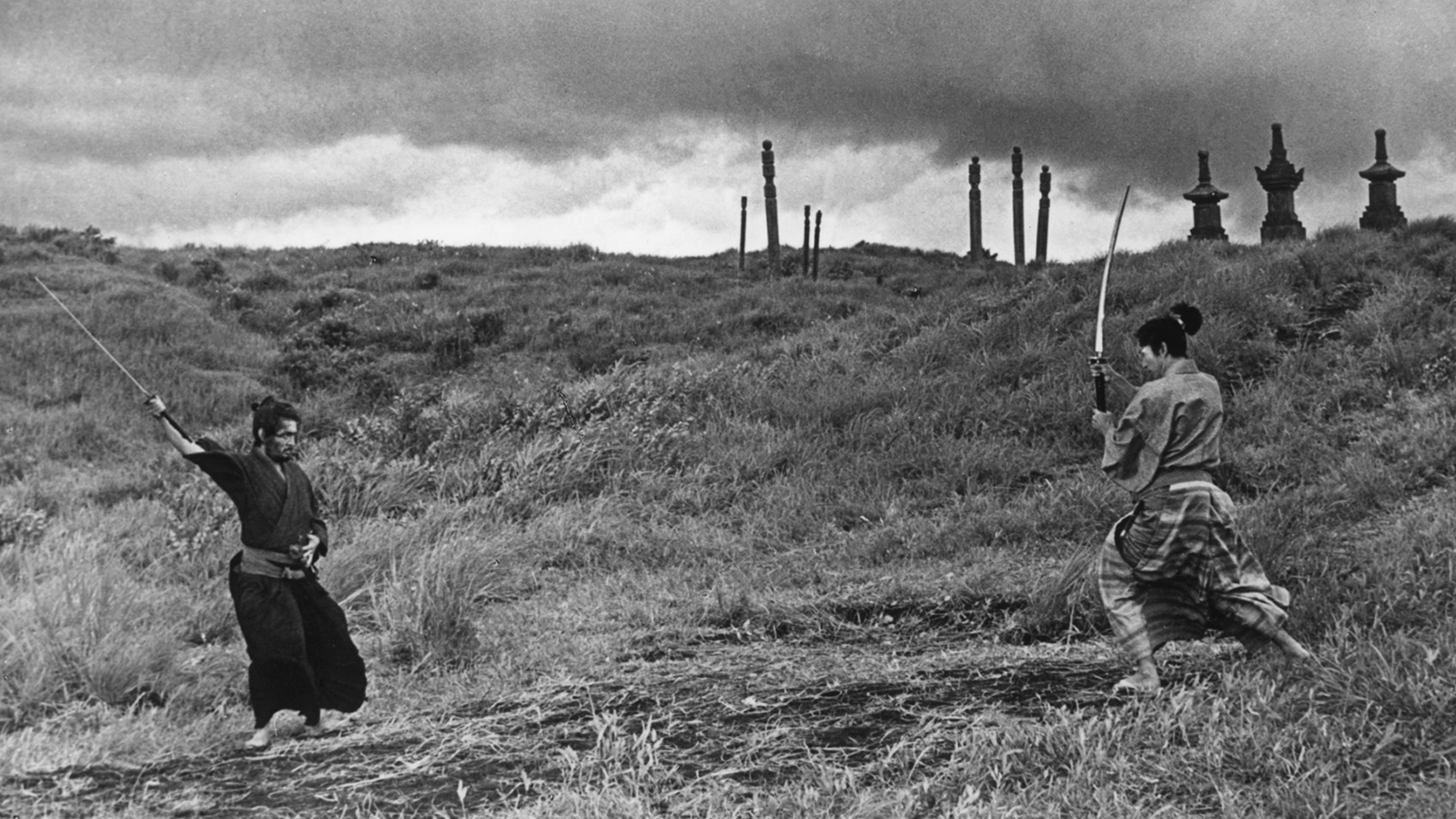
We will be examining a classic Japanese film on 17th century samurai as both a faithful homage to their traditions while a deep critique to the virtues instilled – a refocus from all the horror as a cult classic. The film is Harakiri (1962) – named after ‘self-inflicted disembowelment‘ – from Masaki Kobayashi, who also directed The Human Condition as an epic trilogy for anti-war sentiments, and starring Tatsuya Nakadai as Japan’s foremost A-Lister of the 60’s. Visually accurate for the era from the set to the costumes, while filmed in black and white for a contemplative focus, the cinematic quality is unparalleled as a period piece – it’s a realistically vivid portrayal of a clan and the inhabitants in Edo Japan to have a starkly intimate feel for an era we never personally witnessed.
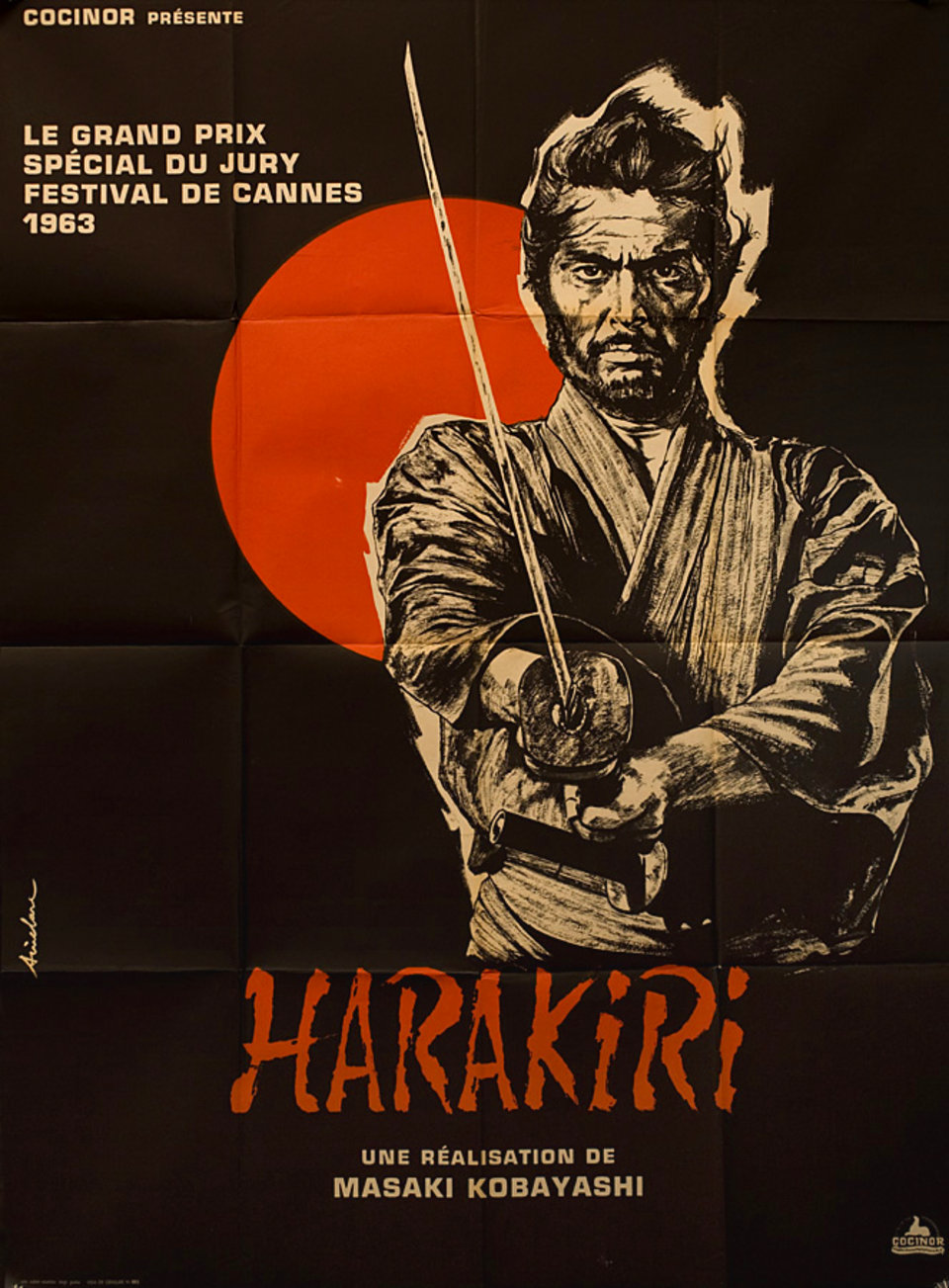
The Shogunate is dismantling all clans to have any war as obsolete while the era of the samurai finishes with their class system in disarray – samurai as a warrior caste are suddenly aimless and useless in their vocation – their profession is supposed to be limited to fidelity to war. Consequently, despite previously an esteemed nobility, those without liege lord for steady support are suffering destitution and resorting to all kinds of desperate measures as a contradiction to their Bushido values- confidence tricks, banditry and other lowly means to merely survive. The Daimyo, however, are content and scorn such malpractice of their role arrogantly from their secure dwellings comprised of loyal retainers.

A rōnin, Hanshiro Tsugumo, visits the headquarters of the local Ii Clan and seeks permission to perform ‘Harakiri’ in their court as he feels his existence is a disgrace from the societal upheaval already mentioned, but he’s harshly rebuffed as they dismiss him as a fraud who’s bluffing the request, which they should honour without accepting, to receive a pittance in sympathy of his virtue. The clansmen – cynical of any artifice in fear tolerance of duplicitous men will encourage worse – start to recount a prior young visitor who did the same and was detected, or assumed, as insincere – they forced him to commit the Harakiri, which he didn’t truly wish to perform, in an agonizing scene of self-disembowelment with a bamboo stick as his sharpened, metal sword was absent. When a samurai’s soul is intertwined with their sword, it’s shameful to die without possession and also to commit ‘Harakiri’ with such a false weapon – the man was manipulated into a prolonged, humiliating death of immense pain.

As these brutal accounts end, Hanshiro reveals the boy was his son-in-law and he had took an oath to care for him – the whole court in attendance is shocked as his humble request no longer seems to be all there is any more and he seems to have a vindictive scheme in the works. This film is a cultural heavyweight of Japan’s traditions being expressed, a dissection of the warrior code as a delicate subject and a trenchant social commentary on the transition of classes as the Meiji Restoration looms.
The cost of the samurai values in real struggles is beautifully displayed and the portrayal of tragedy is potent. It is easily amongst the most finest thrillers as the plot unravels between intense dialogue sessions of the characters, who’re all on edge while dangerous men, as they mutually share recollections to anecdotes gradually highlighting truths about the plot leading to violent conclusions.. Takashi Miike did a remake in 2011 as a disservice to the mastery of cinema in the original – the pacing for reveals, focused camerawork on the characters, stunning cinematography of every setpiece, visual immersion with environmental detail and visceral violence are each lost in depth during his rendition.
More Reviews:

I’ve Died A Lot Lately (2022) Film Review – Death and Rebirth of a Slacker
Having recently lost her grandmother, Satoko Sato finds herself deeply withdrawn from the pressures of Covid landing her in the position of a NEET. However, at the age of 32,…
Winnie the Pooh: Blood and Honey (2023) Film Review – Poorly-Written Tripe
I’m all for enjoying bad films, in fact, some of my favourite films are schlocky B-movies from the 70s. However, I would always argue that these films, whilst terrible, always…

The Awakening of Lilith (2021) Film Review – The Excruciating Weight of Loss
Sparked by the death of her partner Noah, Lilith is struggling with her mental health and has succumbed to a deep depression that affects all aspects of her life. Fighting…
J-Horror Origins: The Ghost of Yotsuya (1959)
Modern-day J-horror traces its origins back to Japanese folklore and Kabuki plays, The Ghost of Yotsuya can be seen as an intermediate stage in the development of the field itself….

Flammentod (2023) Film Review – Fire, Fire, Light the Fire
Flammentod (Pyromaniac) is a 2023 extreme horror film written by Jean Rises and directed by Domiziano Cristopharo. Known as an author/publisher of extreme horror literature, as well as a horror…

Tale of Two Sisters Movie Review – Classic K-Horror Film Gets Arrow Video Release
Konnichiwa! Dia Duit! Yo Yo Yo! Straight Outta Kanto here welcoming you all aboard the Nostalgia Train. I’ve said it before and I’ll say it again, the early noughties was,…


Some say the countdown begun when the first man spoke, others say it started at the Atomic Age. It’s the Doomsday Clock and we are each a variable to it.
Welcome to Carcosa where Godot lies! Surreality and satire are I.
I put the a(tom)ic into the major bomb. Tom’s the name!