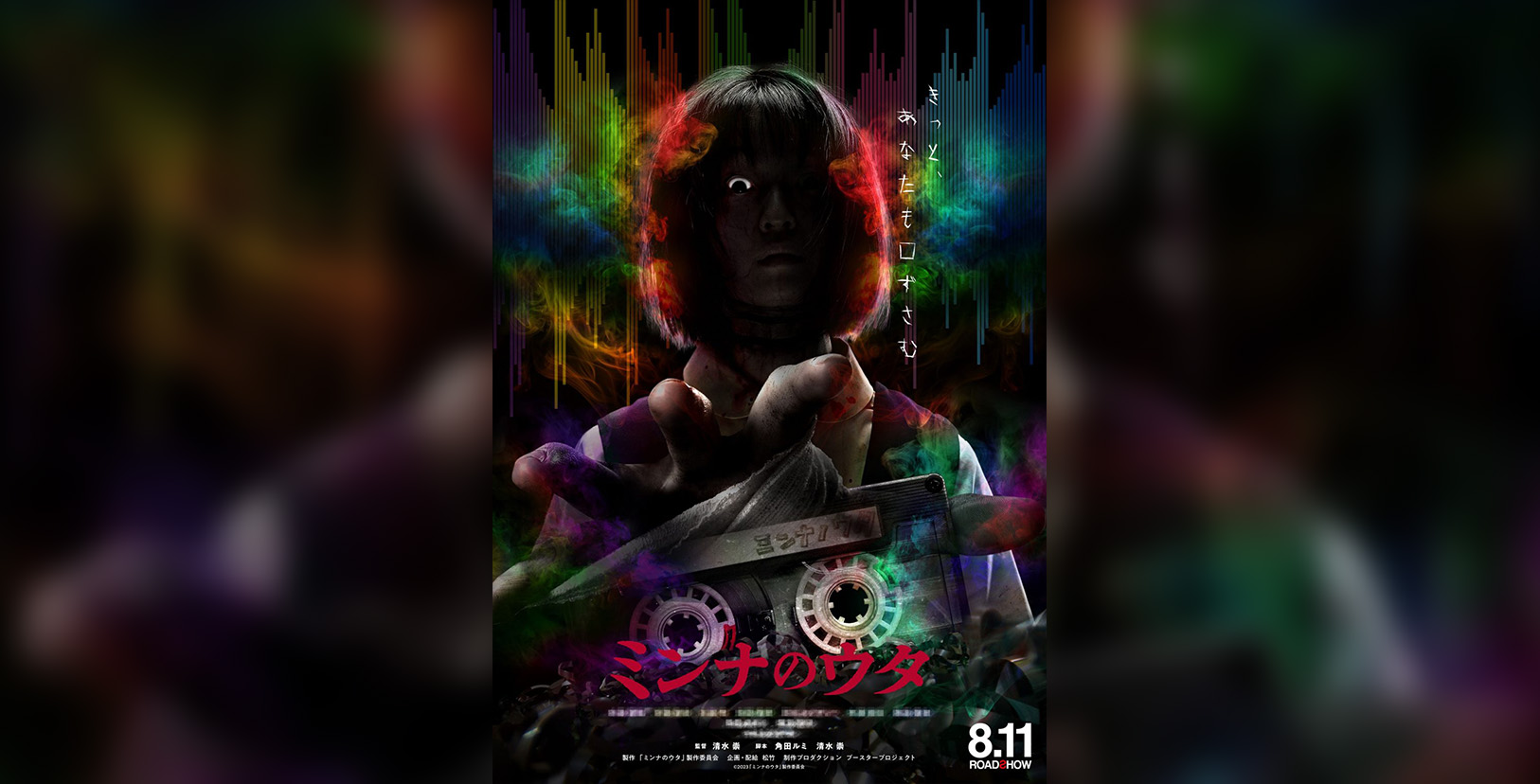





I have spent a significant amount of my tenure with Grimoire of Horror reviewing the latest films of Takashi Shimizu—the man responsible for the sensational Ju-On film series—and although none of his newer films have affected me as much as his earlier work (Ju-On: The Curse (2000) and Marebito (2004) specifically come to mind), I always find enjoyment in seeing what’s next in his ongoing filmography. In fact, as I may have mentioned in one of my other reviews of his work, I appreciate his commitment to the horror genre. Sure, he has dabbled in other genres here and there, but his heart seems to be where the ghouls are.
When it comes to horror, Shimizu-san tends to explore traditional themes of curses and supernatural hauntings. His recent Village trilogy, consisting of Howling Village (2020), Suicide Forest Village (2021), and Ox-head Village (2022), tackled urban legends in modern settings, while Immersion (2023) played with the beloved J-horror trope of mixing contemporary technology with ghostly interference. These themes seemed to mark a bit of a return to form for Shimizu, with a pinch of the ambitious nature of his more divisive efforts. Nevertheless, I was surprised to find a stronger feeling of nostalgia while watching Sana (2023), otherwise known as Minna no Uta (Everybody’s Song).

A broadcasting station employee discovers a box of cassette tapes gathering dust in a storage room while accompanied by Komori, a member of an idol group called Generations. On the tape, there is a faint humming sound of a girl, which they believe is a fan of the radio program from thirty years ago. The two of them suddenly go missing after finding the tape, which prompts the idol’s manager to employ a private investigator to find Komori within three days, just in time for a big concert. As the inquiry proceeds, however, the idol members succumb to a terrible curse, falling to terror one by one. When the detective examines the identity of the mystery voice on the recording, it becomes clear that the cursed cassette tape holds the answer to their problem.
The premise of a cursed song or cursed tape will not feel unfamiliar to even the most casual fan of Asian horror. Junji Ito’s Used Record is a story that immediately came to mind upon watching the trailer for Sana, and White: The Melody of the Curse also registered shortly afterwards. Of course, these are only two examples, but I do not doubt that our readers can list even more! With that said, Sana will no doubt feel too derivative for some viewers to enjoy, as it follows the same or very similar story beats as its predecessors. The aspect which might set this film apart from others is Shimizu-san’s directorial skills.
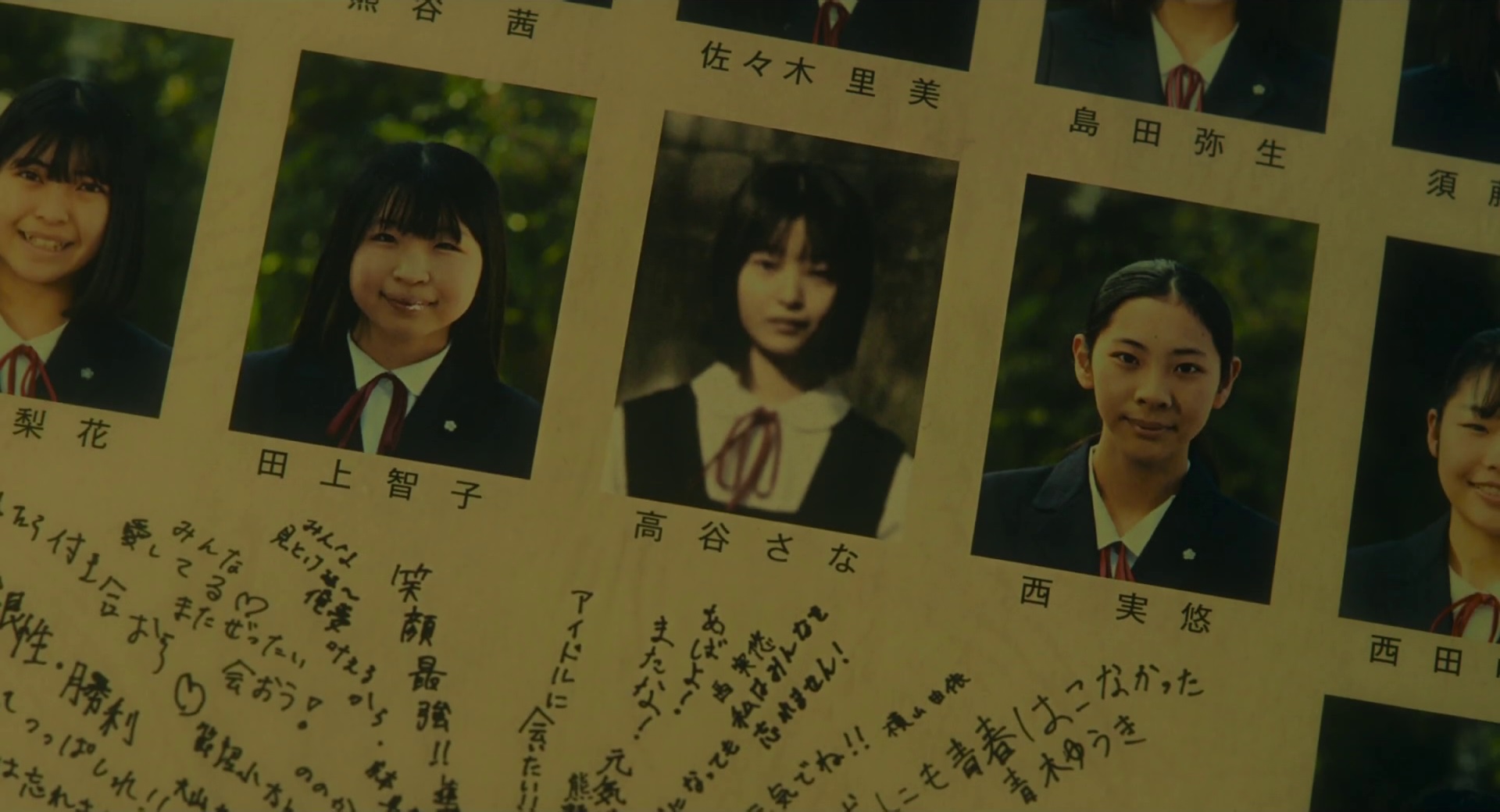
Oftentimes, films that re-use ideas found in other media may feel rushed and uninspired. Shimizu-san could have easily taken this simple premise and delivered a half-baked effort, but instead paces the narrative as if it was something fresh. For one, the viewer does not immediately hear the contents of the cassette tape, which enables a level of mystery to pervade the majority of the first act. We spend the first thirty minutes or so following the former detective Gonda as he talks to each idol group member and tries to figure out where their missing peer could be. We’re shown a glimpse of what Gonda is dealing with in his personal life, too, which adds a bit of texture to his involvement.
It goes without saying that Shimizu-san is no stranger to crafting up a good scare, even if said scare has been recycled. As you may already know, Shimizu-san has had several directorial credits for the Ju-On films, and his own ideas were reused for several of them. Sana finds Shimizu referencing other films this time around, and I refuse to believe that they were not intentional. There is a reference to Mario Bava’s Shock (1977) which I clocked right away from the trailer. This particular scare was also used in 2014’s Annabelle, though to lesser effect. Another reference I noticed comes from Ju-On: White Ghost, which Shimizu did not direct. I thought for a moment that I was reaching with this one, but it’s pretty clear after comparing the two scenes.

Perhaps another familiar tactic stemming from Japanese horror is casting J-pop group members in the lead roles. Generations, previously known as Generations from Exile Tribe, is a real-life seven-member Japanese dance and vocal group that has been active since 2012. If you were not familiar with this group until now, don’t feel bad; I had no idea who they were either! Thankfully, the film provides a quick rundown of each member pretty early on, so prior knowledge is not necessary. The members of Generations give adequate performances overall but no one in particular stood out. I believe Gonda gets the most screen time next to band manager Kakuta, but not significantly.
Although Sana is indeed derivative and by-the-J-horror-book, it’s not at all a terrible film. In fact, I would even say that it is technically a solid film, weighed down only by its all too familiar premise. I believe that viewers must be in a very specific mood in order to even mildly appreciate Shimizu’s endeavor—I found a strong sense of nostalgia for the Tartan Asia Extreme era of yurei films when the credits began to roll, and I imagine that anyone who remembers and adores that time in Asian horror history won’t mind the trite nature of its execution. I remember personally loving every new yurei flick that Tartan released, no matter how unoriginal it was. I guess it was all just so new to me at the time, so it was nice to revisit that feeling temporarily.
More Film Reviews
A prequel to the 1968 horror masterpiece, Roman Polanski’s Rosemary’s Baby, Natalie Erika James Apartment 7a takes place up just before Rosemary Woodhouse moves into the infamous Bramford. Apartment 7A instead follows… Every year horror fans are inundated with a slew of holiday-themed horror, with a select few becoming instant classics. Even at Fantastic Fest, where we caught There’s Something in The… Gorenography is a 2021 documentary hosted by director Tony Newton. The documentary delves deep into the world of extreme cinema, divulging an uncensored, unbridled look at this niche underbelly of… Who knew queer mommy vlog culture could be this unhinged? The Rebrand (2024), written and directed by Kaye Adelaide and with additional writing from Nancy Webb, is a wickedly… Jishu eiga, abbreviated from jishu seisaku eiga and translating roughly to “autonomously produced”, is an elusive, self-sufficient form of filmmaking popularised during the decline of mainstream Japanese cinema around the… Even though the Asian horror movie craze is not as potent as it was back in the early 2000s, new titles have managed to make their way overseas and have…![Apartment 7A (2024) Film Review – A Bit of Satanism To Put a Spring in Your Step [Fantastic Fest]](https://www.grimoireofhorror.com/wp-content/uploads/2024/09/Apartment-7a-cover-365x180.jpg)
Apartment 7A (2024) Film Review – A Bit of Satanism To Put a Spring in Your Step [Fantastic Fest]
There’s Something in The Barn (2023) Film Review – If You Give an Elf a Lutefisk [Fantastic Fest[

Gorenography (2021) Film Review – A Conscientious Exploration of Extreme Cinema Directors
![The Rebrand (2025) Film Review – Turning Queer Mommy Content Into Nightmare Fuel [Unnamed Footage Festival]](https://www.grimoireofhorror.com/wp-content/uploads/2025/03/The-Rebrand-2024-Horror-Movie-Review-365x180.jpg)
The Rebrand (2025) Film Review – Turning Queer Mommy Content Into Nightmare Fuel [Unnamed Footage Festival]

Crazy Thunder Road (1980) Film Review – Cyberpunk Biker Action

Incantation (2022) Film Review – An Incredibly Competent Addition To Asian Horror And Found Footage Catalogs

Your typical ghoul next door; film enthusiast, horror fanatic, J-horror nerd, aspiring horror host, and all around geek. Will likely be found cuddling with their cat and reading an old smelly book, or stuffing their face with popcorn at the cinema!