





Meiruko-chan is a 2025 Japanese supernatural horror/slice of life film written and directed by Yoshihiro Nakamura. Beginning his career with the horror film series Honto ni Atta! Noroi no Video, Yoshihiro Nakamura would proceed to write and direct the first seven films in the series–later returning to the series to narrate films eleven through to the most recent entry, Honto Ni Atta! Noroi No Video 106 (2024), as well as direct the series’ 100th entry. The film is based on the popular manga/anime of the same name, written and illustrated by Tomoki Izumi.
One day, high school girl Miko suddenly gains the ability to see spirits. Surrounded by terrifying and grotesque apparitions, Miko chooses the most unexpected survival strategy: pretending she can’t see them. Whether her best friend Hana becomes possessed or her classmate Yuria starts to suspect her secret, Miko sticks to her plan — ignore everything with all her might. But as Hana begins acting more and more strangely… can Miko really survive this ordeal by pretending she doesn’t see a thing!?
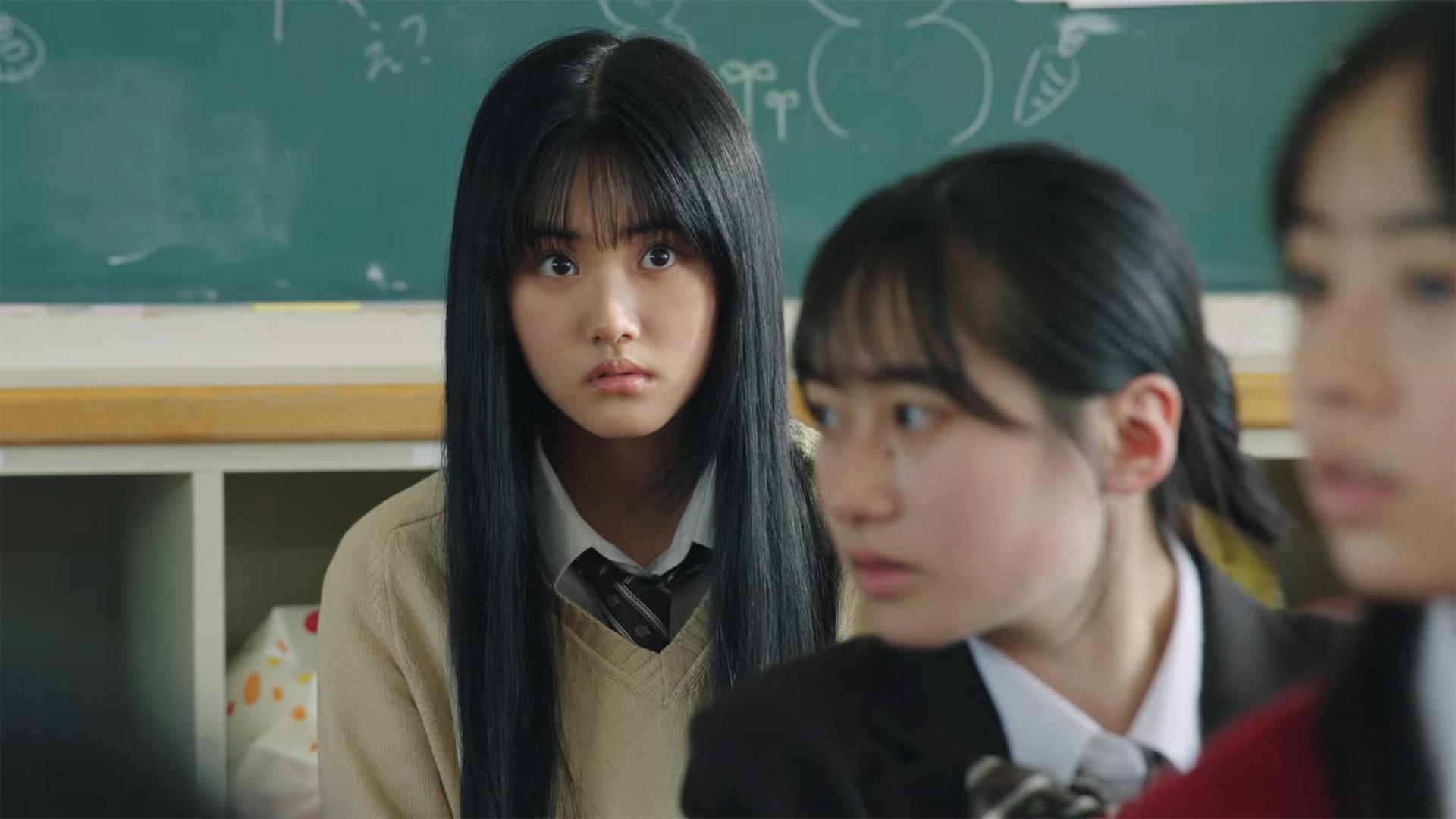
Presented with a much lighter tone than the previous iterations, Meiruko-chan forgoes much of the darker, creepier visuals present in both the manga and anime. While both of these previous versions boasted a good mix of unnerving supernatural and saccharine slice-of-life elements, the film leans heavily into the latter–sacrificing much of these previous horror elements. Depictions of these ghostly entities lack the unsettling designs defined by Tomoki’s incredible art style, instead retaining their human shape and relying on an unnatural depth of field effect to define their apparitional relegation.
Despite this, the narrative is adapted well, if not a little compressed, compared to the original story. The film largely bypasses the exploration of Miko’s newly gained ability to focus on less horror-oriented elements. While this does streamline the viewing experience, fans of the manga or anime may find the film somewhat lacking in comparison.
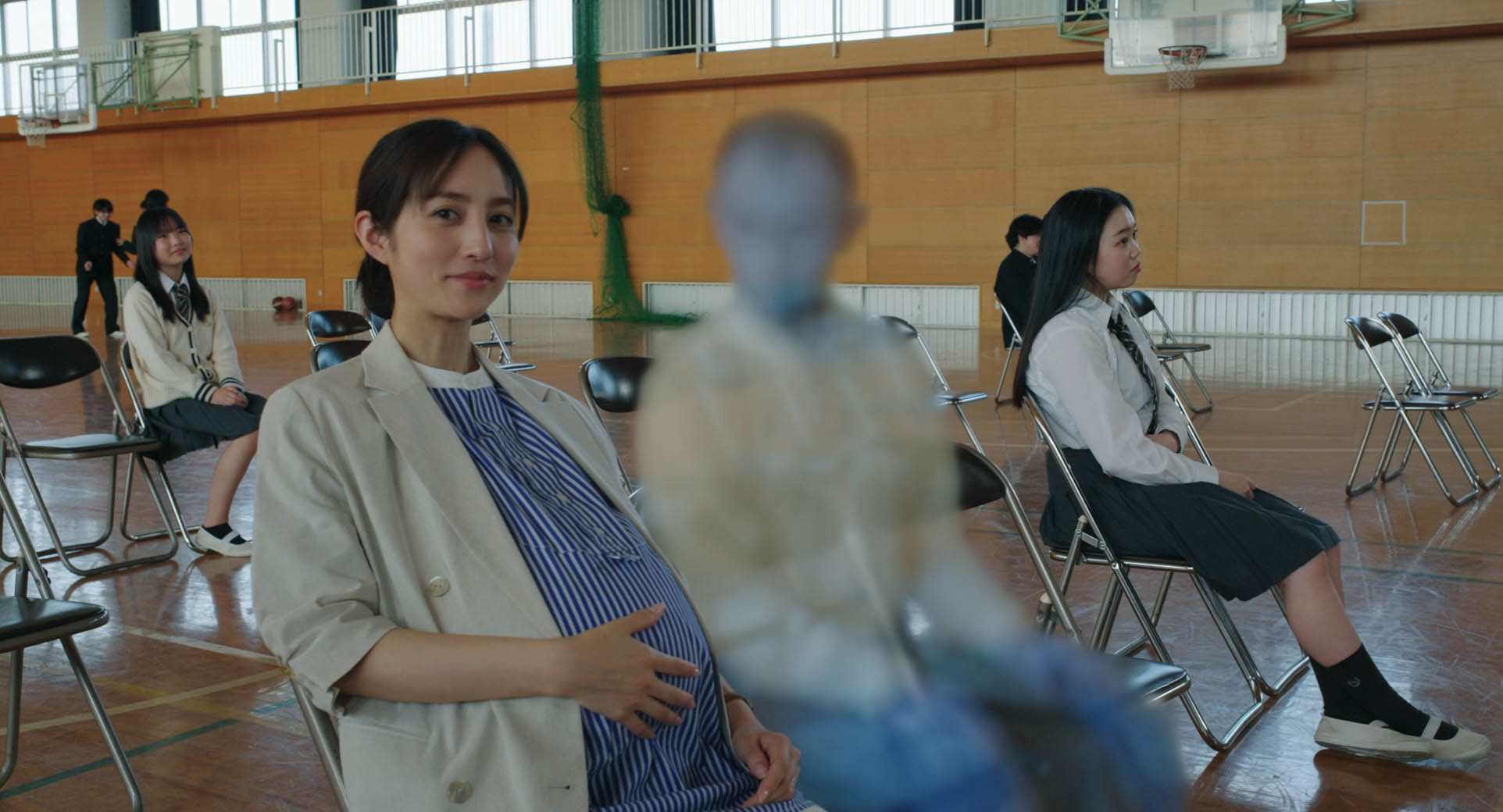
However, a stand-out element comes from Nanoka Hara’s performance as the titular character. Miko’s awkwardness, fear, and resolve are displayed fantastically by Hara’s execution, delivering one of the true highlights of the film overall. Furthermore, the fantastic interpretations of side characters, Hana Yurikawa and Yuria Niguredo, played by Rinka Kumada and Naenano, respectively, each capture their characters’ traits and translate them to their performances expertly.
While somewhat hollow compared to its namesake, Meiruko-chan is still an interesting, if not stilted, adaptation of Tomoki Izumi’s hit manga. While those unfamiliar with the original story will find a serviceable slice-of-life horror comedy with good acting, fans of the original will certainly find the film missing the impact notable from previous adaptations.
More Film Reviews

Saiko! The Large Family (2009) Film Review – Bless this Psychotic Mess
Leon Tolstoy once wrote, “Happy families are all alike; every unhappy family is unhappy in its own way.” While tragic, this notion works wonders in the horror and thriller genre….

Cursed Land (2021) Film Review – A Haunting Family Portrait In The Vast Wilderness
Cursed Land (in competition at the Dracula Film Fest under the name Cursed Land. Fate), was one of the best films I saw at that festival, a big surprise basically…

Terrified (2017) Film Review – Do You Believe in Pure Evil?
Terrified, existing as one of the earlier Shudder exclusives, is a a supernatural horror film from Argentina that has seen a fair amount of accolades – it has been sitting…

On the 3rd Day Film Review – Fantasia Festival 2021
Anyone who’s been in a car accident understands disorientation; the lack of clarity of what just happened, the realization that time does indeed slow down, it’s not some old wife’s…

X-Ray aka Hospital Massacre (1981) Film Review – A Long-Neglected Slasher
*This is a guest article from Weirdling Wolf for the Grimoire of Horror! X-Ray has proven to be another welcome resurrection of a long-neglected slasher, helmed by genre polymath Boaz…
Senritsu Kaiki File Kowasugi! File 05: The Ghost Of Yotsuya! (2014) Film Review – Isekai and Shiraishi’s paranormal universe!
Picking up after the vile incident of the fourth Senritsu Kaiki File, Kudo assembles his team once again to film paranormal activities and to… discover isekai? Yes, you heard that…

Hey there, I’m Jim and I’m located in London, UK. I am a Writer and Managing Director here at Grimoire of Horror. A lifelong love of horror and writing has led me down this rabbit hole, allowing me to meet many amazing people and experience some truly original artwork. I specialise in world cinema, manga/graphic novels, and video games but will sometime traverse into the unknown in search of adventure.