





Exit 8 is a 2025 Japanese psychological horror film written and directed by Genki Kawamura, with additional writing from Kentaro Hirase. The film is based on the video game of the same name, created by Kotake Create. Genki is known as a producer for such titles as the live-action adaptations Parasyte: Part 1 (2014) and Part 2 (2015), anime series Your Name. (2016), and, strangely enough, the music video for Ed Sheeran x Pokémon: Celestial (2022), to name a few. As a writer, he has worked on many titles, including the short animation Moom (2016), Doraemon the Movie: Nobita’s Treasure Island (2018), and Doraemon the Movie: Nobita’s New Dinosaur (2020), as well as working as an established author.
A man trapped in an endless, sterile subway passageway sets out to find Exit 8. The rules of this quest are simple: do not overlook anything out of the ordinary. If you discover an anomaly, turn back immediately; if you don’t, carry on. Then leave at Exit 8. But even a single oversight will send him back to the beginning. Will he ever reach his goal and escape this infinite corridor?
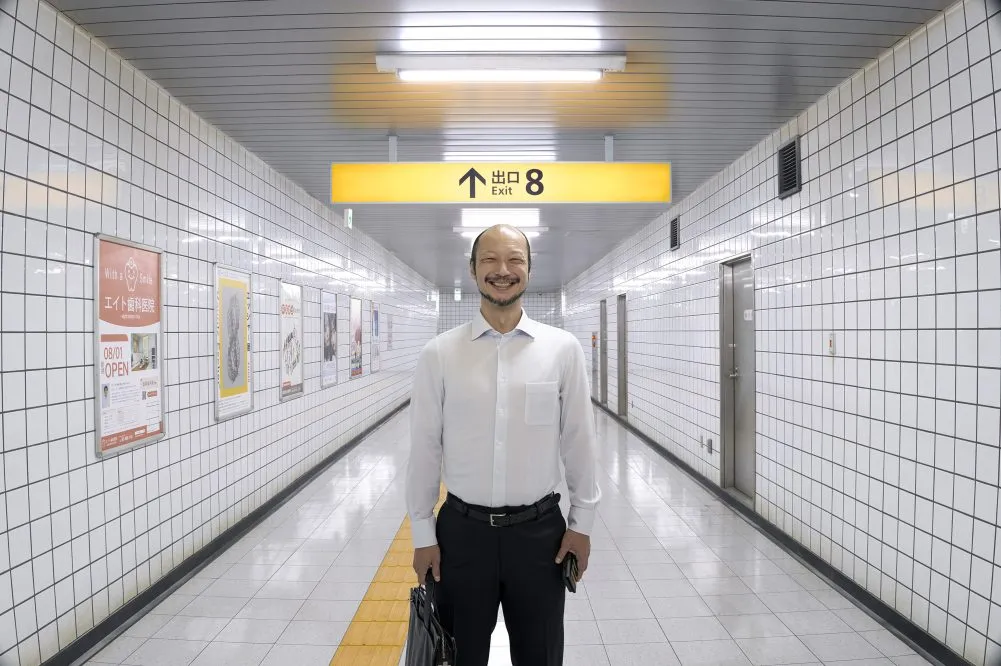
Though based on a simplistic, narrativeless video game, Exit 8 as a film implements a fairly comprehensive exploration of selfishness, on both an individual and a societal level, accountability, and powerlessness as its narrative basis. Moreover, while the introduction of a story aids in the film’s tight pacing, it unfortunately becomes over-imposing towards the second and third acts—somewhat overtaking the aspects of liminal horror built within the first act. A much more minimal implementation of an outline plot would undoubtedly fit the game’s initial aspects of psychological horror more efficiently.
Being presented as a (mostly) unbroken single take, Exit 8’s cinematography is impressively smooth. The highly kinetic camera movement is used to effortlessly translate the unending environment through impeccable editing, with cuts so fluid that it’s almost impossible to spot them. This one-shot cinematography successfully translates the terrifying liminal feel of the perpetual, clinical locale. Additionally, the setting has been painstakingly translated to film flawlessly, being an impressive 1:1 recreation of the looping tunnel down to the smallest detail.
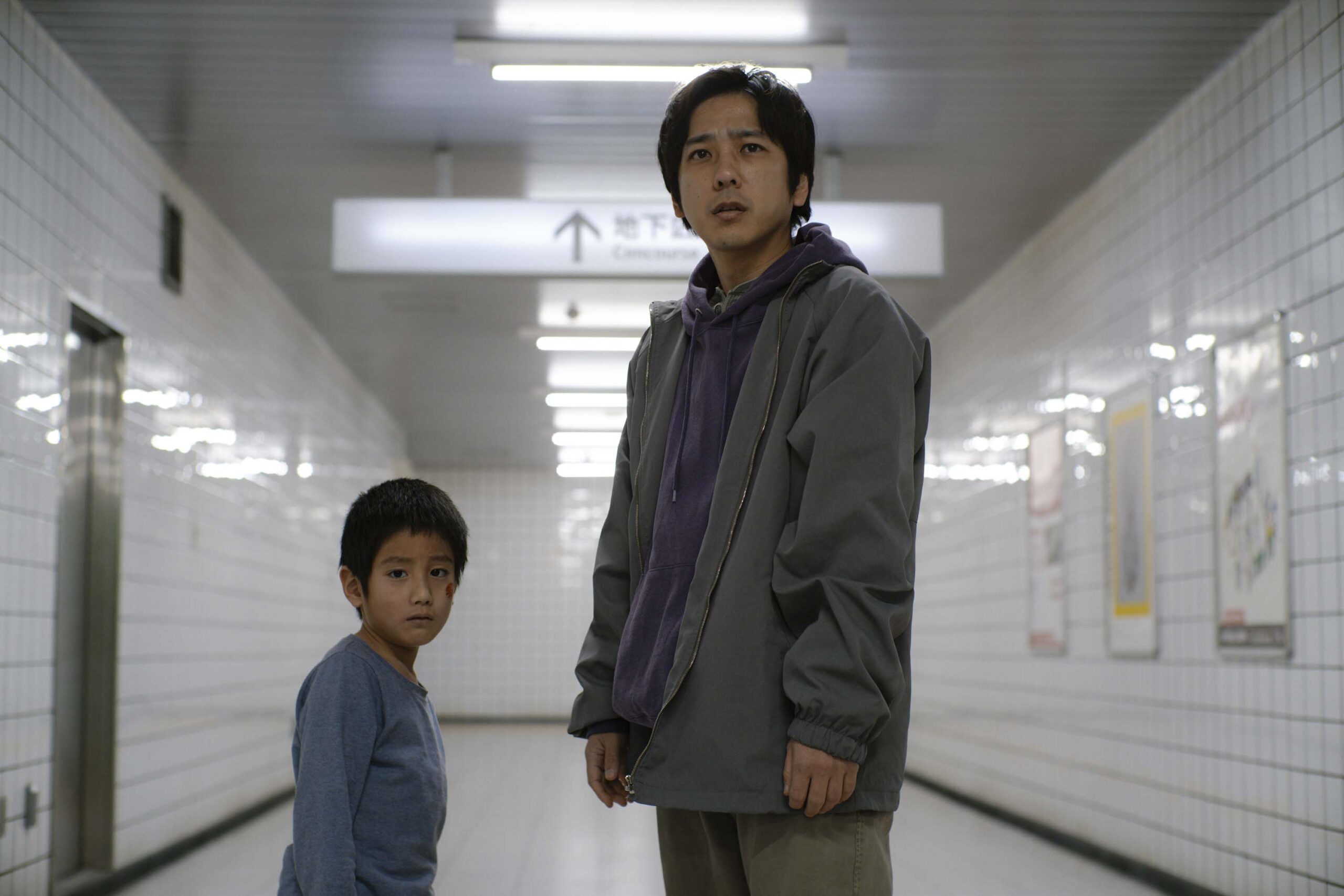
While the game was created on Unreal Engine 5, an engine also used in filmmaking, Genki Kawamura stated in an interview with The Wrap, “As much as possible, we didn’t want to use CG or VFX in this film.” As such, Exit 8 delivers an outstanding use of traditional lighting and multiple filming techniques to create the pre-rendered feel of the game environments through traditional means. Although that isn’t to say there isn’t any use of CGI effects, with multiple examples used throughout the film. However, these instances are usually implemented with effects unable to be produced through practical means.
While the entire cast delivers great renditions of their respective roles, Kazunari Ninomiya provides a fantastic performance as our unnamed protagonist. His anger, frustration, and determination are relatably characterised, and his overall presence does an excellent job at driving the narrative’s progression. Furthermore, the characters’ near-constant struggle to breathe from an asthma attack creates a highly distressing and slightly claustrophobic accompanying undertone throughout the film.

With slick visuals and impressive technical execution, Exit 8 delivers an overall decent adaptation of a spot-the-difference-based horror game. While I was unsure of how it could be translated into the cinematic medium, director Genki Kawamura manages to effectively capture the unnerving liminal visuals and immersive atmosphere of the original material—all whilst adding his own unique influence. And, while the introduced story does become too bloated towards the mid-point, it still reworks its narrative-less basis to add a sense of successive progression where there would otherwise be none.

More Film Reviews
![Frogman Returns (2025) Film Review – The Citizen Kane of Amphibian Horror Movies [Unnamed Footage Festival]](https://www.grimoireofhorror.com/wp-content/uploads/2026/03/Frogman-Returns-Review-365x180.jpg)
Frogman Returns (2025) Film Review – The Citizen Kane of Amphibian Horror Movies [Unnamed Footage Festival]
Stop right here! Before you dive into this review and find out how phenomenal Frogman Returns is, it is essential that you watch Frogman (2023) first, which is easy to…
![The J-Horror Virus (2023) Documentary Review – How Japanese Horror went from Tape to Trend [Nippon Connection]](https://www.grimoireofhorror.com/wp-content/uploads/2024/06/j-horror-virus-2023-cover-365x180.jpg)
The J-Horror Virus (2023) Documentary Review – How Japanese Horror went from Tape to Trend [Nippon Connection]
If you ask a Western horror fan, they can probably tell you exactly when they first heard about Hideo Nakata’s cult classic Ringu (1998). Whether it was due to the…

Deerskin (2019) Movie Review by Quentin Dupieux – “Killer Style Never Looked so Good”
Down and out, and possibly facing a midlife crisis, Georges decides he wants to change things up. The first thing on the agenda comes from a unique purchase, a deerskin…
Forgotten Trash (2019) Film Review – Modern SOV Horror
When one thinks of Shot on Video (SOV) horror, a definitive time period tends to pop into the mind. That period from the 80s to the late 90s, when SOV…

The Advent Calendar Film Review – Eat Chocolate or Die!
Selected to cap off the closing night of Fright Fest 2021, The Advent Calendar has come to the attention of horror fans as one of the titles already announced as…
![Do Not Watch (2023) Film Review – Avert Thy Gaze [Unnamed Footage Festival 7]](https://www.grimoireofhorror.com/wp-content/uploads/2024/03/Do-Not-Watch-2023-transformed-365x180.jpg)
Do Not Watch (2023) Film Review – Avert Thy Gaze [Unnamed Footage Festival 7]
Do Not Watch is a 2023 American found footage horror film, written by Ryan Toyama and directed by Justin Janowitz. Ryan has spent most of his writing career working on…

Hey there, I’m Jim and I’m located in London, UK. I am a Writer and Managing Director here at Grimoire of Horror. A lifelong love of horror and writing has led me down this rabbit hole, allowing me to meet many amazing people and experience some truly original artwork. I specialise in world cinema, manga/graphic novels, and video games but will sometime traverse into the unknown in search of adventure.