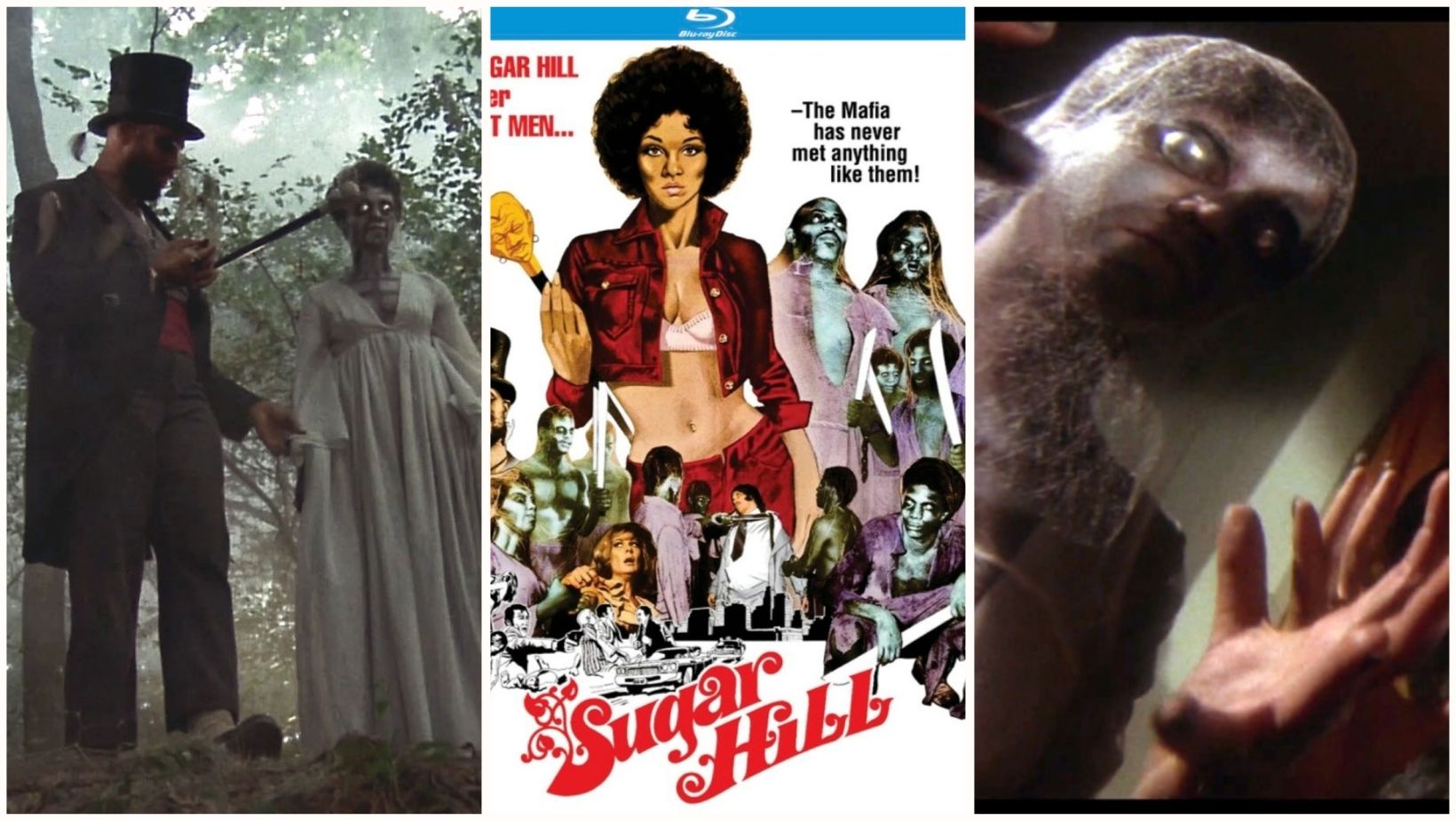




One purpose of the arts is to help society’s members make sense of the world they live in by holding up a mirror that exposes problematic areas. Two such areas concerning inequality between races and inequality between genders came to the forefront of the American public’s attention in the 1970s. During the 1950s and 1960s, the Civil Rights Movement energized America’s struggle with its racist past as black voices clamored to be heard. The same was true for the women’s liberation movement as second-wave feminism led women to demand equality beyond the right to vote. In either a subtle or profound manner, popular culture reflected these issues. How did a nation’s racist and patriarchal legacies look through the eye of the horror genre? Paul Maslansky’s 1974 blaxploitation-zombie horror flick The Emancipation of Sugar Hill provides perspective and serves as a time capsule for American life in the mid-1970s.
A New Genre is Born
Early in the 1970s, a fresh wave of low-budget, action, and exploitation films about African-Americans began appearing in theaters and drive-ins. Junius Griffin, president of the Beverly Hills-Hollywood NAACP branch, felt that movies like Sweet Sweetback’s Baadasssss Song and Shaft stereotyped members of the black community as criminals or drug addicts. He used the portmanteau of black and exploitation to express his displeasure with the new films, giving the genre its name. Critics and fans of the new blaxploitation genre pointed out that many of the movies were about a direct struggle against corruption and oppression, drawing attention to the best qualities of African-Americans.
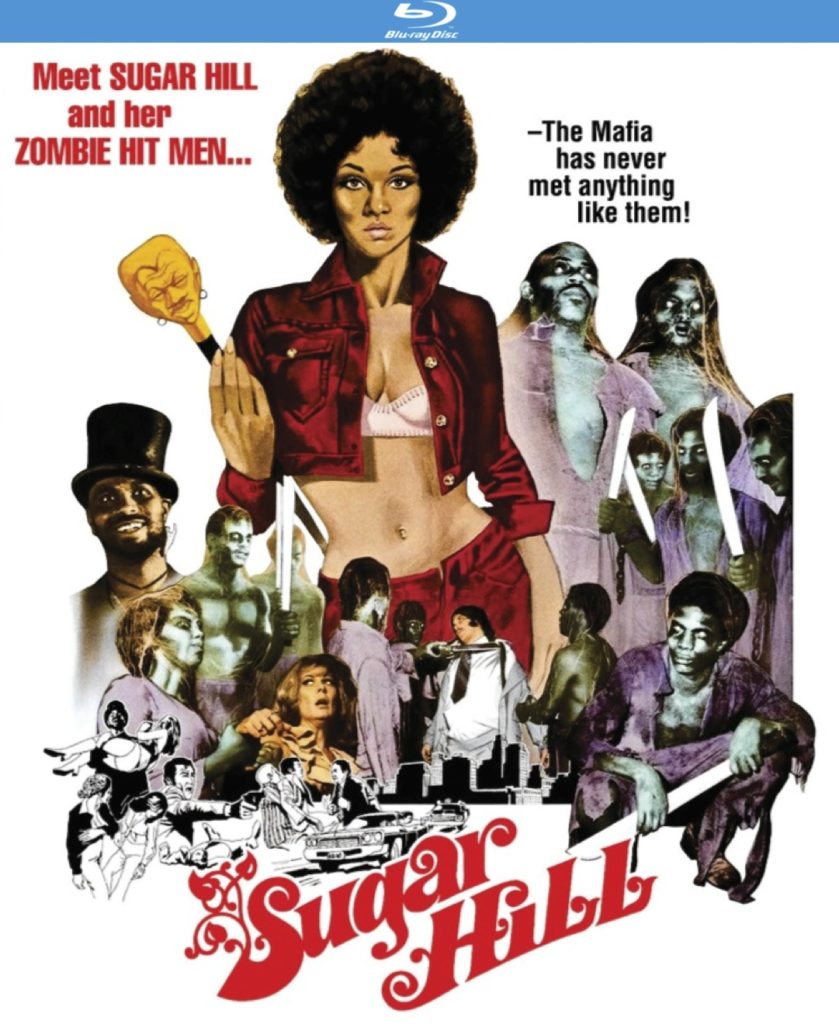
Besides powerful male protagonists, blaxploitation movies put the spotlight on strong and independent women. The filmmakers named the movies after them: Coffy, Sheba Baby, Cleopatra Jones, and TNT Jackson, to name a few. These eponymous movies showcased women leading the fight against the crime and corruption that was destroying their neighborhoods. Blaxploitation horror’s own Diana The Emancipation of Sugar Hill arrived on the scene with no qualms about using supernatural means to take names and right wrongs.
Synopsis
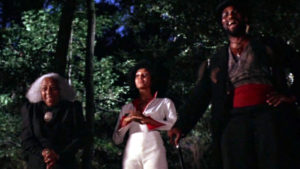
The Emancipation of Sugar Hill opens during an elaborate voodoo ritual being performed in the Club Haiti nightclub. Langston, the owner, is being pressured to sell it to white crime boss Morgan (Robert Quarry). When he refuses, Morgan’s hoods beat him to death. Langston’s girlfriend, Diana “Sugar” Hill (Marki Bey), becomes the new owner and Morgan sets his sights on wresting the club from her. Sugar appeals to Mama Maitresse (Zara Cully), a local voodoo priestess, to help her get vengeance on Morgan and his men. Mama Maitresse calls on the spirit of Baron Samedi (Don Pedro Colley), one of Voodoo’s most powerful loa (spirit) to aid Sugar. Baron Samedi, the Lord of the Dead, raises an army of slaves to aid Sugar in destroying the gangsters.
The fingerprints of America’s unsettled history of slavery and racism are visible in the characters of The Emancipation of Sugar Hill. Like antebellum plantation owners, Robert Quarry’s Morgan is a white man getting rich by exploiting African-Americans. A good example of Morgan’s arrogance is evident in how he treats Fabulous (Charles P. Robinson), his only black henchman. Besides doing Morgan’s dirty work, Fabulous also shines Morgan’s shoes. Marki Bey’s Sugar is at the opposite end of the continuum. She is the champion of independence and she will fight for her freedom. Baron Samedi’s army of dead slaves rise from their graves still wearing their slave’s shackles. Their purpose is more than to help Sugar. They are also avenging their own tormented lives as slaves. They carryout Baron Samedi’s work with gleeful smiles on their dead faces. The religion that Mama Maitresse uses to summon the baron is a product of slavery. Voodoo was born when slaves’ traditional African religions became mixed with the Christianity their masters forced them to adopt.
Positive Aspects
Despite some rough spots, The Emancipation of Sugar Hill is a fast-paced, exciting movie. To make the movie current, director Paul Maslansky and playwright Tim Kelly eschewed many, but not all, of the traditional voodoo-themed tropes, grounding the film in modern, urban settings. The opening credits marry both worlds as Club Haiti’s dancers reenact a Voodoo ritual accompanied by the Motown influenced theme song “Supernatural Voodoo Woman.”
The filmmakers eked out as much special effects action as they could from what was most likely a pretty limited budget. Although the fog in the swamp scene looks a little thin, the corpse makeup with glowing eyes is spooky! The fabulous’ death scene in the massage parlor is terrifying.
The Emancipation of Sugar Hill uses its resources well, creating plenty of atmosphere while taking a fresh approach to Haitian Voodoo/Zombie territory. Rated PG, there is little gore, and the violence is toned down. This doesn’t stop it from being a fun movie that is worth watching.
Conclusion
The early blaxploitation films of the 1970s had cultural significance for many reasons. Besides increasing the representation of the African American community on the big screens, these films showed audiences brave and powerful black heroes. Blaxploitation gave women a chance to prove they were just as good at fighting corruption as men. Marki Bell as Sugar Hill is one of these empowered women. Her fight encompassed more than revenge. It also was about her heritage and her struggle to protect herself against racist thieves. The filmis the story of her emancipation.
More Film Reviews
I want the truth. No matter how terrifying. I want the truth. ~ Masafumi Kobayashi When I think about the genre of mockumentaries, the first image that comes to my… Two high profile couples are forced to examine the cost of success when they’re invited to an exclusive self-help retreat at the elusive Stauphen House where their ancestors sold their… A post-apocalyptic, 80’s nostalgia, comedy creature feature for the Stranger Things era! **Minor spoilers follow** If TV series such as Stranger Things and that one episode of Black Mirror has given… Konnichiwa! Ni Hao! Hola! Straight Outta Kanto here with a little director spotlight for you this week! Just like you guys I am a die-hard Asian horror fan and have… There is a good reason why Don’t Look Now so rarely feels like it is a horror film. It is much too concerned with going about its daily business as… Sparked by the death of her partner Noah, Lilith is struggling with her mental health and has succumbed to a deep depression that affects all aspects of her life. Fighting…
Noroi: The Curse (2005) Film Review: Into the Twilight Zone
The Summoned (2022) Film Review – Horror of Being The Odd Man Out

Revealer (2022) – A Shudder Original Review

Overlooked J-Horror: Director Koji Shiraishi

Don’t Look Now (1973) Film Retrospective
The Awakening of Lilith (2021) Film Review – The Excruciating Weight of Loss

I am a lifelong lover of horror who delights in the uncanny and occasionally writes about it. My writing has appeared at DIS/MEMBER and in Grim magazine. I am also in charge of programming at WIWLN’s Insomniac Theater, the Internet’s oldest horror movie blog written by me. The best time to reach me is before dawn.