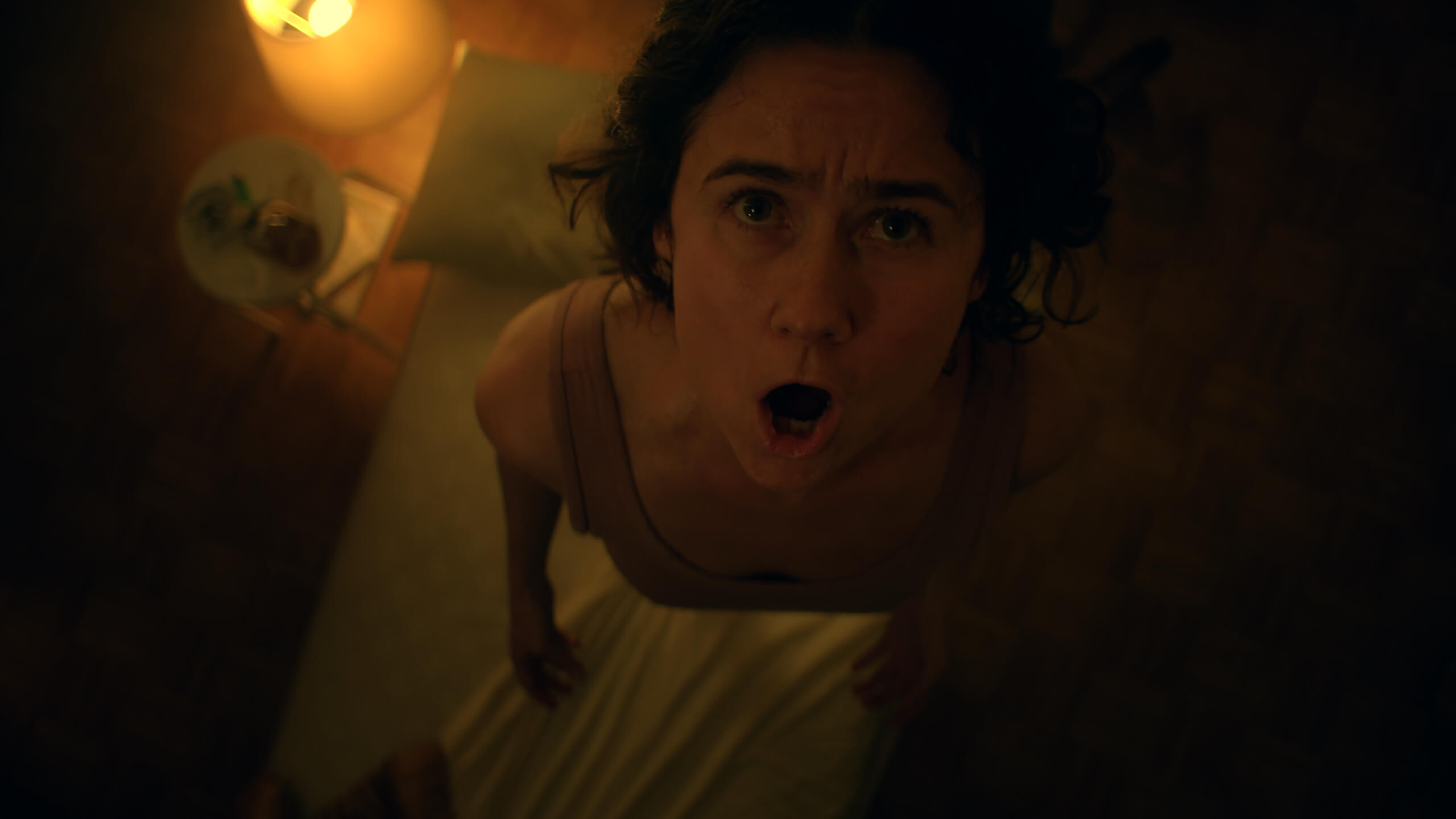




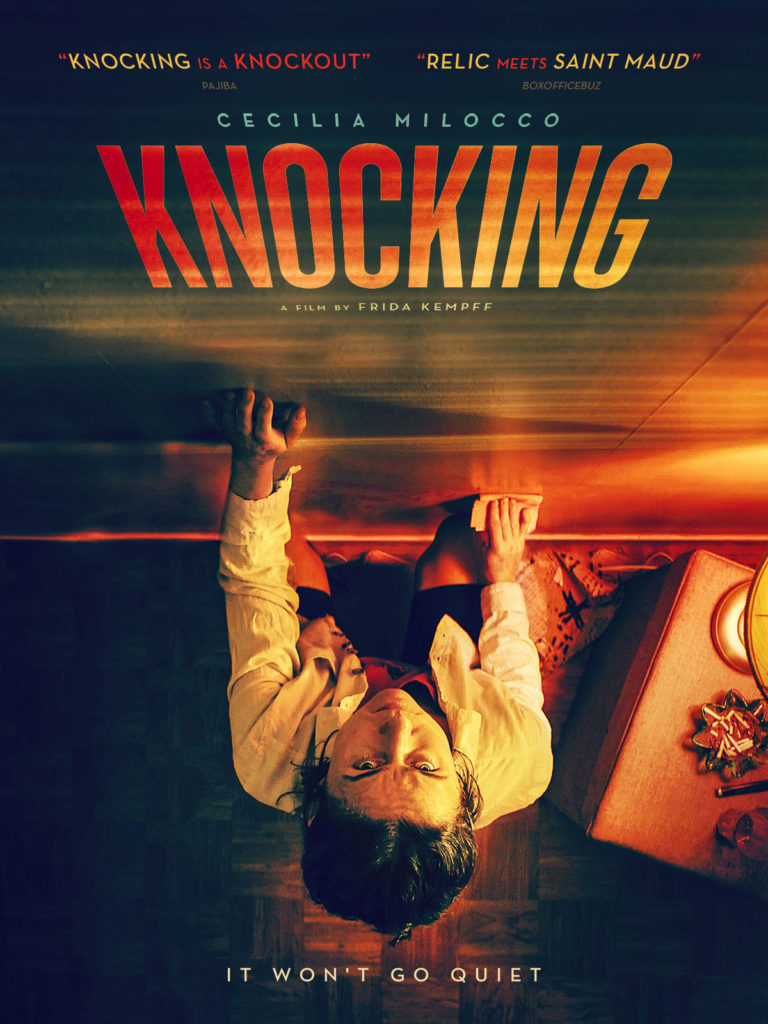
From Cannes Palme D’or Winner Frida Kempf, Knocking marks the Swedish Filmmaker’s first foray into horror. Posing a dark tale of madness, the film captures the unease found in the fear of undiscernible noises seeping into our conscience – bumps in the night or strained speech that permeates the walls of busy apartments everywhere. A universal experience, but one ripe for exploring madness that can seep in when obsessing over the uncertain.
What Is It?
“A woman (Molly) who has just experienced a traumatic incident is unnerved by a haunting knocking sound from upstairs in her new apartment building. As the noises become more desperate and increasingly sound like cries for help, she confronts her neighbours, but it seems no one else can hear them. In an unsettling quest for truth, Molly soon realizes that no one believes her, and begins to question if she even believes herself – a realization that is perhaps even more chilling.”
What Worked?
Knocking is the idyllic portrayal of the ‘unreliable narrator’ in horror, constantly toying with the viewer’s trust in someone not credible. The cause comes from a recent trauma catching up and distorting reality of the troubled Molly, our protagonist – it twists the experience we share from witnessing her perspective. However, Knocking gives the audience enough to string them along, hoping that ‘what if’ is true for sake of the the protagonists’ sanity. Deeping Molly’s paranoia, incessant tapping on the walls and cries seeping in through the vents is presented as a reality and not the product of delusions – further pushed by tenants of the building who are quick to call her hysterical. Consequently, the sense of security in home is stripped away, causing a wonderful portrayal of inescapable madness. If anything, Knocking perfectly nails the slow burn horror which has had it draw comparisons to standouts in atmospheric dread like Saint Maude and Relic.
In needing to capture a sense of all-consuming desperation, Knocking find the perfect lead in Cecilia Milocco. Undeniably, the actor delivers a persuasive portrayal of a unstable persona coming apart – shockingly realistic. She successfully captures paranoia down to the slightest mannerism, making for a haunting and unforgettable performance.
Gorgeously shot, the cinematography is unrelenting at the height of paranoia unfolding and successfully uses a fixed camera to keep the protagonist focused in the center of shots. This angle captures the frenetic chaos as she struggles to find validation among those deriding her as unstable. It is aptly overwhelming as the audience experience the same sensory overload as cornered protagonist. Adding to the tension, the audio design is impeccable in conveying the idea of unknown sounds consuming Molly’s attention.
What Did Not Work?
Taking a minimalistic approach, the film is more likely to appeal to fans of drama/thriller genre as it lacks the visual stings or shocking imagery that defines the modern horror genre. There is a pervasive sense of dread throughout, but patience and acceptance of the methodical flow is required to fully immerse oneself.
At just over an hour, certain plots points feel unexplored. Particularly, the past of Molly and the more nuanced catalyst of her mental decline. Arguably, the film presents these instances on a need-to-know basis, but disappoint within the engrossing narrative. More revealing details would have been appreciated, but it is hard to say this would have enriched the near-perfect experience.
Where Can I Watch It?
FrightFest presents and Signature Entertainment present Knocking at FrightFest 29th August and on digital platforms 15th November
Overall Thoughts
Frida Kempff has already made a name for herself in the form of documentaries and short film, but her first feature length film reflects a profound talent in the work. Knocking crawls under the skin, giving a somber depiction of mental decline. Furthermore, the performance from Cecilia Milocco is unforgettable – drawing the viewer deep into the horror of a troubled mind.
If you can’t catch this one during its festival run, keep an eye out for it when it comes to demand – fans of moody slow burns won’t be disappointed.
More Film Festival Coverage:
Anyone who’s been in a car accident understands disorientation; the lack of clarity of what just happened, the realization that time does indeed slow down, it’s not some old wife’s… Recently, the “adventure survival” thriller has seen a sizeable spike in popularity. Gone are the nastiness, the unbearable tension, the relentless bad luck and shaking-in-their-boots protagonists of survival classics like… Follow Her is a 2022 American horror thriller, written by Dani Barker and directed by Sylvia Caminer. Aspiring actress/social media influencer Jess responds to a mystifying classified ad to work… After a hard day of work, 36-year-old Yuko Sawamatsu returns to her apartment for an evening to unwind. However, her memories of a recent affair with a married man keep… When the first V/H/S film was initially released in 2012, its impact on the horror community was immediately felt, creating shocking scenarios presented in intimate detail through the found footage… The Killing Cell falls into familiar tropes and beats of the found-footage genre. Notably, the plot sees a group of friends/paranormal investigators head to an abandoned facility, only to find…
On the 3rd Day Film Review – Fantasia Festival 2021
Fall (2022) Film Review – It’s Lonely at the Top

Follow Her (2022) Film Review – Revenge is a Dish Best Served Digitally
One Day, A Woman (2022) Film Review – A Tragic Decline of a Young Woman
V/H/S/94 (2021) Film Review – Found Footage Series Back With Vengeance
![The Killing Cell (2025) Film Review – Extreme Found Footage Horror Done Right [Another Hole in the Head Film Festival]](https://www.grimoireofhorror.com/wp-content/uploads/2025/12/The-Killing-Cell-2025-365x180.jpg)
The Killing Cell (2025) Film Review – Extreme Found Footage Horror Done Right [Another Hole in the Head Film Festival]