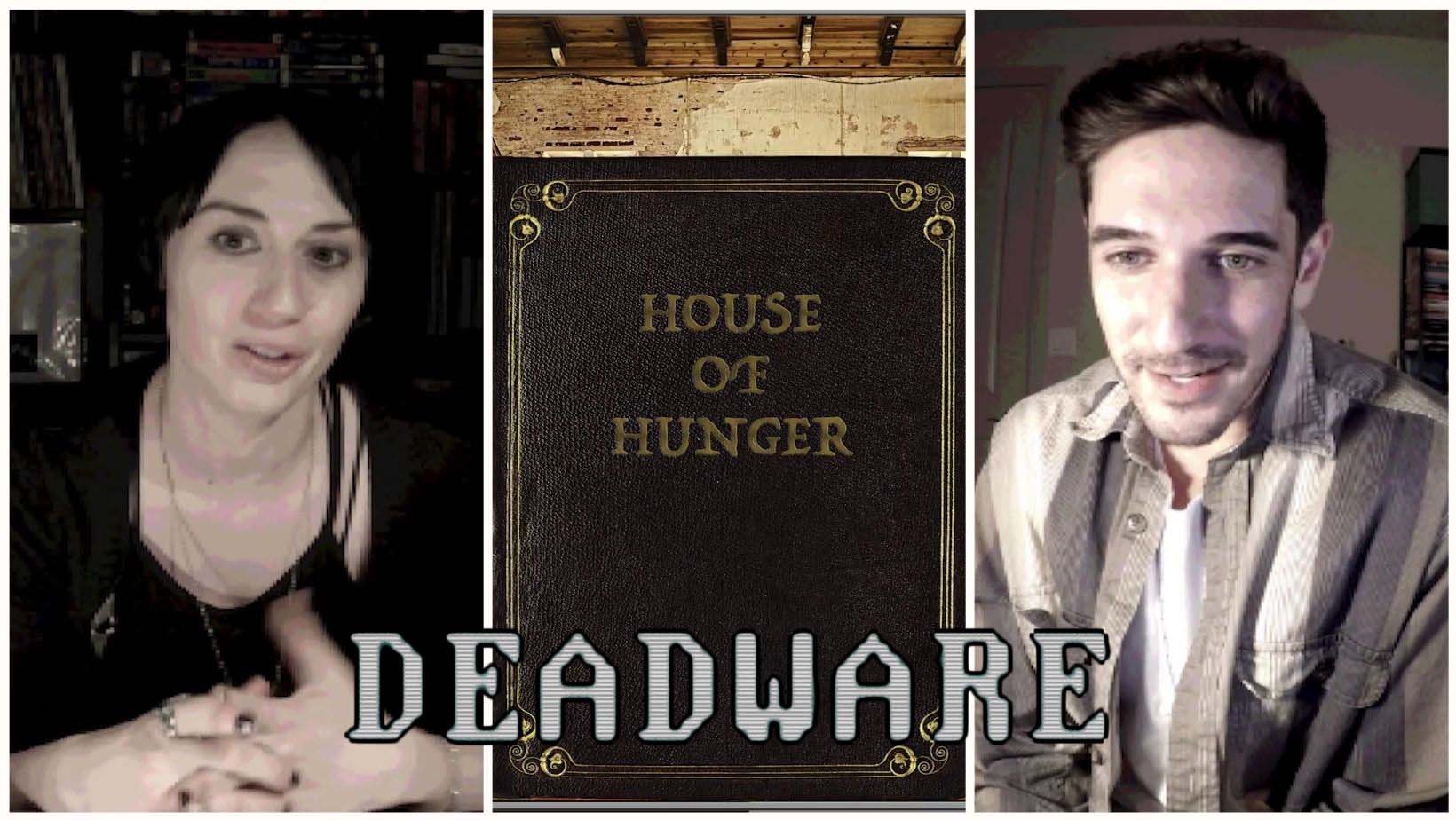




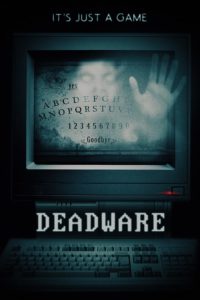
Deadware is a 2021 American-found footage horror, written and directed by Isaac Rodriguez. Mostly known for directing horror shorts such as We All Fall Down (2011) and Russian Doll (2019). In addition, Rodriguez has created a number of feature-length productions including Unknown Visitor (2019) and Last Radio Call (2022) in addition to Deadware.
“In 1999, two friends use a webcam for the first time and stumble across a mysterious browser game that may be haunted.”
Being a found footage film, Deadware self contains its framing device inside a video call and the shared desktop controlled by both protagonists. Though the film cuts to focus on certain parts of this display, this framing remains unbroken throughout with the only additional character’s appearance occurring through her addition to the video chat (though never appearing in person). Although this static framing device could become tiring, the film efficiently utilizes this consistent framework to create an enigmatic story along with an effectively suspenseful atmosphere in leu of expressive cinematography.
The film’s main progression revolves around the protagonists exploring the game “House of Hunger”, a browser-hosted point-and-click game similar to other popular games hosted on sites in the 90s such as Newgrounds. House of Hunger presents this style of media accurately, the use of pre-rendered 3d backgrounds with digitized sprites for characters is very reminiscent of older design–fitting the visual aesthetics perfectly.
Taking inspiration from a number of different internet gaming urban legends, the game instantly brings to mind the likes of Sad Satan and Killswitch. However, House of Hunger presents itself as a unique piece of gaming rather than rehashing an already popularised internet mystery.
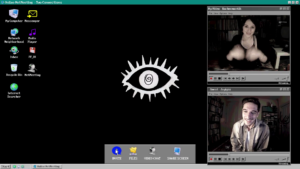
The veritable glue that keeps this simple idea from falling apart at the seams, the lead protagonist’s, Jay and Megan (Ali Alkhafaji and Sarah Froelich), deliver an impressive performance throughout. Their conversation together has a natural flow, reaffirming their past friendship together yet with an understandable inclining of disconnection between them. Consequently, the feeling of catching up with an old friend after losing contact for a period is well realized.
Set in the distinct time period of 1999, Deadware retains the visuals of the era in vivid detail. The domicile of each character littered with media and tech prolific in the era; shelves of VHS and vinyl, tiny screened CRT TVs as well as primitive mobile phones all subtly reinforce this time period. Additionally, the clothing the protagonists wear feels modern enough to not seem outdated yet ambiguous enough to still feel appropriate for the time. In spite of this attention to detail, a few minor characteristics of modern times managed to slip through into the production. Presented in a 16:9 widescreen ratio, this display type wasn’t fully implemented in computing until 2008, as well as screen share capabilities not being available until the 2000s. Even so, these are very minor details and at no point drew attention away from the story.
Deadware is an interesting self-enclosed piece of found footage cinema, providing enough descriptive storytelling to progress its fairly in-depth story effectively for the possible restrictions that come with a fixed framing method. Including well-built, congenial characters as well as their believable chemistry together, the production utilizes these aspects to create a genuinely creepy atmosphere at times; triumphant in the intended structure and pacing that a bigger production budget could overshadow.
Deadware (2021) is Screening as Part of the 2022 Unnamed Found Footage

More Film Reviews
Dr. Lamb is a 1992 Hong Kong CAT III horror film, written by Kam-Fai Law and directed by Danny Lee and Billy Hin-Shing Tang. The production is based on the… The audience meets Ozzie Gray at a turning point in her life, dealing with her past trauma through an upbringing with a grandmother, Dorothy Bell, who was violent towards her… “The Empty Man is a supernatural horror film based on a popular series of Boom! Studios graphic novels. After a group of teens from a small Midwestern town begin to… There’s an alluring quality that surrounds the link between horror and the queer community, from its roots in the 18th and 19th century with the emergence of queer coded Gothic fiction… A teenage runaway takes part in a sleep study that becomes a nightmarish descent into the depths of her mind and a frightening examination of the power of dreams. Have… Junk Head is a 2017 dystopian stop-motion animation film, written and directed by Takahide Hori. The film is based on the director’s 2013 first short film Junk Head 1, whose…
Dr. Lamb (1992) Film Review – A Torrent of Torturous Turbulence
![What Happened to Dorothy Bell? (2024) Film Review – Living in the Shadow of Evil [Fantastic Fest]](https://www.grimoireofhorror.com/wp-content/uploads/2024/09/What-happened-to-Dorothy-Bell-cover-365x180.jpg)
What Happened to Dorothy Bell? (2024) Film Review – Living in the Shadow of Evil [Fantastic Fest]
The Empty Man (2020) Team Review – Fear The Abyss
Homoerotic Subtext in Daniel Isn’t Real (2019) Film Review – Homoeroticism is Hard as Ever
Come True (2021) Team Film Review – Beware the Shadows
Junk Head (2017) Film Review – Superb Stop-Motion Cinema

Hey there, I’m Jim and I’m located in London, UK. I am a Writer and Managing Director here at Grimoire of Horror. A lifelong love of horror and writing has led me down this rabbit hole, allowing me to meet many amazing people and experience some truly original artwork. I specialise in world cinema, manga/graphic novels, and video games but will sometime traverse into the unknown in search of adventure.