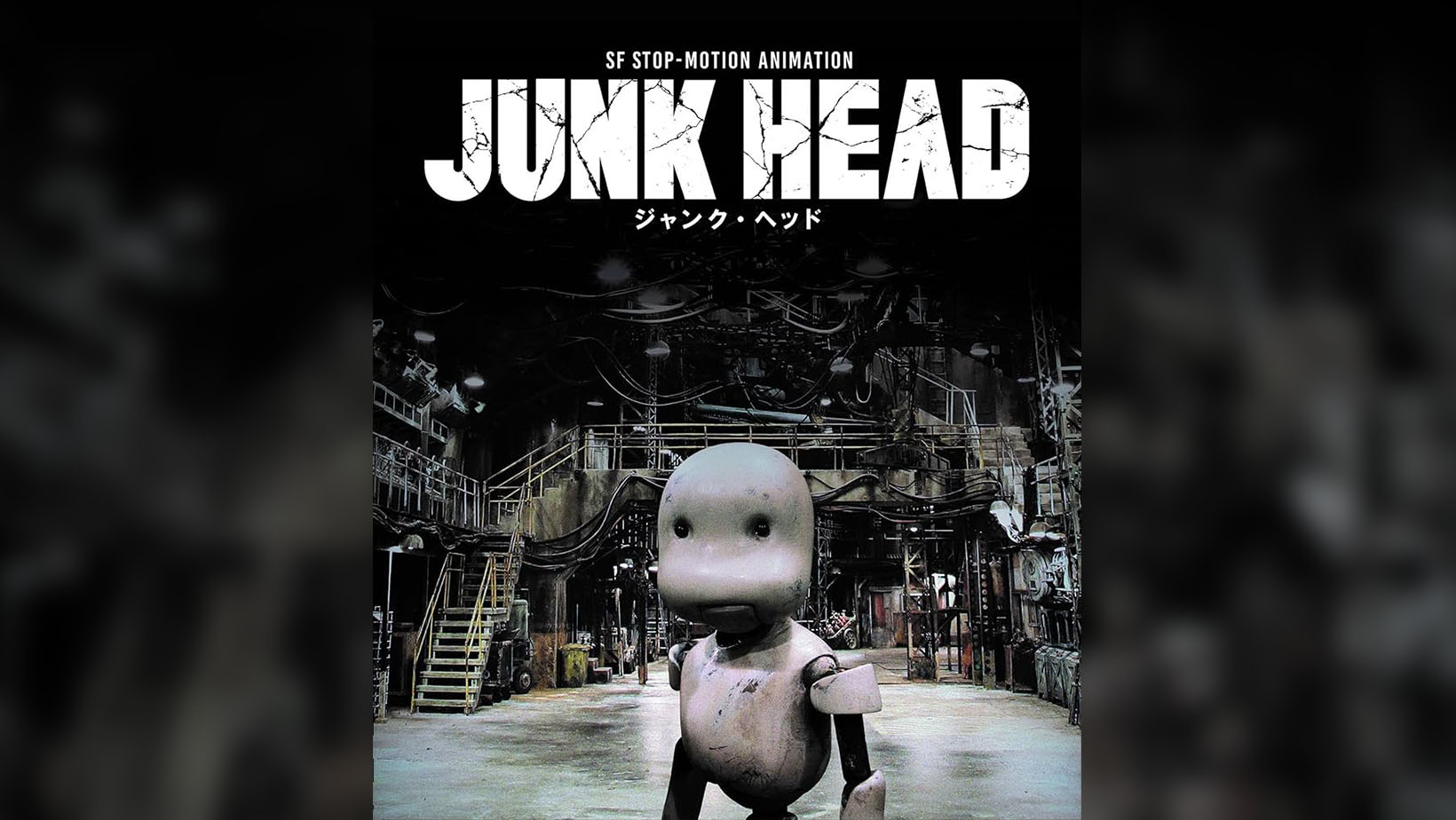





Junk Head is a 2017 Japanese stop-motion animation film written and directed by Takahide Hori. The film is based on Hori’s first short film, Junk Head 1 (2013), a project that took four years to create and whose narrative was expanded into a feature-length production over a further three years.
Mankind can no longer reproduce because of gene manipulation aimed at making life longer. The clones ruling the bottomless underworld may have become fertile. Parton is selected to go on a mission through a subterranean labyrinth crawling with monsters to secure humanity’s future.
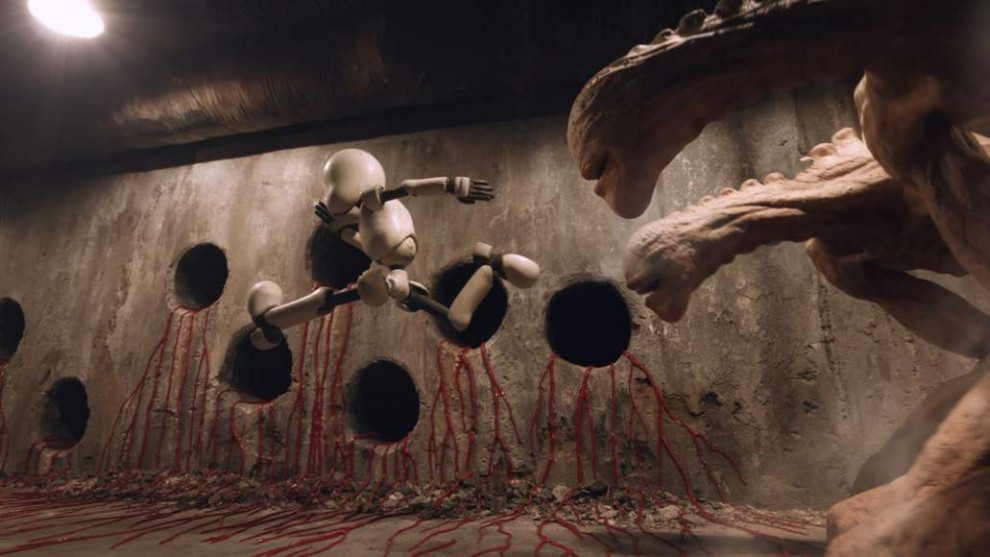
An incredibly fluid depiction of stop-motion animation, director Takahide Hori’s self-taught knowledge of the medium equates to one of the very best examples of the weight stop-motion animation can hold. From the intricate mechanical landscapes of the post-apocalyptic environment to the unique character designs and their fluent movement, the meticulous attention to detail in every scene is astounding. With almost all of the set design, puppet building, and animation being provided by one person, this labour of love goes above and beyond to deliver the highest quality production imaginable.
The main narrative, though sparse at points, serves as a vehicle for an Odyssean adventure in which our protagonist travels through vast, cataclysmic wastelands and interacts with a varied cast of characters—featuring excellent, deliberate pacing to utilise the grandiose design. Though set in a grim, dilapidated world, overtones of comedy shine through the bleakness. A mix of Three Stooges–esque slapstick comedy, absurdism, grotesque body humour, and juxtaposition, the comedic elements play a key role in the film’s overall tone—often undercutting darker moments to provide an overall lighter atmosphere.
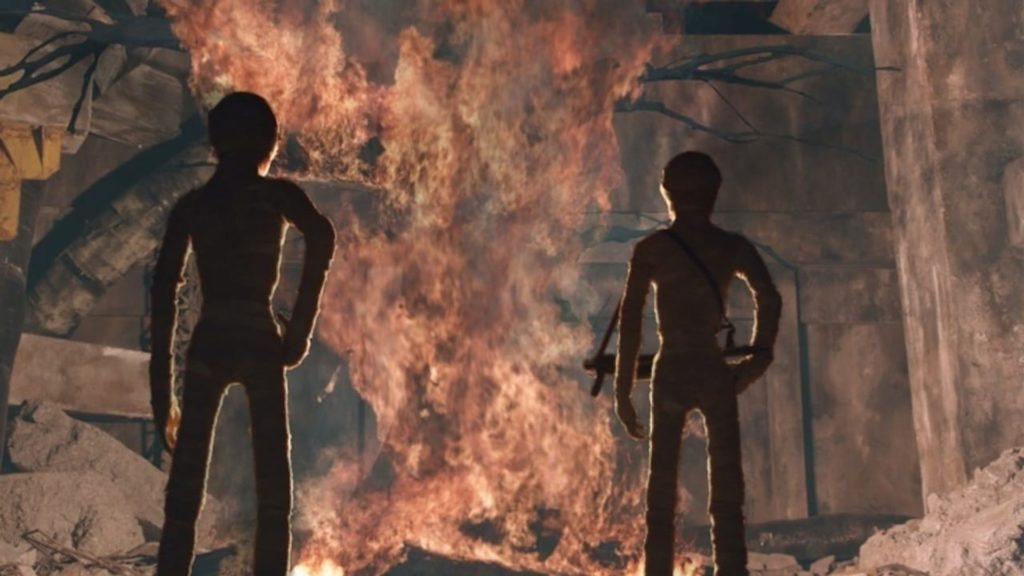
Employing an impeccable sound design, the majority of Junk Head is filled with deafening silence. The lack of score is filled with ambient sounds of the world, creating an amplified world that exists far outside the scope of the film. The low industrial drones of distant machinery and howling winds create a magnified environment that the audience only experiences a small part of. However, during more action-packed scenes, the film employs high-tempo electronica as a strong juxtaposition to the ambient sounds—exacerbating the already tense situations.
Containing a varied cast of unique characters, each model is extremely distinct from the others. And no character embodies this more so than the protagonist, who undergoes several distinct body changes throughout the film. From his original form of a severed head to a childlike, full-body robot able to speak to a more rudimentary robotic body unable to speak, the diverse range of differing designs for the protagonist adds an unexpected level of character development. And, even when characters lack facial expressions, Hori’s animation skills effortlessly transfer an instinctive level of emotion through their body language, or even a complete non-reaction for comedic effect.

Far more charming than it has any right to be, Junk Head is one of the finest examples of full stop-motion animation cinema there is. With its grandiose narrative, marvelous, endearing characters, and outstanding set design, the film is a must-watch for anyone interested in the stop-motion medium or cinema fans in general.

More Film Reviews
Senritsu Kaiki File Kowasugi! File 03: Legend of a Human-Eating Kappa (2013) Film Review- Now it’s a cryptid!
Director Koji Shiraishi takes a dip into cryptozoology in Senritsu Kaiki File Kowasugi! File 03: Legend of a Human-Eating Kappa (shortened to File 03). In this third installment in the…

Stanleyville (2021) Film Review: Is the Car Really Worth It?
Stanleyville (2021) has a simple premise: five contestants compete in a contest to win a brand-new habanero-orange compact SUV. Maria joins hoping for a chance at transcendence, but the other…
Unspeakable: Beyond the Wall of Sleep (2024) Film Review – An Inventive Yet Deferential Reimagining
Unspeakable: Beyond the Wall of Sleep is a 2024 horror film, written and Directed by Chad Ferrin. The film is an adaptation of H.P. Lovecraft’s short story Beyond The Wall…

Dark Visions Short Films Review – Blood in the Snow Film Festival 2024
It’s that time of year again! Blood in the Snow Film Festival is back for 2024 with a whole host of short, medium, and feature-length films for horror fans to…
Savageland (2015) Film Review – The Camera Doesn’t Lie
The found-footage subgenre of horror is probably the most threadbare of its kind. The cinematic possibilities and the amount of legroom where a creative might pull a stunt out of…

Go (2001) Film Review – A Competent Coming-of-Age Drama with a Pertinent Message
“A rose by any other name would smell as sweet.” The adage above—from William Shakespeare’s play Romeo and Juliet—has stood the test of time, having been referenced in countless other…

Hey there, I’m Jim and I’m located in London, UK. I am a Writer and Managing Director here at Grimoire of Horror. A lifelong love of horror and writing has led me down this rabbit hole, allowing me to meet many amazing people and experience some truly original artwork. I specialise in world cinema, manga/graphic novels, and video games but will sometime traverse into the unknown in search of adventure.