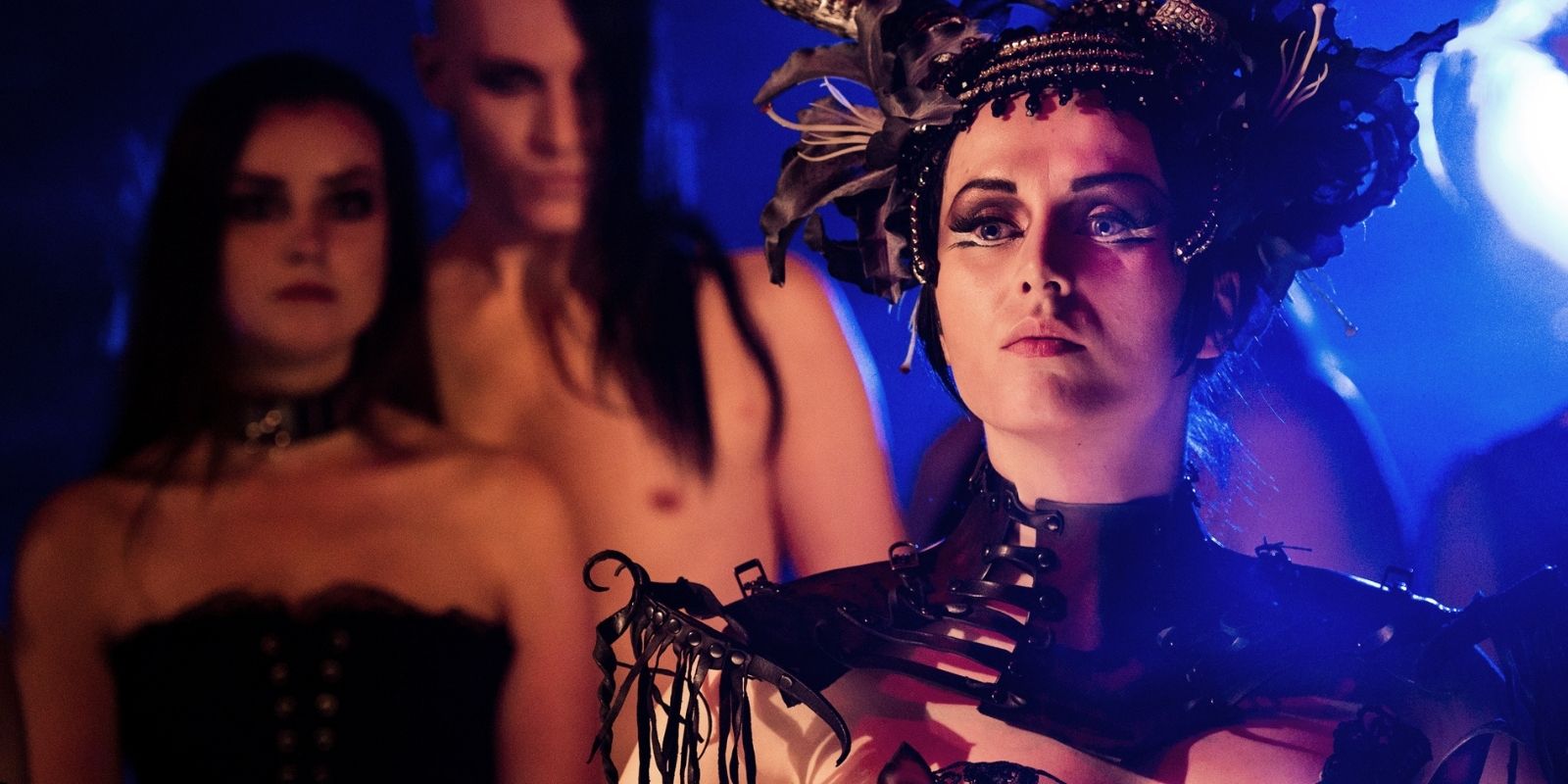




Johanna is just twenty years old but struggling with her boring and aimless existence. Disturbing visions start the day she gets fired from her job. Soon Johanna is carried off into a different world beneath the city where people live in a parallel universe full of darkness and magic rituals. The denizens of this world are inspired and guided by a mysterious woman, The Mistress. Drawn into her cult through an extravagant initiation ceremony, Johanna encounters fascinating characters: People like Simon, the collector, with whom she embarks on an obsessive affair. As Johanna plunges deeper into the occult her old world slowly collapses…
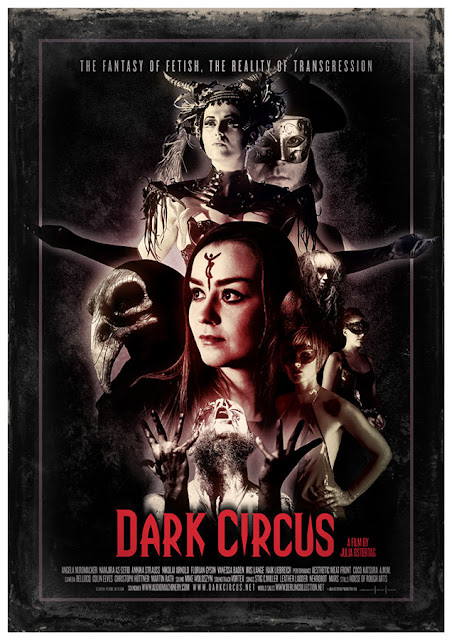
There are some productions that exist as a celebration of a certain sub-culture, a way to showcase the attributes that those involved find worthy of further exploration. However, the inherent fault in such an approach is to realize, after the fact, that the subculture you embrace is seen as unremarkable from the outside. Julia Ostertag’s Dark Circus certainly falls into the latter pitfall, yet it is not without it redeeming qualities.
Notably, and showcasing the exquisite fashion of the scene, the costume design in Dark Circus is stylish and sensual. Fetish gear is mixed with costumes to capture that sense of the occult and Johanna’s own sexual and spiritual awakening. In addition, the set designs are wonderfully macabre either filled with art or bodies writing to capture a constant sense of a living/expansive environment. If anything can be said in favor of the production, it exists as a consistent vision steeped in its own lore through design alone.
The other productions’ admirable attribute comes from its unapologetic embrace of sexuality, both in its display of nudity and BDSM culture. There is a lot of tits, and there is a slot of sub/dom play in the film, but it is all represented in a dizzying abundance that keeps the tone of the film in the fantastical – ideal when framed as the re-awaking of Johanna.
Story wise, the film presents itself as a sexual rebirth of Joanna, and an embracing of the occult. Unfortunately, this is where the film will begin to unravel for most, as the transformation is slow paced and can’t seem to shake the vibe of still trying to present the subculture as the pinnacle of ‘cool’. A story as old as time told to much greater effect, the sexual awaking of Johanna is much more tepid than Dark Circus makes it out to be – attempt at shock or sensationalism becoming lost in the noise of the sets and characters. Sadly, there is not much reason to feel invested in Johanna, and the project can’t shake the vibe of trying to show off a certain cub-culture over crafting an engaging narrative. Tragically, this also buries any of the performances and makes the weak ones even more pronounced, but this is always a problem when you hire friends over actual actors.
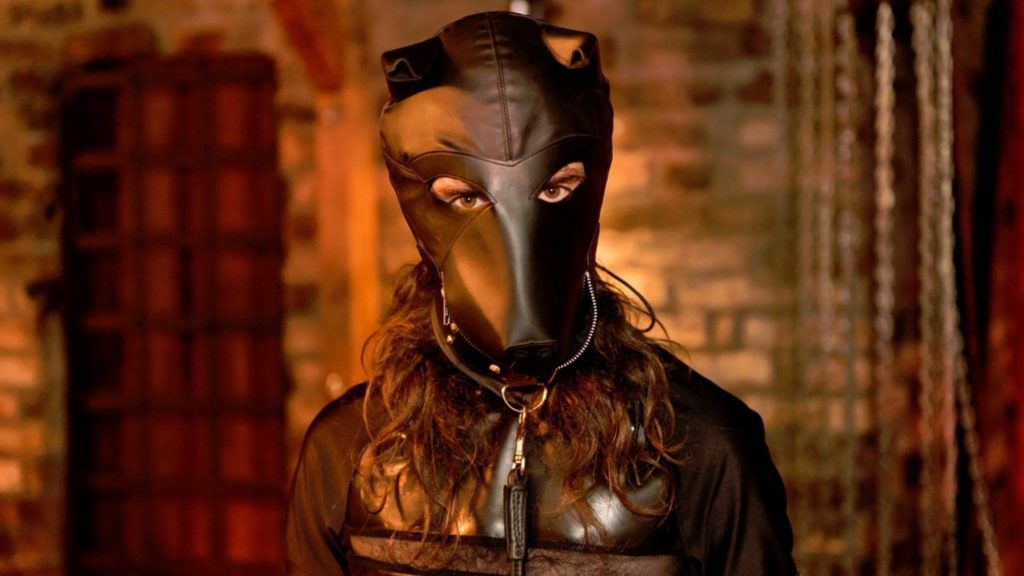
Approaching a film so heavily steeped in a certain sub-culture, it feels dishonest to critique it without mentioning my own personal bias with said group. Growing up as a kid and being overtly obsessed with the German goth scene, particularly through music, it is no longer a sub-culture that I really equate with high artistic standards, yes art and style is subjective but to me it was something I ‘grew out’ of (personal reflection not condemnation). Furthermore, any variant of BDSM has never been a personal interest of mine. As such, while I could admire the eroticism in these scenes as a man who likes nudity, the actual sex play to me was awkward at best and downright silly at its worse (pup-play is something I can’t take seriously).
To say my own personal tastes were not a direct factor on whether I enjoyed the film or not is very present in a production of this ilk. Conversely, I can see people who are into BDSM and goth aesthetic to find a lot here to adore and get lost in. This film was objectively, not for me, yet, if anything covered here tickles your fancy I implore you to check it out. Ultimately, Julia Ostertag has crafted a unique vision rooted in her love of German counter-culture.
We Watched Dark Circus Courtesy of Midori Impuls

More Film Reviews
“The Lord giveth. The chamber taketh away.” The Ackerman’s have a family business: torture. When older brother Tyler (Seth O’Shea) goes missing, his sister Ava (Jessica Vano) is left in… Susumu Nokoshi once worked for a top foreign financial company. He is now a 34-year-old homeless man, usually found around a park in Shinjuku. He then meets medical school student… Punk Samurai Slash Down is a 2018 Japanese period action/drama, written by Kankurô Kudô and directed by Gakuryû Ishii (formerly known as Sogo Ishii). The film is based on the… Despite being one of Japan’s biggest film studios throughout the late 40s and 50s during the golden age of Japanese cinema, Daiei was struggling by the mid-60s and had to… Established in 2009, the American Genre Film Archive is a non-profit which seeks to collect, conserve and distribute genre films in order to preserve their legacy. From shot-on-video slashers and… There are a few sins of horror movies making worse than the lack of originality. Every year theaters and streaming services are flooded with tepid horror movies churned out for…
The Chamber of Terror (2021) Film Review – Canada’s Evil Dead
Homunculus (2021) Team Review – What Would Your Trauma Look Like?

Punk Samurai Slash Down (2018) Film Review – Audacious Reimagining of Jidaigeki Cinema
Secrets of a Woman’s Prison 2 (1968) Film Review – Brutality Behind Bars

Sometimes Aunt Martha Does Dreadful Things (1971) Film Review | There’s something about Martha…

Bad Bones (2022) Review – Low-Budget Horror with Major Creep Factor