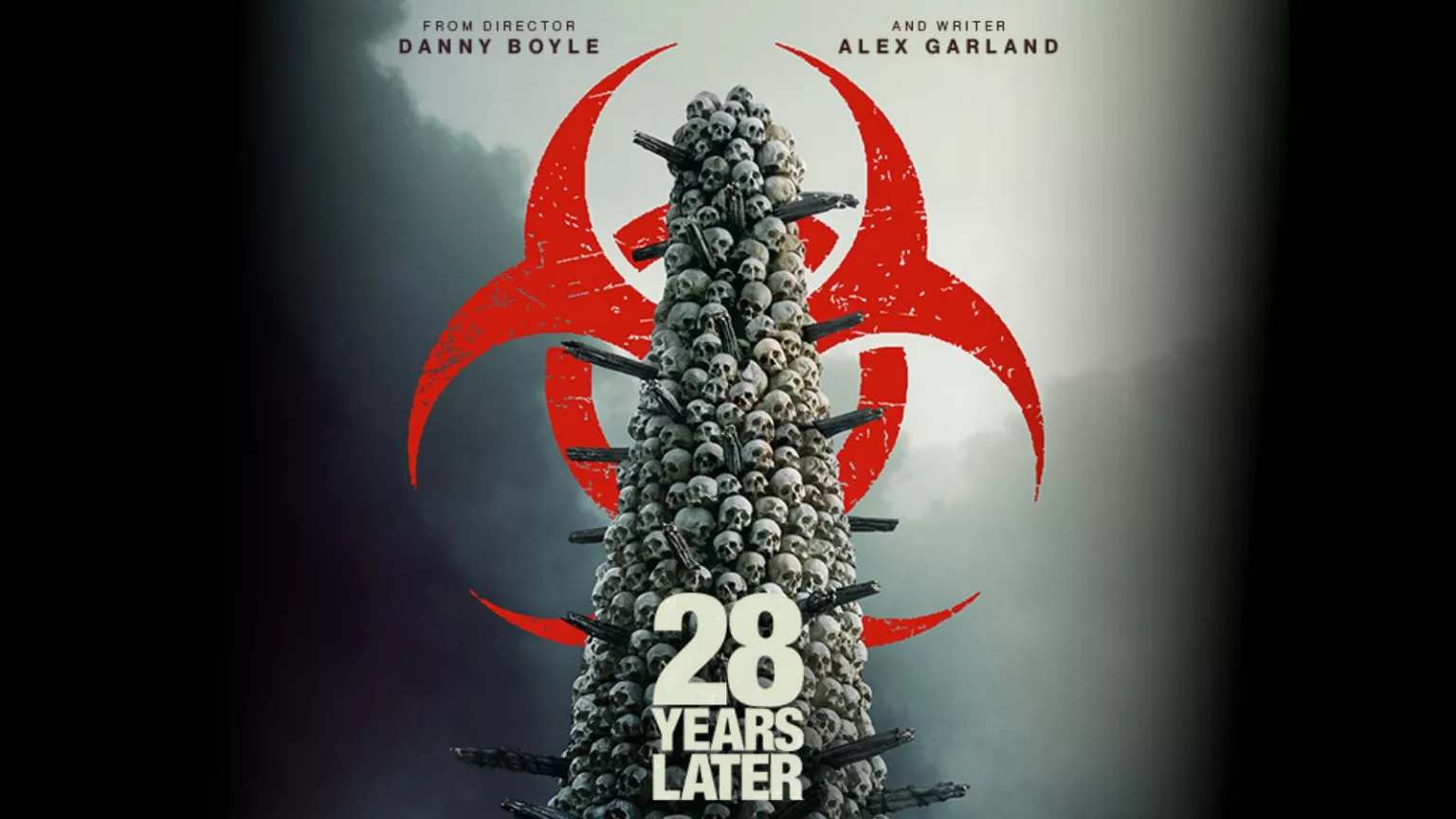





In 2002, 28 Days Later revitalised the zombie genre, introducing new lore and changing the game forever. And while 28 Weeks Later (2007) didn’t – and couldn’t – compete with that prestige, it remained an excellent addition to the franchise that expanded the world Danny Boyle and Alex Garland had created.
28 Years Later (2025), however, is a somewhat confusing third part to the series. The first half is a careful recreation of the style and tone of the iconic 28 Days Later, complete with overtly British references and shaky camera. The second half…well, we’ll get to that.
In 28 Years Later, we get to see the state of England nearly 30 years after the zombie outbreak. The UK is quarantined, with other armies on patrol to keep those Raging Brits contained, and we’re fully into post-apocalypse territory, as civilisation is split into small groups of survivors who have made a new way of life for themselves.
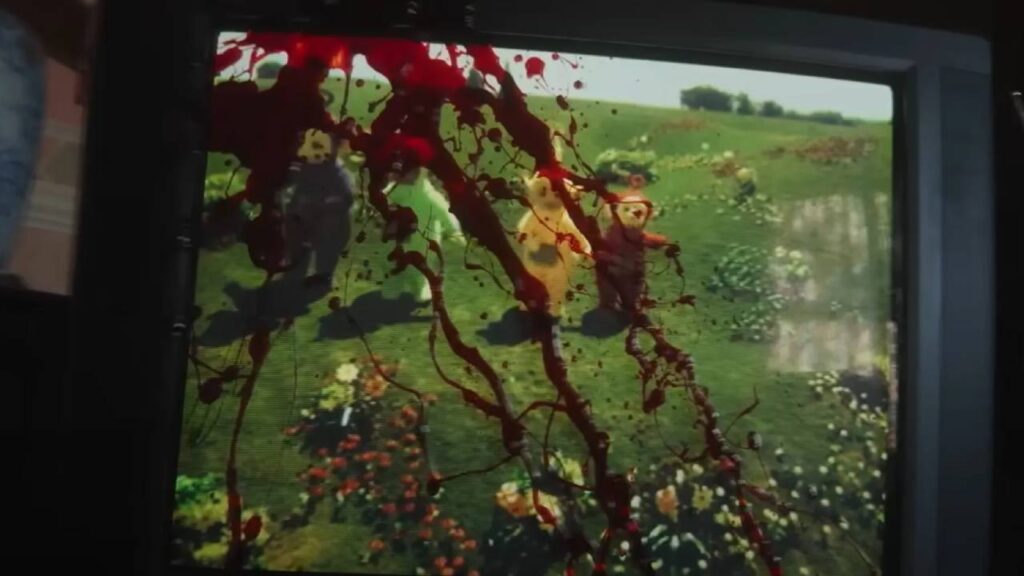
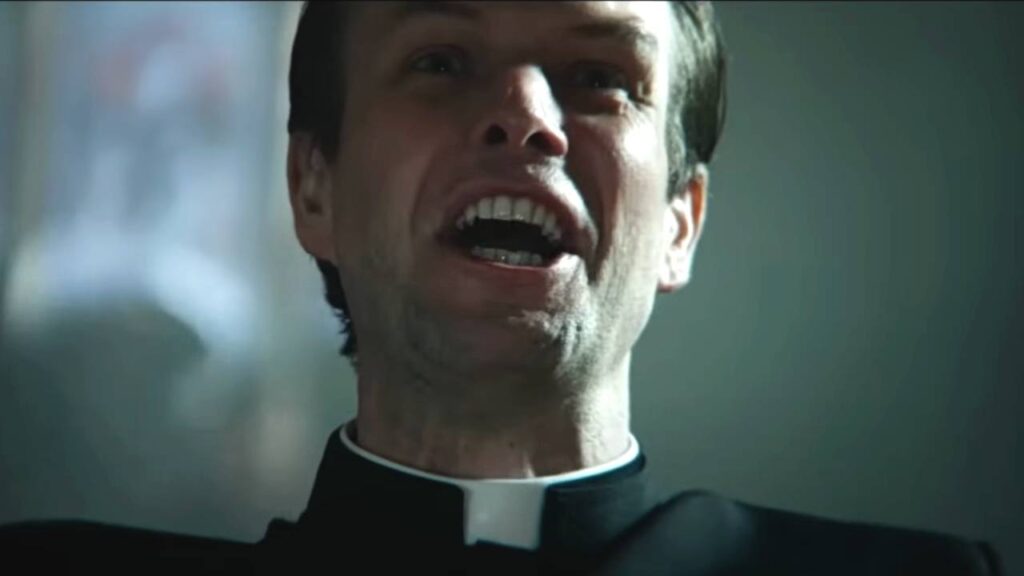
The film begins back at the beginning of the outbreak. A group of traumatised children are watching The Teletubbies while their parents try to keep them safe, but soon the infected come to their door. As chaos ensues, a young boy breaks out of the house and runs down to the church, where his father – the priest – is praying. Certain that he’s experiencing the rapture, the priest hands his crucifix to his son before succumbing to the horde.
Many years later, we see a commune built on Lindisfarne, an island separated from the mainland by a causeway that disappears at high tide – a clever concept for survival, if they didn’t have such issue with watch duty. The majority of the film centres around one family: the young Spike, his brave father Jamie, and his unwell mother Isla, played perfectly by the wonderful Jodie Comer.
The community on Lindisfarne has taken the very sensible route of returning to bows and arrows to hunt and protect the community. They seem to have a pretty well-developed setup, and for children like Spike, the best possible place for them in a Rage-infected Britain. Part of their new society involves a coming-of-age ritual hunt, and Spike’s finally old enough to go to the mainland.
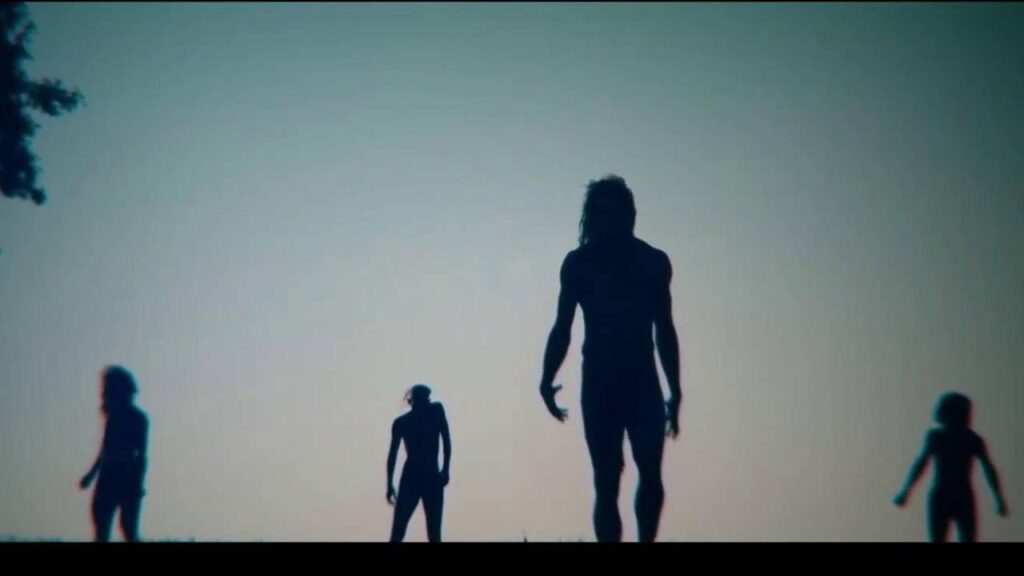
Throughout the hunt, we get glimpses of how the world and the virus have changed since the last time we saw England. Most notably, there are different types of infected now, although it’s unclear why that’s happened – we only really get uninformed speculation. As viewers, we’re of course swept up in the horror of the zombie outbreak, the fear and the survival, but for people like Spike who have only ever known this world, the real horror is his mother’s mental degeneration.
He takes her out to the mainland to seek out a mysterious doctor, considered mad by the people of Lindisfarne, thanks to his habit of burning corpses—which is actually a very helpful and sensible thing to do if you want to reduce disease and infection rates. And when you’ve got that many bones and skulls to hand, why wouldn’t you create your own haunted sculpture garden?
But 28 Years maintains a theme present throughout all its films: that people don’t need to be infected to act monstrous.
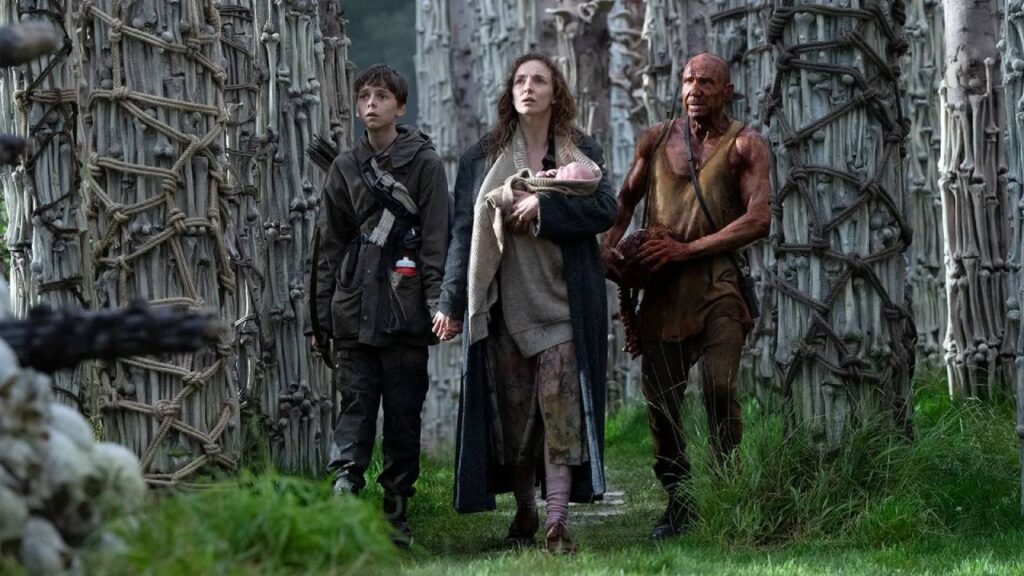
This film is clearly a lot more introspective and experimental than the other two, although some of the messaging feels a little heavy-handed at times. Up until the last thirty minutes or so, it follows most of the tropes of the series so far: fear of the government, the perils of isolationism, distrust of the armed forces and the importance of found family. It felt like it wanted to say something about patriotism and hatred of the unknown, but the messaging was murky.
However, it also felt like a lot was missing. It’s entirely possible that everything will be revealed in the second installment. Until then, there are a lot of unanswered questions about how the Rage virus mutates, how the infected mate, the relationship the doctor has with the local infected population—and that’s before our little boy from the beginning shows up again with a cult of ninjas dressed like Jimmy Saville. No, really.
Hopefully, all of our questions will be answered in a satisfying way in The Bone Temple. In the meantime, it’s best to think of 28 Years Later as the Rec 3 of this series – not faithful in tone to the first two, but an experiment with the established world.
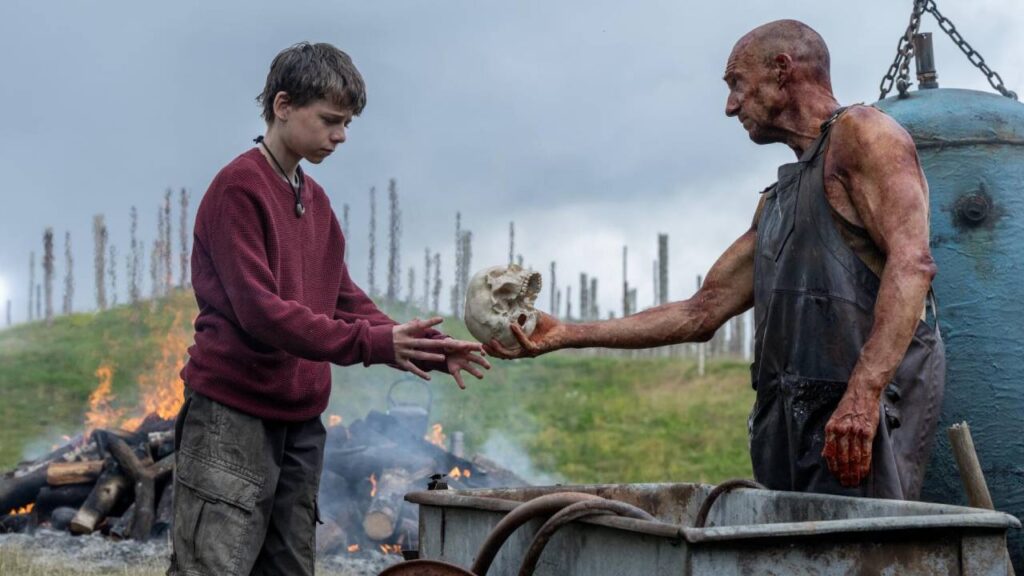
The cast are uniformly excellent, with Jodie Comer really standing out as an emotional lead, and Ralph Fiennes creating a captivating antihero. The writing can be a little stilted, but complaints about the changes in tone are rather strange; both 28 Days and 28 Weeks had moments of emotional intensity alongside the fear and horror.
Expect tense moments, extravagant gore, tracksuited ninjas, goth Christmas trees, and some serious monster dong. The film looks beautiful, the sound design was excellent, and it was worth holding off on John Murphy’s iconic theme music until nearer the end!
More Film Reviews
A lot has been said in the last week or so about the legend and legacy of David Lynch. The man was a unique visionary who saw the world, time… Why people remain in situations of domestic abuse can be difficult for outsiders to understand. That is because there are unseen, powerful forces that keep victims in dangerous, toxic relationships…. There have been several films made about the Japanese urban legend known as Hitori Kakurenbo. There are also several ways that the title has been presented in English: hide and… Suzy Eddie Izzard delivers a masterful performance of duality as the titular character in Doctor Jekyll, Hammer Film Productions’ retelling of The Strange Case of Dr Jekyll and Mr Hyde,… Director Koji Shiraishi takes a dip into cryptozoology in Senritsu Kaiki File Kowasugi! File 03: Legend of a Human-Eating Kappa (shortened to File 03). In this third installment in the… There is something incredibly endearing about anthology films, especially those in the horror genre. In fact, I would wager to say that this format of filmmaking works best with horror,…
Lost Highway (1997) Film Review – One Heavy Trip

Ad Lib Short (2022) Short Film Review

Creepy Hide and Seek (2009) Film Review – The Sleazier Side of a Famed Urban Legend

Doctor Jekyll (2023) Review – Well Hello, Ms Hyde…

Senritsu Kaiki File Kowasugi! File 03: Legend of a Human-Eating Kappa (2013) Film Review- Now it’s a cryptid!
Rokuroku: The Promise of the Witch (2018) Film Review – An Exceedingly Entertaining Haunted Funhouse Ride

Jenny is a creative copywriter living just outside of Liverpool who loves horror, board games, comics, video games and industrial metal.