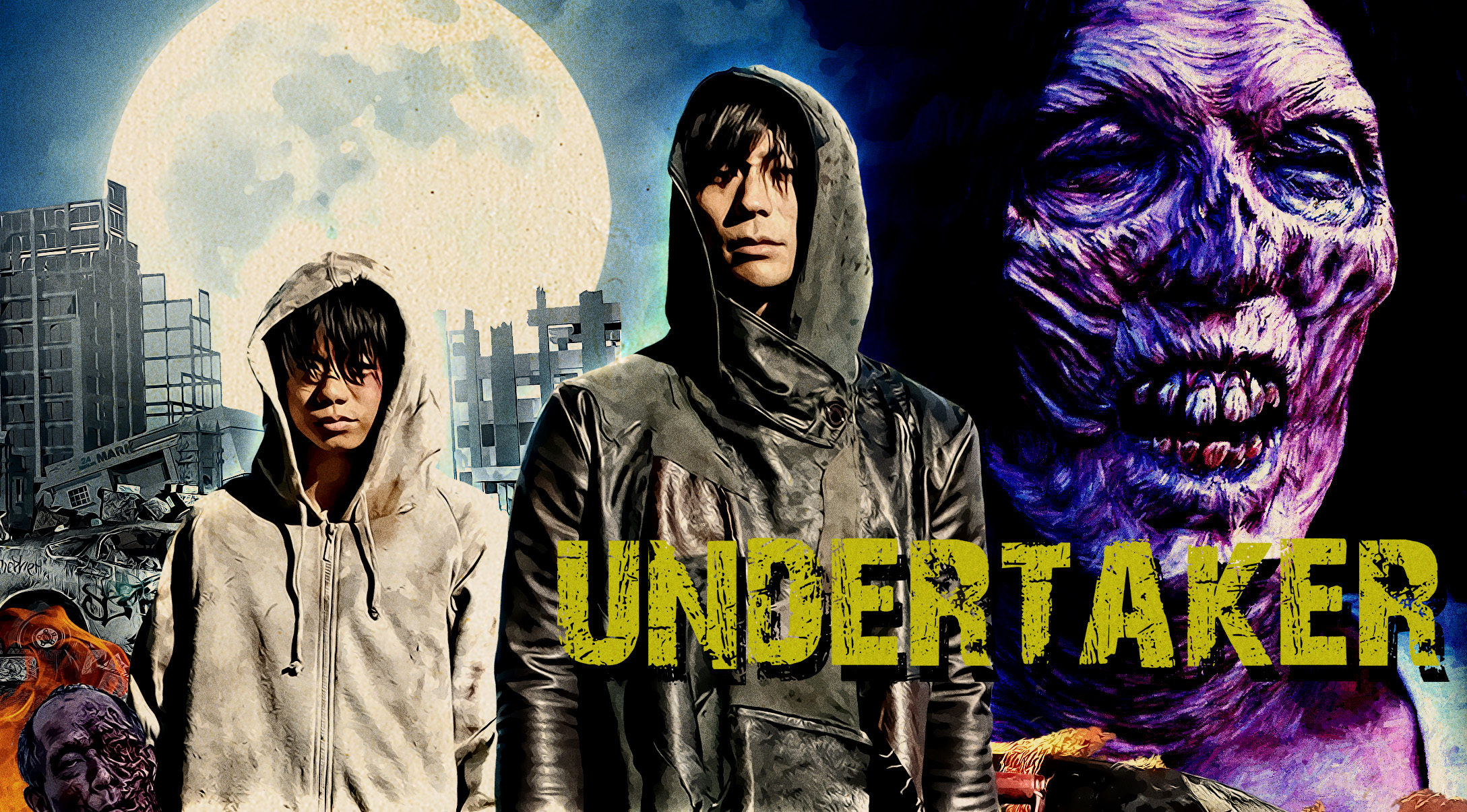




While zombie flicks are a dime a dozen here in the West, the walking dead don’t really occupy the same space in Japanese horror. Not to say that there have not been phenomenal films and stand-out manga, yet, even when the titles do stand out it is often because of a very distinct, culturally different take on the undead. Enter Undertaker (2012) from Naoyoshi Kawamatsu, a more nuanced and stylized interpretation on the genre wherein a lone soul wanders a post-apocalyptic Japan taking on bounties to bring the undead to their final resting place.
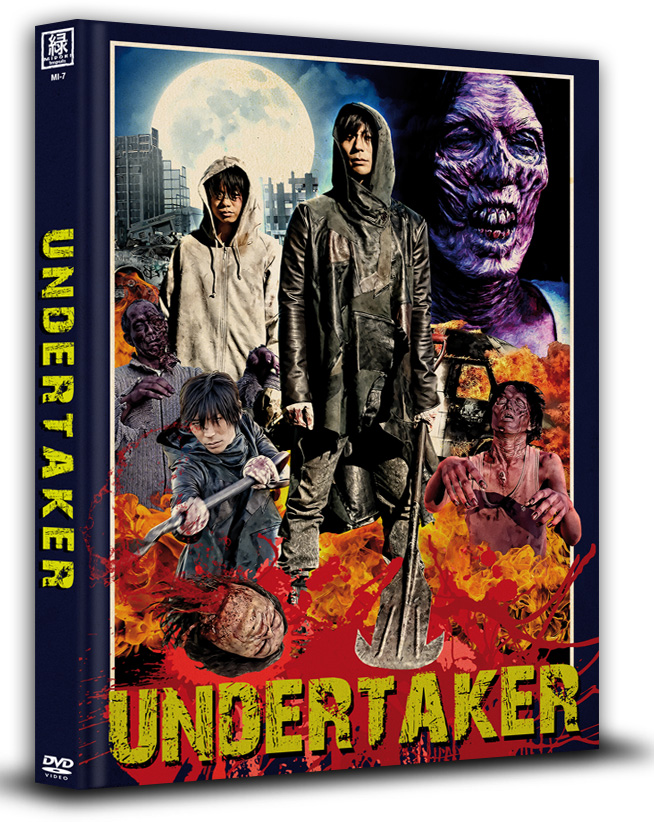
Where Undertaker begins to separate itself from its contemporaries in Japanese zombie movies, is in relying on subtilty versus over-the-top absurdity that often defines productions of the ilk. Instead, Undertaker chooses an emotionally driven narrative that spends the bulk of its time in silent contemplation, as the bounty brings our protagonist back to his own past trauma. For an independent Japanese production, the choice may seem rather counter-intuitive to the gore soaked insanity that tends to thrive in the underground. However, and to the film’s most pronounced strength, the subtilty and simplistic story devices manages to capture a broader sense of tragedy in an unforgiving world.
Largely dialogue free, much of the story is told in the opening which sees the protagonist abandoned during the early stages of the pandemic. Moving onward into adulthood as a bounty hunter, narrative depth is added through flashbacks which envision a simpler time – triggered by certain cues which cause the Undertaker great mental anguish. Inevitably, this ties to the trauma in both losing his mother and best friend as a kid – the films major showdown with the undead sprinkled with these painful memories perfectly conveys his relatable humanity. Ultimately, Undertaker excels in telling a complete narrative through minimal visual cues and dialogue to make it stand out among its contemporaries in the underground.
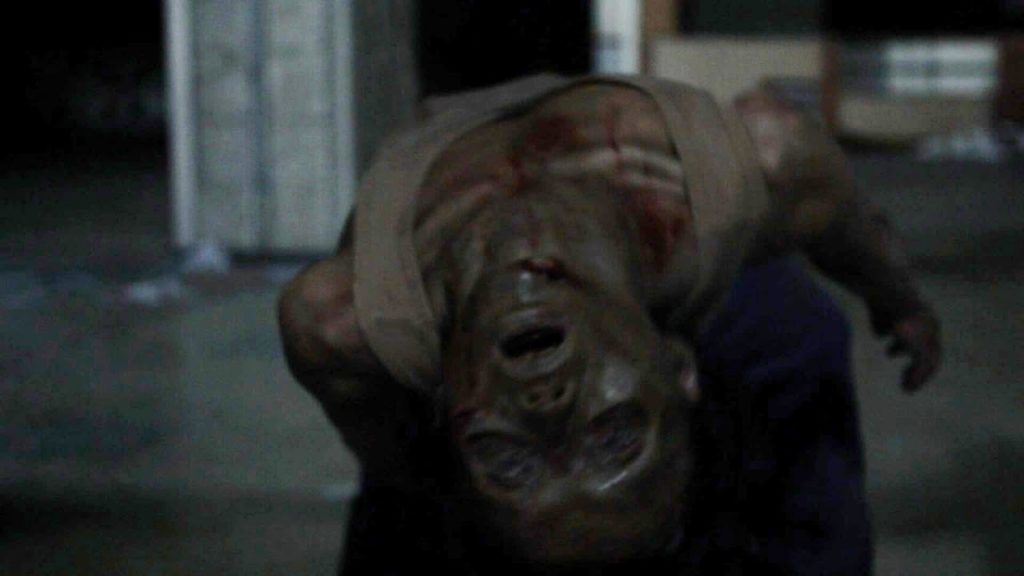
However, that is not to say that the production is not without its gorey goodness and sensational violence. In particular, the first major reveal of the undead comes from a distorted figure whose backwards shuffling sees his ominously drooped down – leading to the gloriously disgusting reveal of eye sockets attempting to open only to exude puss. From here, the audience gets a decent amount of bloodshed as the Undertaker takes out several of the undead, using his trusty modified shovel to chop of their heads. Arguably, the showdown is rather refrained with minimal gore beyond the first reveal, yet, the action and blood should still thrill fans of the zombie genre.
The cinematography and sound design is, purposely, minimalistic in approach. Unfortunately, many will find the film too free of space and visual flair with the bulk seemingly focused on the protagonist just listening to see if there is anything out there. Furthermore, the zombies are pretty low key and more often then not tend to mind their own business – the threat level seems minimal in most cases, even in swarms. Consequently, there is never a sense of immediacy in the films aesthetic as it takes its time to set up each scene. This will, undeniably, slow the pace down too drastically for some regardless of the intent of Kawamatsu to make a more atmospheric and sombre zombie film.

Reviewed as part of the collection from Midori Impuls, there is certainly value in owning the physical media. Besides the signed postcard from the director, this release features an interview with the director translated into English. Personally, the greater addition to the physical release comes via the mini-manga that is included. More graphic and heavy on action than the film, it is a wonderful inclusion for fans of collecting horror manga – now proudly sitting on my shelf between some other horror titles. The bonus features, unfortunately, are only available in German subs, still, the behind-the-scenes and storyboards can be appreciated without.
Undertaker is a unique take on the zombie genre that uses clever narrative devices to tell a deeper story of loss in a nightmarish, desolate Japan. There is a lot here to dig, making it tragic that Naoyoshi Kawamatsu has only made two feature-length films with no sign of return. Arguably, the nuanced approach will dissuade some zombie fans from giving this one a shot – it won’t be to all tastes. Regardless, Undertaker proves to be an emotionally driven dive into a zombie-infested post-apocalyptic Japan – what more do you need?

We Watched Undertaker Courtesy of The Good Folks at Midori Impuls

More Film Reviews
Who does not like a little bloodshed in their Halloween flicks? Well, Gabriel Carrer & Reese Eveneshen certainly deliver the goods in For the Sake of the Vicious, a film… Mors Omnia Solvit (aka “Frammenti – I Veneratori di Morte”) is an Italian extreme satanic horror film directed and produced by Congrega Esoterica Padovana. The name is based on a… Blood-Red Ox (2021) is an ambitious attempt to capture the spirit of classic Italian horror cinema, and a bold step forward for the visibility of queer men in South American… Despite being one of Japan’s biggest film studios throughout the late 40s and 50s during the golden age of Japanese cinema, Daiei was struggling by the mid-60s and had to… Returning to the site of a hotel where the aboriginal people slaughtered a team of archaeologists, a new team set forth to find out the truth of what happened to… Established in 2009, the American Genre Film Archive is a non-profit which seeks to collect, conserve and distribute genre films in order to preserve their legacy. From shot-on-video slashers and…
For the Sake of the Vicious (2020) Film Review – What Glorious Violence!

Mors Omnia Solvit Film Review – Yes Today, Satan

Blood-Red Ox (2021) Film Review – Bolivian & Queer, What’s Not To Like?

Secrets of a Woman’s Prison 2 (1968) Film Review – Brutality Behind Bars

Jungle Trap (2016) Film Review – Do You Know Where You Are?

Sometimes Aunt Martha Does Dreadful Things (1971) Film Review | There’s something about Martha…