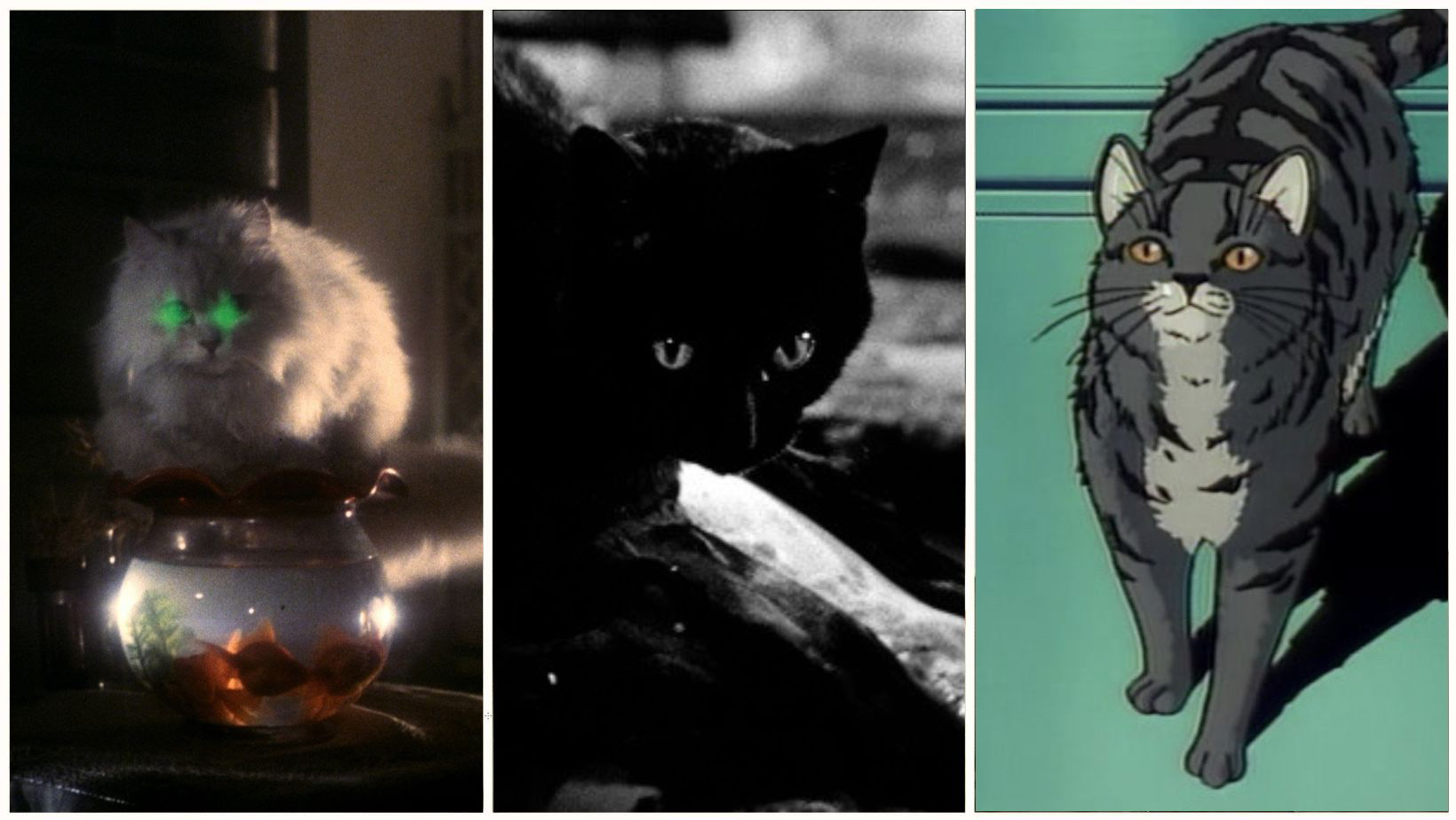





Revered throughout ancient history, the humble kitty cat has long been considered a necessary addition to society. Associated with agriculture, pest control, and cleanliness, their presence was celebrated as an effective means of protecting crops and food from unwanted vermin—and was even considered sacred in certain cultures. However, in parts of Asia, there has always been a more ambivalent relationship with felines. From the sudden panic over sinister Maogui (cat demons) in Sui dynasty China, to the trepidation about their ability to turn into yokai in Heian period Japan, to the general suspicion that they are harbingers of death and disease adopted by 19th-century Korea, cats were often depicted as bad omens, yet still a necessary deterrent against pests.
While this attitude towards cats is less prevalent in modern times, their depiction in horror media draws heavily on this antiquated superstition of supernatural abilities and evil intent, to great effect. And as it’s International Cat Day, we decided to take a look at some Killer Kitties in media and at some of the most dangerous depictions of cats on film.
Caution! May contain spoilers for the following films:
- The Ghost Cat and the Mysterious Shamisen (1938)
- The Cat (1992)
- Hausu (1977)
- Kuroneko (1968)
- Lily C.A.T (1987)
- The Ghost Cat of Ouma Crossing (1954)
- The Cat (2011)
- Legend of the Demon Cat (2017)
- Evil Cat (1987)
- Blind Woman’s Curse (1970)
Kuro – The Ghost Cat and the Mysterious Shamisen (1938)
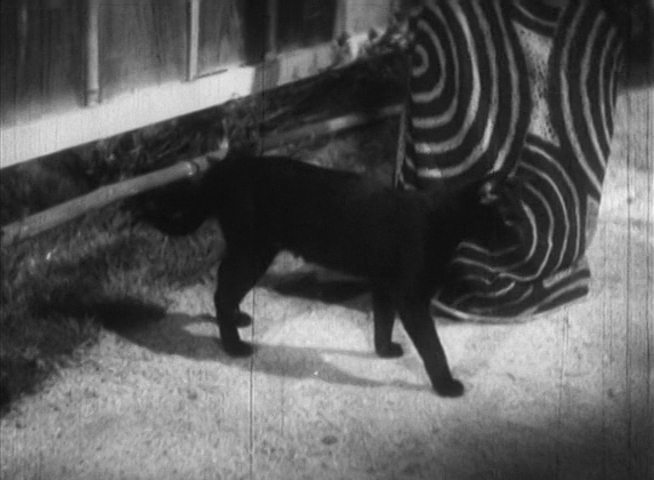
Mitsue is a popular kabuki stage actress and the lover of a shamisen player named Seijuro. She jealously murders two other objects of his affection: Okiyo, a young woman from a samurai family, and Kuro, a black cat. The spirits of Okiyo and Kuro then merge into a vengeful ghost.
Certainly one of the oldest films we have covered, The Ghost Cat and the Mysterious Shamisen is the third (known) Japanese film depiction of a kaibyō—with the oldest being the lost 1916 short film Arima no nekô sôdô. The second is Arima Neko (1937), which was never commercially digitised and the surviving print held with restricted access.
This black & white supernatural horror film, written by Kenji Hata and directed by Kiyohiko Ushihara, utilises its feline actor as a catalyst to drive the story as much as an overt depiction of horror. While Kuro is mostly depicted as… well, a cat, up until its murder, its metamorphosis with Okiyo into a chimera-esque malevolent spirit combining her emotional desire for revenge with the supernatural powers of a bakeneko fruitfully —delivering an impressive final scene in a Kabuki theatre.
The General – The Cat (1992)
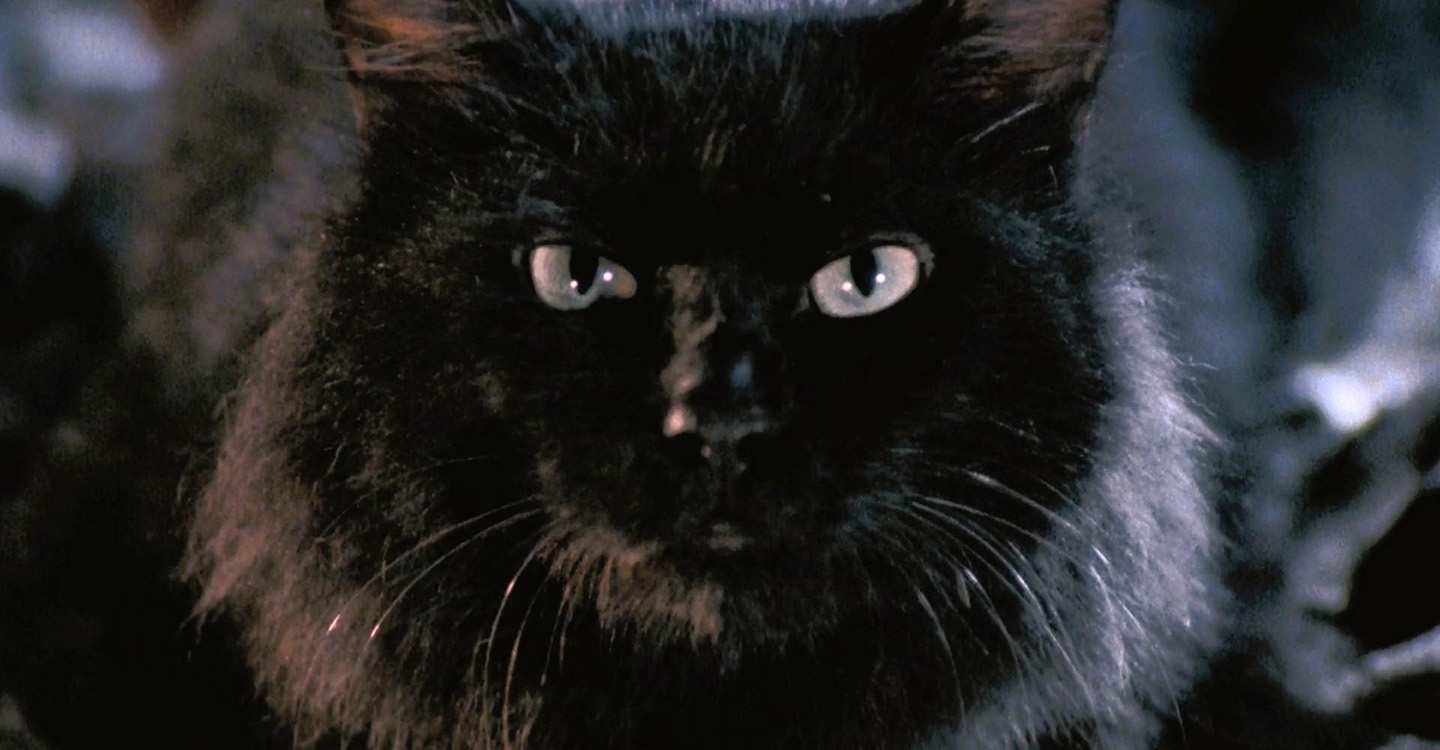
A cat from outer space teams up with a young alien girl and her knight, along with an adventure novelist named Wisely, to fight a murderous alien that possesses people.
Unbound by the traditional ties to folklore prevalent in most of the films in this list, The Cat, based on the novel Old Cat, penned by Ni Kuang, plays with the audience’s expectations, only to reverse the typical superstition to place the titular feline as the main hero of the story. Being depicted as an ominous presence in the first act, its silent observation, unexpected appearances, and supernatural intelligence certainly call into question its motives. However, with the introduction of the real villain, a parasitic alien taking control of human hosts, he displays out-of-this-world powers and killer kung fu to battle it out against this evil invader and save humanity (the martial arts cat vs dog fight is a sight to behold).
Blanche – Hausu [House] (1977)
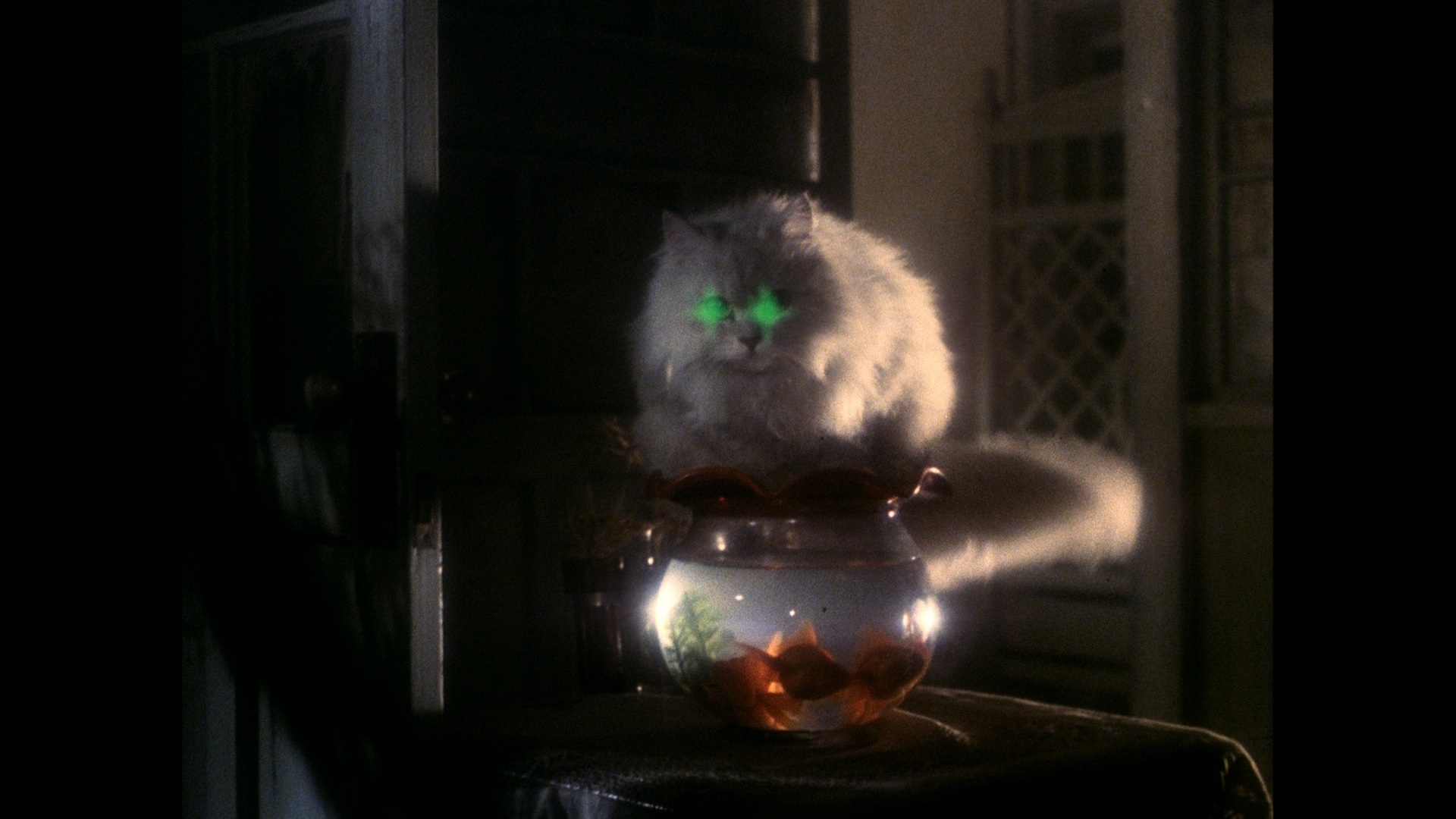
Hoping to find a sense of connection to her late mother, Gorgeous takes a trip with her friends to visit her aunt’s ancestral house in the countryside. The girls soon discover that there is more to the old house than meets the eye.
No list of killer kitties would be complete without Nobuhiko Obayashi’s cult classic, Hausu, the psychedelic horror comedy that remains unmatched almost 50 years later. Delivering a quintessential example of both the haunted house and kaibyō horror genres, the film bestows on Blanche a characterisation that fluctuates between a folklore entity, a supernatural conduit, and a thematic representation of grief. As the cat identifies Gorgeous’ heartache, similar to her aunt’s, and manipulates her through multiple means to take her aunt’s place as the heart of the house that hungers for unwed women—delivering a more cyclical than destructive horror.
Kuroneko – Kuroneko (1968)
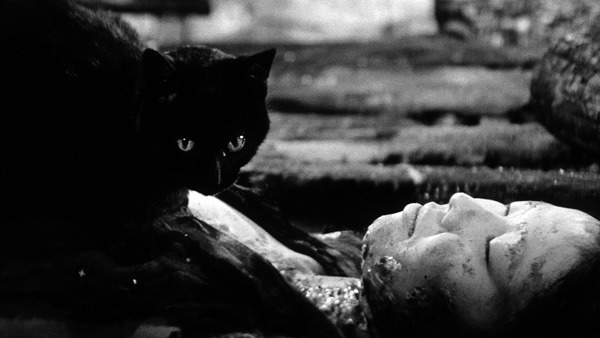
In the Sengoku period, a woman and her daughter are raped and murdered by soldiers during a time of civil war. Afterwards, a series of samurai returning from the war through that area are found mysteriously dead with their throats torn out. The governor calls in a wild and fierce young hero to quell what is evidently an Onryō ghost.
Once again rooted in the characteristics of Kabuki theatre, Kuroneko is fairly similar in set-up to The Ghost Cat and the Mysterious Shamisen (1938). The titular black cat acts as a conduit to imbue the emotionally scorned women with supernatural powers, allowing them to avenge their rape and murder through their amalgamated spirits. Yet the key difference between the two lies in how they depict the physical form of a bakeneko. While The Ghost Cat and the Mysterious Shamisen utilise more abstract means of representing this vengeful spirit, Kuroneko goes for a distinct visual depiction—using Hikimayu (the act of removing eyebrow hair and replacing it with smudged makeup on the forehead) after their deaths to create uncanny valley-esque character designs for the murdered mother and daughter after their transformation. Additionally, the mother and daughter display animal-like characteristics in their mannerisms, such as lapping water from a bucket, biting and scratching as their means of attack, and perching cat-like when alone, lending further credence to their chimeric synergy with the bakeneko.
Lily C.A.T – Lily C.A.T (1987)
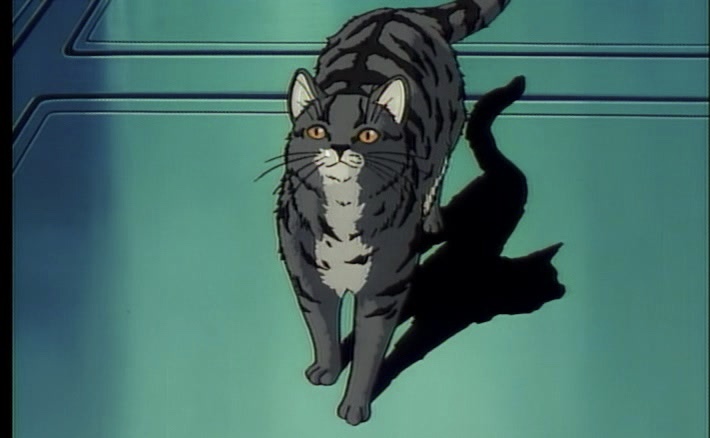
A captain and his crew travel across the universe aboard a ship that can travel for 20 years while the crew ages only 1 year. Soon, the crew realise that a criminal is on board, hoping to escape civilisation. The crew must identify the criminal and find the source of a deadly virus that is destroying them one by one.
While often referred to as a rip-off of Alien (1979) and The Thing (1982), director Hisayuki Toriumi stated he intended to create a more modern take on the kaibyō narrative, taking the genre where all stories eventually go (insert your best Tim Curry impression here): space. While the film leads the audience to believe the title refers to our protagonist’s cat, Lily, the anime soon delivers a U-turn with the poor creature’s horrifically visceral murder—only to be unknowingly replaced by the mechanical double Lily C.A.T (Computerized Analysis Terminal). This element plays on the bakeneko’s tradition of deception, hiding in plain sight as a normal house cat hiding an unnatural, often malevolent persona.
Miya – The Ghost Cat of Ouma Crossing (1954)
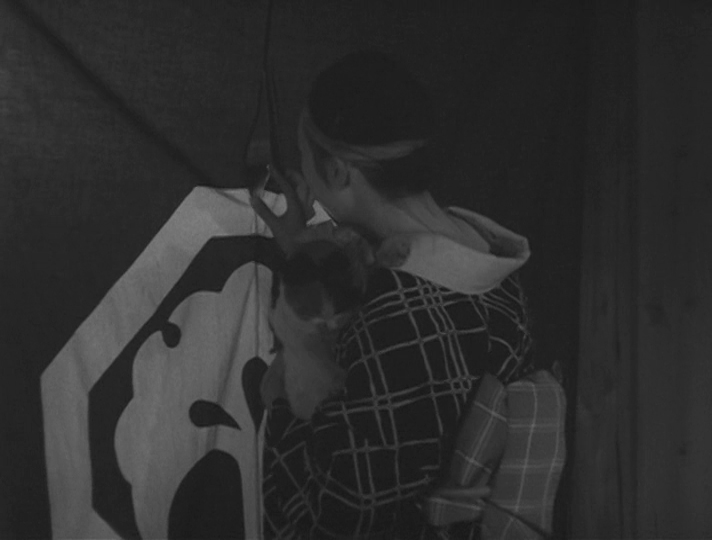
A beloved kabuki actress is disfigured by her jealous co-stars and murdered by her lover. Her pet cat laps its mistress’s blood and becomes a demon possessed by the vengeful murder victim’s spirit.
One of many in a flurry of kaibyō horror films produced by Daiei Films in the 50s, The Ghost Cat of Ouma Crossing places much stronger emphasis on the backstage drama at the kabuki theatre. That being said, when the supernatural spookiness kicks off around the third act, the film delivers some fantastic bakeneko action. Relying on performance and special effects over heavy cat-like make-up to depict this vengeful spirit, actress Takako Irie provides a riveting mix of cat-like mannerisms with telekinetic abilities to punish those who murdered her.
Bidanyi – The Cat (2011)
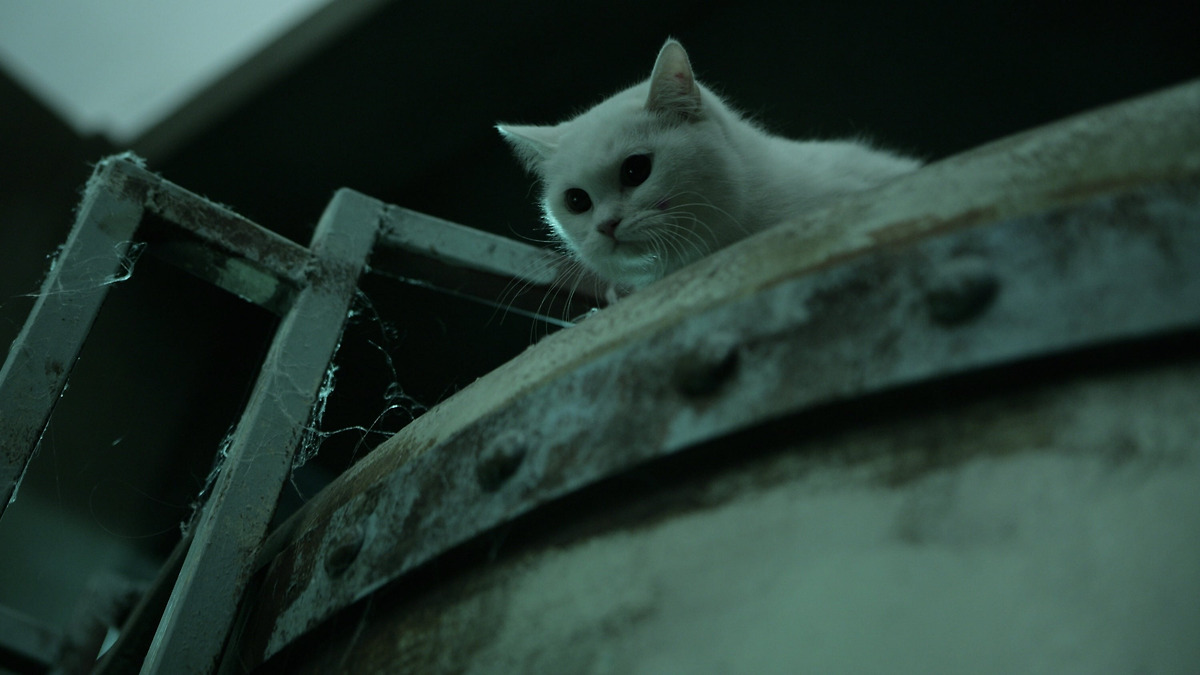
So Yeon is a pet groomer who suffers from claustrophobia. One day, one of her customers dies in the elevator, leaving a cat, Bidanyi, behind. The murderer is unknown, and the cat is the only witness.
Flipping the usual formula for cat-based horror, The Cat instead casts the feline as a vengeful spirit that manifests as a deadly supernatural entity to wreak its revenge rather than aid in a human’s retribution. This reversal subverts the usual superstitions surrounding the evil cat trope, avenging the terrible neglect and cruelty suffered at the hands of humans rather than serving as a conduit for others’ retribution. Additionally, the film utilises the mysteriously uncanny traits associated with cats, such as their silent movement, nocturnal habits, and reflective eyes and exaggerates them through sudden appearances and bright, glowing eyes effectively.
Bai Long – Legend of the Demon Cat (2017)
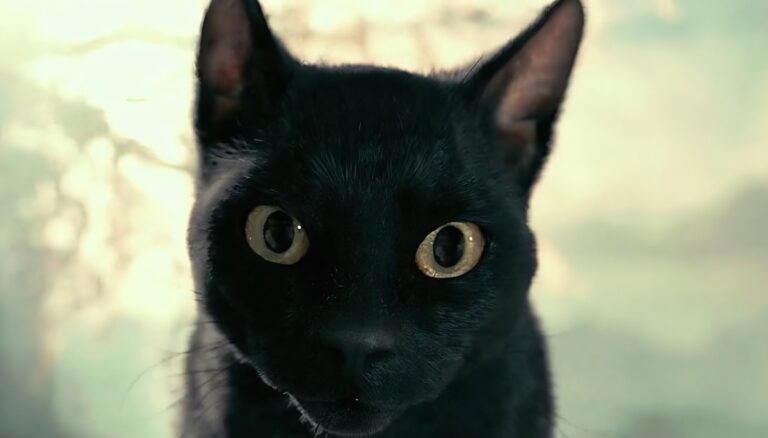
When a demon cat appears, breaking the peace of Chang’an City and causing a series of strange events, poet Bai Letian and monk Kukai join up to investigate the death of the emperor’s concubine by following the trail left by the cat.
A joint Chinese/Japanese production, Legend of the Demon Cat combines the shape-shifting manevolence of the Bankeneko with the link to hidden injustices embedded in Chinese mythology. While the spirit of Bai Long possesses powerful supernatural abilities and is a dangerous entity capable of killing anyone who gets in its way, its actions are benevolent as it brings attention to a vicious murder whose cover-up prevented any form of justice for the deceased.
Nine Lives Cat Demon – Evil Cat (1987)
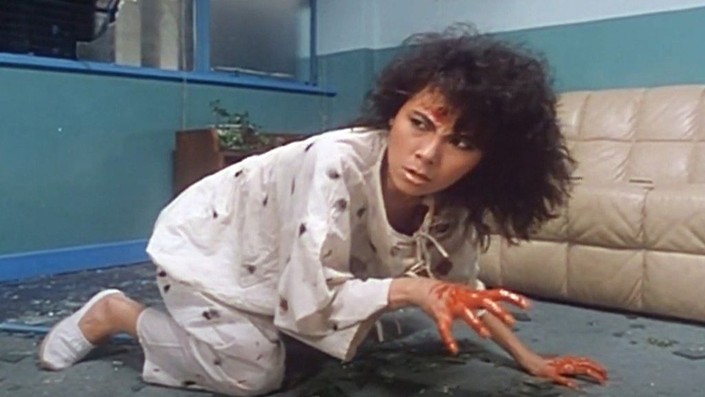
Every 50 years, a member of the Cheung family must kill a cat demon until its nine lives are up. However, Master Cheung is worried that cancer will kill him before he can complete his task, so he decides to give a newcomer the power to defeat the demon.
Another crazy CAT III (get it?) horror film from Hong Kong, The Evil Cat is an all-out fever-dream depiction of an evil cat entity. While never appearing in its feline form, instead possessing numerous human hosts. Its actual depiction is mostly benign—looking like a normal human, bar some cat-like agility. However, in the final scene, the film delivers fantastic special-effects make-up reminiscent of a Cats stage play. Furthermore, the cat demon’s supernatural abilities are conveyed through intense martial arts battles and black magic spells—creating some tense kung-fu action that HK films are synonymous with.
Black Cat – Blind Woman’s Curse (1970)
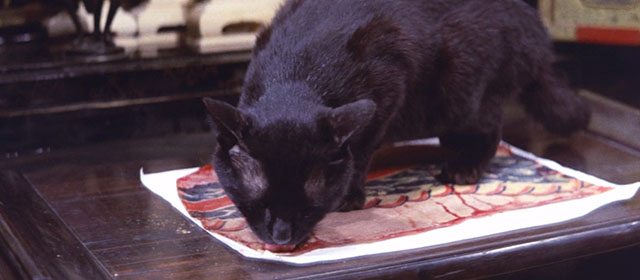
Akemi is a dragon-tattooed leader of the Tachibana Yakuza clan. In a duel with a rival gang, Akemi slashes the eyes of an opponent’s sister, Aiko, and a black cat appears to lap the blood from the gushing wound. The blind girl, along with the cat, goes on to pursue Akemi’s gang in revenge, leaving a trail of dead Yakuza girls, their dragon tattoos skinned from their bodies.
Blending samurai, crime/yakuza, surrealist, and horror genres, Blind Woman’s Curse delivers a powerful tale of revenge with supernatural undertones. Though the nameless cat is suggested to be a bakeneko, with the ability to curse Akemi for her wrongdoing, the film uses the feline more as an embodiment of Aiko’s vengeance and Akemi’s guilt. However, there are still multiple examples of supernatural happenings throughout the film caused by its four-legged character.
More Lists
Junji Ito has been writing horror since 1987. Nowhere near finished, he has several more tomes set for release this year. Often called the Stephen King of Japan, his works… From the dawn of humanity’s time on this Earth, fear has been the most important feeling for the survival of man. It is what keeps us alive, the reason… Within the medium of cinema, where every frame is meticulously crafted to evoke emotions and ignite imaginations, titles serve as a gateway to the world within. It is not merely… We are always on the lookout for the best free to stream horror and cult films. There are plenty of services that provide this service while still giving back to… Bringing you a list of the most terrifying books we’ve read this past year. Hold onto your hats, it’s going to be a bumpy ride. List: Becoming the Boogeyman –… 2023 has been quite the year for new releases, from sci-fi thrillers, to splatter horror, to sequels and remakes out the wazoo, the year has seen a wide variety of…12 Best Short Stories of Junji Ito – Master of Horror Manga
Celebrating The Best Hidden Gems of The Found Footage Horror Genre (Part 1)
[April Fools] 10 Most Beautiful Titles in Cinema – Beauty is in the Eye of the Beholder

20 Best Free to Stream Horror and Cult Films
Top 10 Reads for the Spooky Season 2023
Extreme Cinema of 2023 – Some of the Best Releases of this Year

Hey there, I’m Jim and I’m located in London, UK. I am a Writer and Managing Director here at Grimoire of Horror. A lifelong love of horror and writing has led me down this rabbit hole, allowing me to meet many amazing people and experience some truly original artwork. I specialise in world cinema, manga/graphic novels, and video games but will sometime traverse into the unknown in search of adventure.