





We meet Elena, a “gajin” with a British father and Japanese mother, at her lowest, in a hospital bed after an implied attempt at taking her own life, or self-harm to the point of hospitalization. This incident acts as a catalyst to send her to a new school, where, while she still feels the prejudice for her mixed heritage, she finds a friend, and more importantly, another student lower on the totem pole than her. The young, picked-on student, obsessed with her phone, has a breakdown one day after it is stolen from her. Her bullies place the phone in Elen’s bag, making her the next target of a relentless entity. This entity can only be heard when Helena has earbuds and can only be seen on her phone screen.
The Invisible Half marks the feature-length debut film of Masaki Nishiyama, who is noted for having been interested in film at a young age, starting with short films as early as 14 years old. At 26, Nishiyama, a younger filmmaker, proves himself to be a talent to watch in the horror space, while still showing a modicum of limitations.

As an older horror fan, I always have a degree of hesitation when approaching younger filmmakers, as they often try to make their films relevant to the times, without touching on themes that can make their work timeless. The Invisible Half explores prejudice in Japan through Elena’s mixed heritage, giving her character depth rather than trying to evoke empathy or a sense of injustice. However, we feel for Elena not because she is ostracized, but because of how the subsequent loneliness affects her. Notably, the film touches on universal themes of outsiderism that extend beyond the classroom drama in which the film takes place. Masaki Nishiyama’s scriptwork is impeccable and shows someone writing far beyond their age and limited experience; this alone makes his future work a fascinating prospect that horror fans should keep an eye on.
Yet the film begins to falter slightly in its construction of horror. Visually and in its technical execution, The Invisible Half is a polished work of horror, yet it lacks the sort of grittiness or visceral shock value to scratch that itch. The film feels like a high-school drama with horror elements, and if this was Masaki Nishiyama’s intent, then he succeeded. However, with the rich history of J-horror offering up some of the best movies ever in the genre, both in extremity and atmosphere, the work here feels slightly too subdued.

The monster in the film is a wonderfully macabre vision, simple in construction but haunting in presence, but not as menacing as one would like. Even a few jump scares or more extreme visions of violence would have gone a long way toward creating terror, without sacrificing any story elements. Even with the superb scriptwork of Nishiyama, this lack of scares will be enough to sink the film for a more cemented ‘horror experience.’ Otherwise, the movie has a lot of other strnegths it can lean on in its execution, albiet with the same double-edged caveats.
Lisa Siera as Elena can be an awkward teen in the worst sense. She is always socially awkward and dwells primarily in her own head; she is not the type of protagonist that fans will inherently want to root for. The script around her is phenomenal, but Elena herself is too timid. Still, where Lisa shines is in expressing raw emotion, especially in her final run-in with her silent stalker, where her terror feels palpable. The use of muted audio, reflecting the need to wear earbuds to hear the vengeful entity’s steps, also adds depth to her performance while offering a unique audio experience. Elena was, essentially, a character whose story was fascinating, her personality dull, and her ability to emote great.

The score and visual presentation are polished, offering a picturesque vision of small-town Japanese life, with flowing classical music that shifts between serene and uneasy, depending on the scene. Again, here, Masaki Nishiyama shows the skill of a much more veteran filmmaker. However, The Invisible Half is also sometimes too pretty for its own good, feeling more influenced by high-school romance movies than the terror of your typical J-horror film.
The Invisible Half shirks greatness due to tonal inconsistencies across almost every aspect of the production, though this will vary depending on what the viewer wants from it. As a horror film, it is at best middling, but as a drama/mystery set in a high school, it is phenomenal.
Here, for score, I have to go with my own experience, and the lack of sensational horror was not nearly as much of a bother as it was for me, as I am aware it would be for others. The Invisible Half succeeds in so many regards that its more timid approach to horror becomes more of a minor hang-up than a reason to disregard the work. Regardless, Masaki Nishiyama is a name horror fans should keep an eye on; I personally can’t wait to see what he comes up with next.
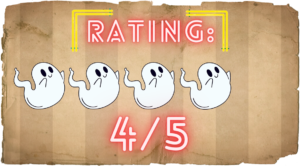
The Invisible Half (2025) is screening as part of
Another Hole in the Head Film Festival

More Film Festival Coverage
Musicals are my thing, they have been for as long as I can recall enjoying cinema, there is something so inherently magical about the world breaking out in song. For… Imagine waking up one day to a bedroom unfamiliar to you, with a stranger lying on the bed beside you. Sounds like a normal Saturday morning? Well, what if that… Content Warning: This film contains depictions of ne***philia. Bad Candy takes place in the town of New Salem during Halloween, where two radio DJ’s invite callers to share local myths…. Follow Her is a 2022 American horror thriller, written by Dani Barker and directed by Sylvia Caminer. Aspiring actress/social media influencer Jess responds to a mystifying classified ad to work… Anya, an aspiring yoga influencer, decides to take on her grandmother’s regime for ‘good health’ after finding her notes in a secret room of her house where she is currently… Set to screen at the 2021 Fantasia Film Festival, Story of a Southern Islet rests as Malaysia’s only entry into the prestigious festival. Having found myself intently interested on the new…
Powertool Cheerleaders vs the Boyband of the Screeching Dead (2022) Review – Sing Into The Chainsaw!
![Affection (2025) Film Review – Amnesia Horror with a Sci-fi Twist [Brooklyn Horror Film Festival 2025]](https://www.grimoireofhorror.com/wp-content/uploads/2025/10/Untitled-design-8-365x180.jpg)
Affection (2025) Film Review – Amnesia Horror with a Sci-fi Twist [Brooklyn Horror Film Festival 2025]
Bad Candy (2021) Film Review- A Frightfest Halloween Anthology
Follow Her (2022) Film Review – Revenge is a Dish Best Served Digitally
![Mind Body Spirit (2023) Film Review – Demonic Yoga [Unnamed Footage Festival 7]](https://www.grimoireofhorror.com/wp-content/uploads/2024/03/Mind-Body-Spirit-2024-cover-Fixed-365x180.jpg)
Mind Body Spirit (2023) Film Review – Demonic Yoga [Unnamed Footage Festival 7]

The Story of Southern Islet Film Review – A Curse On You!