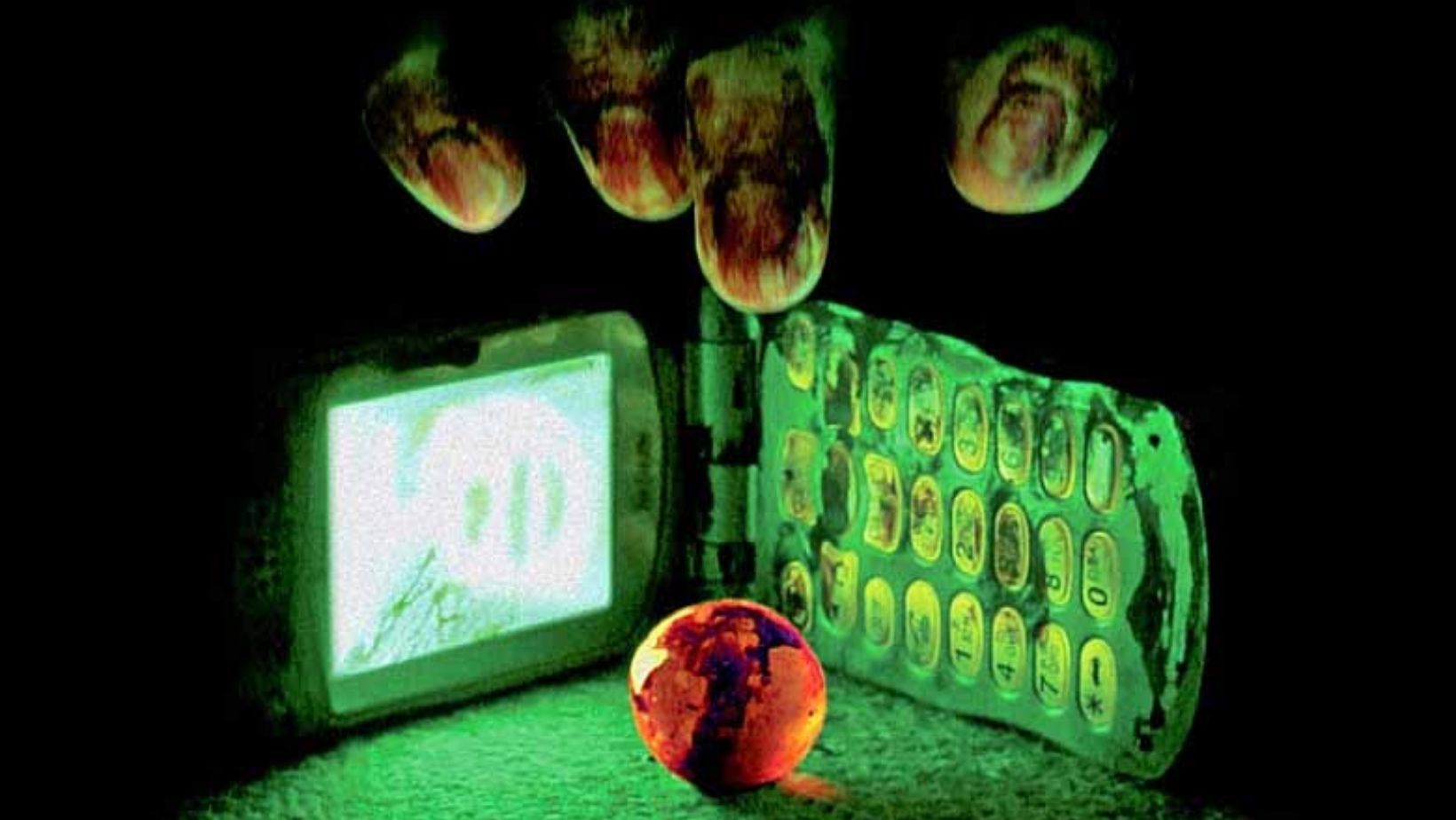
It’s well hypothesised that the late 90s-early ’00s ‘J Horror’ boom was inspired thematically in parts by the country’s post-war advancements in technology and economic prowess that had gradually begun to stagnate by the 90s. A zeitgeist of fiscal depression and disappointment opened the door in which crept the eponymous genre, wrapping a slimy, cold hand around the culturally specific anxieties of Japanese horror audiences and refusing to let go. Famously, Hideo Nakata’s Ringu explored the viral spread of a VHS-borne curse, whereas later in 2005, Kiyoshi Kurosawa’s unimaginably bleak Kairo prophesied an apocalypse of social withdrawal thanks in no small part to the worldwide surge in Internet usage. Nestled between these two powerhouse pictures was legendary director Takashi Miike’s take on the cell phone, still in its humble beginnings, as a vessel of malevolence. From a director who seems to swing so frequently and violently between trash and treasure, 2003’s Chakushin Ari sits somewhere in the ‘just fine’ category: it’s no Audition, sure, but it’s also no Zebraman 2: Attack on Zebra City.
Known in English as One Missed Call, the film follows Yumi (Ko Shibasaki), a young woman who finds herself enmeshed in a mysterious series of deaths seemingly triggered by a voicemail from the future, and the world’s catchiest ringtone. With the help of Detective Yamashita (Shinichi Tsutsumi) – also seeking answers for his sister’s death – Yumi must solve the curse and appease the spirit behind it before her own phone starts ringing.
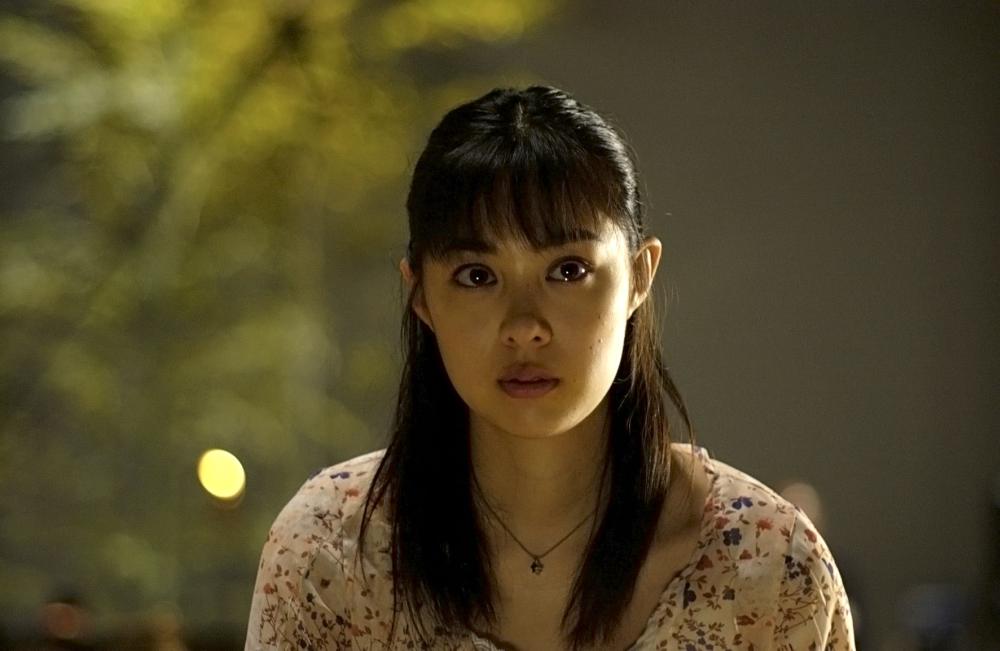
Perhaps it’s unfair to compare Chakushin Ari to the main big hitters of the J-Horror boom, but it’s hard not to when the film seems so desperately to want to belong in the pantheon of such iconic films as Dark Water and Ju-On. The film is often (again, perhaps unfairly) decried as part of the subgenre’s eventual death knell with a lukewarm reception upon release and a reputation marred by one of the lowest-rated American remakes of all time. Although only five years had passed since Hideo Nakata’s ground-breaking tech-terror had crept through screens into the nightmares of viewers, five years of rip-offs, sequels, and reboots is a very long time for audiences oversaturated with the image of the crawling, croaking onryo.
From 2022, the idea of a ‘cursed voicemail’ might feel out of touch as it’s a medium seemingly forgone in favour of instant or text messaging, but the call itself is where Chakushin Ari holds its chills even today – especially with a generation so avoidant of picking up the receiver. How many of us have stared at our ringing phone, waiting for the number on the screen to disappear so that we can continue to doomscroll in peace? There’s also horror to be found in the large scale circulation of communication and the modern-day memetic nature of informational spread. It’s no longer a case of ‘if’ your phone will receive whatever’s going around, but ‘when’.
Unlike the existentially dreadful and subtle simplicity of Ringu’s seven-day death sentence, Chakushin Ari tries to go all out on big scares. Priests are propelled like rag dolls in a live, over-the-top TV exorcism. Limbs are shattered and sliced by a speeding train. Rotten, green skin slops off the bones of a walking corpse. This is where the flashes of Miike genius shine through in twisting, bone-cracking gore. But they don’t quite flash bright enough to light up long swathes of dull investigation, in which Yumi and Detective Yamashita try to piece together a puzzle made of weak parts. The teddy bear, the red candy, and the inhaler all feel like desperate attempts to capitalize on creating an iconic, recognizable ‘symbol’ for the film, à la Sadako’s television or Kayako’s throaty death rattle.
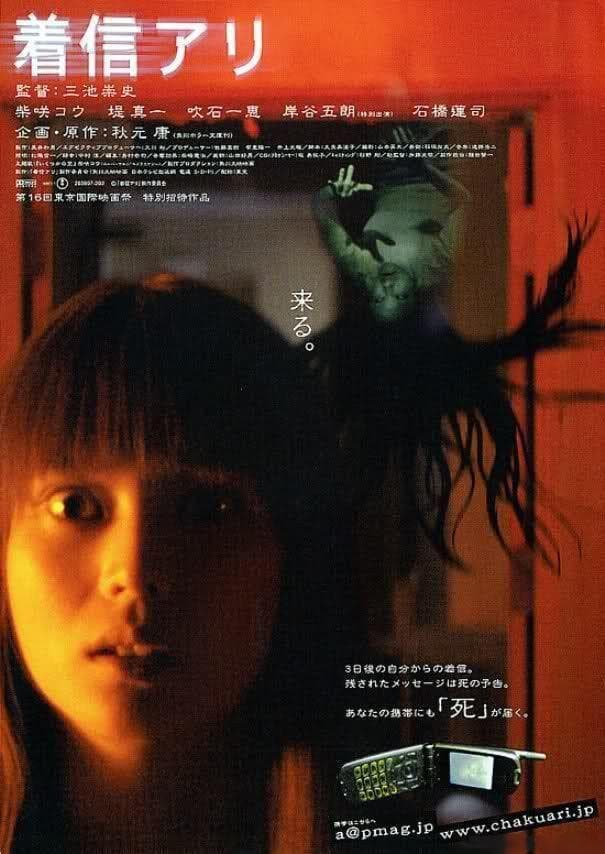
At its strongest, Chakushin Ari leans into Miike’s talented touch, with colour and camera work often reminiscent of the sepia, sickly hue that runs through Audition’s nastiest moments. And, much like Audition, there’s a poignant theme of trauma begetting trauma beating through the film’s undertones. As Yumi follows the supernatural calls down a rabbit hole of a fraught parent-child relationship, the abuse enacted by her own mother comes back to haunt her. It’s here where, after all the scares both tacky and terrifying, Chakushin Ari presents a surprisingly heart-wrenching look at how pain leaves a stain that seeps through peace, shattering the silence like a ringing phone.

More Film Reviews
The Mildew from Planet Xonader is a 2015 English-language Italian splatter horror film, written and directed by Giulio De Santi and Neil Meschino, with additional writing from Dave Fogerson and… The 17-volume horror manga Karadasagashi (Shōnen Jump+, 2014-17) began life as a web novel of the same name. With a story from Welzard and art by Katsutoshi Murase, it concerns… Konnichiwa! Ni Hao! Hola! Straight Outta Kanto here with a little director spotlight for you this week! Just like you guys I am a die-hard Asian horror fan and have… Something deadly has begun in the woods as an infectious spore mutates from ‘Patient Zero’ to begin an alarming spread. People are its food source as well as reproduction method,… The film It (2017) surprised me. In fact, I saw it five times due to how much I enjoyed it! Unlike a majority of modern horror films, it focused more… The Ugly Stepsister (2025) is Norwegian writer and director Emilie Blichfeldt’s debut feature that combines a reworked fairytale with stomach-churning body horror while satirising the appalling steps women must take…
The Mildew from Planet Xonader (2017) Film Review – Beautifully Moist

Re/Member (2022) Film Review – Body Search

Overlooked J-Horror: Director Koji Shiraishi

The Spore Film Review (2021) – An Apocalyptic Infectious Outbreak

It (2017) Film Review – Reboot of a Stephen King Classic

The Ugly Stepsister (2025) Film Review – Cinderellian Horror

Writer, podcaster and reviewer over at HornBloodFire.
Lover of gore, ghosts and girls getting their own back.