



Jishu eiga, abbreviated from jishu seisaku eiga and translating roughly to “autonomously produced”, is an elusive, self-sufficient form of filmmaking popularised during the decline of mainstream Japanese cinema around the 1970’s. Mostly filmed on 8mm film and chiefly witnessed at a handful of specialist film festivals, this independent form of filmmaking helped launch the directorial careers of many great directors. It was an inventive way for young creators to produce their ideas without having to cave to the styles of big production companies.
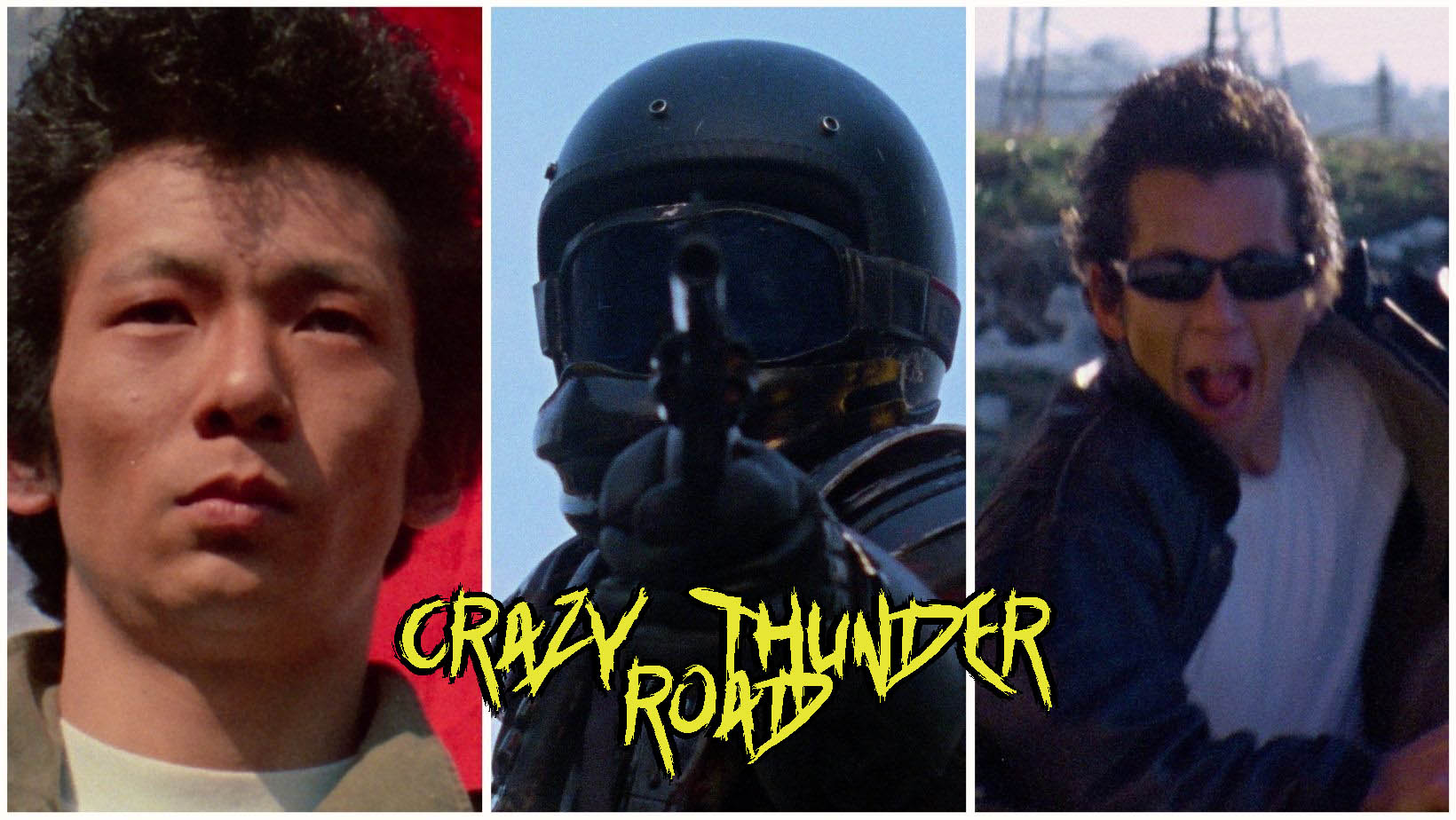
Famous examples of filmmakers beginning their careers in Jishu eiga include Naomi Kawase, whose intimate, self-reflective documentaries, such as Katatsumori (1995) and Embracing (1995), ascended her into the mainstream while attaining multiple awards across several film festivals including Cannes. Other notable directors who adopted this approach are the likes of Kiyoshi Kurosawa, Hideo Nakata, and Sogo Ishii who all began making short, low-budget films on 8mm and 16mm. One of the most popular examples of these is Crazy Thunder Road (1980) and we are happy to review this as an opportunity from Third Window Films.

Crazy Thunder Road is a 1980 Japanese punk action biker film, written and directed by the incredible Sogo Ishii . Known for his Jishu Eiga works such as Isolation of 1/8800000 (1977) and Panic in High School (1978) to name a few, Crazy Thunder Road was Sogo Ishii’s breakthrough into mainstream cinema.
“When Ken, the leader of the once-notorious biker gang of Tokyo, falls in love with a barmaid, he quickly loses his rebellious ideals. The rest of the gang feels betrayed, especially the reputedly troubled kid Jin who revolts against his former friend.”
Typical in Jishu eiga, the film features an astonishing use of creative and stylish cinematography throughout the film’s run time. A multitude of camera shots are implemented throughout, their varied execution feels purposeful and matches a scene’s tone comfortably. From close pans and frantically claustrophobic fight scenes, along with beautiful establishing shots, these display an unbelievable cinematic technique by the then 20-year-old film student.
Moreover, the film is visually grimy in its presentation, firmly set in the counterculture of Japan at the time. Specifically, the gang’s anti-establishment attitude paralleled the views of many groups of youths in Japan at the time. The big city suburbs are portrayed as a seedy underworld rife with criminal activity, a den for gunrunners and drug dealing children to peddle their wares unhindered in a sea of neon light.
Featuring a boisterous range of music, the film’s soundtrack enhances the film tremendously. Full of rambunctious Japanese punk and rock, the soundtrack enunciates the story efficiently and supports distorting already frantic fight scenes between the rival gangs.

The film captures the essence of rebellious youth adroitly, utilizing the previously mentioned music and clothing to the communal disenfranchised attitude to do so effectively; it represents youth culture and their struggle to find their identity in a turbulent time. Consequently, the only care shared by these gangs is their own personal enjoyment, be it drink, drugs, or fighting – a disregard for personal well-being is the communal sacrifice in search of escapism and amusement.
Undoubtedly, Crazy Thunder Road has a level of influence taken from Walter Hill’s The Warriors. Reminiscent in character design as well as some elements of the story, Sogo Ishii elaborates on these influences, injecting his own personal style into the mix to create a unique production overall. However, Crazy Thunder Road’s cyberpunk biker aesthetic can be seen in the work of Katsuhiro Otomo, notably Akira (1988) emulating these styles and sentiments at its very core design.
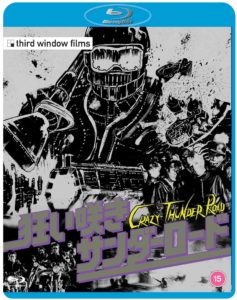
After 42 years, Crazy Thunder Road is finally receiving an official release outside of Japan thanks to Third Window Films’ remarkable new Blu-ray release. Featuring a new restoration supervised by director Sogo Ishii, alongside many new and exclusive extras. Including a new interview with Gakuryu (Sogo) Ishii, audio commentary by Tom Mes, and a video essay by Jasper Sharp on Jishu Eiga. It is available here.
As university projects go, this is by far one of the most polished I have ever seen. Accordingly, the attentive skill displayed by the cast and crew, along with the deliberate style in cinematography and editing, elevate Crazy Thunder Road into a timeless representation of the disenfranchisement of youth. It’s exciting to see this incredible film finally see some kind of release outside of Japan, its availability to a new audience should aid in pushing the film to cult classic status outside its country of origin.

More Film Reviews
Synopsis: Childhood friends are trying to carve out their own piece of infamy online by staging exorcists and selling bunk merch. Wanting to increase their following, the two struggle to come… For the length of time that zombie movies have been a part of horror, it is only natural that the subgenre would eventually go stale, occasionally requiring a total re-evaluation… An Irish musician, played by writer, director, and editor Richard Waters, heads into the woods to record a music album. Using the inspiration of nature and a break from the… After the tragic loss of his mother, Oliver is threatened with state custody unless he can find a new family. And so Oliver does just that… by digging one up… RevBarely a year after Neil Marshall’s first big-budget Hollywood feature, Hellboy (2019), failed to earn him a box office success, he has returned to his horror roots with the much… In the great history of vampire movies, there are a lot of incredible films – but only one can claim to be the first vampire film, and perhaps the most…
The Cleansing Hour (2019) Review – The Devil Wants More Followers!

Stacy: Attack of the Schoolgirl Zombies (2001) – Film Review and Retrospective
![Distort (2025) Film Review – Messages of Horror from the Unknown [Unnamed Footage Festival]](https://www.grimoireofhorror.com/wp-content/uploads/2025/03/Distort-2025cover-365x180.jpg)
Distort (2025) Film Review – Messages of Horror from the Unknown [Unnamed Footage Festival]

The Loneliest Boy in the World (2022) – Just Dig Up A Best Friend If You Need One

The Reckoning Review (2020) – Neil Marshall’s Return to Horror

Nosferatu: The Real Story (2024) Film Review – Looking Back and Forward

Hey there, I’m Jim and I’m located in London, UK. I am a Writer and Managing Director here at Grimoire of Horror. A lifelong love of horror and writing has led me down this rabbit hole, allowing me to meet many amazing people and experience some truly original artwork. I specialise in world cinema, manga/graphic novels, and video games but will sometime traverse into the unknown in search of adventure.