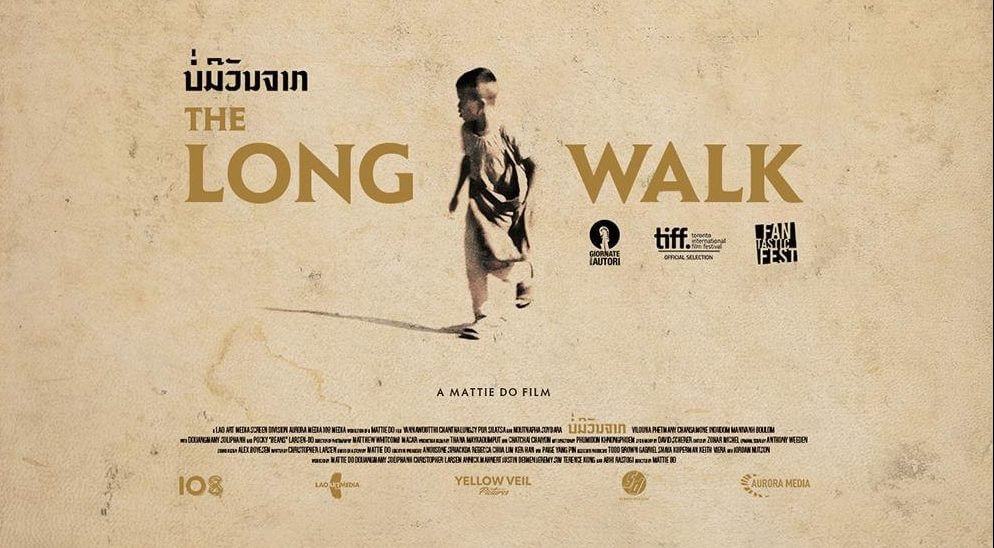
Combining elements of half a dozen genres, The Long Walk is a surprisingly cohesive supernatural time travel drama from Laos, the most recent Southeast Asian country to break onto the horror scene.
Laos’ first and only female film director, and the country’s first horror film director at all, the award-winning Mattie Do’s third film with writer Christopher Larsen is a slow-paced thinker that’s well worth the effort. An existential supernatural thriller with horror elements and a hint of sci-fi, the film is mostly a melancholic exploration of how pain and grief stay with us and change us.

The opening scene effectively sets the tone of the film; the overwhelming noise of rural life contrasted with an ever-present whining of electricity is the soundscape to dirty fingernails and rusted machine parts, buried skulls and bio-tech. Dusty yellows and murky greys dominate the colour scape.
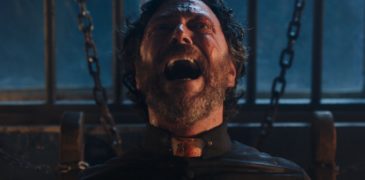
Weaving the past and multiple presents together, we see the main character as both a young boy and an elderly man. When the boy finds a dying woman in the forest, he kindly holds her hand and stays with her as she dies. He continues to visit her rotting corpse as a means to escape his difficult home life, where his beloved mother is slowly and painfully dying of tuberculosis.
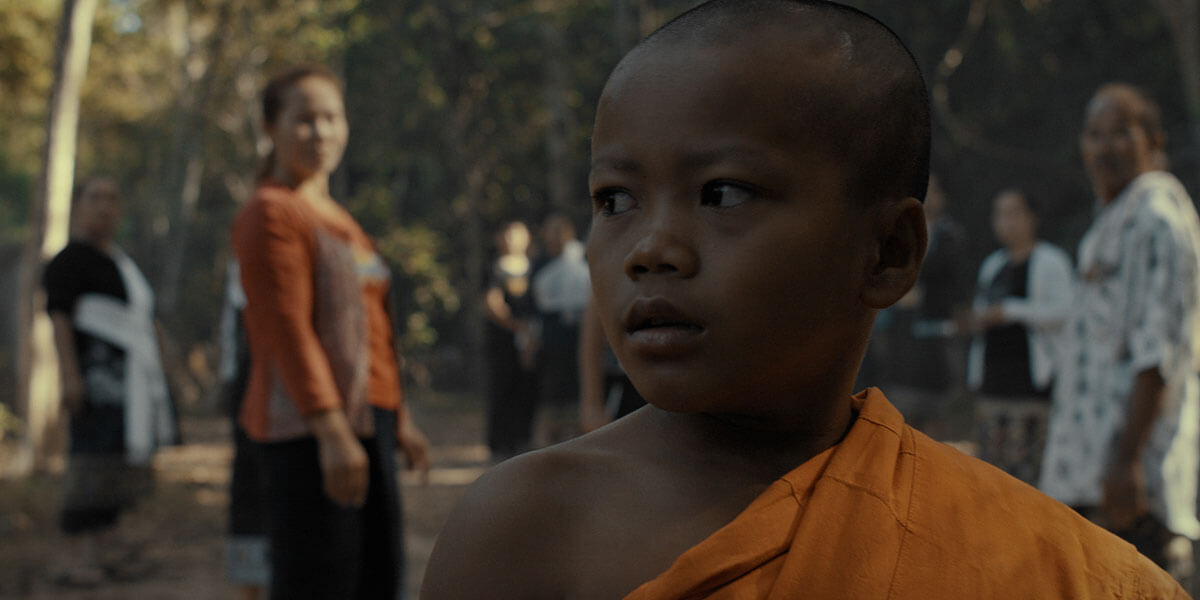
When he’s visited by the ghost of the woman in the forest, he realises two important things: firstly, that pain is alleviated through death; and secondly, that anyone who is buried in the forest is denied ascendance and stays on as a spirit. These two facts would shape the rest of his life, and then some.
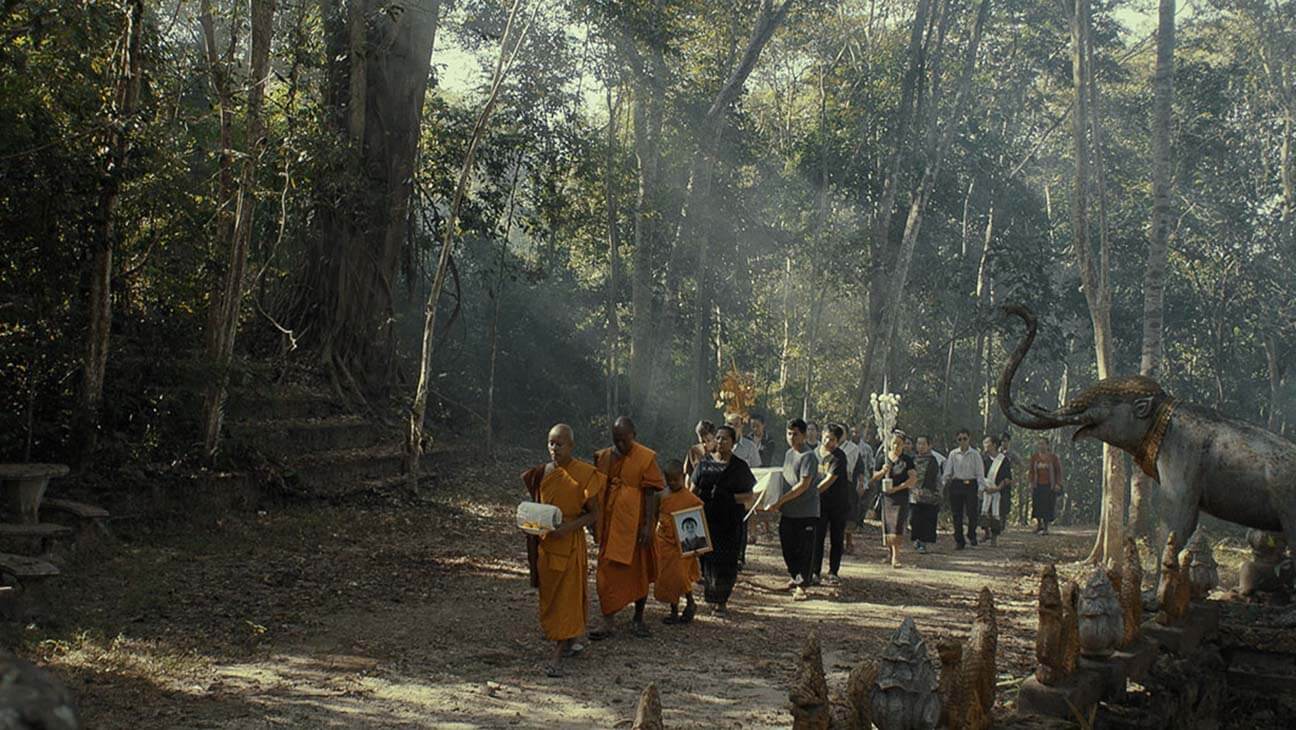
In the future, the man is visited by local policemen keen to find the body of a local woman gone missing, followed by the missing woman’s daughter who decides to stay with him while they look. The ghost he’s known his entire life then reveals an important secret: she can transport the man back in time to his childhood, where he can fully interact with himself as a youth.
Anyone who knows anything about time travel can tell you, you should never interact with your past self, and you especially shouldn’t reveal your identity. That’s like rule number one, and The Long Walk shows us exactly why, as The Man continuously makes things worse by trying to fix his own past. It’s only when he returns to his present that he can see what meddling with time has done to him.
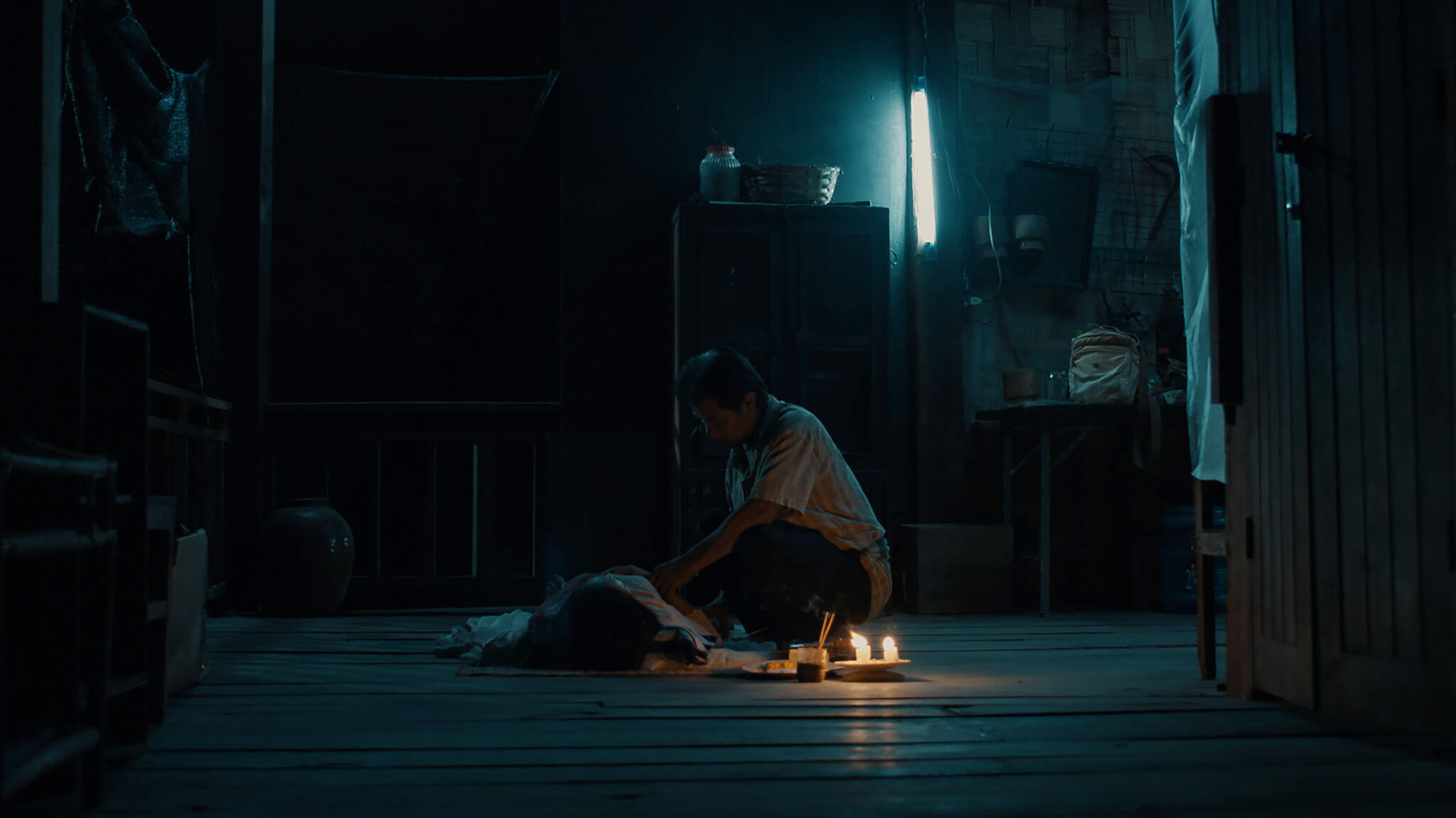
The Long Walk is a Lao film not only in origin but in influence – the film exemplifies the life of rural Lao people living under the Lao People’s Revolutionary Party, a government with a history of shocking human rights abuses and torture. In both his past and future, the main character lives in the same level of abject poverty; whether the technology of the day is solar panels or subdermally implanted ID chips, he lives the same life of desperation.
Do also examines the looming threat of globalization, with an incoming tide of English-speaking investors encouraging the boy’s father to install solar panels, even though he needs food far more than electricity. This critique of what many would consider to be benevolent development of poorer countries is interesting and important, as it highlights the self-serving nature of such efforts.
The Long Walk is brilliant; slow and methodical, it allows the mystery to unfold at a steady pace, ramping up the violence and gore as it goes.
The Long Walk is available on VOD 28th February in the UK, courtesy of Lightbulb Film Distribution.

More Film Reviews
She Kills is a 2016 American action horror film, written and directed by Ron Bonk. Boasting a huge filmography as an executive producer, Ron is known as the proprietor of… Lake Jesup is a 2024 creature-feature horror comedy written and directed by Michael Houston King. Working in the TV industry as an actor for nearly 30 years, Michael has also… The exorcism subgenre can be a bit of a double-edged sword. It’s so easy to rely on cheap makeup effects and jump scares to quickly turn a profit, which is… Chloe Okuno’s Watcher, which delighted lucky Sundance Festival-goers earlier this year, is a step forward for the horror genre and doubles as a neat entry point (for those curious) into the… Horror filmmaking royalty collides in Two Evil Eyes (1990): a star-studded yet relatively niche anthology horror from the depraved minds of Dario Argento and George A. Romero. The dastardly duo… It’s understandable why Japanese filmmakers focus so often on the feudal era in their horror cinema. It’s a setting so naturally horrific in the plight and pain of the peasant…
She Kills (2016) Film Review – Right in the Dick
![Lake Jesup (2024) Film Review – “CATCHPHRASE!” [Dead Northern Film Festival]](https://www.grimoireofhorror.com/wp-content/uploads/2024/09/Lake-Jesup-2024-cover-365x180.jpg)
Lake Jesup (2024) Film Review – “CATCHPHRASE!” [Dead Northern Film Festival]
The Exorcism of God (2021) Film Review – Tough Questions Require an Exorcist
Watcher (2022) Movie Review – A Smart Fish-Out-Of-Water Paranoid Thriller

Two Evil Eyes (1990) Film review – Defrosting Forgotten Horror History

Ugetsu (1953) Film Review – Feudal-Era Horror

Jenny is a creative copywriter living just outside of Liverpool who loves horror, board games, comics, video games and industrial metal.