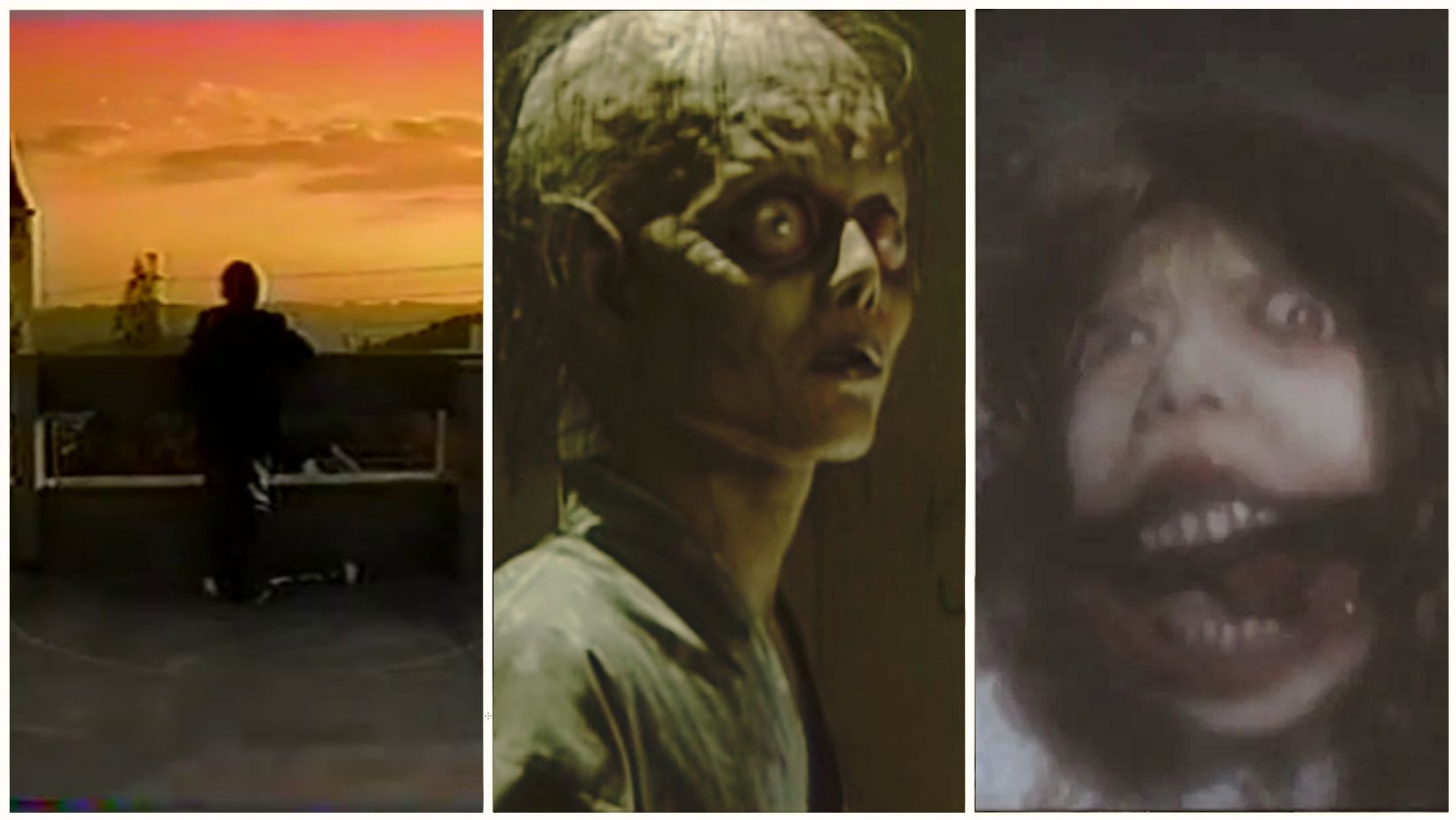





One of the most notable names in modern horror manga, Junji Ito has left an indelible mark on both the medium and the genre as a whole. From his striking, unsettling artwork and undeniably foreboding atmospheres to his simple yet effortlessly horrifying narratives, Ito can take even the most mundane ideas and weave them into an engrossing tale that evokes a primal level of fear in the reader. With a wealth of short stories and full-length narratives under his belt, it was only natural that filmmakers would want to adapt his unique, nightmarish vision to the big screen. But while you have certainly heard of classic Junji Ito adaptations such as Uzumaki (2000) and Gyo (2012), and more modern interpretations such as Bloody Smart (2026) and Junji Ito Maniac: Japanese Tales of the Macabre (2023), many lesser-known, lower-budget adaptations of Junji Ito’s work have mostly escaped the public eye. As such, we decided to check out some of these more obscure titles that may have flown under your radar.
Long Dream (2000)
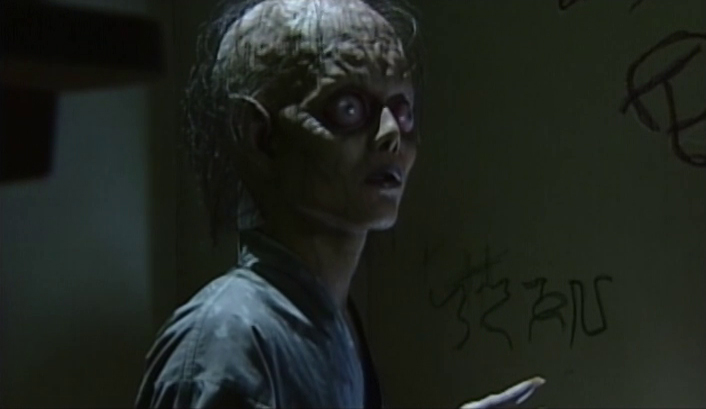
Strange things lurk in dreams. For Mukoda Tetsurou and the doctors tending to him, things have begun to get stranger as Mukoda begins having longer and longer dreams every night. Can one dream infinity in the span of a night?
Adapted from the short story of the same name, Long Dream does a fantastic job of replicating the manga’s intense imagery through impressive practical effects. Directed by Higuchinsky (Akihiro Higuchi), this made-for-TV movie follows the original story quite closely for the most part. However, because of the original story’s short length, Higuchinsky took some artistic liberties to expand the narrative to fit its 60-minute runtime with the introduction of original subplots and side characters. While these may slightly differ in tone, they still fit well within the original concept and are overall a decent expansion of Ito’s work.
Oshikiri (2000)
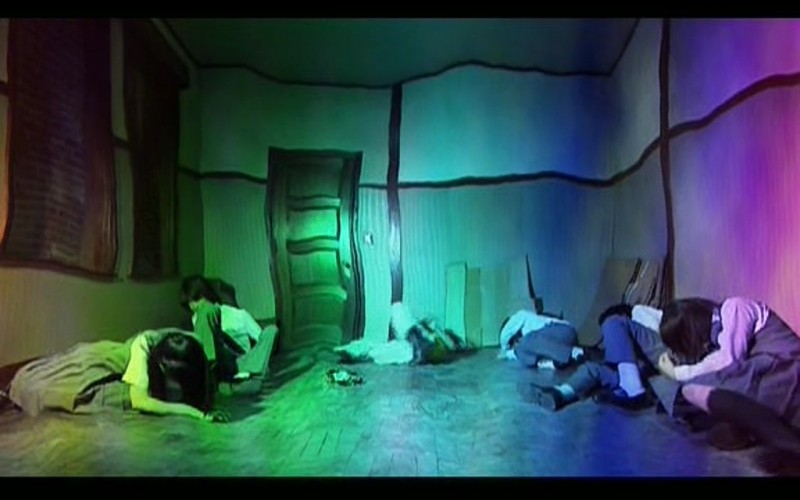
Toru Oshikiri is a loner haunted by memories of his childhood and his grandfather, a brilliant scientist. He returns to his grandfather’s mansion to try to remember what really happened. He finds a portal to a parallel universe his grandfather originally discovered. From this portal comes his doppelganger, dressed in a cloak and gas mask, who kills his fellow students with an ancient axe.
Written and directed by Yoshiki Sato (referred to as Zenboku Sato), Oshikiri is mostly based on the short story The Intruder, with some elements from Strange Tale of Oshikiri: The Walls, as well as other Oshikiri shorts. However, like many adaptations of Ito’s work, the narrative expands rather than directly retreading the manga—adding continuity to the fractured design. Additionally, the film deepens the lore of the murderous doppelganger into a more classic slasher antagonist. Rather than being depicted as just a direct copy of Toru, the film shrouds the antagonist in mystery with the obscuration of their identity. Their portrayal as a stereotypical serial killer clad in a gas mask certainly makes for an impressive reveal, but sacrifices a lot of the original’s uncanniness.
The Face Burglar (2000)
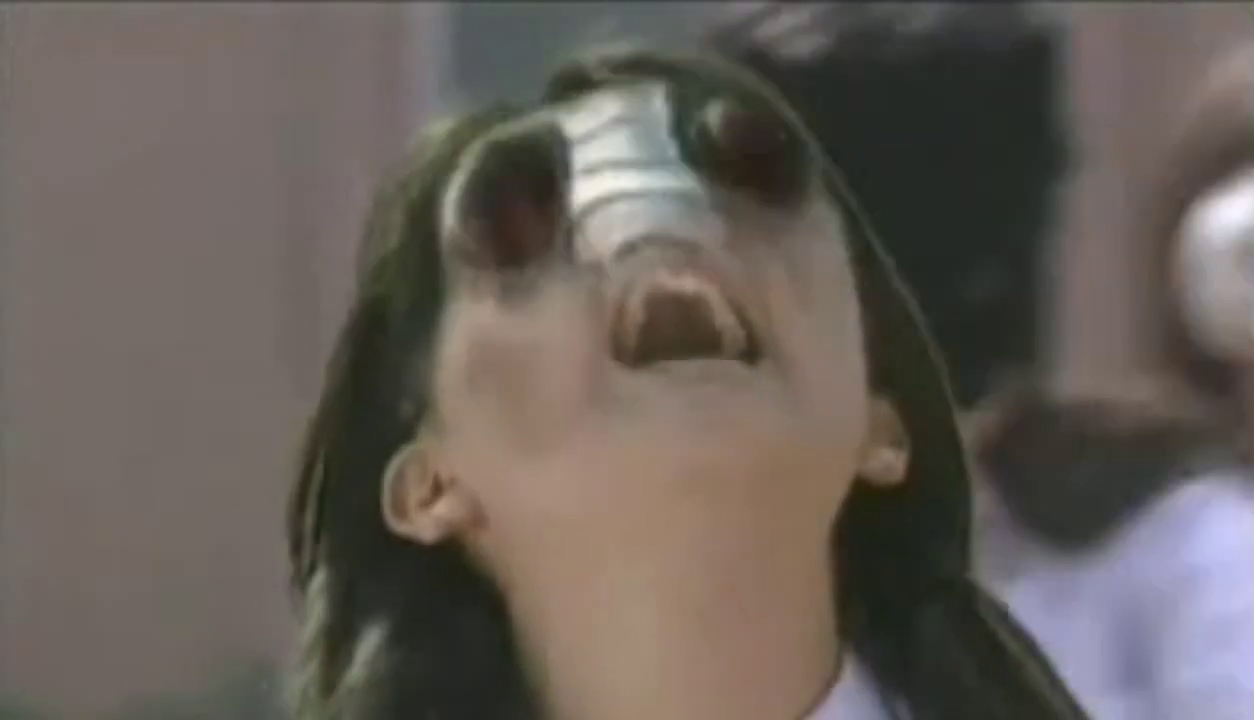
Momoko Kamei has the mysterious ability to mimic the appearance, voice, and mannerisms of any woman she spends time with—so accurately that the victim’s friends can’t tell the difference. After being turned down by her crush for not being as pretty as his current girlfriend, she begins to stalk and record the unsuspecting schoolgirl to try to better imitate her mannerisms to win her love interest’s infatuation.
Based on the short story of the same name, The Face Burglar does a fantastic job of exploring the themes of isolation, loneliness, and self-identity prevalent in the original. Directed by Kenji Nakanishi, the main change implemented in this adaptation is the addition of new characters to build a stronger framework for the narrative. While released on VHS and DVD in Japan in late 2000, the film never had an official release globally, and, as a result, has never received an official translation—leaving available copies without English subtitles. However, there are mentions of a (poor-quality) fan translation floating about online, but most links seem to lead to an unavailable YouTube video.
Street of Gravestones (2000)
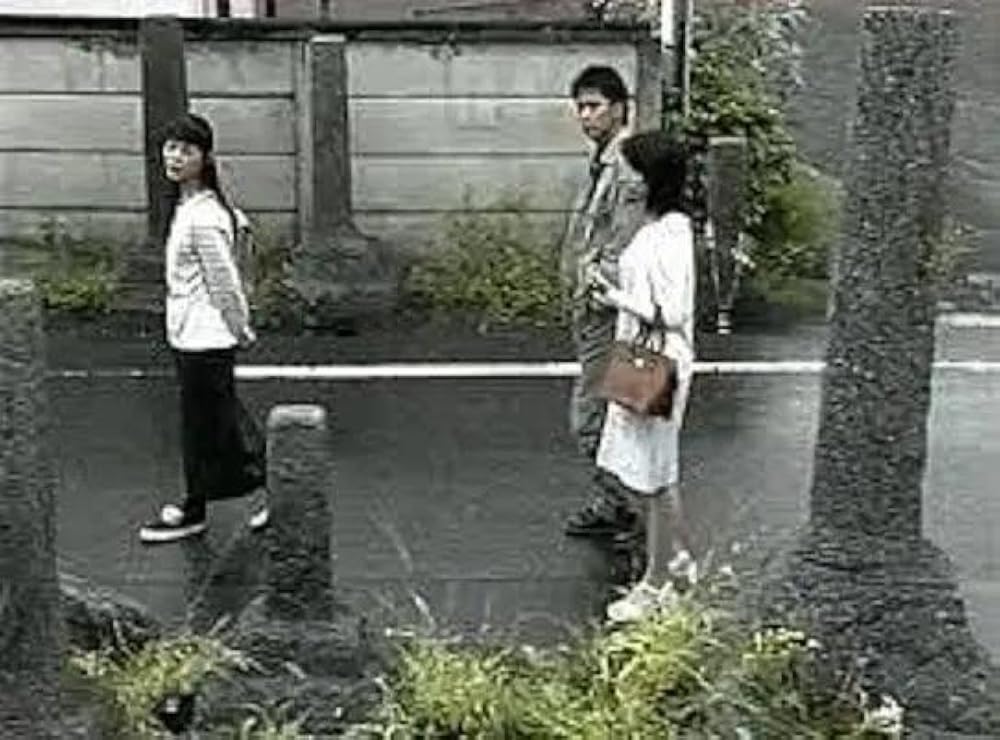
A pair of siblings visit a friend in a remote town with a strange effect on its inhabitants; when they die, they transform into gravestones.
Directed by Kenji Nakanishi, Street of Gravestones is said to have been a fairly faithful adaptation of its source material. The film aired as part of the 2000 TV series Junji Ito Horror Collection broadcast on Asahi National Broadcasting, alongside The Long Dream, The Face Burglar, and a different version of Oshikiri (all information suggests this version may have been a director’s cut). However, unlike The Long Dream, The Face Burglar, and the theatrical cut of Oshikiri, Street of Gravestones never received any home VHS or DVD release, and is currently considered lost media (the different cut of Oshikiri mentioned also cannot be found). With the only available screenshot being (supposedly) sourced from an ancient Yahoo! Japan blog, it would seem that this adaptation may never see the light of day again.
Marronnier (2004)
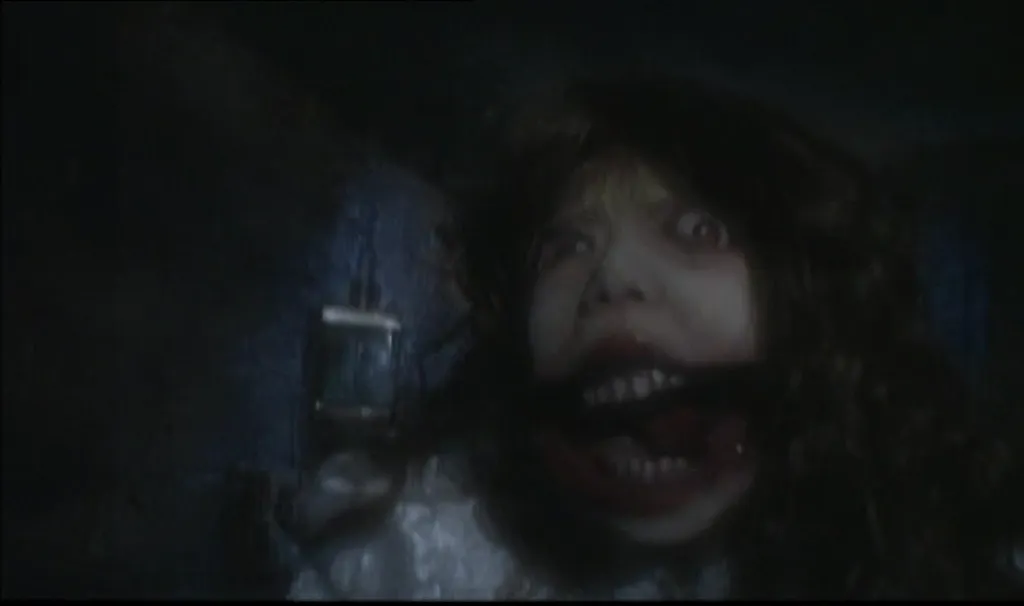
The tale of an inventor with a menacing streak who creates a contraption that turns humans into marauding dolls. One of his creations becomes the toy of an unsuspecting young girl who becomes the subject of strange fascination for the inventor’s assistant.
Loosely adapted from two separate shorts, Marionette Mansion and A Doll’s Hellish Burial, Marronnier (2004) blends their premises into a unique narrative. As a near one-man project by first-time filmmaker Hideyuki Kobayashi, the film certainly isn’t without issues. From wild pacing to soap opera-esque music cues, the film lacks the level of polish seen in other adaptations. Yet, despite this, the film is undoubtedly one of the best doll horrors to be released, offering genuinely disturbing monster designs and uncanny valley-level horror that is highly effective. Furthermore, unlike most adaptations that credit the mangaka as the source material author, Ito had a small level of involvement in the film’s creation. He is credited as a supervisor of the project, in a design role aiding with the dolls’ visual design, and even makes a brief cameo appearance in the film.
The Hanging Balloons (2000)
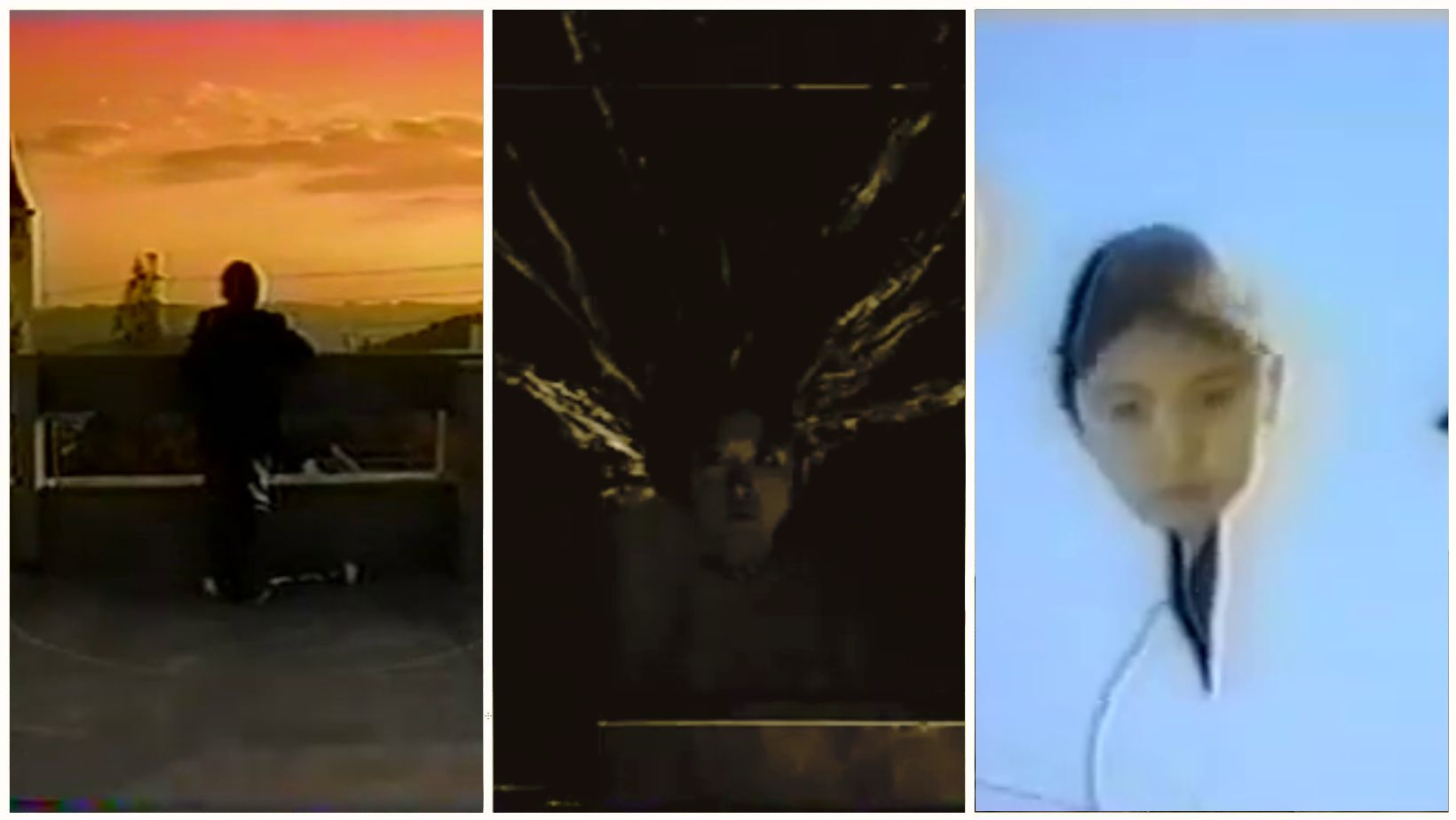
An anthology horror that retells Ito’s The Devil’s Logic, The Long Hair in the Attic, and The Hanging Balloons. In The Devil’s Logic, suspecting his girlfriend Kazumi is having an affair with a classmate, Okamori plants a listening device on her. Eventually, Kazumi commits suicide by jumping off a building, and Okamori learns a shocking truth from the recording tape she left behind. In The Long Hair in the Attic, Chiemi, an innocent office worker, is resented by her boyfriend Koichi. After extorting a large sum of money from her, he leaves her for another woman. Crying, Chiemi cuts the long hair she had grown out at Koichi’s request. In Hanging Balloons, Balloons shaped like human faces hold the person inside and pull them into the sky. The first victim is idol talent, Terumi Fujino. When her twin sister is also attacked, the media is thrown into an uproar.
Directed by Hiro Masaki, Ryuta Miyake, and Issei Oda, respectively, The Hanging Balloons is a straight-to-video anthology film based on several of Ito’s works, produced by Omega Micott and released by Daiei Co. The film’s first segment, The Devil’s Logic, is fairly faithful to the source material—making only minor changes to the original story. While the manga’s short length of a few pages gives the story a rapid pace, the adaptation slows this momentum to build tension more atmospherically. Additionally, while the protagonist is presented as a jealous classmate in the manga, the film casts him as her boyfriend—shifting his motive from spite to romantic suspicion. Despite these changes, the segment conveys the story’s bleak, cyclical tones well.
The anthology’s second segment, The Long Hair in the Attic, similar to the previous segment, slightly adjusts the narrative to fit the medium of film more cohesively. While the main story elements remain unchanged, the film embellishes certain background details such as scene locations, as well as providing a level of tragic catharsis lacking in the manga. The film also offers a slower, more deliberate introduction to the characters—fleshing them out into three-dimensional characters. Moreover, the film provides a decent level of body horror with some impressive, yet limited, practical effects, successfully translating the manga’s horrific imagery.
The final adaptation, The Hanging Balloons, is certainly the anthology’s highlight. Taking a more meta approach to the original story, this adaptation’s key difference is that the manga exists within the film’s universe. Everyone knows who Junji Ito is, and they are all obsessed with his latest release, The Hanging Balloons, turning the inexplicable horror into a self-fulfilling curse. While the narrative still focuses on the impact of celebrity worship, this addition encompasses media consumption in its critique. Moreover, the film’s special effects do a great job of adapting Ito’s visual design. Although the CGI used isn’t of the highest quality, its primitive design, along with the degradation of the aged digital footage, presents some disturbing imagery.
The Groaning Drain (2004)
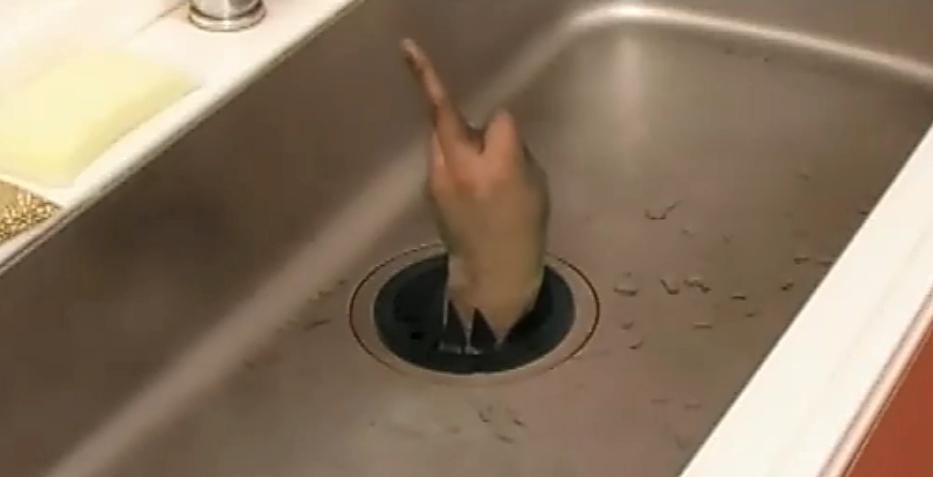
Two sisters and their cleaning-obsessed mother are at first only mildly annoyed by their drains being clogged. Until the drains begin to leak a foul smell and moaning.
A boldly distinct approximation of the short story of the same name, The Groaning Drain certainly pushes the limits of creative freedom as an adaptation. Using Ito’s original manga as a loose guideline, the film retains certain basic narrative elements, such as characters and the titular drain with a taste for human flesh. However, director Ataru Oikawa changes both key aspects of these characters, as well as introducing new ones, along with altering the original tone of the story. From turning a character into a slasher-horror-esque stalker to the constant mention of a strange virus contaminating the water, the narrative is drastically altered from the original (not necessarily for the better). Furthermore, the addition of a bizarre comedic overtone is baffling, to say the least. With random cutaways to one of the characters performing musical numbers and overly exaggerated performances that border on slapstick, the tonal shifts between comedy and horror are far from complementary to each other.
The Fearsome Melody (1991)
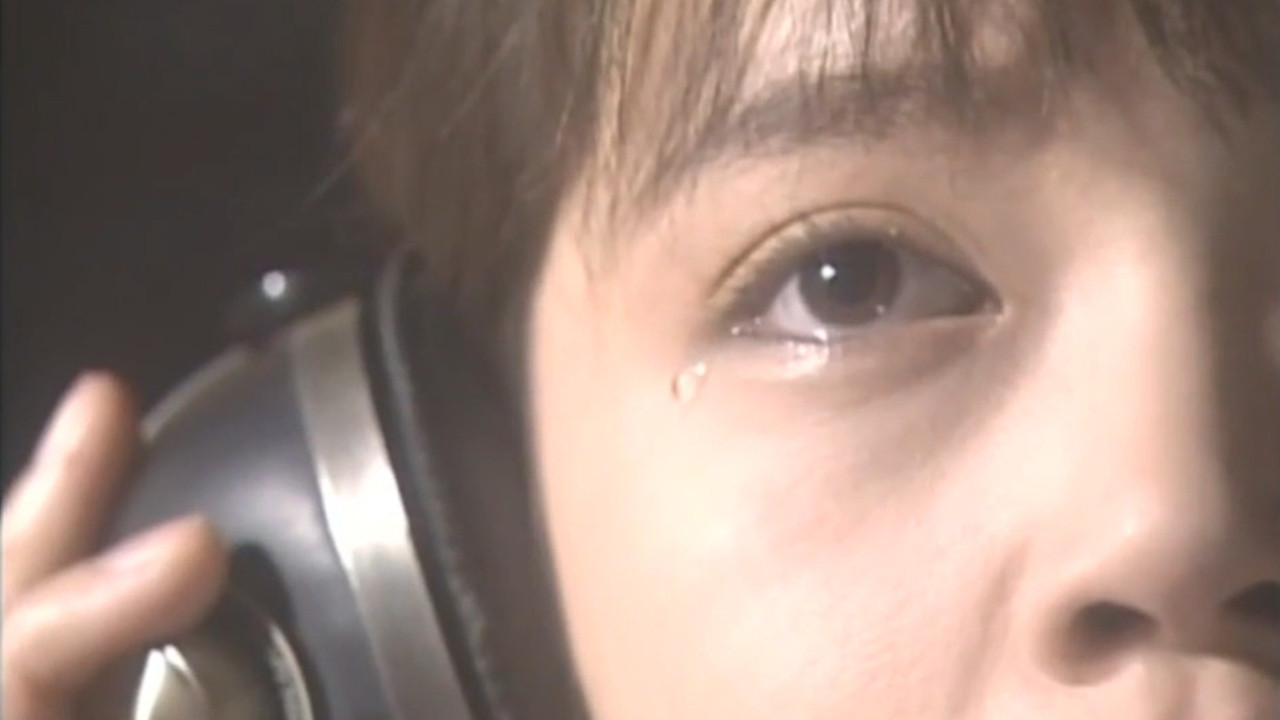
A haunted melody, a used record one must possess. At any cost.
Written and directed by Takumi Kimizuka with additional directing from Yōichi Nishiyama, The Fearsome Melody (1991) is based on Ito’s short story Used Record. First broadcast on Kansai TV on October 16, 1991, the short was part of an anthology series of 30-minute TV dramas collectively titled DRAMADOS, eventually receiving a DVD release in Japan on July 29, 2005. Being a relatively faithful adaptation of the source material, the narrative has received very little change—retaining the original premise and atmosphere. However, one of the key differences is in the film’s ending, discarding the ambiguous, supernatural finale for a more definitive, grounded ending. Unfortunately, similar to Face Burglar, this adaptation never received an official English translation, and remains unsubbed.
Kakashi (2001)
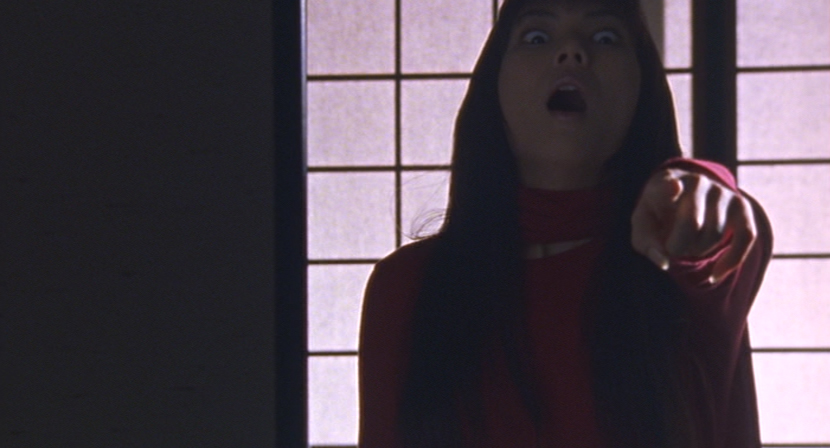
Searching for her vanished brother, Tsuyoshi, Kaoru travels to the lonesome village of Kozukata in the Japanese backlands. The locals react with repulsion to her, except for a Chinese girl, Sally. When her car breaks down, Kaoru is trapped in the village; will she have to pay for her past actions?
Directed by Norio Tsuruta, Kakashi is mostly adapted from the short story of the same name, but also borrows thematic elements from other Ito manga, such as Tombs. The film alters numerous aspects of the original narrative, narrowing the story’s scope from supernatural horror to an atmospheric melodrama, recasting the accidental discovery of the Kakashi’s power as a well-established village tradition, and entirely reworking the featured characters into new protagonists. The film also adds subplots to pad out the original manga’s rapid progression to fit its feature length. The titular scarecrows, though simple in design, carry an uncanny weight, delivering genuinely disturbing moments scattered throughout.
Love Ghost (2001)
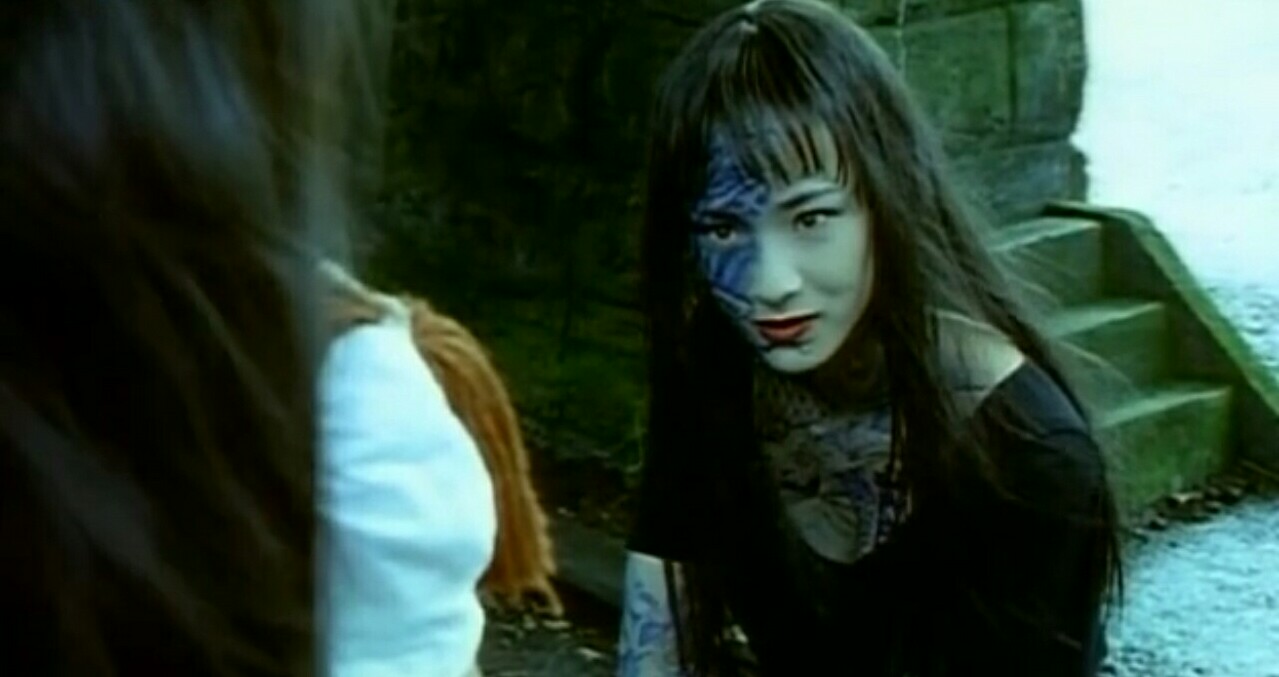
Teenager Midori’s family moves back to the city where she lived as a child and is relieved to discover that her old friend Ryusuke still lives there. Her terrifying nightmares begin intersecting with her everyday life. Do her nightly dreams about an anonymous fortune-teller have anything to do with the tragedies plaguing her high school?
Adapted from the 5-chapter manga series, Lovesickness, Love Ghost (2001) offers a less grim, more melancholic and fractured romance story. Directed by Kazuyuki Shibuya, the film blends multiple elements from each chapter, and utilises a slower momentum typical of J-horror over the manga’s original pacing. Additionally, the narrative shifts protagonists from Ryusuke to Midori’s perspective of events, altering the guilt-ridden narrative by focusing on traditional romance elements—with the curse being experienced more passively by her than by Ryusuke’s psychological connection. Furthermore, the film lacks the eerie trademark fog and visceral gore due to budget limitations, yet still manages to present the characters’ deaths impactfully despite this.
The Earthbound (2015)
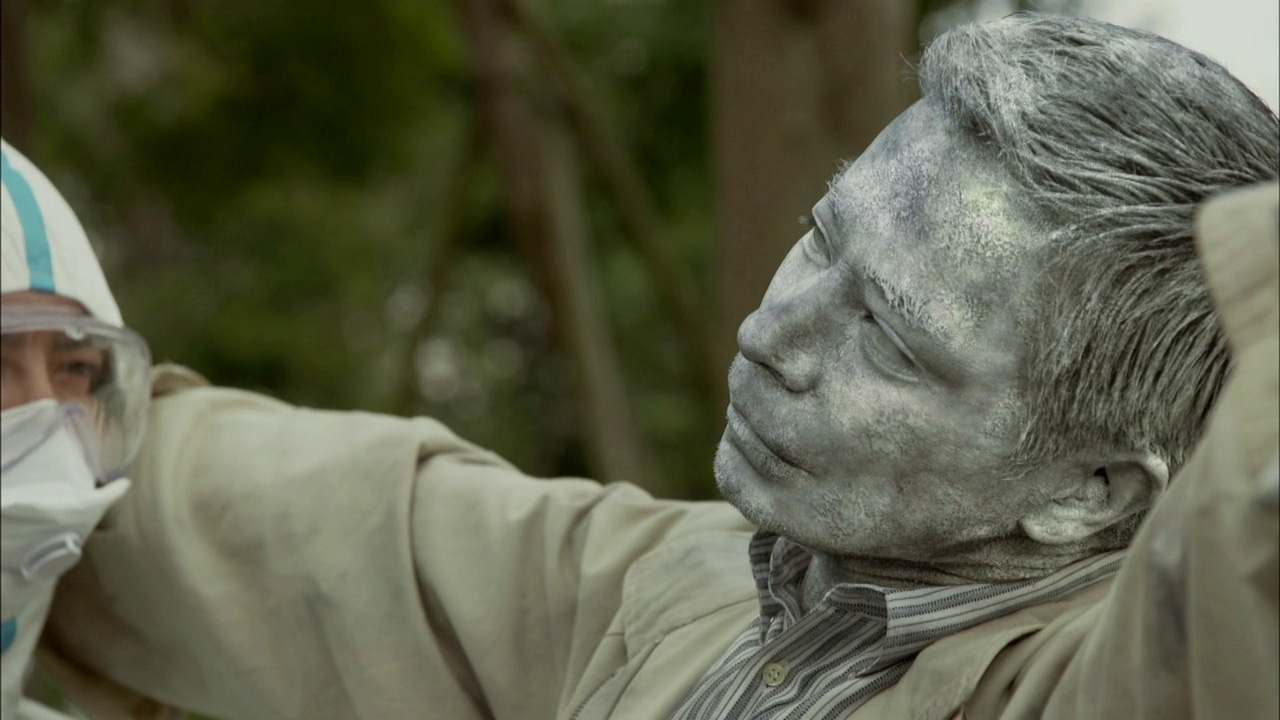
People begin to mysteriously freeze in place, becoming statue-like, unable to move. If physically moved by someone else, they return to the same location. They become known as “the earthbound” and increase in number.
Based on the story of the same name, The Earthbound is a 30-minute short that was broadcast as part of the TV show Tales of the Unusual: 25th Anniversary Spring Special ~Popular Manga Artists Competition~ (世にも奇妙な物語 25周年スペシャル・春 ~人気マンガ家競演編~), featuring adaptations of works from Go Nagai, Eiichiro Oda, Kazuo Umezu and Masayuki Ishikawa, as well as Junji Ito. The segment makes significant changes to the original story, narrowing its narrative scope. Not only is the protagonist’s experienced trauma altered, but entire subplots are dropped, and the story’s ending is drastically changed. Moreover, due to budget restrictions, the short bypasses most of the body horror elements prevalent in the story. However, while these scenes are notably absent, avoiding the use of low-quality CGI certainly provides a more palatable experience overall.
More Lists
5 Chinese Horror Movies To Explore
China is never the first country you think of when it comes to horror films. Government regulation have all but destroyed most of the creativity in all movie genres, not…
Killer Kitties – 10 Most Dangerous Cats in Asian Cinema
Revered throughout ancient history, the humble kitty cat has long been considered a necessary addition to society. Associated with agriculture, pest control, and cleanliness, their presence was celebrated as an…
Celebrating The Best Hidden Gems of The Found Footage Horror Genre (Part 1)
From the dawn of humanity’s time on this Earth, fear has been the most important feeling for the survival of man. It is what keeps us alive, the reason…
Top 15 Pseudo-Snuff Films – Diamonds In The Snuff
The generally agreed definition of a snuff film is a real (not staged) filmed murder. In some cases, it is viewed for arousal. However, this is somewhat incorrect, as by…
5 Disturbing Japanese Books for Horror and Thriller Fans

People tend to underestimate just how unsettling reading horror can be. Granted, there are no images or music, but sometimes the brain fills in the blanks all too well and…
Top Christmas Horror List – Ten More Movies to Add to Your Holiday Horror Watchlist

As the holiday season approaches, many people look forward to cozy evenings by the fireplace dipping into the eggnog, and singing the Christmas classics. But holiday-themed horror movies offer a…

Hey there, I’m Jim and I’m located in London, UK. I am a Writer and Managing Director here at Grimoire of Horror. A lifelong love of horror and writing has led me down this rabbit hole, allowing me to meet many amazing people and experience some truly original artwork. I specialise in world cinema, manga/graphic novels, and video games but will sometime traverse into the unknown in search of adventure.