




True crime has become a popular sub-genre that has reached a wide audience of those looking for shock or to better understand the lowest depths of humanity. However, the genre seems to hold comfort in the knowledge that these stories we can attribute to another’s actions, not the construct of an artist. Certainly, there are exceptions, but it is hard to argue that fiction focused on violent realism over sensationalism garners a smaller niche audience.
It can be difficult to quantify why people become investing in the genre, but events grounded in reality seem to create a buffer – a safe space for someone to enjoy exploring. comparatively, when an ‘artist’ creates a monster of their own will it is up to the reader to actively participate in bringing the entity to life – you can’t point towards real actions as reason to justify morbid interests.
Nishioka Kyoudai, a pseudonym of a brother-sister duo, is familiar working with controversial narrative work. God’s Child, however, is a bit different in it lacks fantastical elements found in the rest of their bibliography in favour of crafting an uncompromising portrait of a killer. Anti-social behavior, associating violence with sexual release at a young age, and misdiagnosed mental issues, are but a few scenarios that fans of true crime will be able to associate with real-life killers.
As a fan of the siblings, this particular project was really unsettling on first read when I came across it years ago. I was not sure how I would feel on revisit but was curious to dive in and give my general thoughts.
Plot
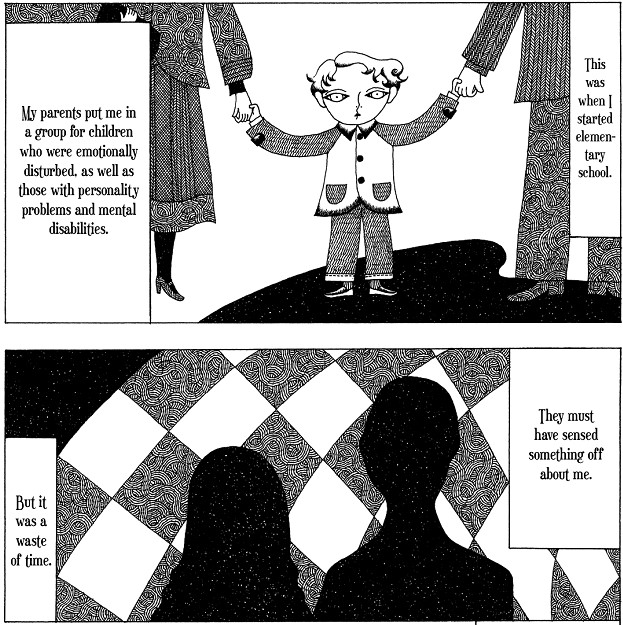
A nameless protagonists tells his life story and how he came to be a violent killer and manipulator. From his early school days at a school for special needs becoming his hunting ground, to his later days where he uses his charisma to draw in wayward children to fulfill his sexual desires and train them to kill, God’s Child is the story of a despicable evil force pretending to be human.
What Did I Like About It
While containing minor elements of sensationalism, the work is shockingly realistic in its portrayal of trauma that acts as a background to many famous killers. The duo certainly did their research, with certain turns reminding me of the explored lives of such figures as Richard Ramirez and Albert Fish. Consequently, the story flows in an oddly familiar fashion that makes the escalating depravity unsurprising. Does this make it any less shocking? Certainly not, but it does speak to the duo’s ability to tell these types of stories with conviction.
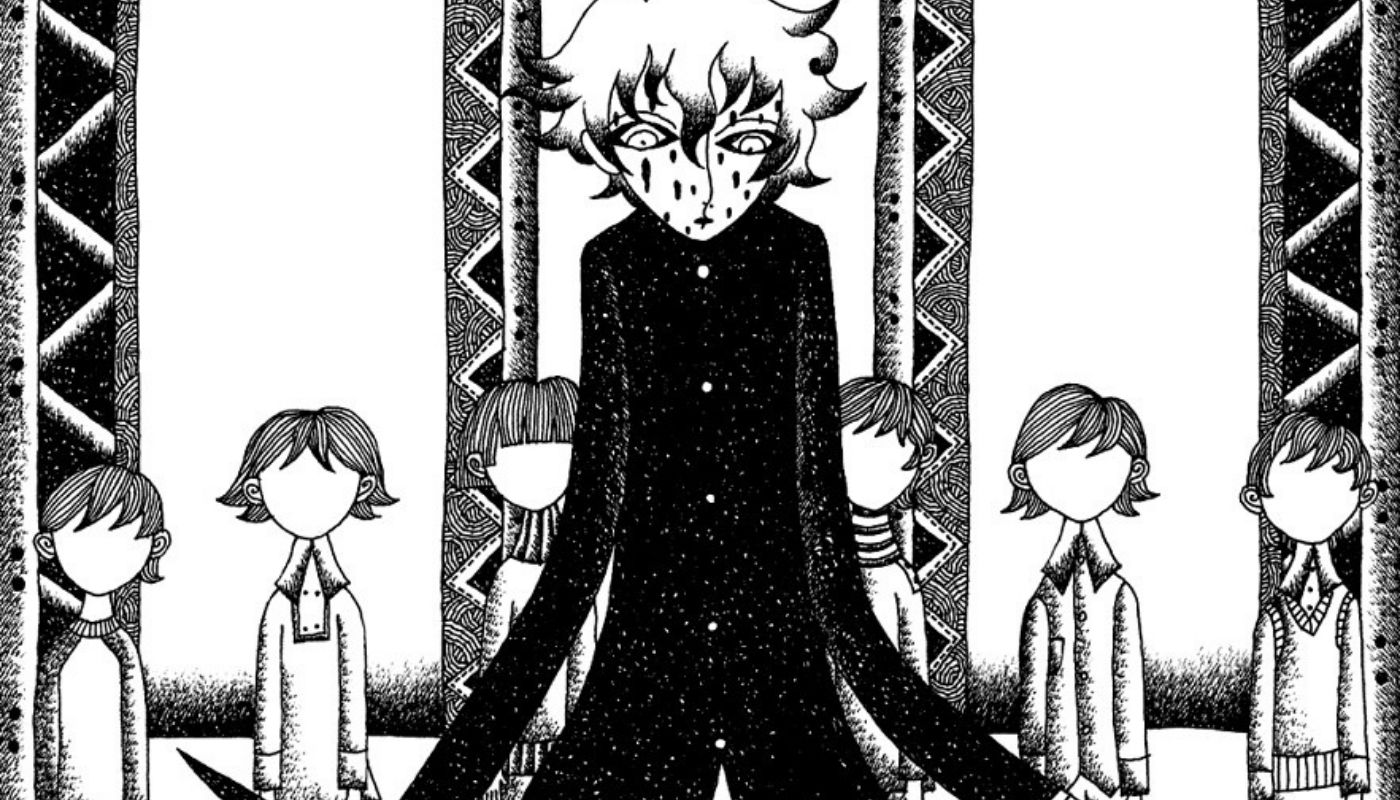
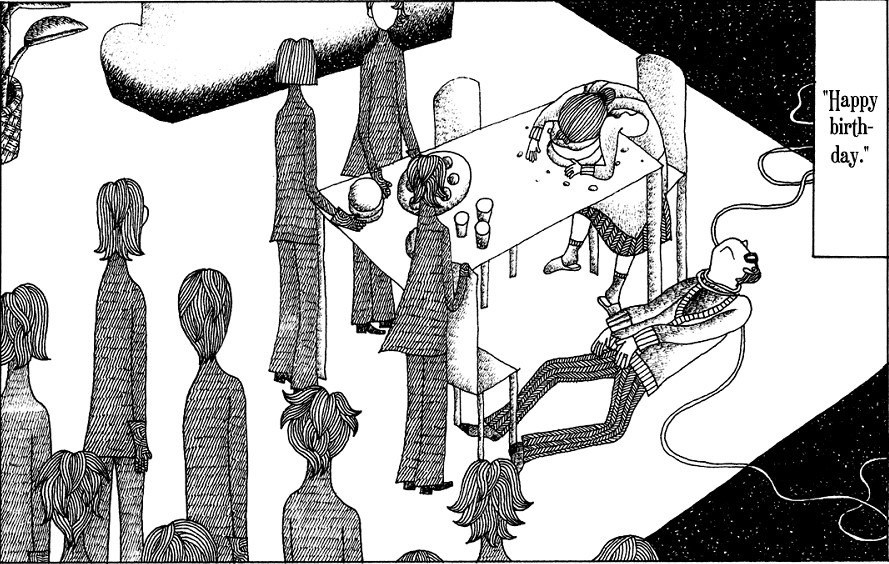
Incomparable in style, the art of Nishioka Kyoudai will always be a point of intrigue. Essentially, the childlike figures mimic the western gothic aesthetic (tragic and sickly-looking elongated figures) made popular by the likes of Ed Gorey (and later Tim Burton). Often equated with ‘dark whimsy’ the book becomes unnerving when approaching violence towards minors. (not pro or con, just observational)
The visuals are not just targeted to shock the audience, as the sibling’s art is used to deepen the narrative. Notably, the protagonist’s view of the world around him as minor often blurs the faces of those around him – if they have no value to his deviancy they appear as less than human. Overall, there are clever uses of visual storytelling sprinkled throughout that help draw the reader into the mindset of the murderer.
What I Don’t Like About It
This story still makes my stomach churn, with the acts of violence toward woman and children being extremely uncomfortable to take in. While one could argue this was the intent, it does not make the experience any less soul-crushing.
This project also lacks elements of fantasy and whimsy that make the sibling’s work approachable. In comparison, God’s Child almost feels mean-spirited and nihilistic in its views on humanity. It does not represent the duo at their best but instead indulges in the extremities that they can explore in their work.
Overall Thoughts
God’s Child is a difficult read, it is morally corrupt and visually disturbing. Shock value aside, it is a gritty and exploitative work like none other that is ideal for those who like challenging themselves. Paired with the sibling’s unique visual approach, God’s Child is an unforgettable experience, which may be good or bad for the reader.
For those dissuaded by the themes in this work, I would highly recommend you check out Jigoku or Journey to the End of the World. Both are much lighter on content while still containing a decent amount of disturbing content. If you dig those come back and give this one a shot.
More Manga Reviews:
Before finding success with his nostalgic “High Score Girl”, Rensuke Oshikiri went full-Michael Haneke and brought us “Misu Misou”. Bleak, cruel, and extremely tragic, this manga explores to an extreme… Theoretically, a vampire is one of the sexiest supernatural transformations you can have in fiction. You remain young, you become strong and agile, and nothing can kill you. However, Happiness… Japanese ‘erotic grotesque nonsense’, often abbreviated to ‘ero guro’ or ‘ero guro nansensu’, is a genre of art that extends to various mediums. Consequently, the genre exists as a broad… The Laughing Vampire, or Warau Kyuuketsuki in Japanese, is a shocking two volume series of the Suehiro Maruo and follows the vampire of Rakuda as she first emerges from parallel… Recently, disturbing news regarding Masaaki Nakayama, a horror manga author known for his manga Fuan no Tane (2013), has been circulating online. According to many social media posts, he has… When you think about Pokemon and Digimon, there are probably 2 things that come to your mind: the power of friendship and absolutely cute magical critters. It does not matter…
Misu Misou (2009) Manga Review – Not Quite Sweet Revenge
Happiness (2015) Manga Review: Life Sucks but Being a Vampire Sucks Even More
Japanese Erotic Grotesque Art: 5 Definitive Figures
The Laughing Vampire Review – The Fringes of Japanese Horror Manga
PTSD Radio (2010) Manga Review – When reality meets fiction (sort of)
Narutaru (1998) Manga Review: The Kids Are Not Alright