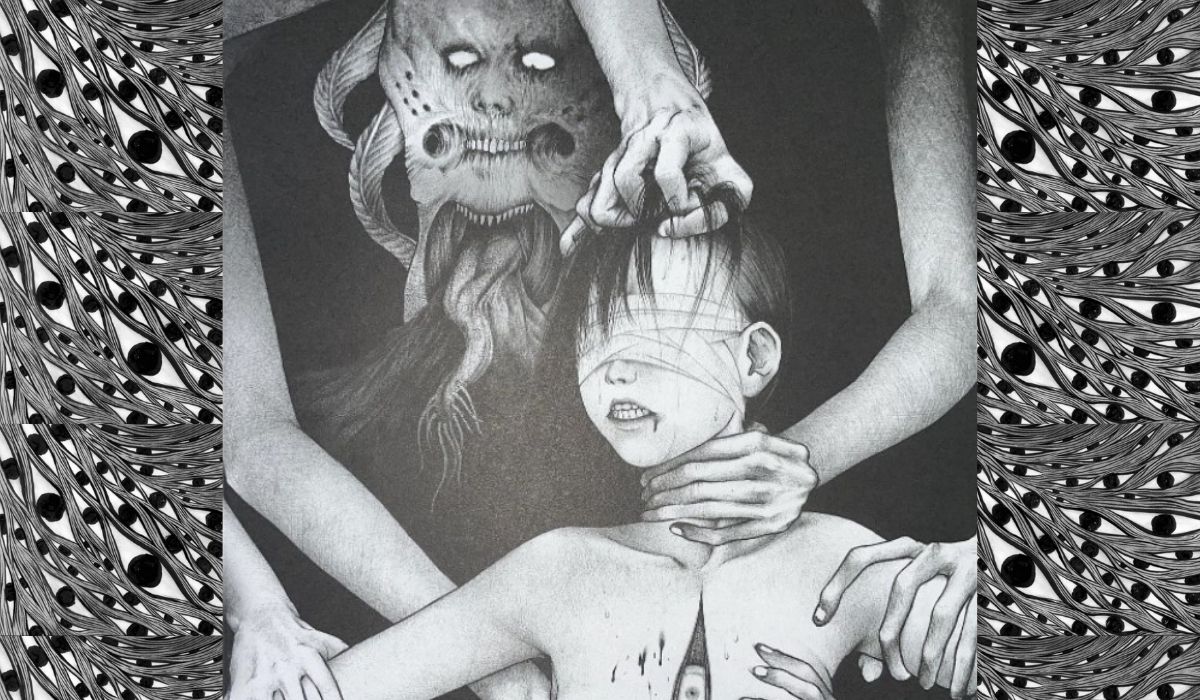
Gaia is a strikingly gorgeous and demented release from new mangaka Asagi Yaenaga, who is transitioning from their expressive and violent art pieces into the realm of narrative storytelling. The debut also exists as a rarity for a Japanese artist, debuting outside of the manga system and landing their work with a European Publisher, Hollow Press, and printed in its native Japanese, English, and Italian. The resulting combination of the large paper stock (formatted Western Style) with the unique visions of Yaenaga make Gaia a truly unique release for horror manga fans.
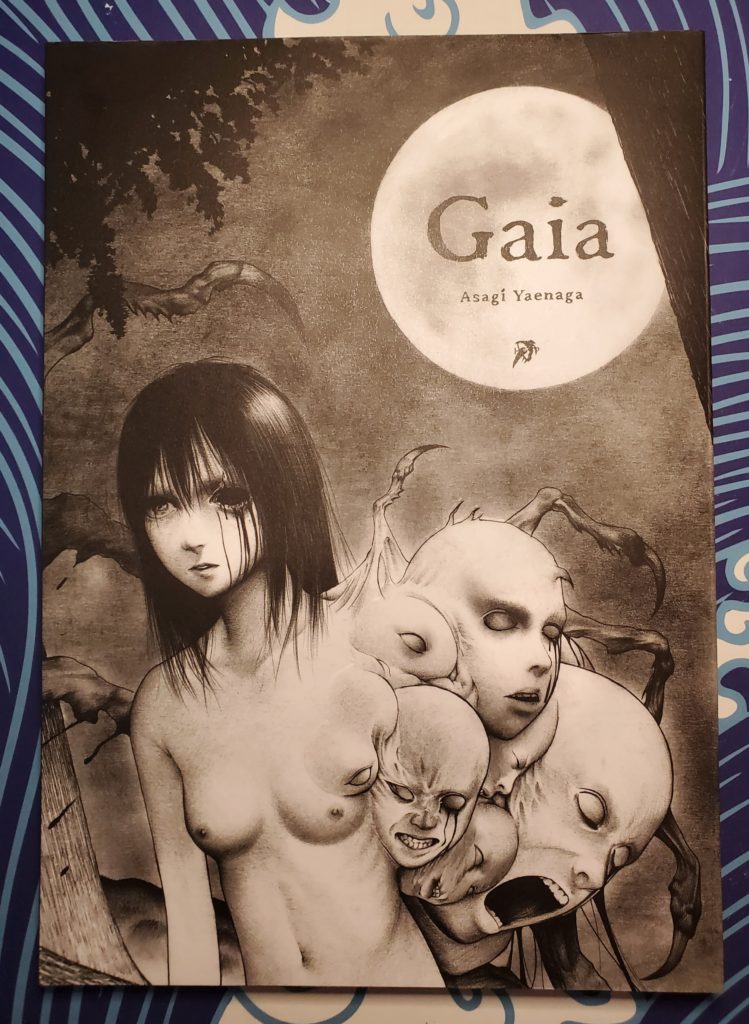
The narrative of Gaia is bleak and abstract, an unsettling concoction of themes that will leave many aspects open to reader interpretation–a fact even touched on in Yaenaga’s own words in the interview included. However, there are a few concrete concepts that the audience will find less ambiguous, such as themes of fragility and insecurity feeding into paranoia. In addition, the all-powerful being known as ‘Gaia’ acts as nature’s reaction to trying to purge humankind from the planet. It is apparent in the pages that the inhabitants have overstayed their welcome, both with nature and an incurable spiritual sickness–the wandering of the last unfortunate women alive is one of immeasurable hopelessness born out of abandonment. Where the narrative is more open to interpretation comes from the surreal state of the world where suffering is blurred between physical and metaphysical, pushed by creatures whose actions seem arcane and chaotic (think Lovecraftian). Undeniably, the ‘realm’ that Yaenaga creates is both brutal and unforgiving to those unfortunate enough to be trapped within.
At face value, fans of ero-guro art will click with the mixture of angelic beauty and visceral graphic violence. Where Yaenage differs in his approach to the more familiar ero-guro nonsense is the body contortions and horrific imagery that lies in the ambiguity of the laws of the dark land traveled. Notably, physical pain and mental anguish act as a means of transformation into monsters that in turn hunt the remaining survivors.
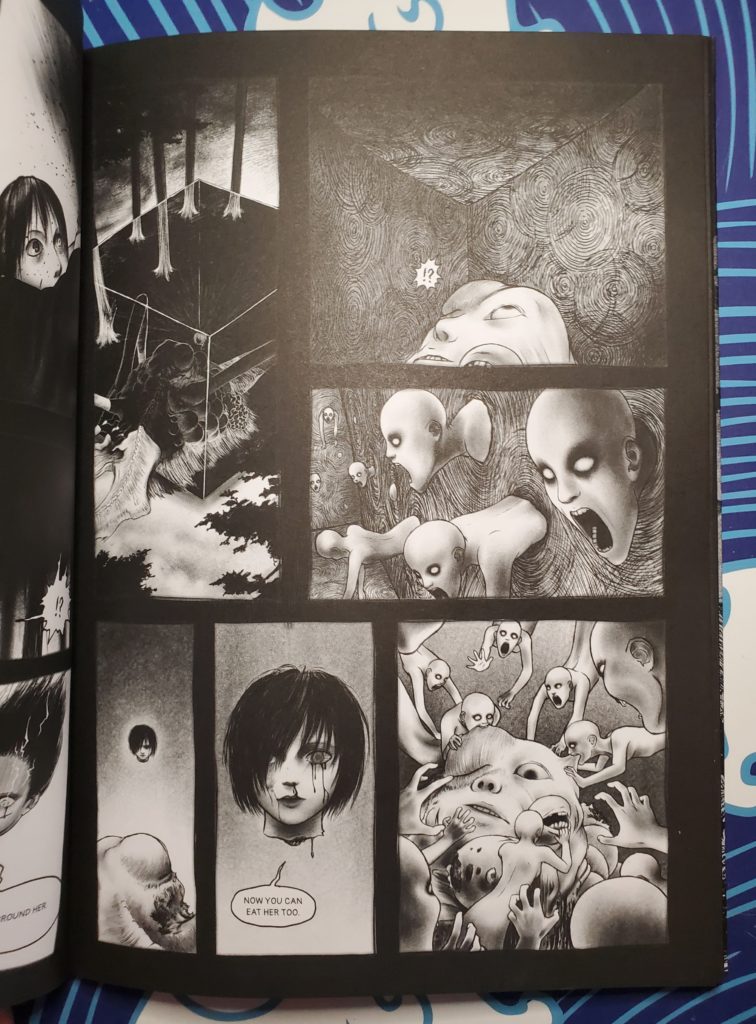
Visually, Yaenaga style, though influenced by horror manga, has its own definitive style that makes it unique among the slew of modern mangakas in the genre. The aesthetic utilizes an abundance of darkness with a mix of hand-drawn base finished off using digital techniques, giving the work a slight ‘uncanny valley’ vibe. For the release of Gaia, the comic panel gutters are black instead of the regular ‘white space,’ which adds a sinister vibe to the dark-dominated art – it really feels like being drawn into the abyss. Furthermore, the artists’ obsession with eyes (both in the symbolic and literal sense) makes for a focal point that keeps the visuals perfectly nauseating.
If anything, Gaia proves that Asagi Yaenage is an immense, emerging talent in the underground comic/manga scene. However, their growing pains are apparent in the artist’s own reflection on the work in the included interview–promising to continue to develop their craft while admitting their shortcomings. This reflection does point to the surreal narrative which, at times, lands somewhere between brilliance and inexperience– the lack of form doesn’t always feel purposeful. Regardless, as a debut Gaia is utterly impressive, disturbing, and engrossing, especially knowing that Yaenaga will only improve from here on is a very exciting prospect.
Beautifully presented, disturbing, surreal, and unique, what more would a fan of horror manga want? Make sure you check out Gaia along with the rest of the releases from Hollow Press, as the Italian publisher excels at bringing the voice of the underground to print in an unapologetic fashion. Spread the Hollow Verb!
More Manga Reviews
“Daisuke Ichiba is not a manga artist, he is a drawer of beautiful women!” There are few Japanese underground creators that can hold sway over a select few and never… After contributing to periodical manga magazines such as Manga OK from the mid-60s, the ever-ambitious Taro Bonten would decide to create his own bespoke gekiga magazine in 1969 named Black… The Laughing Vampire, or Warau Kyuuketsuki in Japanese, is a shocking two volume series of the Suehiro Maruo and follows the vampire of Rakuda as she first emerges from parallel… Pygmalion is a gory horror manga consisting of three volumes released in 2015 and concluding in 2017, written and illustrated by Chihiro Watanabe. Watanabe is known as the creator of… HoloX Meeting! is a two-volume comedy manga series, written by Omcurry G. K. and illustrated by Anmitsu Okada. The manga is based on COVER Corp.’s 6th generation of V-tuber talent… At the tender age of four, Kanako Inuki was handed a shiny new five-yen coin. Promising the same allowance each month, her mother took her to a bookstore and let…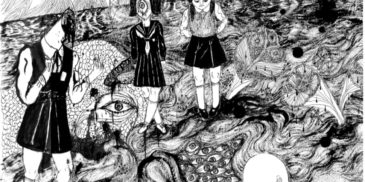
KSKHH (2021) Manga Review – Oh What Beautiful Filth!
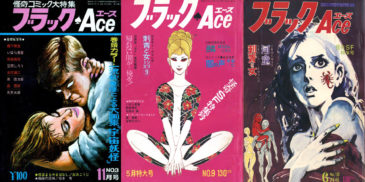
Black Ace – The Ground-Breaking Horror Manga Magazine
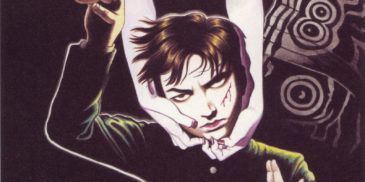
The Laughing Vampire Review – The Fringes of Japanese Horror Manga
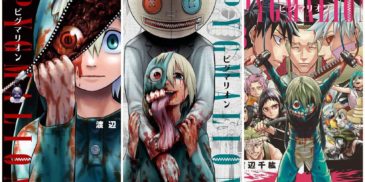
Pygmalion (2015) Manga Review – It’s All Greek To Me
HoloX Meeting! Vol.1 Manga Review – V-Tuber Supremacy
Be Very Afraid of Kanako Inuki! (2022) Book Review | Cute Girls Doing Cruel Things