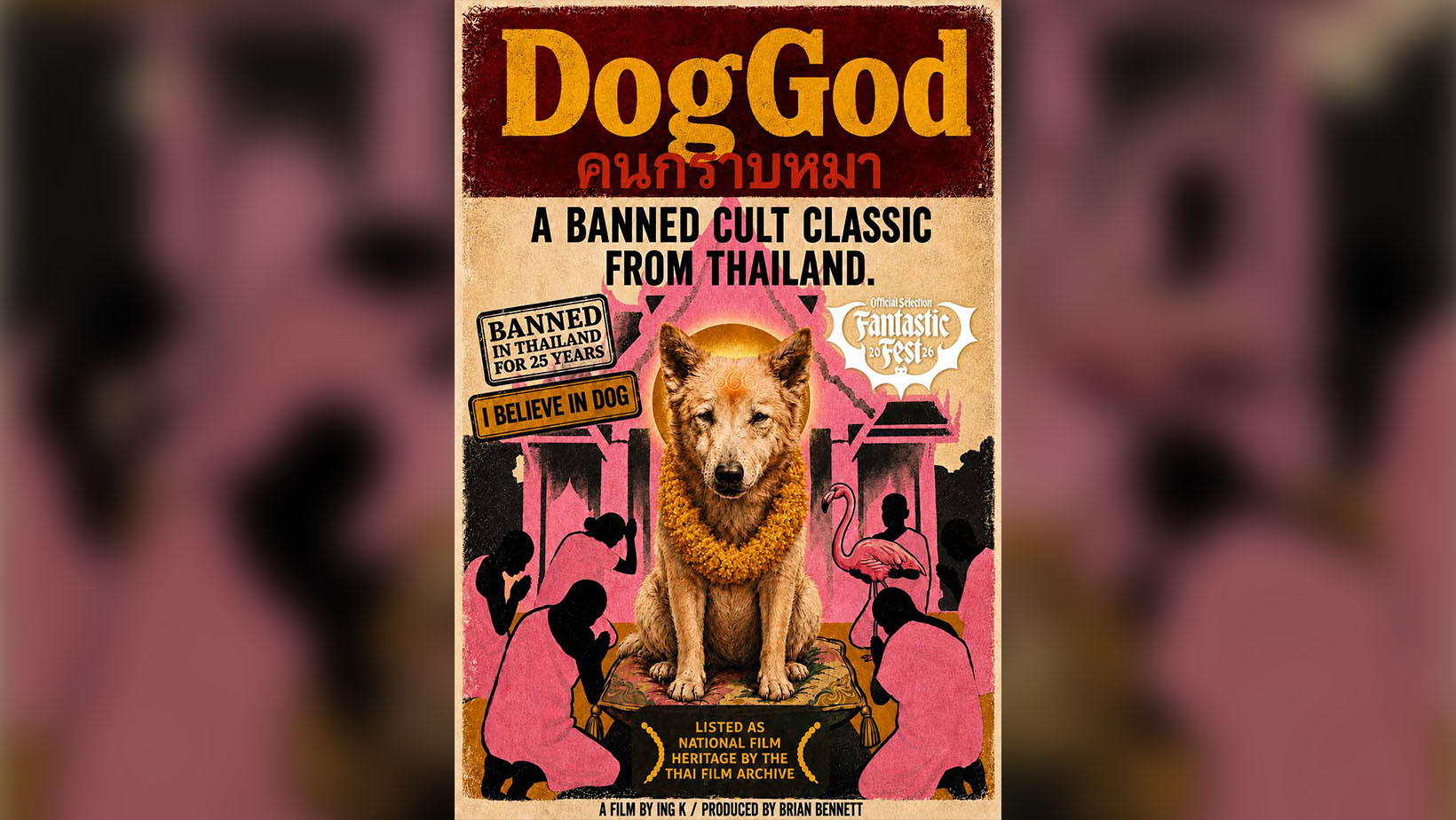





A song that instantly comes to mind, given the title and questions posed in Dog God (1997), is Pink Military’s “Do Animals Believe in God,” which asks, “Do you, do I believe in God?” Of course, the title evokes the image of a dog deity portrayed in the film. Still, it also raises a fundamental question about faith: even within devoted belief, doubt can exist, and one can still examine the structures that build that conviction.
This is an important starting point for Ing Kanjanavanit’s Dog God, a film banned for 25 years for proposing ideas that struck too close to Thai religious beliefs, despite being entirely fabricated. It presented a mirror of control and compliance that, while entirely fictional, raised the question of whether belief holds true, or whether it needs to be tangible to do so.
To reel it back a bit, the plot follows a cult known as the Ashram of Boundless Love, which worships a deity and makes its followers act like dogs, including mating rituals and eating out of dog bowls. Caught in the middle are a man who believes his wife has been indoctrinated and the deprogrammer from the States he hires to help him get her back — a deprogrammer who, the more he comes to understand the cult’s methods, grows just as determined to break its hold on society and thwart its ambitions for global domination.
Underneath the surface are deep philosophical and religious themes, complemented by a visual style that is rough around the edges but beautifully expressive, with small surreal deviations from the story (a bleeding happy-face pie, for example). The movie also opens with a short prelude: a monk finds another monk engaged in necrophilia, a fact that probably did not help when Ing Kanjanavanit was summoned to appear before a parliamentary committee on religious affairs, accused of making a film harmful to society and leading to the 25-year ban.
The themes explored, and the experimentation with narrative and visual devices here are deeply profound — which, again, is an important point to make, as for many audiences the comedic elements will be front and center in the discussion. From a Western perspective, I think that’s valid; I can understand how a Thai film with an English-speaking cast might create certain issues, and how cultural nuances, without the right context, might read as more comedic than insightful.
While approaching the movie simply as a comedy would miss many of its fundamental aspects, it is the most accessible entry point for many. Much of the dialogue reads like a John Waters film, with characters to match, including an over-the-top suicidal teen who makes broad, sweeping statements about his experiences with the act—the perfect blend of dark and comedic absurdity that makes the Waters comparison easy.

The movie is highly quotable, with so many moments of absurd exaggeration delivered in a dragged-out, deadpan style. Once again, within the peculiar delivery, moments of wisdom are sprinkled throughout, reflecting real critiques of religion and power dynamics. It is all disorienting in the best sense.
Adding to the constant feeling of unfamiliarity is the visual style. At times, it almost feels like a mondo film, giving a perverse, lo-fi look into the strange corners of the world. This contrasts with the film’s themes — Dog God is anything but exploitative — yet it adds an unnerving edge to the production, especially when set against public-domain classical music.
It is a movie that needs to be experienced rather than related to, as every moment is its own unique cataclysm of styles and themes, with moments of bravado that can be tonally abrasive. The reveal that those caring for the dog god indulge in “deviancy” while mocking others is very much—again, drawing the Waters comparison—like Donald and Donna Dasher in Desperate Living, reflecting on their own status while voicing their disgust for others through evil, exaggerated dialogue.
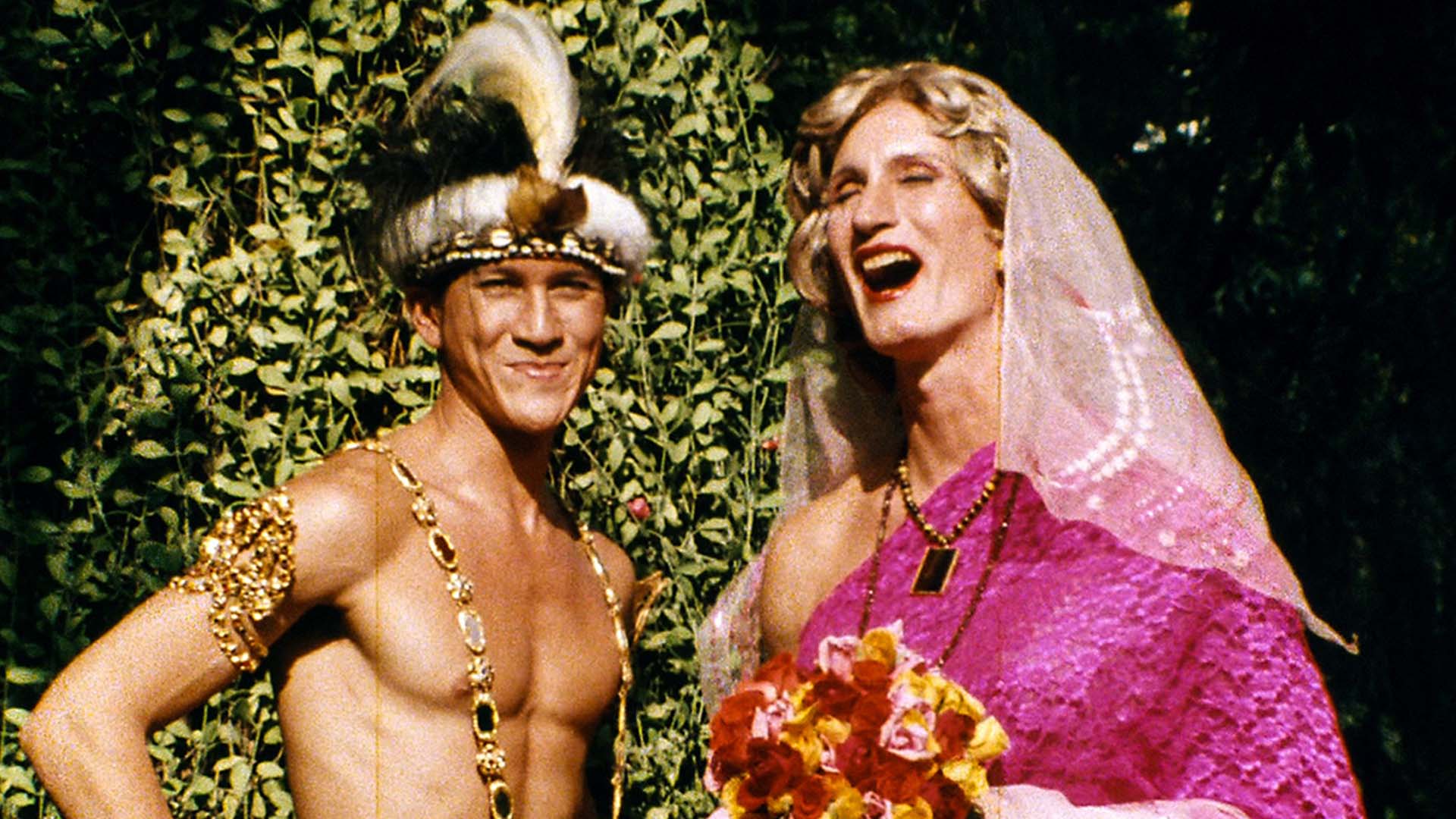
I was utterly mesmerized by Dog God, and after over two decades of actively seeking out challenging and obscure cinema, this is the first time in a long while I can say I’ve seen something wholly original. I realize this may stem from my limited knowledge of Thai film — my only prior exposure being some cult and genre cinema from the region — but the experience, nonetheless, was utterly captivating.
I imagine other cinephiles on a similar trajectory will also find Dog God a cult gem that blows away expectations and delivers a thoughtful, hilarious take on religion. I haven’t felt this way since I first saw El Topo; Dog God offers a window into a singular creative vision, inseparable from its creator. Dog God didn’t have anywhere near the same budget, but my focus has never been there — art doesn’t need a budget to be worthy or profound. Dog God is an easy 5/5, an absolute watch for anyone and everyone who loves experimental and arthouse cinema, and even the “so bad it’s good” crowd. See it at Fantastic Fest; believe in Dog!
We watched Dog God (1997) as part of this year’s Fantastic Fest
More Film Festival Coverage
The seminal American folk horror film Eyes on Fire has been unavailable on home video for decades. Thankfully, the good people at Severin Films has given the title a 4k… Anya, an aspiring yoga influencer, decides to take on her grandmother’s regime for ‘good health’ after finding her notes in a secret room of her house where she is currently… Part of the JFFH (Japan Film Fest Hamburg) 2021 line-up, Kenya Okuba’s Cosmetic DNA was a title that instantly caught my attention with the flashy trailer promising a techno-laden, neon-drenched… Japan seems to have nailed the absurdist comedy, whether that’s big budget to small indie features, no other country is comparable in wit at embracing the peculiar. Available at Japan… Every year horror fans are inundated with a slew of holiday-themed horror, with a select few becoming instant classics. Even at Fantastic Fest, where we caught There’s Something in The… Mr. Crocket is a 2024 American period horror, written and directed by Brandon Espy with additional writing by Carl Reid. Brandon is mostly known as the writer/director of many short…
Eyes of Fire (1983) Film Review – Early Stirrings of Folk Horror

Mind Body Spirit (2023) Film Review – Demonic Yoga [Unnamed Footage Festival 7]

Cosmetic DNA Film Review (2020) – Fashionable Androcide

I, Dolphin Girl Film Review – Supersonic Head Explosions!
![There’s Something in The Barn (2023) Film Review – If You Give an Elf a Lutefisk [Fantastic Fest[](https://www.grimoireofhorror.com/wp-content/uploads/2023/09/Theres-Something-in-the-Barn-review-365x180.jpg)
There’s Something in The Barn (2023) Film Review – If You Give an Elf a Lutefisk [Fantastic Fest[

Mr. Crocket (2024) Film Review – Demented Fun for All the Family [Fantastic Fest]