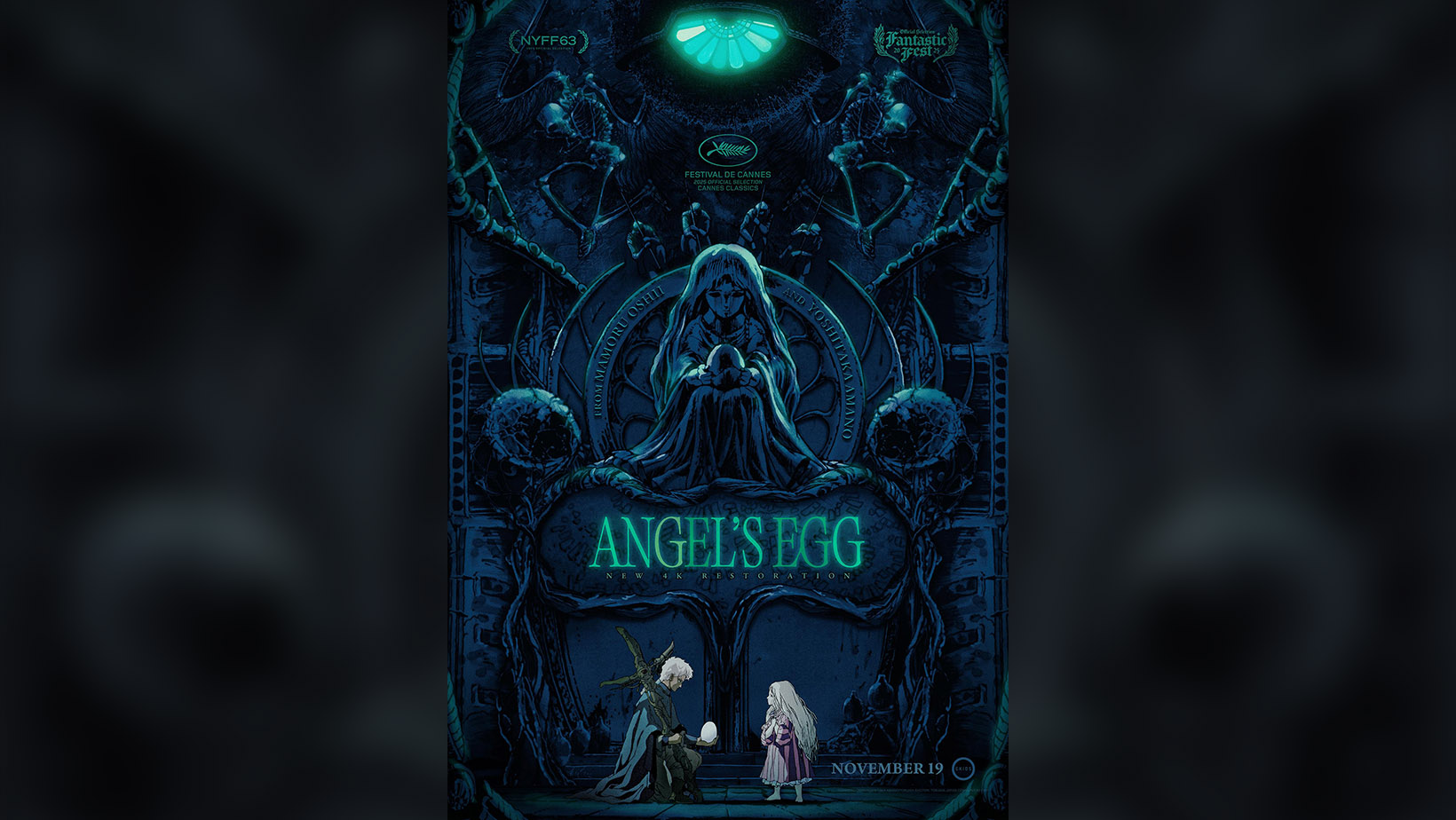





Angel’s Egg (Tenshi no Tamago), a 1985 sci-fi fantasy anime film directed by Mamoru Oshii and illustrated by Yoshitaka Amano. Oshii is best known for directing the cult classic adaptation of Masamune Shirow’s manga, Ghost in the Shell (1995), while Amano is notable for his character design work on the Final Fantasy video game series and the Vampire Hunter D anime series. GKIDS’ all-new 4K restoration of the film, supervised by Oshii himself, will screen in cinemas to celebrate its 40th anniversary and its enduring legacy among fans.
Set in an underwater city, a young girl tenderly cares for a large egg she believes to be an angel’s. A boy arrives, wielding a gun, searching for a bird he saw in his dreams. At first, a sense of empathy seems to develop between them. Then, one night, the boy crushes her precious egg.
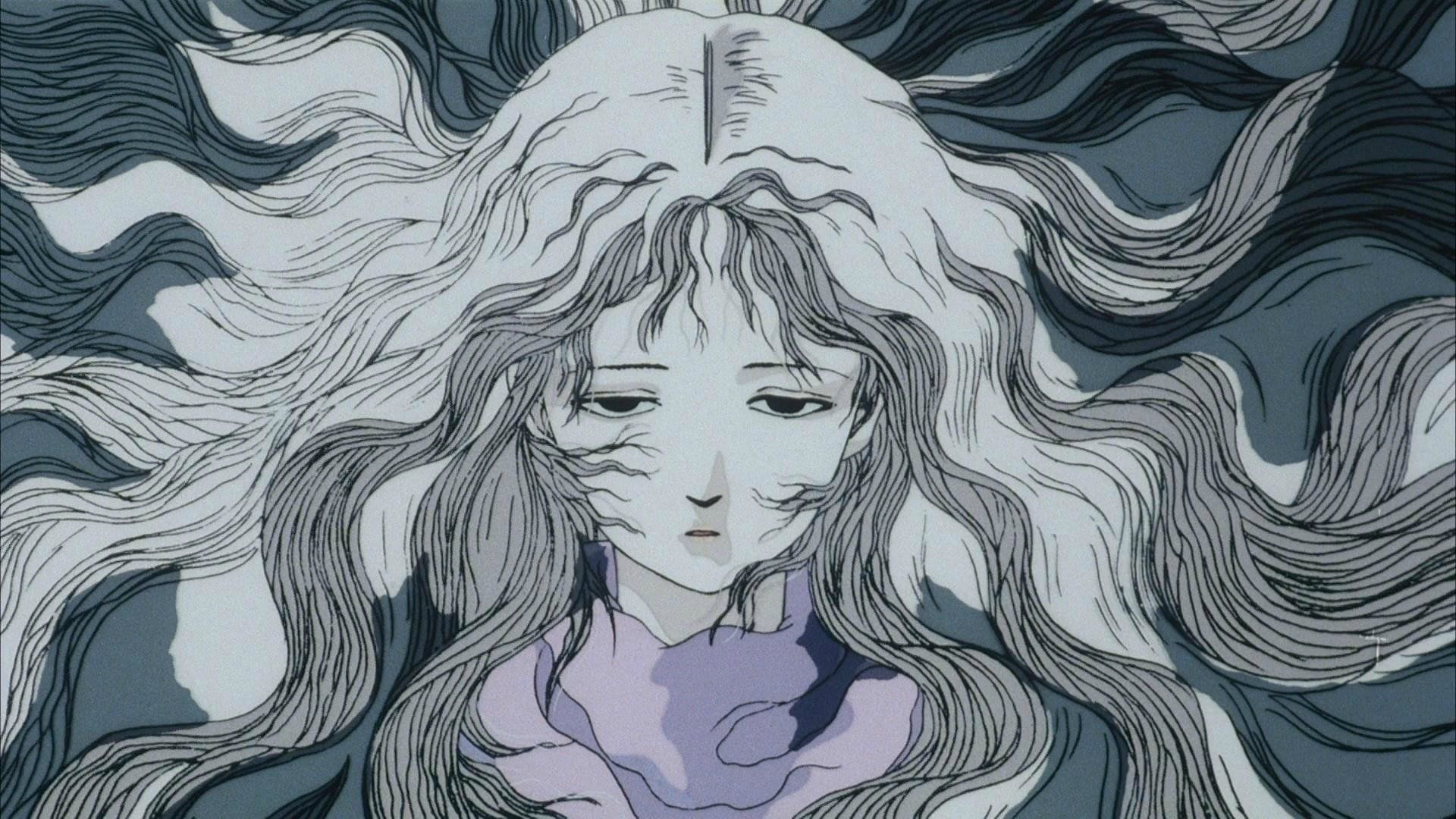
Known for exploring intricate themes of philosophy and theology through allegorical settings in his previous works, Mamoru Oshii’s Angel’s Egg is no exception. Addressing the ambiguity of faith, personal interpretation, and the existential dangers of credulity, its ambiguous, open-ended narrative invites viewers to interpret its metaphysical themes and imagery in their own way. While some may see the film as a critique of faith itself, there remain symbolic elements of hope, leaving both interpretations open to discussion.
Additionally, with sparse dialogue, the film relies heavily on powerful visual storytelling. Its post-apocalyptic environment serves dual purposes: as a backdrop for the story and as a reflection of the protagonist’s emotional state. The unexplained societal collapse adds an extra layer of mystery, heightening the film’s inherent ambiguity.
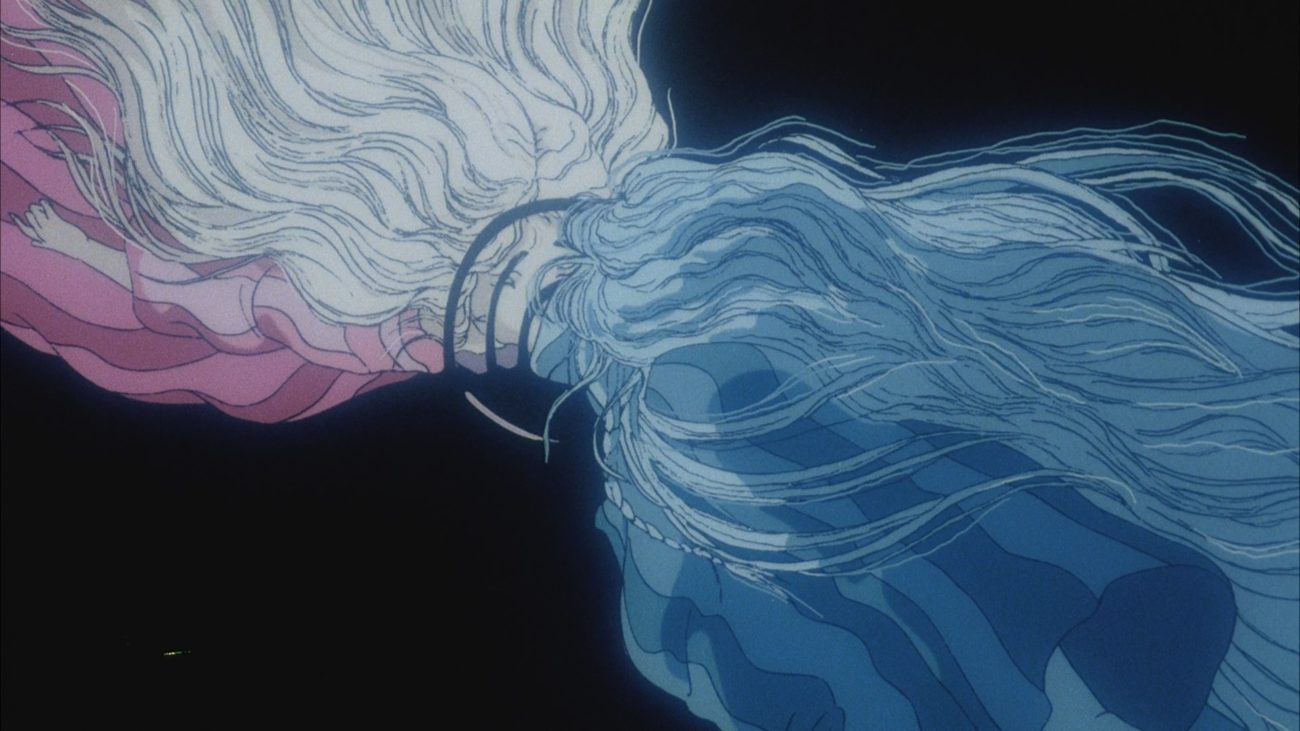
Angel’s Egg’s animation, brought vividly to life through Amano’s distinctive, Art Nouveau-inspired style, stands as a remarkable example within the genre. Displaying vast, desolate landscapes, hauntingly beautiful character design, and compelling use of negative space, the meticulously crafted environments evoke a natural sense of oppression—subtle yet unavoidable. The ethereal characters, designed with a light, contrasting palette, possess a ghostly, otherworldly presence. Their fine, delicate linework resembles Edo-era ukiyo-e paintings but is also influenced by Gothic, Victorian, and Neo-Baroque aesthetics.
A key component of Angel’s Egg’s melancholic atmosphere, the score complements the film’s haunting aesthetic. Heavy and imposing, it enhances the narrative’s atmosphere, amplifying feelings of isolation and desolation. Soft piano and rising strings can evoke a delicate sense of whimsy or swiftly shift into a sinister, oppressive mood. Silence also plays a crucial role in setting the tone, with the absence of music heightening the sense of emptiness.
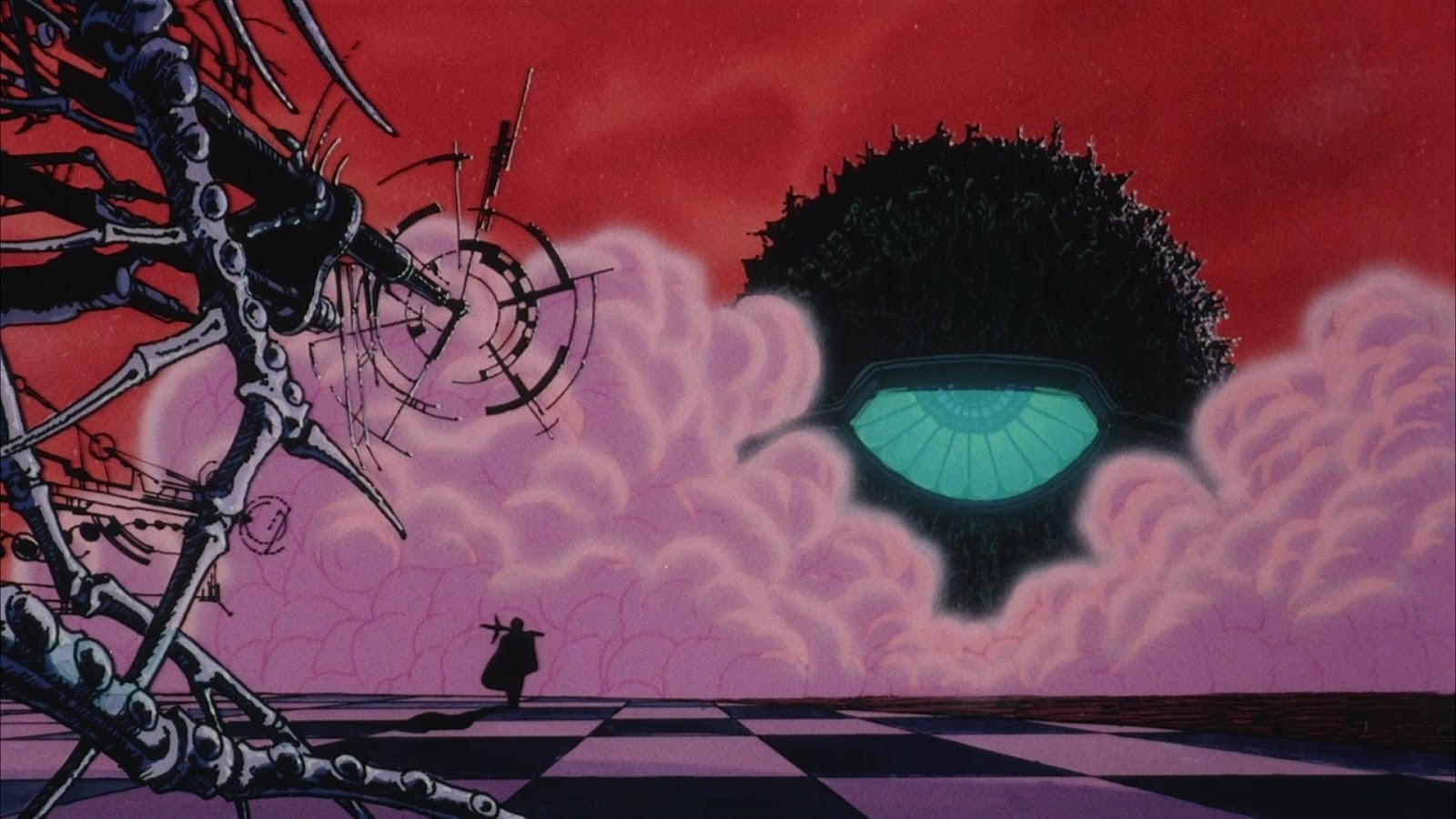
A contemplative exploration of philosophy and theology, Angel’s Egg is a masterclass in atmospheric world-building and visual metaphors. With a thought-provoking narrative, stunning animation, and a powerful score, the film remains as impactful today as it was upon its release forty years ago.

We watched GKIDS’ 4K restoration of Angel’s Egg (1985) at this year’s Fantastic Fest 2025
More Film Festival Coverage
![Affection (2025) Film Review – Amnesia Horror with a Sci-fi Twist [Brooklyn Horror Film Festival 2025]](https://www.grimoireofhorror.com/wp-content/uploads/2025/10/Untitled-design-8-365x180.jpg)
Affection (2025) Film Review – Amnesia Horror with a Sci-fi Twist [Brooklyn Horror Film Festival 2025]
Imagine waking up one day to a bedroom unfamiliar to you, with a stranger lying on the bed beside you. Sounds like a normal Saturday morning? Well, what if that…
Etheria Film Festival 2021 – Breaking Down and Rating The Shudder Short Film Fest
The Etheria Film Festival, or Etheria Film Night, is an annual film festival to showcase the latest short films by female directors. The first Festival was founded in 2014 by…
Alone With You (2021) Film Review – A Metaphysical Nightmare
There are many different types of fears that can fester in the mind, everyone on some level knows what their greatest nightmare is – experiencing such emotions is an unavoidable…
![Cruel Jaws (1995) Film Review – We’re Going to Need a Bigger Budget [Fantastic Fest 2025]](https://www.grimoireofhorror.com/wp-content/uploads/2025/09/Cruel-Jaws-cover-365x180.jpg)
Cruel Jaws (1995) Film Review – We’re Going to Need a Bigger Budget [Fantastic Fest 2025]
Cruel Jaws, also known as Jaws 5: Cruel Jaws or The Beast, is a 1995 English-language Italian creature feature horror film written and directed by Bruno Mattei, with additional writing…

Eri’s Murder Diary Film Review – The Broken Mind Of A Killer
Proposing itself as an intimate look at a killer, Eri’s Murder Diary (2021) caught my attention among the many titles at Japan Film Fest Hamburg. Directed by newcomer Koji Degura,…

Interview with Filmmaker, Writer, Artist and Performer Johannes Grenzfurthner
Writer/director and the founder and artistic director of monochrom, Johannes Grenzfurthner is one of the most unique voices in cinema today. We were lucky enough to catch both Masking Threshold…

Hey there, I’m Jim and I’m located in London, UK. I am a Writer and Managing Director here at Grimoire of Horror. A lifelong love of horror and writing has led me down this rabbit hole, allowing me to meet many amazing people and experience some truly original artwork. I specialise in world cinema, manga/graphic novels, and video games but will sometime traverse into the unknown in search of adventure.