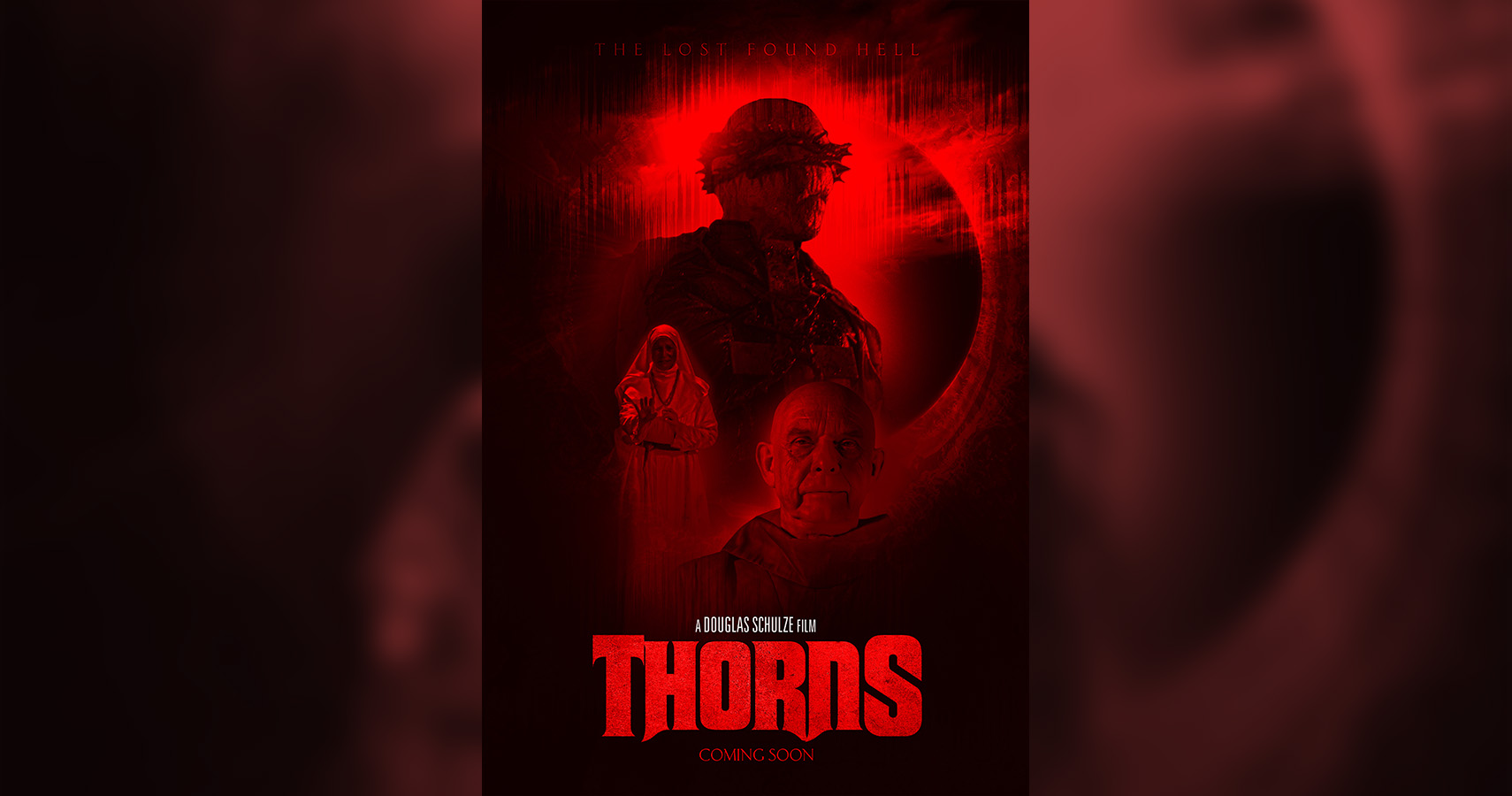





Thorns (2023) is an American sci-fi horror film written and directed by Douglas Schulze. Well-versed behind the camera, Douglas is most known as the writer/director of such films as Hellmaster (1992), The Rain (2009), and The Dark Below (2015); having worked with some respectable members of the acting community, including David Carridine and John Saxton, to name but a few.
An ex-priest working for NASA is sent to investigate a remote observatory that went silent after receiving a mysterious radio signal from deep space. Upon arrival, he discovers the signal has opened a portal, unleashing a thorned monster. The former priest must summon his lost faith to stop the signal from spreading hell on earth and jump-starting the world’s end.
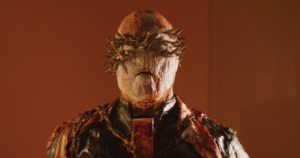
Beginning as it means to continue, Thorns creates an oppressively distraught and tense atmosphere from the get-go, and manages to sustain this level of apprehension until the last minute. Utilizing an effective implementation of light, shadows, and an unnerving score, the film sets up its hellish premise marvelously. The clash of modern sci-fi and classic religious beliefs is certainly a genre that needs more exploration, with Thorns delivering a perfect blend of both. It feels very reminiscent of both Hellraiser (1987) and Event Horizon (1997) in tone, with the use of red emergency lighting and a soundtrack of tortured screams and undistinguished moans perfectly compliment this infernal scenario. Furthermore, the monster design is unquestionably inspired by Hellraiser, with the incredibly imposing creature adorned with a crown of metal thorns stealing the focus of each scene.
Additionally, a comprehensive level of cinematography achieves an outstanding production value for a low-budget film. Thorns provides an astounding visually experience with the execution of unorthodox camera work that utilizes slow horizontal pans, manipulation of depth of field, atypical angles, and an advantageous use of a drone for establishing shots. However, the choice to employ a shaky-cam effect over the tight, gore-focused shots borders on obnoxious around the film’s end, where it is used far too often and with inordinate intensity. The film would have benefited from a more restrained use of the style.

Unfortunately, one of Thorns biggest problem is the mixed performance of our main protagonist Gabriel Goodman, played by John Bennett. Whilst beginning in an adequate manner, towards the film’s second act his overall performance lacks emotional response that only worsens as the film concludes. A notable example would be a bathroom scene, where the response to the situation at hand hardly fits the serious tone already established, bordering on comedic with the low-effort swipes at the impending danger. Although one bad actor is hardly enough to ruin a production, being the main protagonist in an already minuscule cast certainly makes the subpar performance more discernible as a result. However, the acting presented by Cassandra Schomer as the mute Sister Agnes, and the original Pinhead himself, Doug Bradley as Archbishop Jenkings assists in making up for this subpar display.
Despite this, Thorns is still an enthralling film featuring a delightfully large amount of gruesome gore from beginning to end. The visually brutal level of detail achieved through classic practical effects is certainly effective despite the budget restrictions. Whilst there are CGI effects used in the film, they are utilized to support the physical effects rather than replace them (as they should be). Furthermore, certain scenes deemed unobtainable from a budget film were also created using computer animation, but these are few and far between.
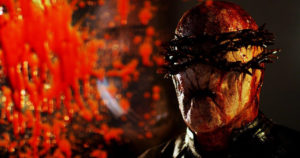
Atmospheric and gritty throughout, Thorns is a riveting amalgamation of science and theology that undoubtedly implements the best of both aspects. With its expressive cinematography, glorious gore, and unsettling sound design, the film makes the most out of its budget and delivers a highly polished piece of indie cinema as a result. Although the film does have some shortcomings, it’s still sure to resonate with fans of 80s horror as an homage to some of the best of the era.


More Film Festival Coverage
With more CGI and prosthetics than you could shake a silver-tipped stick at, Grimmfest’s 2022 Monsters and Movies festival was a roaring success! Manchester’s Odeon Cinema became the focus of… Content Warning: This film contains depictions of ne***philia. Bad Candy takes place in the town of New Salem during Halloween, where two radio DJ’s invite callers to share local myths…. Good Boy is a 2022 Norwegian horror thriller written and directed by Viljar Bøe. This isn’t Viljar’s first time behind the camera; he also wrote and directed the mystery thriller Til Freddy (2020)… “Tick … Tock … Tick … Tock…” If you’re old enough to remember, video stores were most often our method of finding films that we might have otherwise never heard… There is probably no better place to start discussing Yakuza Princess than with its setting of Sao Paulo, Brazil. As the film quickly points out in its introduction, Sao Paulo… Lake Jesup is a 2024 creature-feature horror comedy written and directed by Michael Houston King. Working in the TV industry as an actor for nearly 30 years, Michael has also…
Grimmfest Monsters and Movies 2022: In Dreams Are Monsters
Bad Candy (2021) Film Review- A Frightfest Halloween Anthology
![Good Boy (2022) Film Review – Man’s Best Friend [FrightFest]](https://www.grimoireofhorror.com/wp-content/uploads/2023/08/Good-Boy10-365x180.jpg)
Good Boy (2022) Film Review – Man’s Best Friend [FrightFest]
Dawn Breaks Behind the Eyes (2021) Film Review – A Psychedelic Gothic Horror Acid Trip
Yakuza Princess (2021) Film Review – Classic Yakuza Action with a Fresh Perspective
![Lake Jesup (2024) Film Review – “CATCHPHRASE!” [Dead Northern Film Festival]](https://www.grimoireofhorror.com/wp-content/uploads/2024/09/Lake-Jesup-2024-cover-365x180.jpg)
Lake Jesup (2024) Film Review – “CATCHPHRASE!” [Dead Northern Film Festival]

Hey there, I’m Jim and I’m located in London, UK. I am a Writer and Managing Director here at Grimoire of Horror. A lifelong love of horror and writing has led me down this rabbit hole, allowing me to meet many amazing people and experience some truly original artwork. I specialise in world cinema, manga/graphic novels, and video games but will sometime traverse into the unknown in search of adventure.