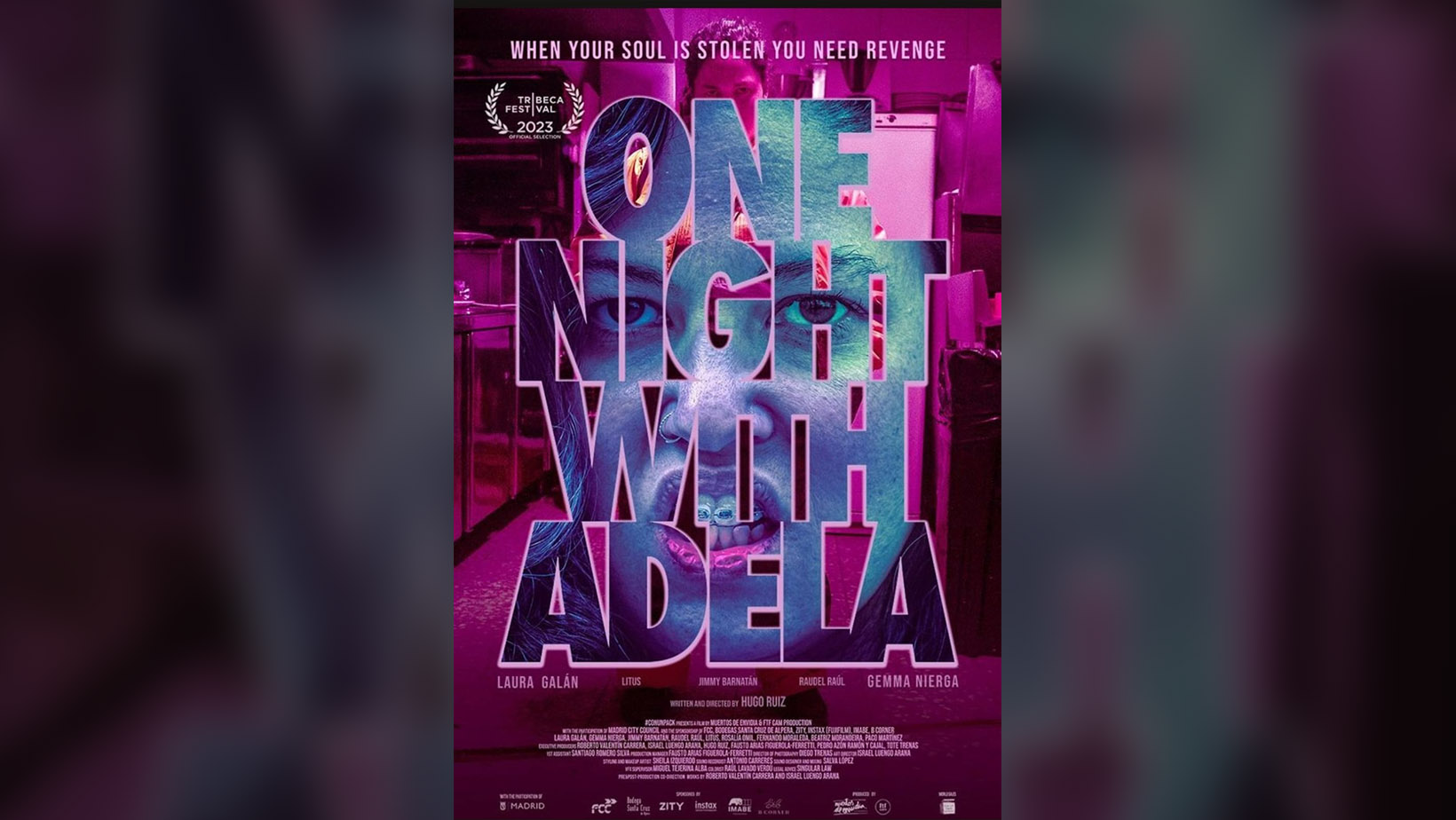





Hugo Ruíz’s debut film, the brutal and unflinching One Night with Adela [Una noche con Adela] (2023), is far more than a simple revenge thriller; it is an indictment of Spain’s generational trauma stemming from the institutionalized sins of infant abduction. Following a single, wrath-fueled night, the film presents a gut-wrenching, 21st-century Taxi Driver–esque story, focusing on Adela, a disaffected sanitation worker driven to settle a deep-seated grudge against a world that has systematically undervalued and abused her. Anchoring this slow-burning nightmare is a legendary performance by Laura Galán, cementing her status as a fearless talent following her turn in Piggy (2022).
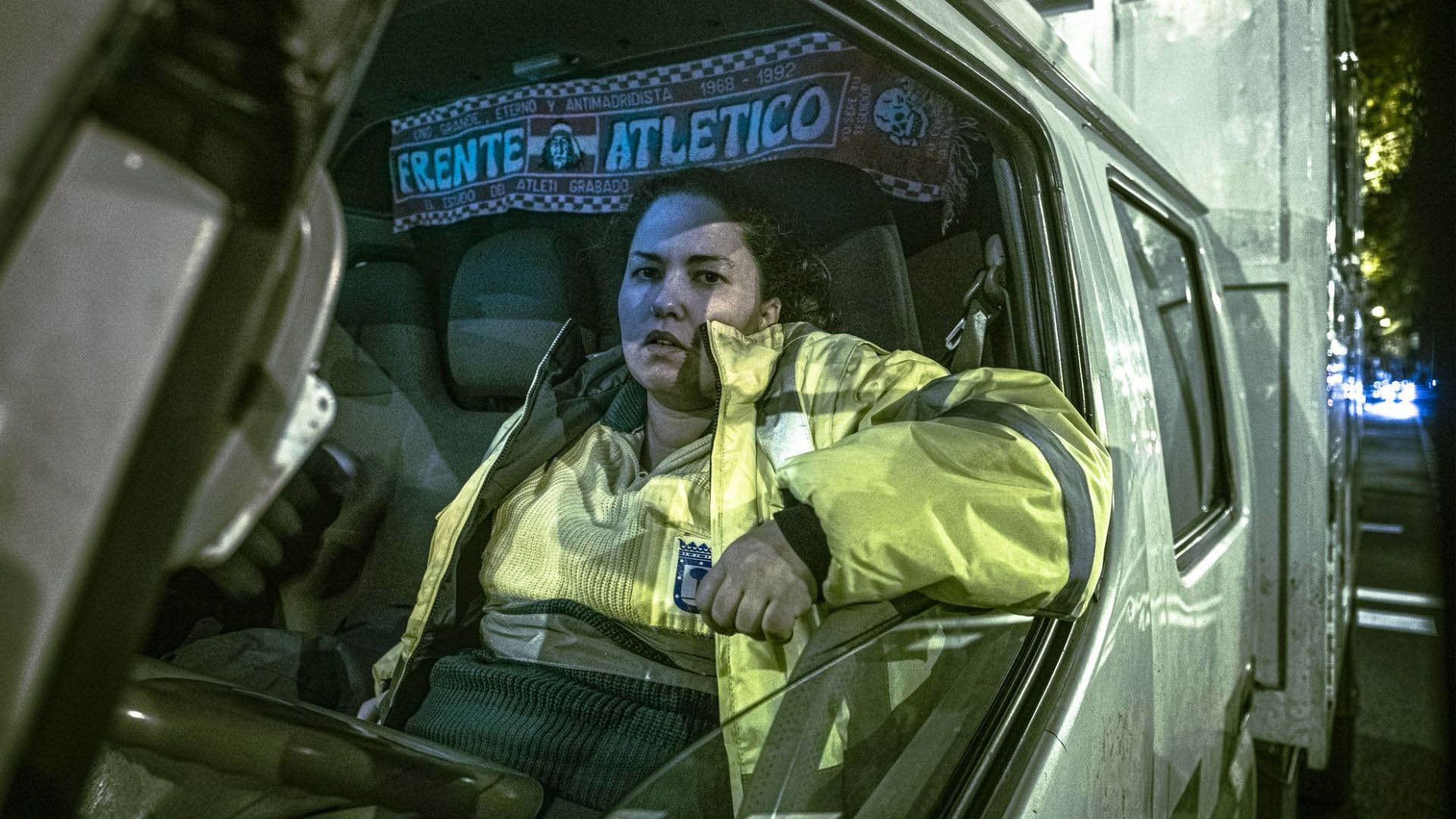
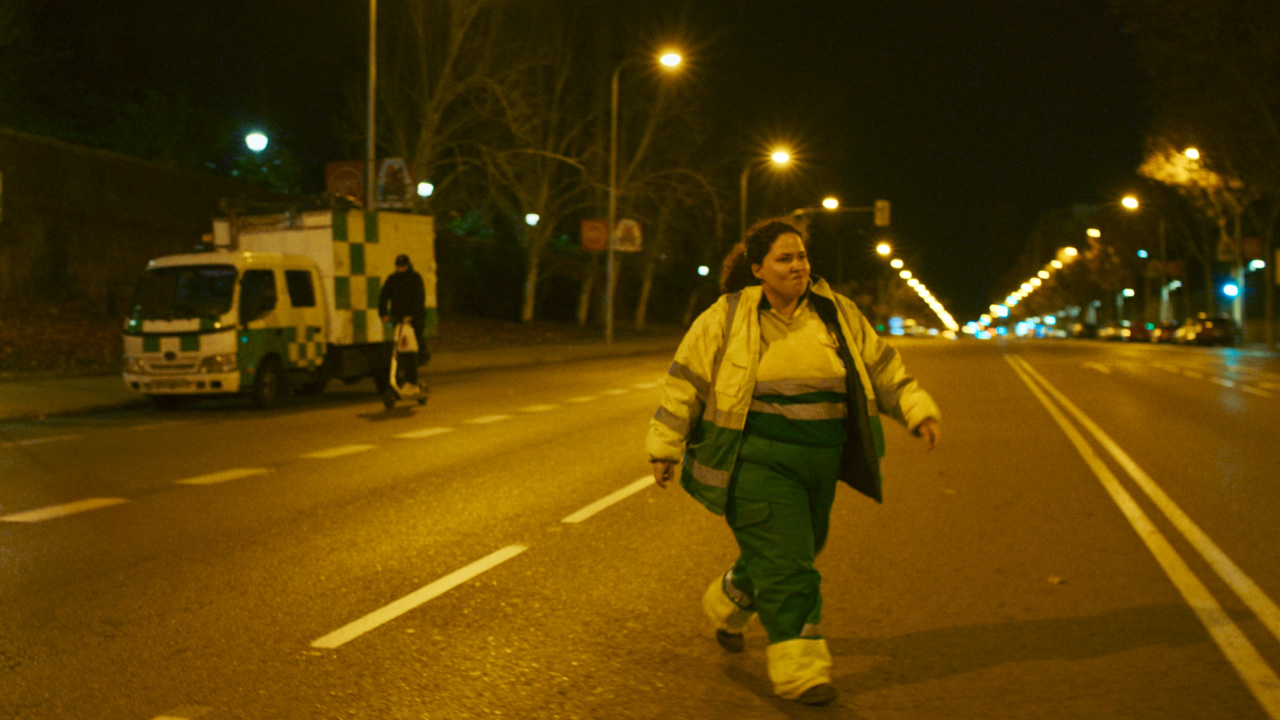
Over One Night with Adela‘s 105 minutes, writer-director Hugo Ruíz’s camera relentlessly focuses on Adela with one long, unbroken shot. Adela is a sanitation worker who, as she completes her shift, begins a drug-fueled bender of rage and violence across the orange sodium-lit streets of Madrid, seeking to right the wrongs life has dealt her. Starting with the murder of a cat-calling passerby who attempts to rob her and ending with the painful confrontation with her adoptive parents, Adela’s every movement and expression is exquisitely recorded by Ruiz’s fluid single-shot camera work. Centered thus, Galán’s performance superbly illustrates Adela’s powerful rage in every expression, every groan and movement—whether she’s climbing in and out of her truck, striding down the sidewalk, or lasciviously dancing in front of her mortified, captive audience.
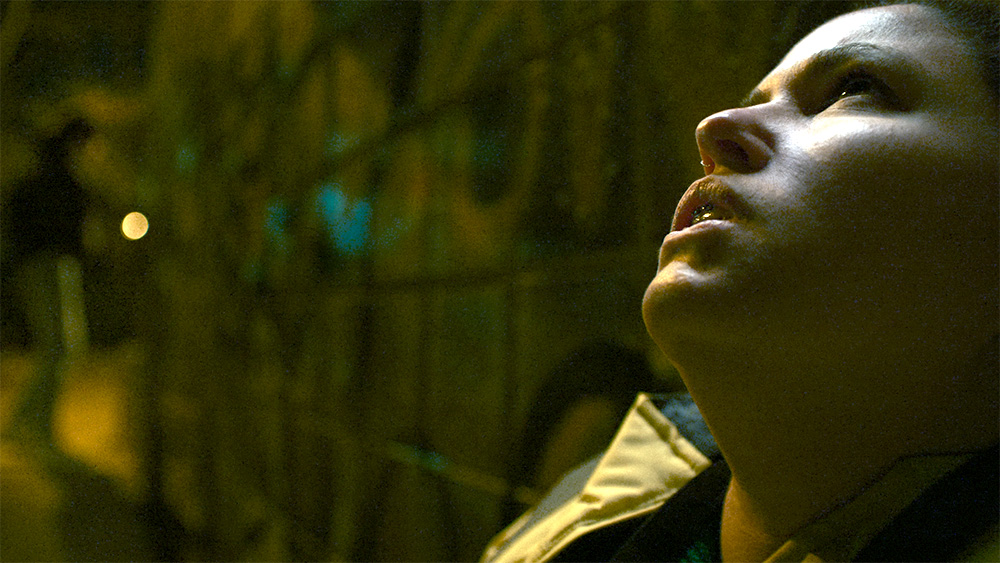
In an industry that consistently prioritizes flawless female aesthetics, Laura Galán’s performance is a fearless act of defiance, as she displays her unconventional body, scars and all. This defiance culminates in one of the movie’s most shocking scenes: an explicit sexual encounter with a male prostitute, where Ruiz reveals Adela’s true victims. The intimate, erotic moment quickly turns horrific as the camera swings to the heretofore unknown, bound and gagged captives forced to witness the performance.
Spanish horror has long been a fount of exceptional, critical cinema. In the Francoist era, films like Chicho Ibáñez Serrador’s The House that Screamed (1969) and Jorge Grau’s The Legend of Blood Castle (1973) often used the genre as a safe and indirect way to criticize the status quo and explore the moral corruption of the regime.
After Franco’s death and the subsequent relaxing of censorship, Spanish horror quickly became known for its cutting-edge gruesomeness and unique aesthetic, with movies like Amando de Ossorio’s Tombs of the Blind Dead (1972) and Jaume Balagueró and Paco Plaza’s dynamic found-footage [REC] (2007-2014) series. This rich history provides a compelling backdrop for One Night with Adela, which continues the tradition of using intense mood and stark visuals, particularly its unsettling burnt orange colored streets, to exhume and expose national trauma.
The theme of confession and penance runs deeply through One Night with Adela. The film’s narrative revolves around Adela’s many on-air dialogues with Gemma, a late-night radio host who acts as her makeshift confessor. In the final act, during a long dialogue, Gemma and Adela discuss the role of Confession, one of the Catholic Church’s Seven Sacraments whose purpose, among other things, is to provide spiritual healing from the effects of sin.
This act, Adela reveals to Gemma, is her goal for the night: the final stage of which is penance, a form of self-punishment or hardship performed to show sorrow for wrongdoing. “It’s time for penance,” she says before ending her call. What follows is a thoroughly gripping monologue Adela delivers to her adoptive parents, the bound victims, who have been forced to witness Adela’s actions. She lays out the sins they have inflicted on her, from being stolen from her birth parents to being kicked out of the house for having a mixed-race boyfriend. “I blame you for turning me into a human wreck,” she tells them, quoting a priest from her childhood. Ensuring the penance she brought to her adoptive parents has begun, she offers a final, chilling invocation from the Gospel of Luke: “Faith doesn’t make things easy, it makes them possible.”
One Night with Adela is a harrowing experience made profoundly impactful by its single-shot format and Laura Galán’s darkly vibrant performance. The audience doesn’t merely witness Adela’s actions; through the claustrophobic filmmaking and Galán’s visceral portrayal, we are invited to feel her raw rage and alienation on a truly deep-seated level, making us all complicit in her journey. This is a powerful, demanding film that uses its unique structure and unflinching thematic focus to exhume the spiritual harm of institutional trauma, cementing Hugo Ruíz’s debut as a necessary and unforgettable piece of modern Spanish cinema.

One Night with Adela (2025) is currently streaming on Amazon Prime.
More Film Reviews
As the holiday season approaches, many people look forward to cozy evenings by the fireplace dipping into the eggnog, and singing the Christmas classics. But holiday-themed horror movies offer a… Konnichiwa! Ni Hao! Dia Duit! Straight Outta Kanto here to put you off your dinner with the 2009 stomach churning Thai horror Meat Grinder. On the surface Tiwa Moeithaisong‘s splatter… Biotherapy is a Japanese 1986 sci-fi horror that’s aptly described as a slasher merged into a splatter creature feature. The short movie was released as a project from the limited… “People don’t really connect, you know.” A sentiment that is often shared among film fans about some of the most eminent artists in the industry is that they were and/or… In 2002, 28 Days Later revitalised the zombie genre, introducing new lore and changing the game forever. And while 28 Weeks Later (2007) didn’t – and couldn’t – compete with… Fifteen years after leaving Corsica, Marie and Daniel return to visit their elderly grandfather. Looking to capture their reunion, they pick up the family camcorder, but what they uncover is…
Top Christmas Horror List – Ten More Movies to Add to Your Holiday Horror Watchlist

Meat Grinder (2009) Film Review – 102 Minutes of Gore, Tension and Shocks

Biotherapy (1986) – An Unknown Japanese Sci-Fi Horror Short
Revisiting ‘Kairo’ During a Global Pandemic in the Age of Social Media
28 Years Later (2025) Film Review – Still Infectious
![Heritage (2026) Film Review – Bloody Family Ties [Unnamed Footage Festival]](https://www.grimoireofhorror.com/wp-content/uploads/2026/03/Heritage-Review-365x180.jpg)
Heritage (2026) Film Review – Bloody Family Ties [Unnamed Footage Festival]

I am a lifelong lover of horror who delights in the uncanny and occasionally writes about it. My writing has appeared at DIS/MEMBER and in Grim magazine. I am also in charge of programming at WIWLN’s Insomniac Theater, the Internet’s oldest horror movie blog written by me. The best time to reach me is before dawn.