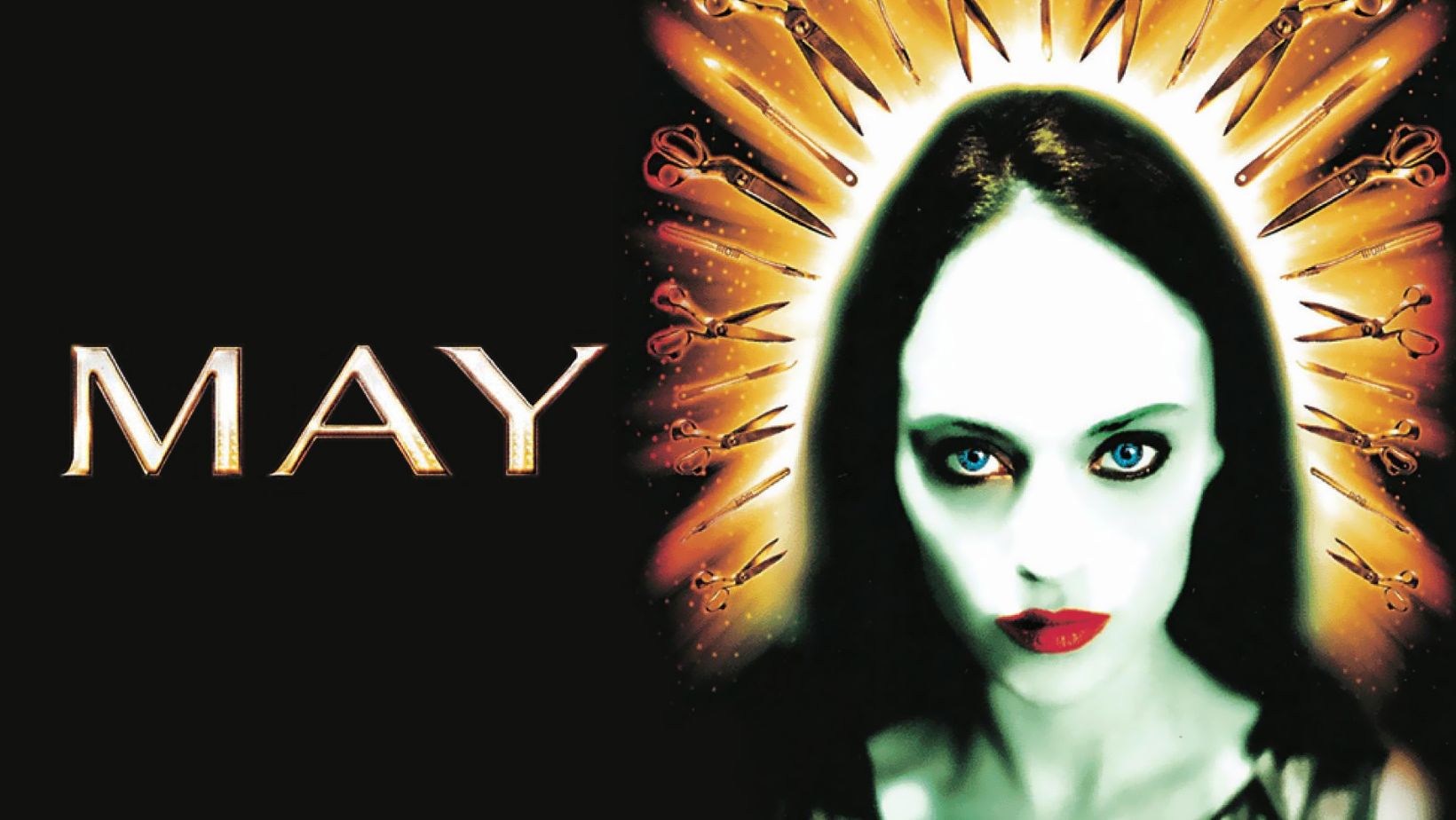





The unwavering theme of love has permeated throughout popular culture and media since the ages. Love in all its forms is revered and explored: from romantic to platonic, enduring, to a love lost, from passionate and lustful to philautia – a self-love. May (2002) is an incisive character study of a woman who deeply yearns for human connection on any level, and the repercussions of unrequited love lit by the searing flame of rejection and ostracisation.
May (2002) is an underrated gem of a film from director Lucky McKee that follows the titular character May, a veterinary assistant, whose latent social skills make it hard for her to fully connect with the world around her or in particular with her two love interests Adam (Jeremy Sisto) and Polly (Anna Faris). From childhood, May has suffered from amblyopia (abnormal visual development) which led to her being secluded from her classmates and left her in adulthood with taciturn tendencies and psychological wounds to lick from playground bullies. As a misguided adolescent, May was taught by her mother to suppress parts of herself – being taught to hide her lazy eye with a patch or hide from her lack of human connection with unhealthy coping mechanisms such as collecting and playing with dolls. It is from this pivotal scene that May learns from her mother, “If you can’t find a friend, make one”, and this precept soon derails May’s life as she becomes obsessed with Suzie – the uncanny doll her mother gifts to her.
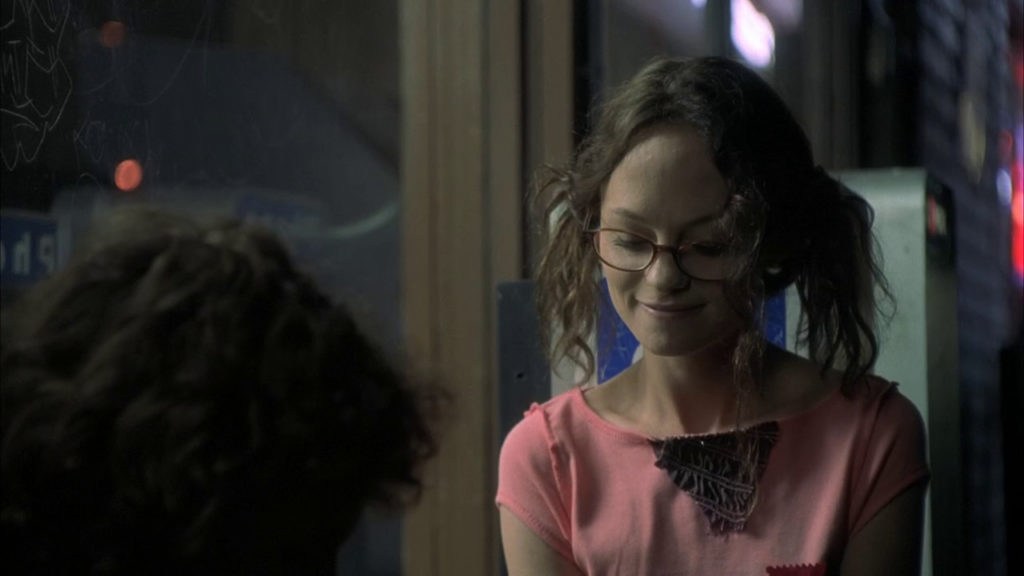
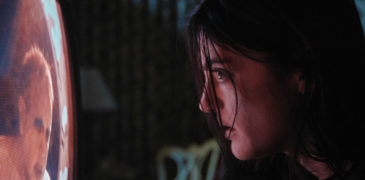
Angela Bettis plays the eponymous May with expert care and nuance as she crafts a character who embodies several paradoxes. May is both naive and insightful, she is innocent and child-like yet a deranged and vicious killer. She is both a product of her abusive and sheltered upbringing and has no doubt been influenced by a repressed but savage nature. In fact, one of the most noteworthy aspects of May (2002) is the complex characterisation that compels the audience to feel sympathy for the endearing and unsettling May as we watch her navigate the confusing landscape of social interaction and human connection, and eventually witness her deranged downfall. May’s presence seems incongruous with every setting she is in; she doesn’t understand social cues and finds it difficult to form genuine friendships and relationships. Bettis portrays May as infantilised, innocent, and vulnerable through her timid, high-pitched voice and shy mannerisms which highlight May’s inability to understand the world around her—evoking sympathy for her. Her subtle ticks and jolting movements further paint a picture of May as being disconnected from societal norms and expectations. Her understanding of the world is inchoate, in part due to her unorthodox upbringing.
Mariano Diaz perfectly underscores May’s fragmented psyche through the costume design. May appears to be the lovechild of Mary Shelley’s Frankenstein and Stephen King’s Carrie as she obsessively uses her sewing skills to stitch together fractured pieces of fabric to create her clothing, to create a whole. She is a woman trying desperately to fit into society and connect with people, she is trying desperately to literally and metaphorically hold herself together at the seams. Her clothing serves as a metaphor for how she views the world, people, and even herself. May becomes hyper-focused on aspects of people, zoning in on Adam’s striking hands and Polly’s alluring neck. She insists people have “so many pretty parts, no pretty wholes”. Yet, because of her fragmented view of people, making meaningful connections isn’t possible. As soon as she lets people into her innermost thoughts and desires, she is shunned and called a “freak”.
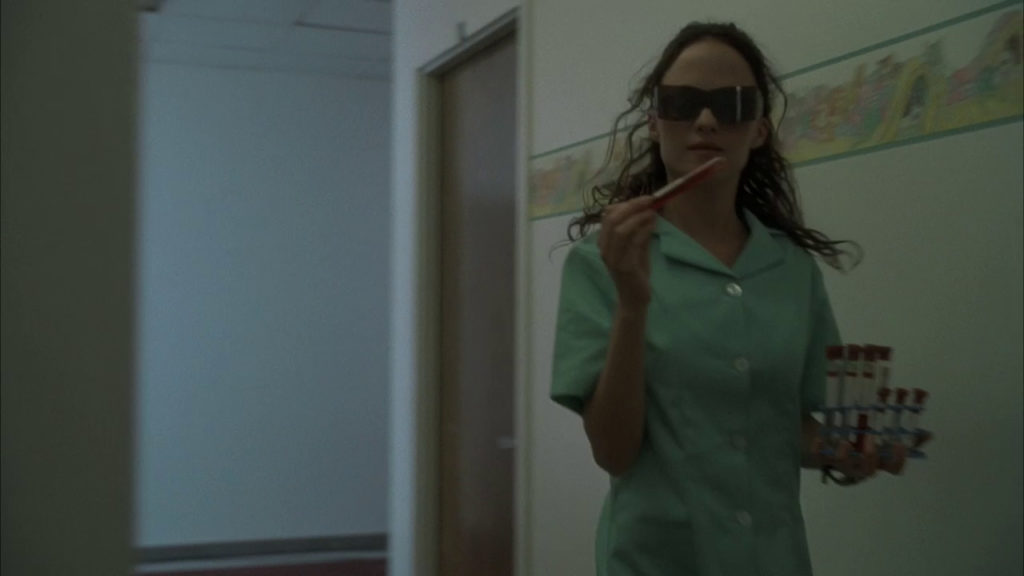
May’s childlike and infantilised nature is emphasised through the haunting score throughout. A lingering sense of foreboding is created as the eerie tinkering sounds of a music box are ever present, binding a sense of childish wonder with mounting tension. Most notably, the music box sounds are merged with scenes of extreme violence only further highlighting May’s misguided intentions with her visceral actions, inciting both sympathy for her and abject horror at her. Ironically, in those moments her actions become a spectacle, harkening back to the spectacle that was created of her during her childhood bullying.
Although the film displays no obvious religious imagery, when examined closer it’s clear that the omnipotent force in May’s life is her obsession with the parts of people, most particularly Adam, whose hands allude to classical artwork. The camera frame zooms into Adam’s perfectly posed hand, making it seem as though he was carved out of marble: Michelangelo’s Creation of Adam comes to mind. Perhaps to May, his hands represent the human connection and physical touch that she so desperately craves. The original poster for the film also depicts May as a biblical and holy figure with bright lights shining around her as though she is Mary, a possessor of immaculate conception. In a way, May certainly does have an immaculate conception in the third act. Her creation, Amy, comes to life to comfort her, only after she sacrifices a part of herself to form a true connection, eventually blurring reality with delusion as her Frakenstein’s monster rises from the dead in front of the viewer’s eyes.

The struggle to feel accepted and loved is the beating heart of May (2002) and ultimately leads to the disintegration of her mental state. Yet ironically, her descent into madness is the only time she truly feels at peace, serving as a poignant reminder of the importance of human connection. Certainly, May (2002) is the perfect film to watch to muse over the repercussions of unrequited love and the fate of a lost soul grappling with her place in the world.

More Film Reviews
The Show (1927) Film Review- A Fun Silent Carnival Ride
Tod Browning is best known for directing creepy, silent films such as Freaks and Dracula, but before he made movies, he was a circus performer and carnival sideshow host. Perhaps…

Cannibal Mukbang (2023) Film Review – A Visceral Feast of Love, Vengeance, and Toxic Appetites
Aimee Kuge’s directorial debut feature, Cannibal Mukbang, dares to ask, “How far would you go for love?” This unsettling yet darkly compelling film explores some of society’s most intimate, and…
Night at the Eagle Inn (2021) Film Review – Paranormal Hauntings
Night at the Eagle Inn was my first experience with the Bloomquist brothers, but it won’t be my last. If you are looking for a deep psychological thriller, wait…

Cocaine Bear (2023) Film Review – A Roaringly Good Time
Cocaine Bear is a 2023 American comedy thriller, written by Jimmy Warden and directed by Elizabeth Banks. The film is based on the true story of a drug dealer’s plane…

Ride Baby Ride (2023) Film Review
Ride Baby Ride is a tightly condensed short film that packs a powerful punch to the patriarchy in its 6 minutes. Director Sofie Somoroff is no stranger to conjuring up…
![Infirmary (2026) Film Review – Found Footage, Atmospheric Dread and Mannequins [Dances with Film NY] (16th)](https://www.grimoireofhorror.com/wp-content/uploads/2026/01/Infirmary-cover-365x180.jpg)
Infirmary (2026) Film Review – Found Footage, Atmospheric Dread and Mannequins [Dances with Film NY] (16th)
The feature-length debut from director Nicholas Pineda, Infirmary (2026), is a found footage horror film set in a decaying hospital/asylum with a dark past. Here, a young security guard, Edward…