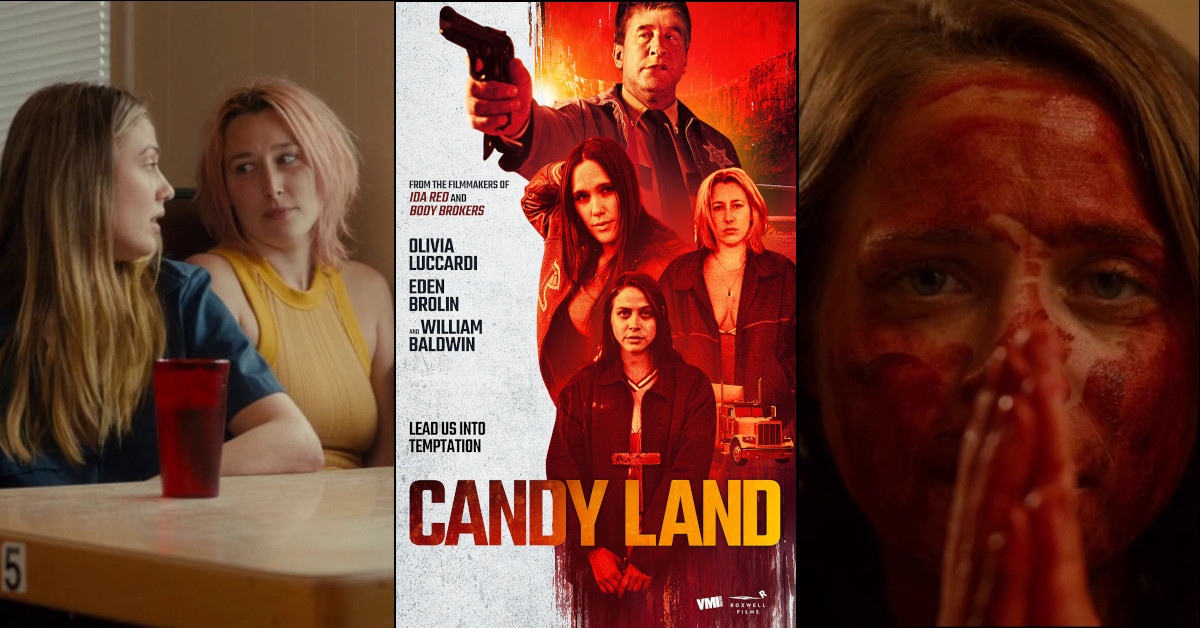




Candy Land (2022) is a religious-horror-themed slasher film that upends established genre conventions in unexpected and gripping ways. Writer-director John Swab (Let Me Make You a Martyr) tells the gritty story of a group of prostitutes that live and work in a rural and isolated truck stop. Tension mounts as a killer stalk them and their clients under Montanna’s big, blue sky.
Candy Land is an intense, bone-crunching, feverish ride punctuated with nudity and gore. Swab’s characters show an impressive level of complexity and detail, untainted by any kind of stereotype. Sadie (Sam Quartin), with her lover Liv (Virginia Rand), Riley (Eden Brolin), and Levi (Owen Campbell) are Candy Land’s “lot lizards,” prostitutes that service truckers and travelers in the parking lot and bathrooms. The customers they serve come to them for comfort, company, and sometimes, something more sinister. Together, they look out for each other and help one another in their hazardous job.

Remy (Olivia Luccardi), a prairie-dress-wearing outcast from a local church, comes to Candy Land asking for help. Sadie introduces her to the rest of the group and they take her in. Soon after, bloody bodies start piling up. Used to dealing with violent and unpredictable men, the denizens of Candy Land miss that Remy’s fanatical and extremist beliefs make her more dangerous than their clients. Her belief in an imminent apocalypse that will damn all of humanity but a chosen few drives her to “cleanse” the prostitutes and their clients from sin before killing them.
Besides a good story backed by solid performances, Candy Land radically alters some of the slasher’s main conventions. After watching hundreds of genre movies, film scholar Carol Clover detailed these conventions in her 1992 book Men, Women, and Chain Saws: Gender in the Modern Horror Film. In it, she codifies a group of common components that viewers could expect to see in a slasher film and Swab subverts some of the most well-known ones for Candy Land.
In a typical slasher, these conventions serve as guideposts that lead the characters (and audience) on a journey of conversion. The next wave of films in this genre, called neo-slashers, radically changed these conventions to refresh a genre that had become stale and, even worse, predictable.
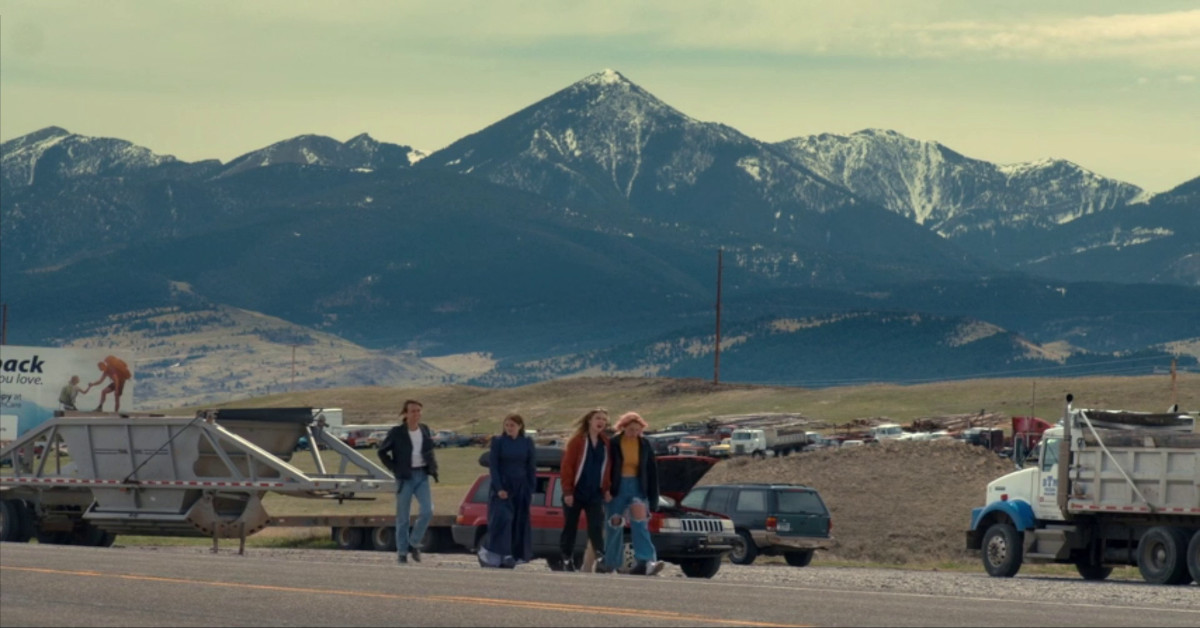
Swab breaks with many of the slasher’s gender norms. While female killers in slashers are not unheard of, they are rare. Their motives typically revolve around either an aspect of motherhood taken to a murderous extreme, or vengeance to be inflicted as the result of a violent act. Although female, Remy, Candy Land’s religious fanatic killer, has a unique movie. She is killing her victims out of love for them and a desire to save their souls so they will join her in Paradise.
Candy Land’s most extreme manipulation of slasher tropes is also the genre’s most recognizable one – its sole survivor, also known as the final girl. Within the story, she differs from the other characters in several easily recognizable ways. She is more responsible than her friends, preferring to study or work instead of partying. She respects society’s rules and boundaries, refusing to break the rules or be dishonest. And the final girl is usually sexually inactive. These differences allow her to make it to the end of the film. She is the one who discovers the dead bodies and fights with the killer to save her own life.
The last living character in Candy Land is nothing like the typical final girl. In place of the traditionally sexually pure and obedient teen girl, viewers are left with Sheriff Rex (William Baldwin), an adult male. Where the final girl is chaste, good-hearted, responsible, and smart, he is corrupt, incompetent, and abusive to the prostitutes. Instead of hetero-normative behavior, Rex is obsessed with the male prostitute. In one of the most difficult-to-watch scenes, he cruelly demands sex from Levi, after he was r*ped by a john.
Clover writes that final girls undergo a symbolic gender switch when they cease running and start fighting. For most of the movie, they are presented as slightly less feminine, not interested in having sex or having a boyfriend, etc. The audience, made up of post-adolescent males, latches on to the killer as the strongest male figure in the movie. That is until the final girl fights back, stealing his knife to defend herself. Then the watching males make her the strongest masculine character. They interpret her use of the killer’s knife as a type of castration where she steals the killer’s masculinity.
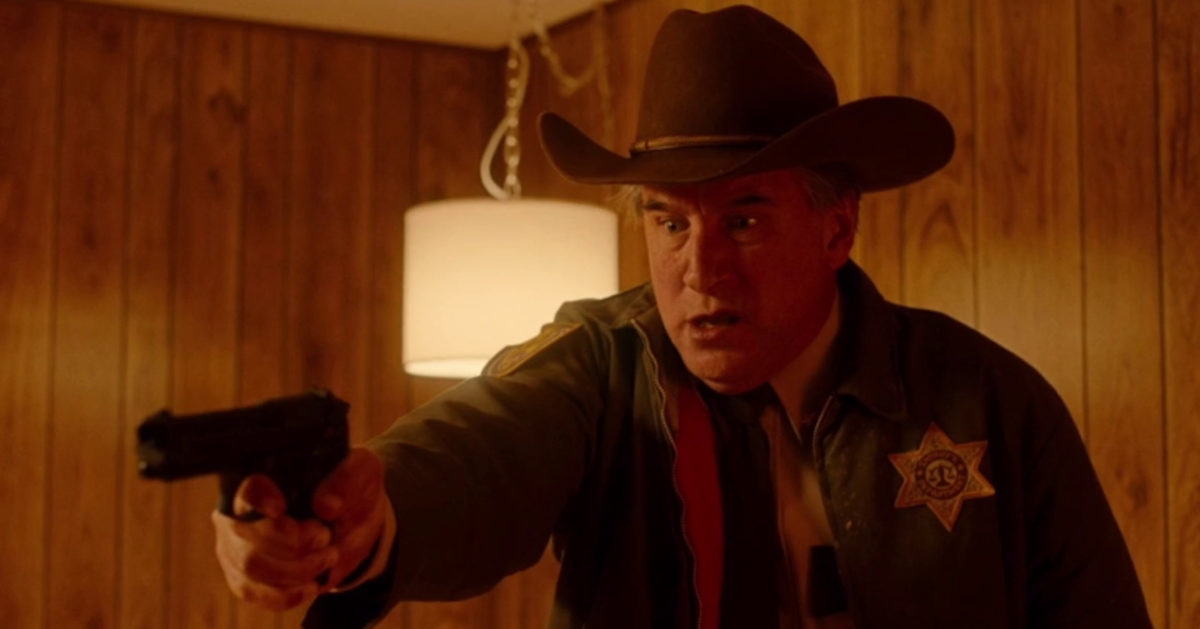
Rex undergoes a similar transition in reverse. Instead of becoming stronger, he gets weaker. For the first part of the film, he only presents as hetero-normative, despising his wife and getting pleasure from dominating Levi. Yet the sight of Levi’s corpse unmans him, reducing him to grief-stricken tears. In the last confrontation with the killer, his gun remains unfired, a symbol of his completely surrendered masculinity.
END OF SPOILERS
John Swab’s Candy Land is a bleak and gritty depiction of life on the edges of society. Swab delves into the lives of his characters without judgment, making them real and relatable. The film is crafted with care and precision, exploring thought-provoking ideas while delivering an enthralling narrative with enough twists to keep genre-savvy audiences engaged until the bloody finale. Candy Land is currently available for streaming across several VOD platforms.
(*For further reading, check out her essay Her Body, Himself: Gender in the Slasher Film, available online here.)
*Affiliate Link
Candy Land (2022) is available to watch on Amazon Prime here.*
More Film Reviews
“We are the children. It’s a pleasure to receive you.” Remember how we always question why alleged alien abductees live to tell the story but don’t have the evidence to… Imagine if, in the early 1980s, nascent film directors John Hughes and Wes Craven met up with venerable science fiction author Ray Bradbury at a Northern California artist’s retreat. There,… Synopsis: Childhood friends are trying to carve out their own piece of infamy online by staging exorcists and selling bunk merch. Wanting to increase their following, the two struggle to come… Two high profile couples are forced to examine the cost of success when they’re invited to an exclusive self-help retreat at the elusive Stauphen House where their ancestors sold their… In addition to those that played ahead of the main features, the Toronto After Dark Film Festival screened eight more Canadian shorts in a dedicated showcase. From stop-motion animation to… Deathsport is a 1978 sci-fi action drama, directed by Nicholas Niciphor, with additional shots directed by Allan Arkush, and produced by Roger Corman. The film is a somewhat spiritual successor…
The Alien Report (2022) Film Review – Close Encounters Done Well

Detention (2011) Film Review – Never Going Back to My Old School

The Cleansing Hour (2019) Review – The Devil Wants More Followers!
The Summoned (2022) Film Review – Horror of Being The Odd Man Out

Canadian Shorts After Dark Showcase – Toronto After Dark Film Festival 2022

Deathsport (1978) Film Review – Blood, Boobs, and Bangs

I am a lifelong lover of horror who delights in the uncanny and occasionally writes about it. My writing has appeared at DIS/MEMBER and in Grim magazine. I am also in charge of programming at WIWLN’s Insomniac Theater, the Internet’s oldest horror movie blog written by me. The best time to reach me is before dawn.