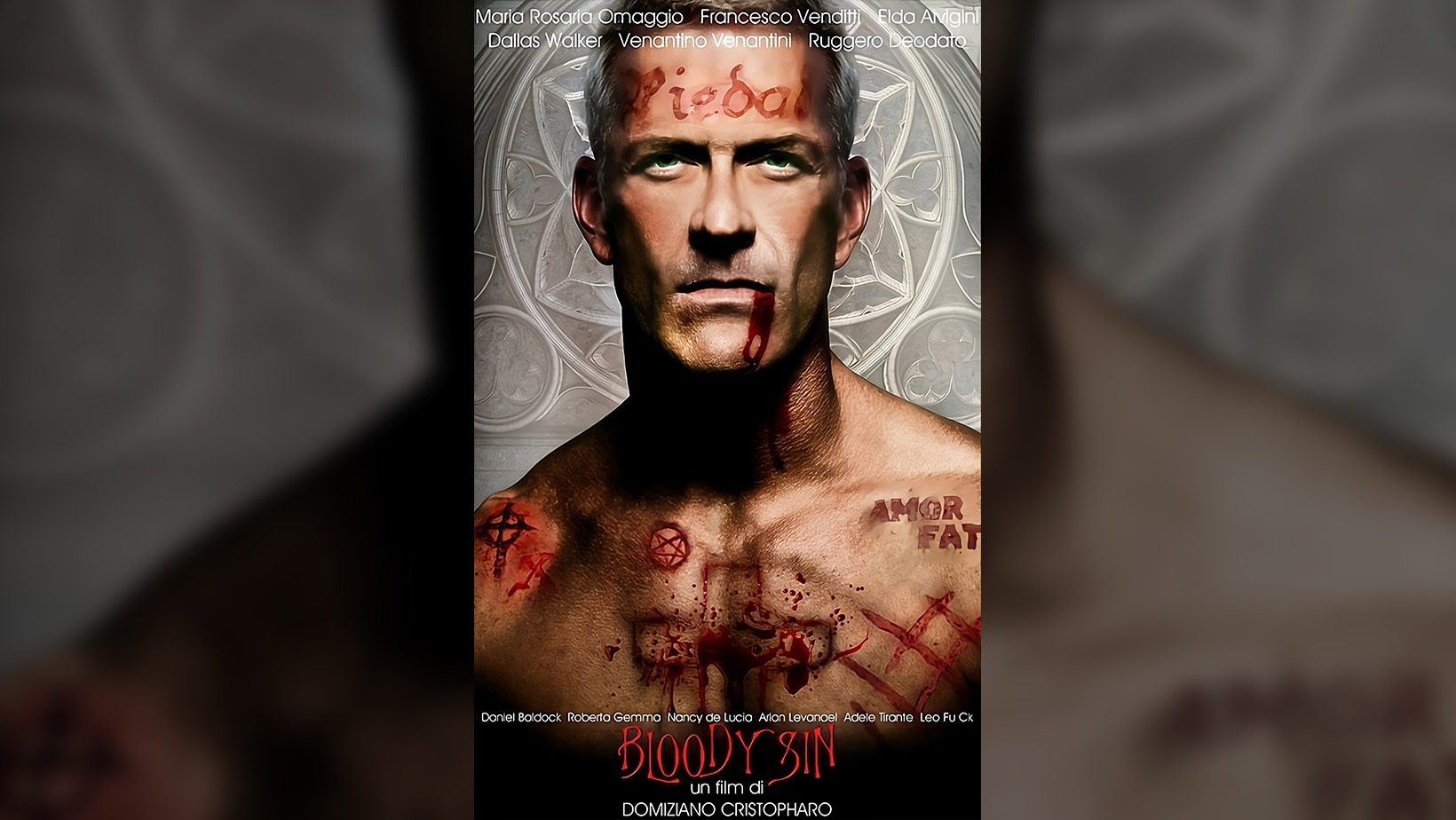





Bloody Sin is a 2011 English-language Italian extreme horror film, written and directed by Domiziano Cristopharo, with additional writing from Jay Disney and Filippo Santaniello. Being particularly well-known in the Italian extreme horror scene, Domiziano is known as the creator of such films as House of Flesh Mannequins (2009), Red Krokodil (2012), and Virus: Extreme Contamination (2016), to name but a few. Whereas, Filippo Santaniello has worked as a writer on a number of titles such as Sarcophaga (2013), and The Slider (2017), and Jay Disney, mostly known as an actor, has worked on translating scripts to English, such as Shock: My Abstraction of Death (2013), and The Transparent Woman (2015).
A team of American photographers/models investigates a European castle that was used for sadistic tortures during the Inquisition, as well as horrifying and abominable Nazi experiments on innocent people. Riddled with history, the demonically possessed castle overtakes the crew, turning their nightmares into a terrifying reality.
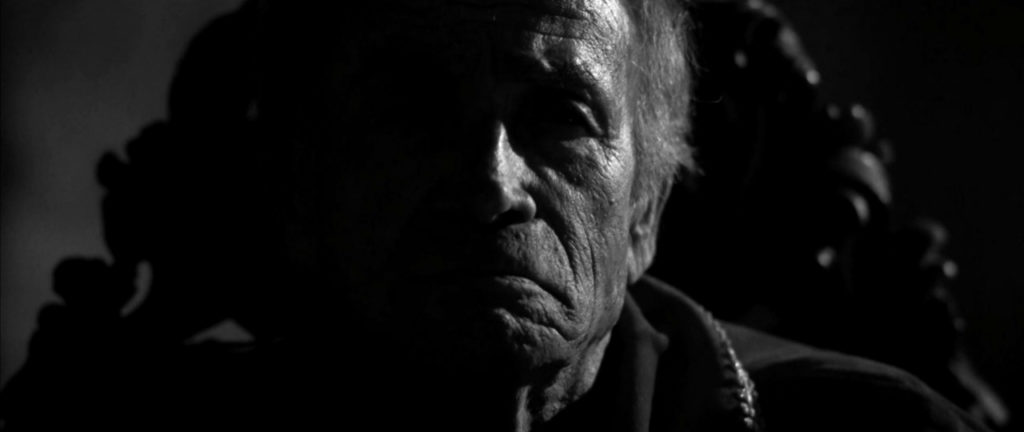
An incredibly perfervid love letter to exploitation films of the ’60s and ’70s, Bloody Sin certainly captures the essence of its basis wholeheartedly. Being a literal homage to classic Italian cinema such as Bloody Pit of Horror (1965) (Il boia scarlatto) and Beyond the Darkness (1979) (Buio Omega) to name only a fraction, the film is an embodiment of Gothic horror, Christsploitation, and Nazisploitation to produce a fantastic combination of them all. The film utilises a number of tropes from the period, such as Italian actors playing Americans, ADR dubbed voices, and overtones of erotica, truly delivering an amazing representation of this classic genre.
Furthermore, with small cameos from the late Ruggero Deodato and Venantino Venantini as executioners, it could undoubtedly be argued that the film got its blessing from some of the greats of the genre.
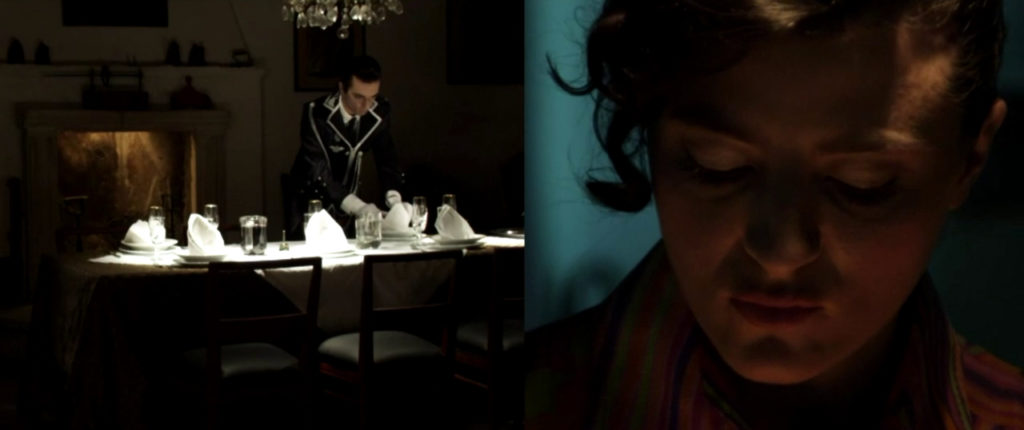
Displaying the acute eye for detail Domiziano is known for in his films, Bloody Sin exhibits an incredibly sleek visual design—utilising an abundant mix of different techniques and styles throughout. From an excellent use of black & white footage to create a faux silent film aesthetic, to highly saturated, soft-focused colour film emulating the vintage cinema of the 60s and 70s, to even implementing a short piece of stop-motion animation; the film certainly accomplishes in capturing its intended styles. Additionally, the film also implements the use of split-screen cinematography, similar to The Boston Strangler (1968) or Wicked Wicked (1973). However, this technique is used in a different manner to these examples, displaying several angles of the same room rather than different perspectives.
However, where Bloody Sin suffers most is with its overtly varied performances provided by the cast. Ranging from decent to thematically campy, there are a fair few renditions that do the film solid justice and certainly play into the aesthetics. Unfortunately, there is more than one interpretation that could be considered subpar to put it politely. Whilst this isn’t exactly egregious, it is a noticeable blemish on an otherwise notable piece of cinema.
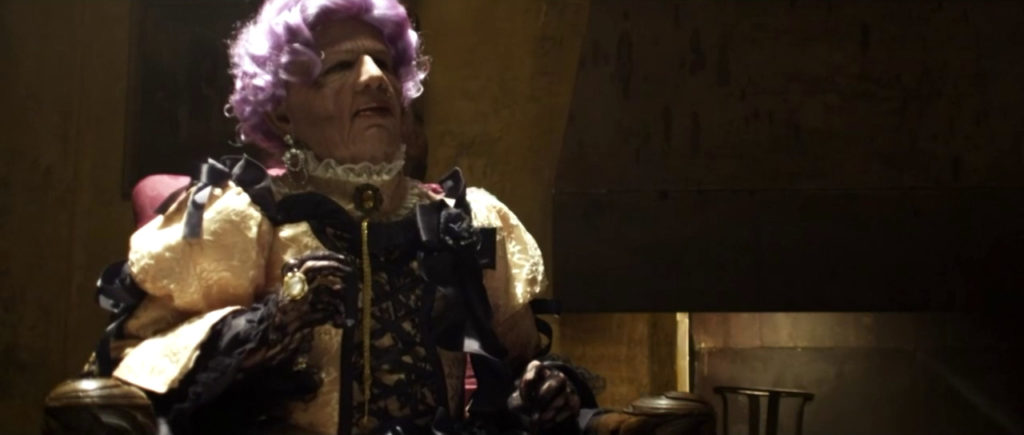
Both visually and ideologically representative of cult classic exploitation from its golden era, Bloody Sin certainly shows due diligence to the films that paved the way for exploitation horror thrillers. With its amazing visuals, beautiful Gothic location, and incredibly unexpected twist ending; the film is an enjoyable romp for those who gravitate towards older horror films.

More Extreme Cinema Reviews
Fist is a 2025 German splatter horror film written by Jean Rises and directed by Tibor Astor. Known for his extreme horror books and novellas, Jean is also the writer/producer… Audition (1999) is the scariest movie of all time. I say that without hesitation or hyperbole. No other director is as effective with their imagery as Takashi Miike is here,… Tapes of Death Collection is an assemblage of gore/extreme horror short films compiled into four separate anthology films—Nekrology, Dark Mixtape, Snuff Video, and Tapes of Death—created by Tony Newton. Tony… Gorenography is a 2021 documentary hosted by director Tony Newton. The documentary delves deep into the world of extreme cinema, divulging an uncensored, unbridled look at this niche underbelly of… Trypophobic Posession is a 2024 Spanish splatter horror short film, written and directed by Mikel Balerdi (though most of the work was undertaken by Cory DeAn Cowley). Known for his… The Sergio Blasco Gore Collection is an anthology of four extreme splatter films all created by the Spanish director – Including Burrp (1996), Mas Carnaza (1997), Plano Detalle (2008), and…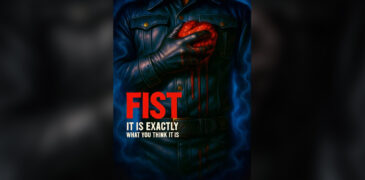
Fist (2025) Film Review – Elbow Deep in Murder
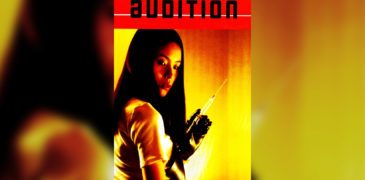
Audition (1999) Film review – A Delightful Descent into Madness
Tapes of Death Collection Film Review – 289 Minutes of Unbridled Indie Cinema

Gorenography (2021) Film Review – A Conscientious Exploration of Extreme Cinema Directors
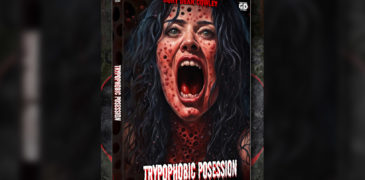
Trypophobic Posession (2024) Film Review – Any Hole’s A Goal

The Sergio Blasco Gore Collection (2024) Film Review – Extreme Spanish Cinema

Hey there, I’m Jim and I’m located in London, UK. I am a Writer and Managing Director here at Grimoire of Horror. A lifelong love of horror and writing has led me down this rabbit hole, allowing me to meet many amazing people and experience some truly original artwork. I specialise in world cinema, manga/graphic novels, and video games but will sometime traverse into the unknown in search of adventure.