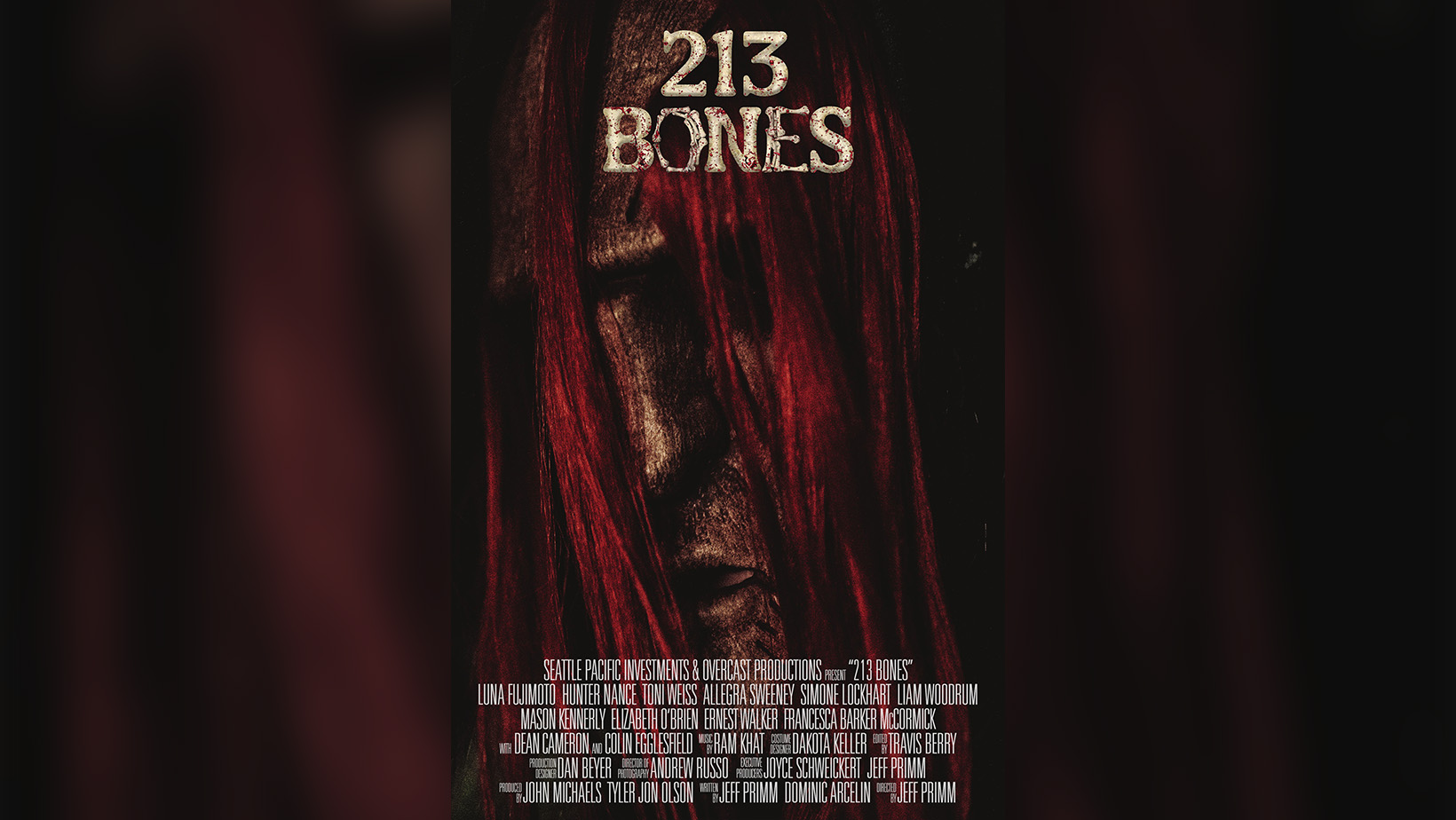





During the current trend of “elevated horror”—films that explore personal trauma with visceral, cathartic violence—Jeffrey Primm and Dominic Arecelin’s 213 Bones promises to be a refreshing throwback to simpler horror movies. It’s a straightforward slasher that follows the familiar formula of the genre without delving into someone’s deep, intrapersonal nightmares. The movie’s premise brings together a disparate group of college students in the pre-cellphone 1990s who must solve a mystery before they get killed. The film offers a bloody mix of John Hughes’s classic coming-of-age film The Breakfast Club and the grungy aesthetic of Cameron Crowes’ 1992 Seattle saga Singles. However, despite its attempt to combine the best parts of these modern classics, 213 Bones lacks their sense of style, in-depth characterization, (and exciting, live footage of bands like Soundgarden and Alice in Chains.)
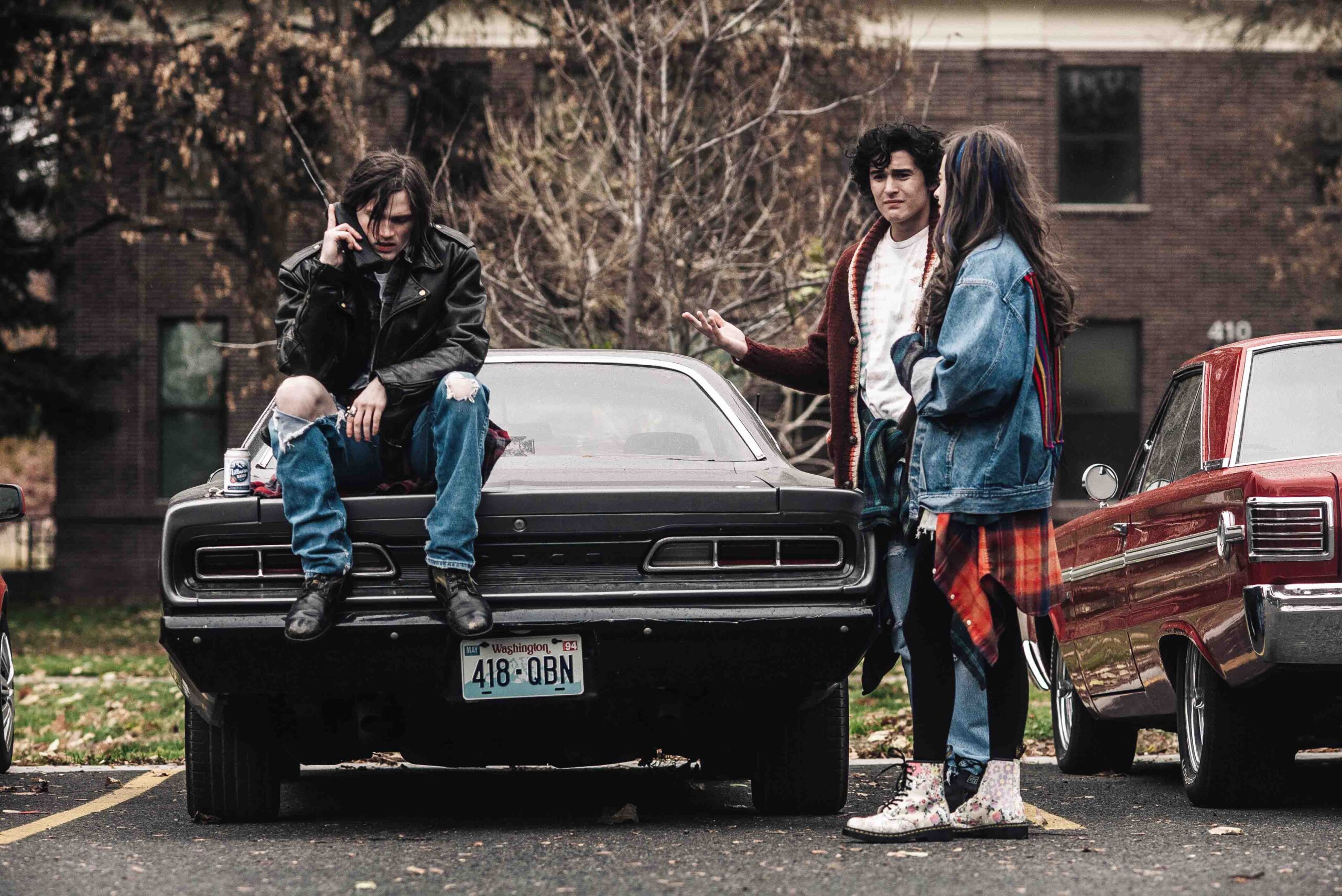
213 Bones assembles a cast of familiar slasher archetypes. Lisa (Luna Fujimoto), the quiet, observant brainiac who fits the mold of the “final girl.” She’s joined by the brawny, Ken-doll-like Brent (Hunter Nance); the stoner Eric (Liam Woodrum) and his girlfriend Joanna (Simone Lockhart); and the surly, ’90s-regalia-clad grunge kid and drug dealer Clyde (Mason Kennerly). Also present is Bob (Dean Cameron), an older, non-traditional student who looks ready for an Indiana Jones expedition, all brought together for a big test that combines anthropology, forensic science, and a murder mystery game.
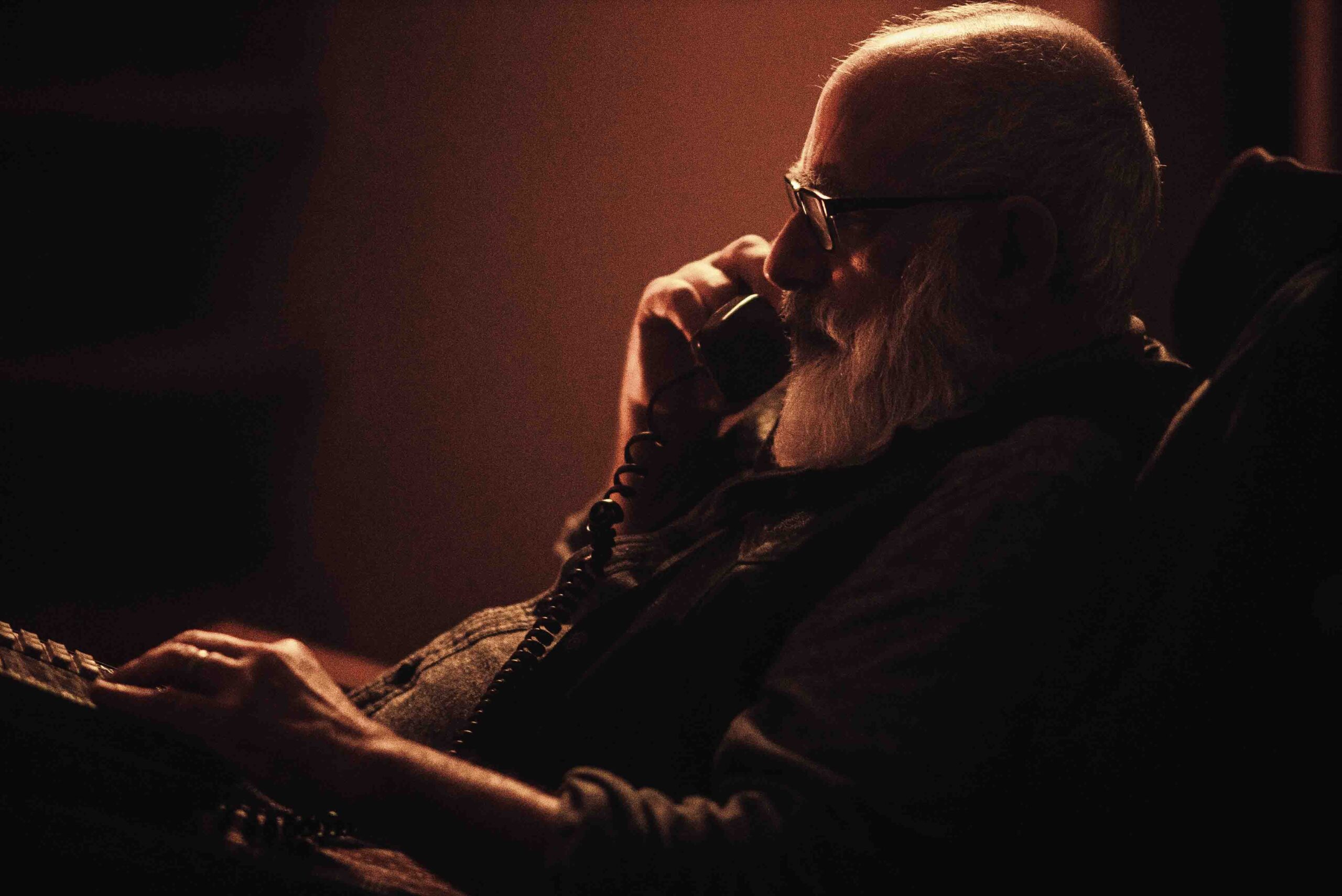
Although some notes hit very well, 213 Bones falls woefully short of delivering a consistent symphony of terror. Despite its promising setup, the film doesn’t seem to know what to do with its more interesting or ghoulish elements. A movie built around discovering real human bones during a college scavenger hunt should be, at the very least, delightfully morbid. Instead, the central plot device—a killer who inexplicably taunts their victims with human bones—is never convincingly explained. This lack of grounding makes the film feel less rooted in reality and more like a collection of ideas that never quite connect.
Another interesting element that is introduced and then forgotten is the intense rivalry between the 90s grunge aesthetic broadcasting Clyde and the ’80s-worshipping, “material girl” Candice (Toni Weiss). Their constant bickering remains wholly unexamined, which is a shame. It would have added some depth or even a fun battle between the decades.

Equally jarring is the informal relationship between the students and their professors. The lack of proper honorifics for Kelly, the professor (Colin Egglesfield), and pathologist Laurie (Francesca Barker McCormick) creates a confusing dynamic, which, combined with the characters’ often illogical actions, makes the film hard to take seriously.
However, the most commendable part of the film is undoubtedly its soundtrack. It is a fantastic, head-nodding collection of alternative and indie hits from the ’80s and ’90s, featuring bands like Duran Duran, Ministry, Meat Puppets, Melvins, Siouxsie and the Banshees, and Soundgarden, to name a few.
Sadly, the music is the most exciting element of an otherwise tepid film. In keeping with the convoluted, side-road-filled plot, the violence is surprisingly low-key. With the exception of one plucked-out eyeball, the kills are pretty bloodless and uninspired. A great soundtrack alone can’t save a film with an incomprehensible plot and a general lack of tension.
Regrettably, I wanted to like 213 Bones a lot more than I did. Watching the film was like drinking a glass of room-temperature water on a sweltering hot day: it’s something you can do, but it’s far from satisfying.
More Film Festival Coverage
Some movies are so bad that they’re fun, like an 80s slasher flick with gratuitous gore and cheesy tropes. You know, the type of films that are so bad that… Post-apocalyptic films after a pandemic certainly seem poised to hit their stride, with the horror genre acting as a cathartic release from modern day anxieties. Enter Glasshouse, the debut from… There are movies that are sometimes too much even for the seasoned horror fan – for the 2012 version of myself, one such movie was the remake of William Lustig’s… There is probably no better place to start discussing Yakuza Princess than with its setting of Sao Paulo, Brazil. As the film quickly points out in its introduction, Sao Paulo… From Cannes Palme D’or Winner Frida Kempf, Knocking marks the Swedish Filmmaker’s first foray into horror. Posing a dark tale of madness, the film captures the unease found in the… The Hammer films of the late ’50s and ’60s are my go-to comfort films. I’m particularly partial to ones starring Peter Cushing and Christopher Lee, but honestly, who doesn’t love…![Your Host (2025) Film Review – Come for the Shock Value, Stay for the Social Relevance? [FrightFest 2025]](https://www.grimoireofhorror.com/wp-content/uploads/2025/09/Your-Host-2025-cover-365x180.jpg)
Your Host (2025) Film Review – Come for the Shock Value, Stay for the Social Relevance? [FrightFest 2025]

Glasshouse (2021) Film Review – Horror of Fleeting Memories
Night Caller (2021) Film Review – Meet the New Maniac
Yakuza Princess (2021) Film Review – Classic Yakuza Action with a Fresh Perspective
Knocking Film Review – A Slow Decline Into Madness

Lake of the Dead (1958) Film Review – A Classic Norwegian Haunted Lake Tale

I am a lifelong lover of horror who delights in the uncanny and occasionally writes about it. My writing has appeared at DIS/MEMBER and in Grim magazine. I am also in charge of programming at WIWLN’s Insomniac Theater, the Internet’s oldest horror movie blog written by me. The best time to reach me is before dawn.