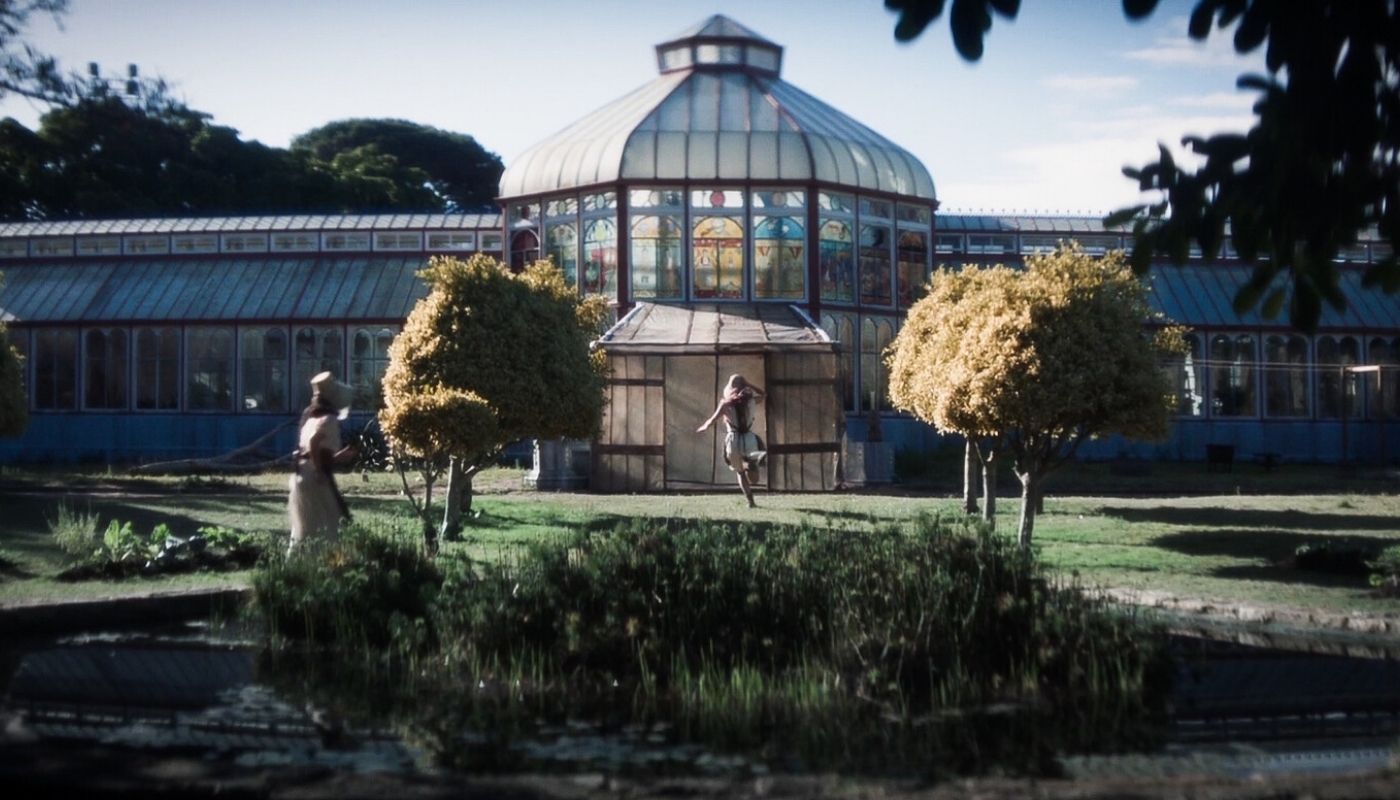




Post-apocalyptic films after a pandemic certainly seem poised to hit their stride, with the horror genre acting as a cathartic release from modern day anxieties. Enter Glasshouse, the debut from South African filmmaker Kelsey Egan, which has the potential to become a modern classic with how it expertly explores a modern dread in a pandemic-conscious society.
As the world is rotting under an airborne pathogen called ‘The Shred’, a family has made a haven for themselves in a self-sustaining glasshouse. As the rest of the world loses greenery and animals, the large structure represents a haven at the end of the world – a home that needs to be protected. However idyllic the home may seem, it holds dark secrets that begin to unravel when a stranger is brought into the home and taught the strict code the family abides by in order to survive.
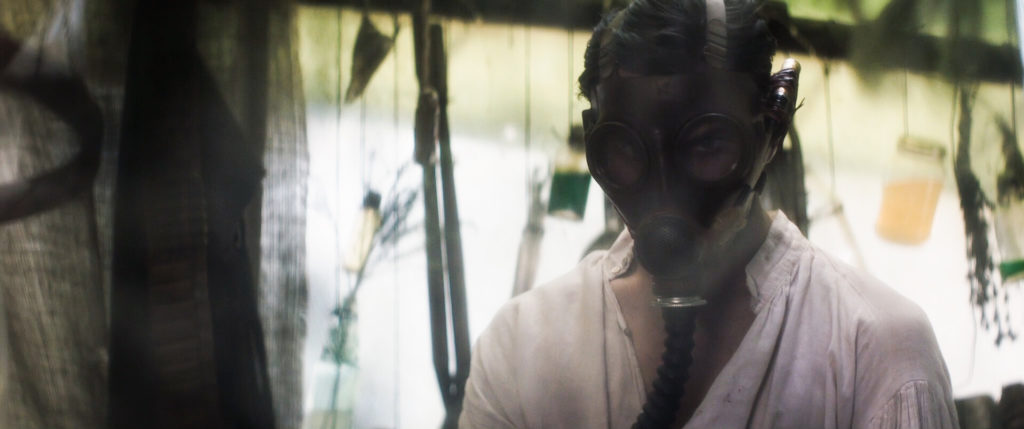
A beautiful melodrama, presented as a love triangle among a secluded family, Glasshouse dominates on a brilliantly guided script blending relatable pandemic paranoia into dystopian themes. The introduction of a foreign entity into a family of women, who are governed by a matriarch, is a scenario that will instantly ring alarms for fans of genre film. Regardless, one of the production’s greatest strengths is in the embrace of a subtle build-up, forgoing the easy route of winning a power struggle through force and opting instead for a long deceitful game of manipulation. Utterly gripping as a drama, the conclusion feels pre-determined, yet the dread will creep up on audiences as Luca positions himself into a place of ownership.
Adding to the complex lives of the family, the ever pervasive ‘Shred’ outside compels each to question their own perceptions, even a few moments outside causing blurred thoughts and memory loss. While the miasma is always present in the narrative, it does take a back seat to the dramatic flair of the production; that is, until the final moments where a devastating revelation crumbles the very foundation and sanctity of the safe haven. Avoiding spoilers, the final revelations reframe everything that came before it in a tragic manner – twists that are jaw-dropping and unforgettable. Ultimately, the script is beautifully realized and deeply engaging in the way it balances elements of family drama with an abstract sickness – easily the most pronounced aspect of the film.
Adding to the intensity of the scenario, Glasshouse is backed by strong performances, with each member of the family playing a key role in the engrossing world-building. Notably, Jessica Alexander (Bee) and Anja Taljard (Evie) craft an intense sibling rivalry that reflects two different mindsets in dealing with the harsh reality of their existence in a dystopian landscape. In addition, Hilton Pesler plays the perfect antagonist, worming his way into the family with charisma.
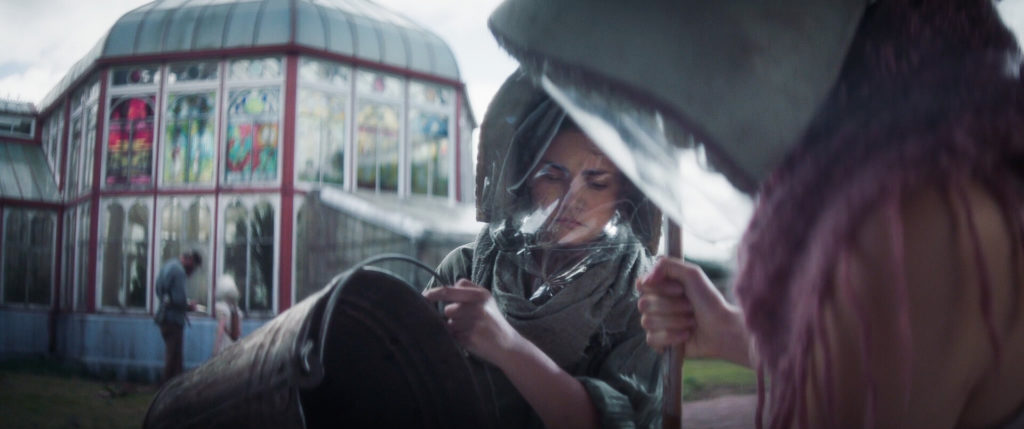
The only major lull comes in the overall presentation being muted both in visuals and sound design. Furthermore, the score is too light to capture moments of intensity, and the few elements of horror existing are conveyed in an overly simplistic manner. Arguably, the production has room for shock to heighten the sense of drama, but at the same time, this does not make the film any less than the achievements for what it sets out to be. Nevertheless, the nuanced approach is bound to make this more of a niche film among horror fans – it is honestly better approached as a drama first and dystopian horror second.
It is difficult to discuss too much of the production without giving away key elements, every moment and interaction has meaning making for a deeply captivating cinematic experience. A wonderfully crafted piece of folk horror, the film may see a limited audience due to its light approach to the horrors of dystopia, but will resonate with those prefer their thrills more calculated and the narrative wholly character driven.
We Watched Glasshouse as part of the 2021 Fantastic Fest
More Festival Coverage
The feature-length debut from director Nicholas Pineda, Infirmary (2026), is a found footage horror film set in a decaying hospital/asylum with a dark past. Here, a young security guard, Edward… TikTok dances emanate eerily around you, a cacophony of booming cackles emitted from influencers as they forcefully push their latest merch (that was most likely made in some far-off, exploitative… The Coffee Table, from the mind of emerging international director Caye Casas, stands out as a genuinely unnerving and intellectually stimulating horror film in recent memory. Serving as a cautionary… I didn’t really have a whole lot going during my high school years. I went to class and did stupid hijinks with my friends, but I mostly just watched movies… Resurfacing from the depths of the 80s, Devil Story is an idyllic pick for 2021 Fantastic Fest, courtesy of the good folks at Vinegar Syndrome. A showcase of inept filmmaking,… Summer in Montreal is always an exciting time. Downtown, Ste. Catherine Street is cordoned off from traffic beneath de Bleury for the Jazz Festival, where past years featured free outdoor…![Infirmary (2026) Film Review – Found Footage, Atmospheric Dread and Mannequins [Dances with Film NY] (16th)](https://www.grimoireofhorror.com/wp-content/uploads/2026/01/Infirmary-cover-365x180.jpg)
Infirmary (2026) Film Review – Found Footage, Atmospheric Dread and Mannequins [Dances with Film NY] (16th)
#Chadgetstheaxe (2022) Film Review – Cancel Culture Gone Awry (Unnamed Footage Festival 666)
![The Coffee Table (2022) Film Review- A Careless Family Affair [Fantastic Fest]](https://www.grimoireofhorror.com/wp-content/uploads/2023/09/The-Coffee-Table-cover-365x180.jpg)
The Coffee Table (2022) Film Review- A Careless Family Affair [Fantastic Fest]
Baby Assassins (2021) Film Review – Moe Moe Kyun!

Devil Story (1986) Film Review – What a Lovable Lump of a Man

Tombs of the Blind Dead Film Review (1972): Fantasia Fest 2021