




Ken Niimura is a Spanish-Japanese artist who employs a simplified, endearing style to share three stories in this volume of the taboo. Taking inspiration from the Japanese tales he heard as a child, such as Urashima Taro and The Crane Wife, he uses each to dig into the questions he had behind the story. What would happen if you opened a box you were forbidden from? Why do we have the rules that we do? Niimura asks us to look not only at the questions themselves, but the status quo behind them. What results when rules are broken, and is it ever right to question the rules?
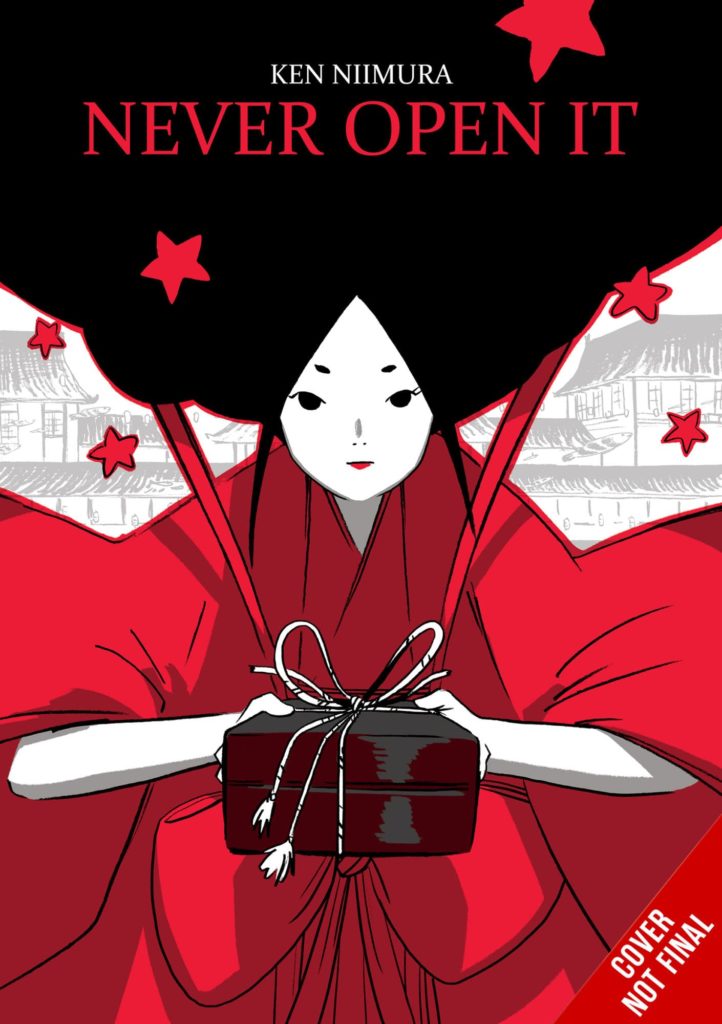
If you are unfamiliar with the source material, have no worry. There isn’t any prerequisite; in fact, not knowing them leaves one with the opportunity to dive into another culture’s admonitory legends with open eyes and untarnished perspective. As primarily a novice myself, I quite enjoyed learning them in a straightforward, engaging format which proved accessible, yet deceptively deep and open to interpretation. For those familiar with such folklore already, however, the author’s rendition presents new twists – refreshing the source material from being yet another reiteration. Admirably, the author’s sources are even cited and discussed in the closing words, perfect as a baseline for those wishing to delve deeper.
Surprisingly dark in the way that only innocuous tales can be, Niimura captures the essence of fairy tales perfectly from the oscillating emotions conveyed between hopeful and bleak. While each plot is a separate mechanism, they are connected effectively in theme, style, and content, making for a satisfying anthology.
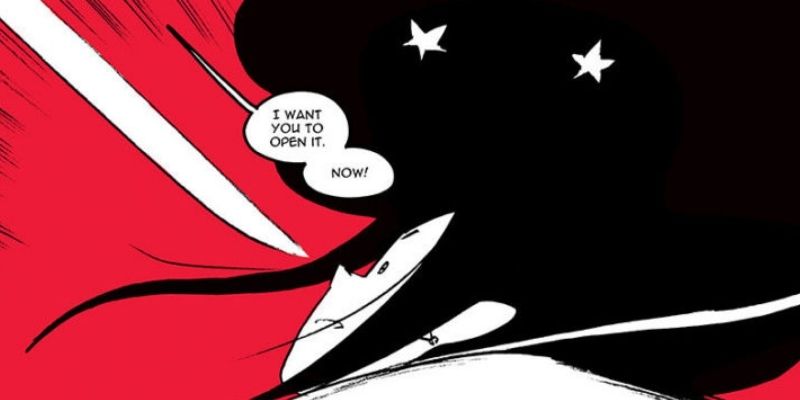
Niimura’s artwork encapsulates the tone, either matching the whimsy of the story or completely juxtaposing it in a way that emphasizes shock value and enhances the surprise. Much like Grimm’s tales, these stories aren’t all innocently portrayed, either, but provide a literary tool to teach children much needed lessons, harsh as those may be.
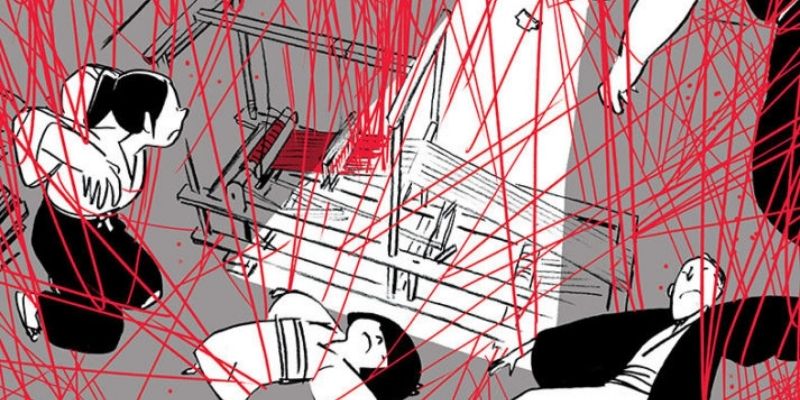
The illustrations have a nostalgic quality, echoing back to Sunday comics to relax anybody into appreciating the relatable style. Clean and easy to read, yet expressive, each arc is presented in black, white, and red drawings – perfect to contour real contrast with the sharp use of red (which is a salient, powerful color in East Asian cultures). Left to right format is used in a way that is accessible for those new to graphic novels and manga. Whether reading on your own or with family, Never Open It has the potential to become a reoccurring tradition.
As a break from horror, this collection of folklore was quite enjoyable. It’s easy to read over a sitting or two, easily digestible, yet impactful enough to keep turning it over for some time. If you’d like a way to dive into Japanese fairy tales but don’t know where to start, Never Open It is the perfect place to whet your appetite.
As a graphic novel, The Taboo Trilogy stands out for being accessible to many ages, but still enjoyable to a mature audience. They say one never truly grows out of fairy tales, but rather into them. Never Open It is the perfect example, and one that will offer you a new take on a feeling that you may have been missing from your childhood. If learning more about Japanese culture appeals to you, this collection offers both incentives at once.
For a charming, impactful read, check out Never Open It: The Taboo Trilogy from Yen Press. It’s available on October 19th, perfect for the imaginative side of the Spooky Season. Don’t forget to listen to the cautions you’re presented with. We usually don’t want to find out what happens when we ignore them…
More Manga Reviews
June 10th, 2021 marked the release of Trese on Netflix, an animated series based on a Filipino Komik of the same name. The anime has been having impressive traction on… At some point in history, the magical girl genre existed as the pinnacle of wholesomeness. Yet, Madoka Magica became a staple as its deconstruction of it. At this time, it… Every anime-inclined teen’s worst nightmare is to have their parents find their secret stash. Imagine that not only your parent finds some rather questionable content, but decides to write to… Many people may be aware of the name Issei Sagawa as well as the sickening crime he committed in France in 1981, but many may not be aware of Sagawa’s… Noboru Yoshimi was a prolific horror manga author who enjoyed great success with over 300 published stories to his name, mainly aimed at a younger audience. There is however one… The vampire sub-genre in the West is one that is marked dull media with the odd standout title slipping through – the creatures seldom seeing reinvention or popularity of their…
TRESE Graphic Novel Review – A Success of Filipino Horror
Magical Girl Site (2013-2019) Manga Review – It’s Not Madoka and That’s Completely Okay

Honey Room’s Obscenity Trial and the Horrors of Scapegoating
Sagawa-san (2000) Manga – True Crime Manga Written by the Killer
Indecent Wriggling (1970) Manga Analysis – A Perverse Gender-Bending Body Horror
Shiga Hime Manga Review – Gore Soaked Vampiric Horror
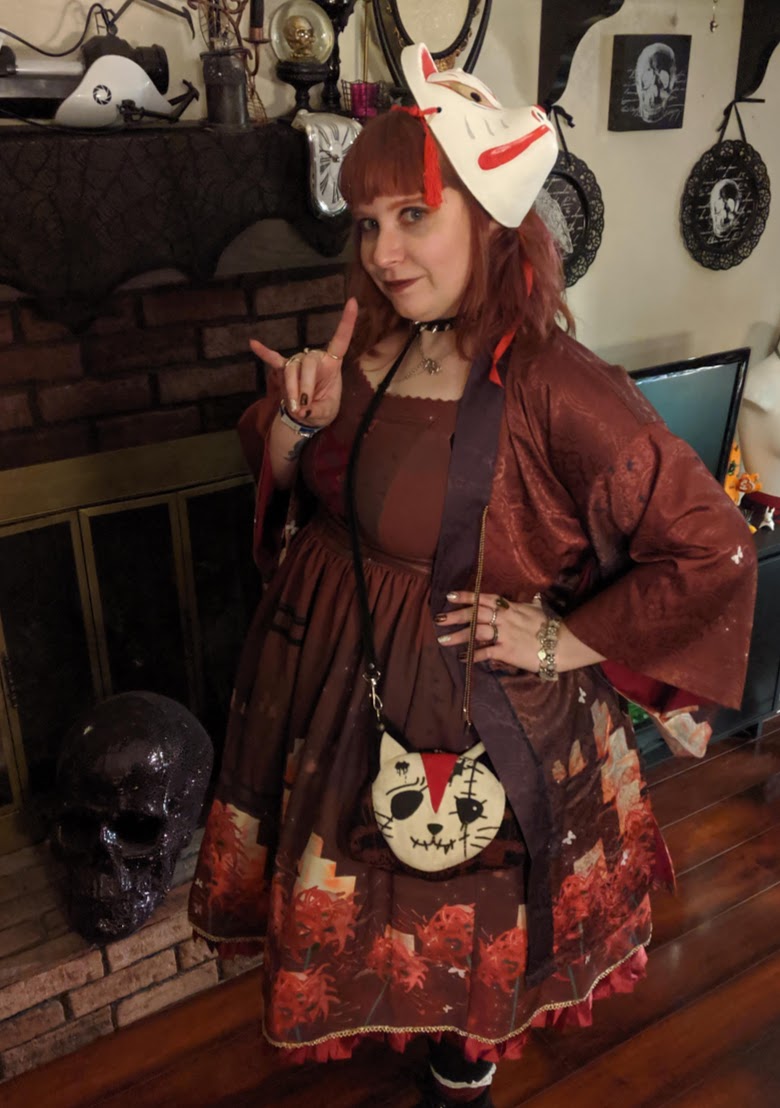
Hello, I’m Quinn. Saying I’m deeply into fashion and Japanese culture is an understatement. We’ve renovated entire rooms of our house to dedicate to my collections of lolita and other Japanese fashions. I enjoy balancing the cute with the macabre, and the more disturbing it is, the more I’ll enjoy it. Thus, my love for Asian horror and manga was born. Thank you for taking the time to read my writings. I look forward to discussing films and aesthethics with you!