




Why are horror and exploitation films so popular? Why do fans willingly submit themselves to the gruelling, torturous experiences that these genres provide? The simple answer is it feels good to be scared. Movies like Night of the Living Dead (1968) or Faster Pussy Cat, Kill Kill! (1965) allow fans to experience unique, unusual and transgressive thrills from the safety of their seats. Those frightful or titillating moments trigger the body’s autonomic nervous system, flooding the body with adrenaline, increasing focus and sharpening the senses. At the same time, our conscious brain registers the safety of our environment and releases a flood of dopamine, which elevates the mood, leaving the viewer feeling exhilarated and happy.
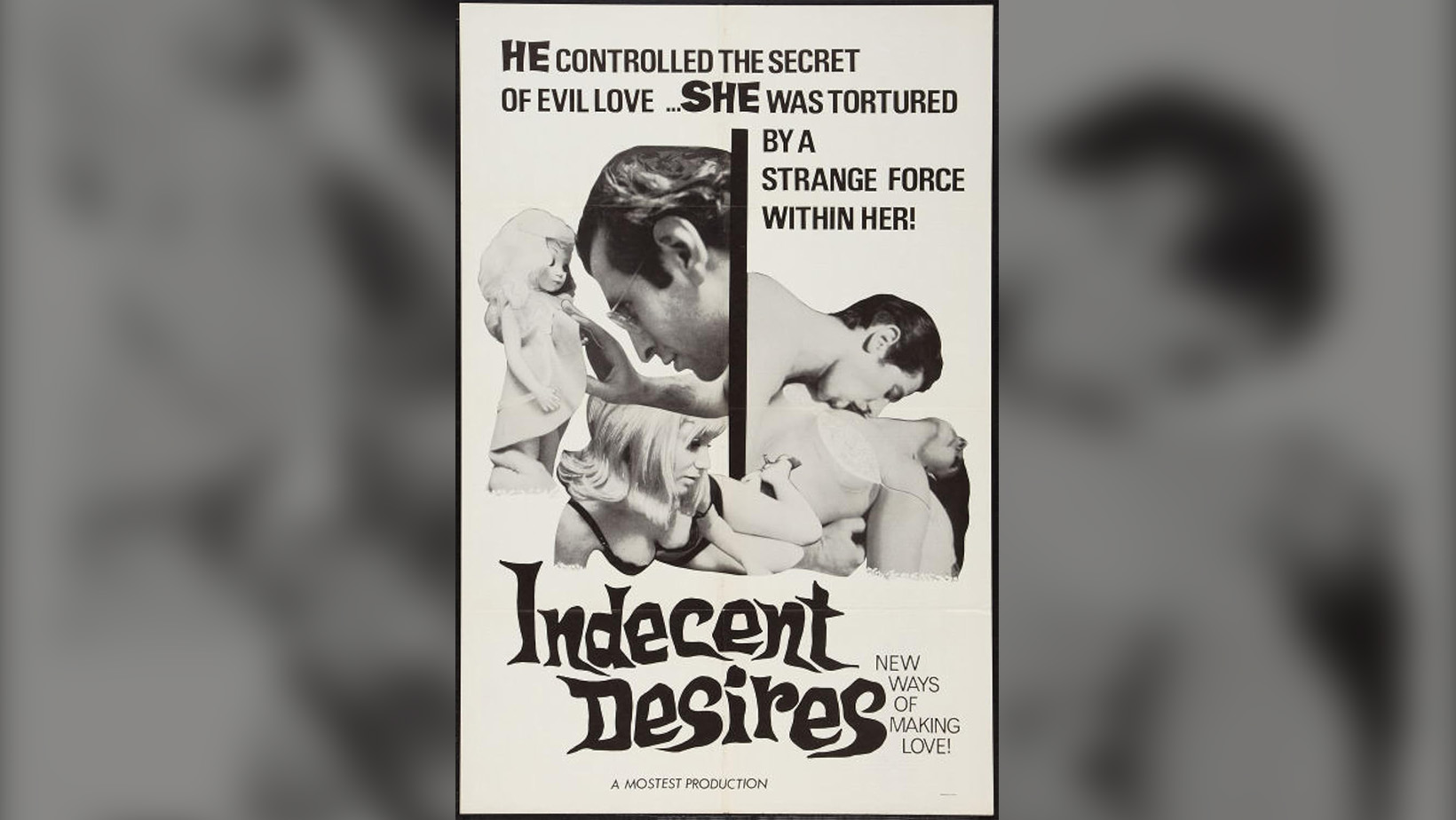
Some fans crave the thrill of witnessing the forbidden, delighting in the assault on societal and moral norms. The sexploitation genre satisfies and fuels this desire to peek through the forbidden windows of cultural appropriateness. Here is where horror and exploitation overlap. They have a common goal: exposing audiences to the transgressive thrills and chills found beyond the wall of convention, be it blood, beasts, or bare flesh. An excellent example of this sort of entertainment is Doris Wishman’s 1968 film Indecent Desires. This film heartily combines sexploitation and horror, through a unique female perspective, that remains titillating and frightful over 50 years later.
As one of the few women behind the cameras making exploitation and sexploitation movies, Doris Wishman (1912-2002) was a real pioneer. Her films tested the legal and moral limits of the day by featuring sensational displays of sex and violence, content that often went afoul of community standards. Wishman also had the reputation of being able to deliver her movies on tight budgets and with rapid production schedules, earning her the title of “the female Ed Wood.” Unlike her contemporary, Wishman’s films were tightly plotted and coherent, full of arresting visuals to tell their stories.
A self-taught producer, director, and writer, Doris Wishman was a consistently unique filmmaker in both her style and themes. Her first film, Hideout in the Sun (1960), established her within the “nudie cutie” subgenre. Though these films featured female nudity—often using nudist colony settings to skirt censorship laws—their images and content were generally non-sexualized and tame. As the appeal of these mild films waned and cultural censorship relaxed, Wishman pivoted to the far darker “roughie” subgenre in the mid-1960s. Unlike their predecessors, roughies unflinchingly embraced misogynistic violence and explicit sexual content, replacing innocent displays of nudity with scenes of kidnapping, rape, and murder.
Her work stands as a crucial counterpoint in the male-centric sexploitation subgenre. Roughies such as Brian Mabe’s The Defilers and Michael Findlay’s Flesh trilogy centered graphically on the men who abuse women, men whose degenerate fantasies were often fueled by uninhibited male rage. Wishman’s roughies, such as Bad Girls Go to Hell (1965) and Another Day, Another Man (1966), inverted this focus, shifting attention to the female victims and their struggle to survive against the incomprehensible depths of male depravity.
Teaming with cinematographer C. Davis Smith, Wishman’s films from this time were stark, black-and-white showcases. Stylistically, she expertly turned her low-budget constraints into a surreal and detached aesthetic. To reduce the cost of audio dubbing, she employed voice-overs and shot the dialogue scenes where the speaker’s face is off camera, giving her work an unsettling, almost detached, dream-like quality.
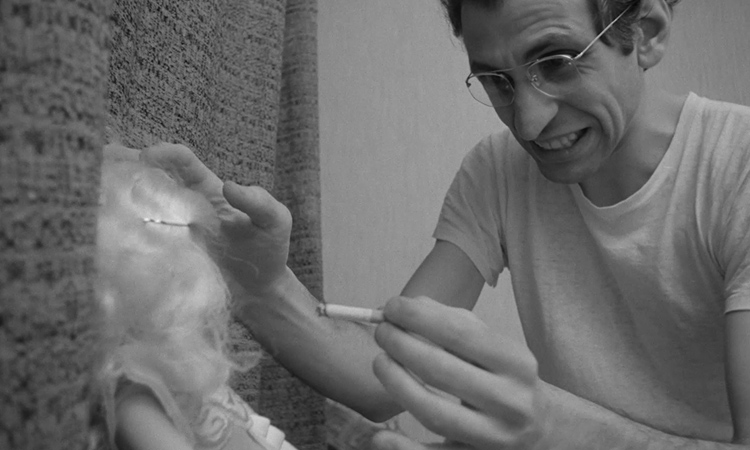
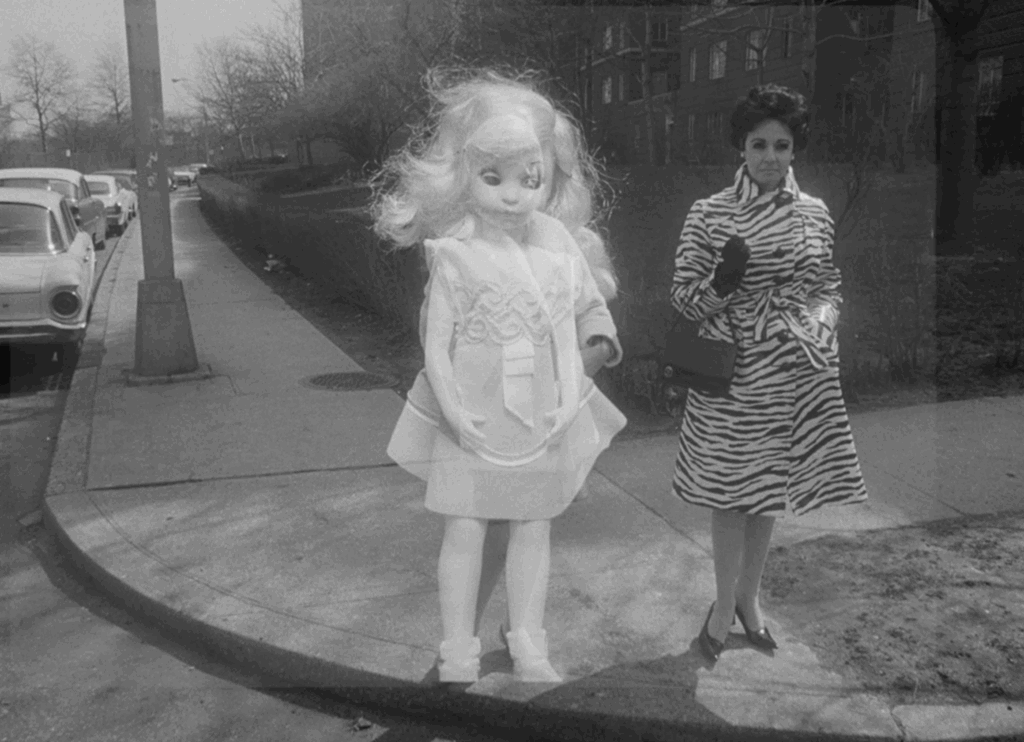
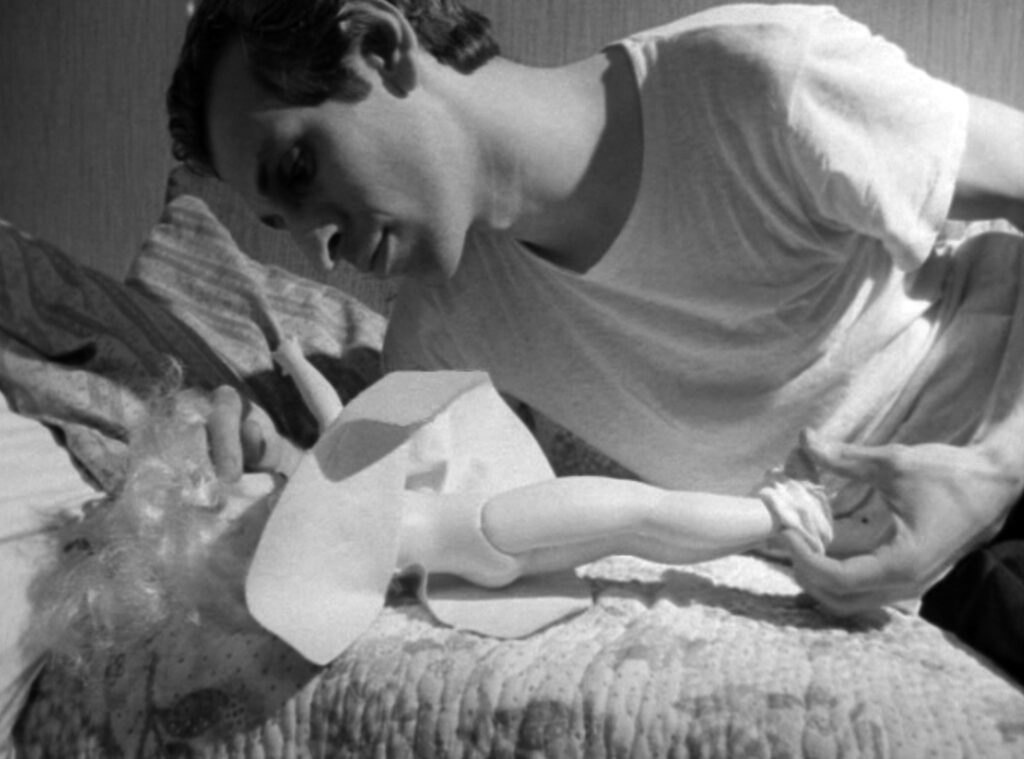
Wishman’s 1968 roughie, Indecent Desires, is a horror movie about obsession and trauma through the lens of its victim. Ann (Sharon Kent), an independent single woman living in a large city, finds her life violently invaded by creepy loner Zeb (Michael Lawrence). He initiates a bizarre, spiritual control over her using a discarded doll and a mysterious ring that allows her to feel his touch as he gropes the homunculus. Initially, she tries to disregard the phantom caresses and unwanted, erotic intrusions, but as the episodes intensify, she becomes increasingly terrified and distressed. Isolated by fear and shame, she abandons her career, her friend Babs, and her fiancé Tom. Trapped alone in her apartment, Ann is forced to succumb to Zeb’s growing, perverse desires. As Zeb’s frustration over his inability to physically interact with Ann mounts, he begins to sadistically punish the doll, leaving Ann’s body broken and as lifeless as the effigy he controls.
While Ann’s agony is the result of a supernatural possession, her experiences are chillingly grounded in the harsh reality of abuse inflicted upon women living alone in a male-dominated world. Through the doll, Zeb objectifies Ann, fantasizing a relationship where she submits wholly to him. The one time he attempts to interact directly, he shies away from knocking on her door, reinforcing his profound detachment. His obsession, which began with a random sighting, rapidly escalates to stalking and voyeurism, culminating in lewd fantasies of her submitting to him sexually. The mystical ring and doll allow him to bypass physical contact and invade her private life, driving a wedge between her and the outside world, leaving her increasingly vulnerable. Ultimately, Zeb’s frustration over his inability to fully possess Ann fuels an act of violence that tragically mirrors the real-life assaults committed by disgruntled men against unsuspecting women.
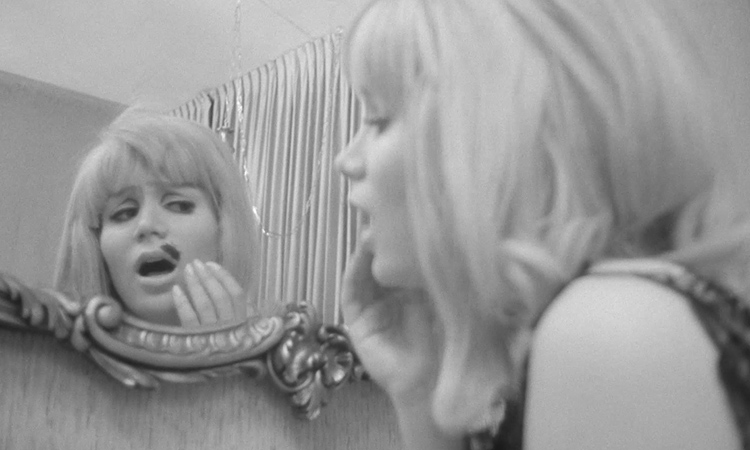
Indecent Desires contains many salacious elements. Wishman’s viewers spend plenty of time watching women getting dressed and witnessing softcore sex scenes, but these erotic moments are given a sharp, uncomfortable bite. Although the movie was marketed as a lurid experience for the “raincoat crowd” in grindhouse theaters, it leaves the viewer with an unsatisfactory, unwholesome feeling. The film’s posters equate love and torture with erotic sensuality, but Wishman’s narrative invites viewers to intimately examine Ann’s destruction while asking them to contemplate what it says about their own attraction to such painful displays. If the scenes depicted are distressing, where is the pleasure in witnessing the debasement of a healthy, happy, and beautiful character? If Ann is the tragic figure in this story, what is the lesson viewers are truly meant to take from watching it?
More Film Reviews
When Toei’s pinky violence line first appeared in 1970 it was an unstoppable force, and throughout the early 70s, it showed little signs of slowing down. 1973 in particular was… In 1967, four South African Republican Intelligence Agents respond to a mysterious object crash landing on a farm, playing out to offer South Africa’s first found footage horror movie. They… Director/writer Gerald Johnston and writer Akela Cooper’s M3GAN sequel isn’t just reheated leftovers. Instead, it serves up a familiar dish with bold new seasoning and fresher ingredients. M3GAN 2.0 ups… After the tragic loss of his mother, Oliver is threatened with state custody unless he can find a new family. And so Oliver does just that… by digging one up… Zombie-driven horror seems to be making a fierce comeback to the movie circuit lately. When one thinks about zombies, the words “apocalypse” and “chaos” instantly come to mind. Most well-executed… Considering the renowned success of Parasite (2019), among many others, South Korean cinema has finally started to receive a recognition outside of Asia that has been mostly reserved for Japanese…
Female Convict Yakuza (1974) Film Review – Giving Pinky Violence the Middle Finger
Wesens (2020) Film Review – A Subversive Mystery From The Afrikaans Sky

M3GAN 2.0 (2025) Film Review – This Doll’s Got a License to Kill (and Dance)
The Loneliest Boy in the World (2022) – Just Dig Up A Best Friend If You Need One

Zombitopia (2021) Film Review – Zombies Take Over Malaysia
0.0 MHz (2019) Movie Review – Possessive Horror from South Korea

I am a lifelong lover of horror who delights in the uncanny and occasionally writes about it. My writing has appeared at DIS/MEMBER and in Grim magazine. I am also in charge of programming at WIWLN’s Insomniac Theater, the Internet’s oldest horror movie blog written by me. The best time to reach me is before dawn.