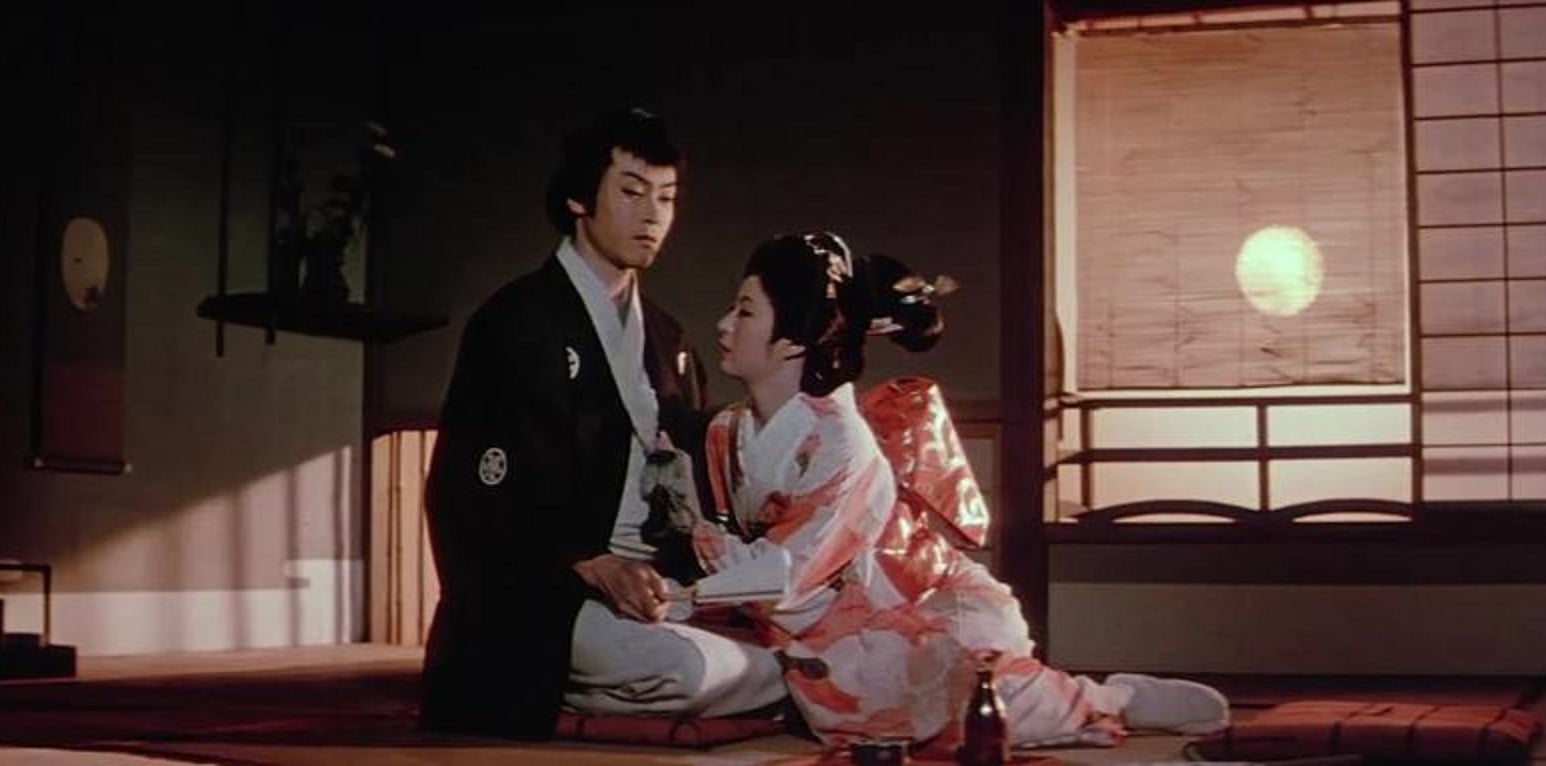




Modern-day J-horror traces its origins back to Japanese folklore and Kabuki plays, The Ghost of Yotsuya can be seen as an intermediate stage in the development of the field itself.
In the movie, our protagonist is a rather short-tempered and gullible young rōnin named Iemon. It is early 19th century Japan and he is living in poverty in the company of his loving wife, Oiwa. Dissatisfied and disappointed, he resolves to murder her in order to re-marry into better opportunities, but little does he know his deceased wife will return as an onryō to haunt him.
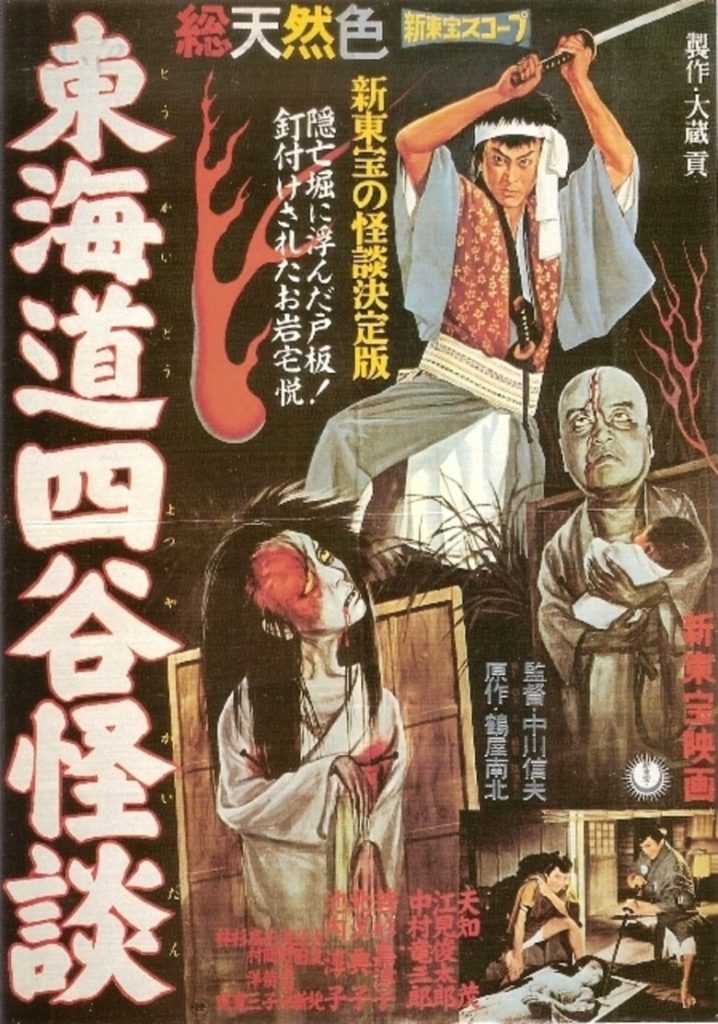
The storyline might be simplistic but it comes with an array of complex characters. Oiwa is a sweet, good-natured soul but she is also naïve, culminating in her unjust downfall. Her sister, Osode, although as good-natured as Oiwa, is more wise of the world, weary and insightful. Similarly, Iemon has a moral compass somewhere, but he is easily manipulated and led astray by his scheming servant, Naosuke, who acts to corrupt him.
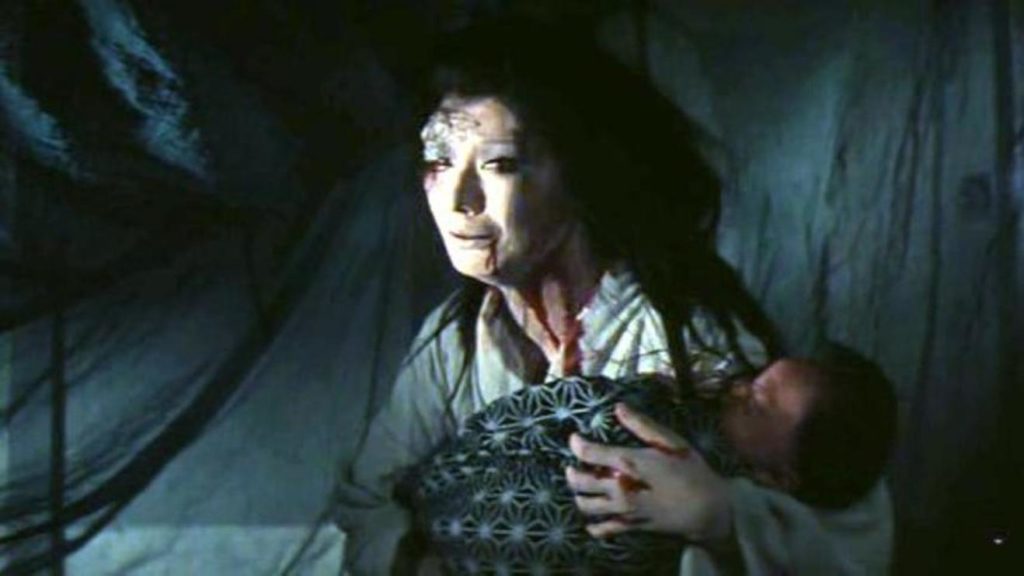
The movie is based on a 19th-century Kabuki play known as Yotsuya Kaidan, an extremely popular theater experience in that era. The performances were so influential that Oiwa, the vengeance-seeking ghost of the story, was forever inserted into the cultural history as a salient figure in Japanese folklore. She is depicted as wearing a long, white gown as a burial kimono as an archetype for yūrei in future cinema as a motif. Her face is deformed and her left eye is drooping, both adverse effects of the insidious poisoning from Iemon.
The popularity of the play (and Oiwa as a figure) extended into the age of cinema as well from being firmly rooted in Japanese history. The play boasts of 30 movie adaptations as a lasting legacy proving no matter how society evolves, it will be adapted as respect for the cultural heritage. This version, The Ghost of Yotsuya by filmmaker Nobuo Nakagawa, is considered the definitive version – the most liked and best produced.
The movie intriguingly does not shy away from its stage origins. The acting, the sets, the make-up, etc., are all decidedly theatrical. I think it was a deliberate choice on the part of the director, a more artificial look as a homage. I found it fascinating as I felt I was getting a glimpse of the Japanese theatre from a bygone era, however! I could be entirely mistaken and those plays may not have corresponded to the setup of this film.
If you like taking a look into the history of J-horror, this is the movie for you. You could have fun comparing Oiwa’s look to Sadako/Samara’s of the Ringu/Ring series and her tragic backstory to that of Kayako’s from Ju-on/Grudge series.
This is a guest article from ‘Movie Meows’
You can follow on Facebook or check out the YouTube channel for more film insights!
More Reviews:
Two dysfunctional brothers struggle to get by after the death of their parents. The younger counterpart is left in the care of his older brother who is slowly yet surely… Susumu Nokoshi once worked for a top foreign financial company. He is now a 34-year-old homeless man, usually found around a park in Shinjuku. He then meets medical school student… Mushrooms, originally known as Grzyby, is a Polish 2023 mystery thriller, written and directed by Paweł Borowski. Beginning his directorial career with the short animated comedy Love Gamestation (2001), Paweł… Fishing doesn’t have the best reputation in fiction. Going off literature and film and Dick Cheney, one gets the impression it’s boring, it’s vaguely cruel, and it mostly serves as… In the anti-consumerist horror comedy Black Friday, a ragtag group of toy store employees try to fight off an infectious horde of customers during the worst day of the year… The sparsely populated northern European country of Norway is the home of large reindeer herds, fjords, the birthplace of black metal, and many quality horror films. A list of notable…
Slapface (2021) Film Review – Dark Coming-of-Age Horror

Homunculus (2021) Team Review – What Would Your Trauma Look Like?
![Mushrooms (2023) Film Review – Unexpecting and Devastating [Fantastic Fest]](https://www.grimoireofhorror.com/wp-content/uploads/2023/09/Mushrooms-cover-365x180.jpg)
Mushrooms (2023) Film Review – Unexpecting and Devastating [Fantastic Fest]

Sweetie, You Won’t Believe It Movie Review – Fantasia Festival 2021

Black Friday (2021) Film Review – Capitalism is Hell

All Must Die (2019) Film Review – Part Slasher, Part Murder Mystery, All Norwegian