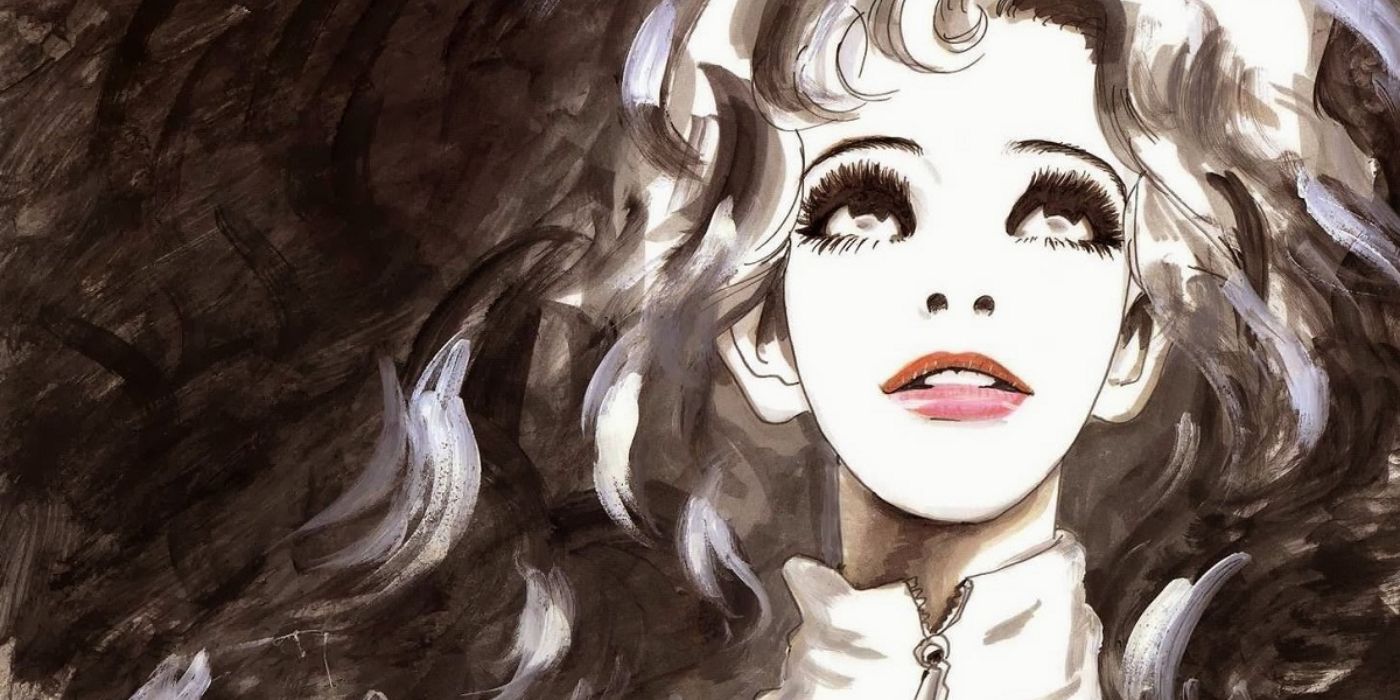





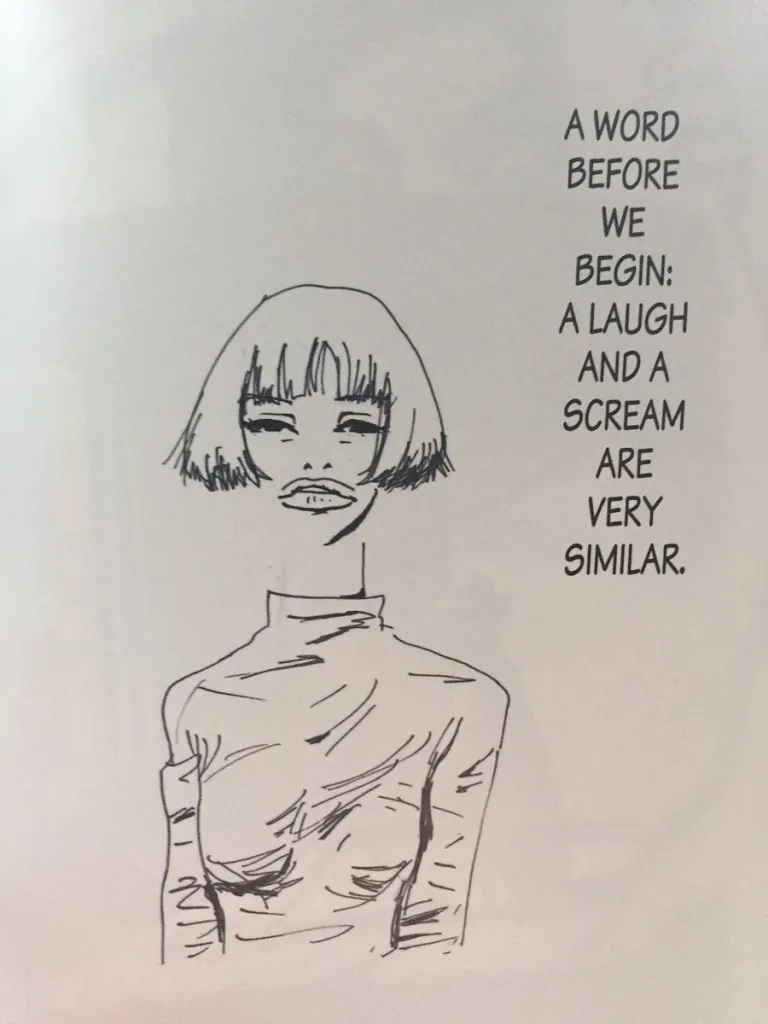
Helter Skelter: Fashion Unfriendly by Kyoko Okazaki defaults to a simplistic style similar to older, nostalgic manga. Yet the style still works for high-impact, fashion-heavy scenes where it effectively conveys the emotional, stylistic world that Liliko inhabits. The bonus full-color illustrations included in the edition released by Vertical, an imprint of Kodansha, are simply breathtaking.
We follow Liliko at the height of her career as a model, where she is on every billboard, in all of the magazines, and everyone wants to either be her or sleep with her. She just landed her first acting role, and she isn’t above some crafty plans to make sure it’s successful. Later on, we come to find out there is something wrong with Liliko. The cliché about beauty being more than skin deep rings exceptionally true in this story.
How far will she go to keep her fame? What has she already done to get to where she is?
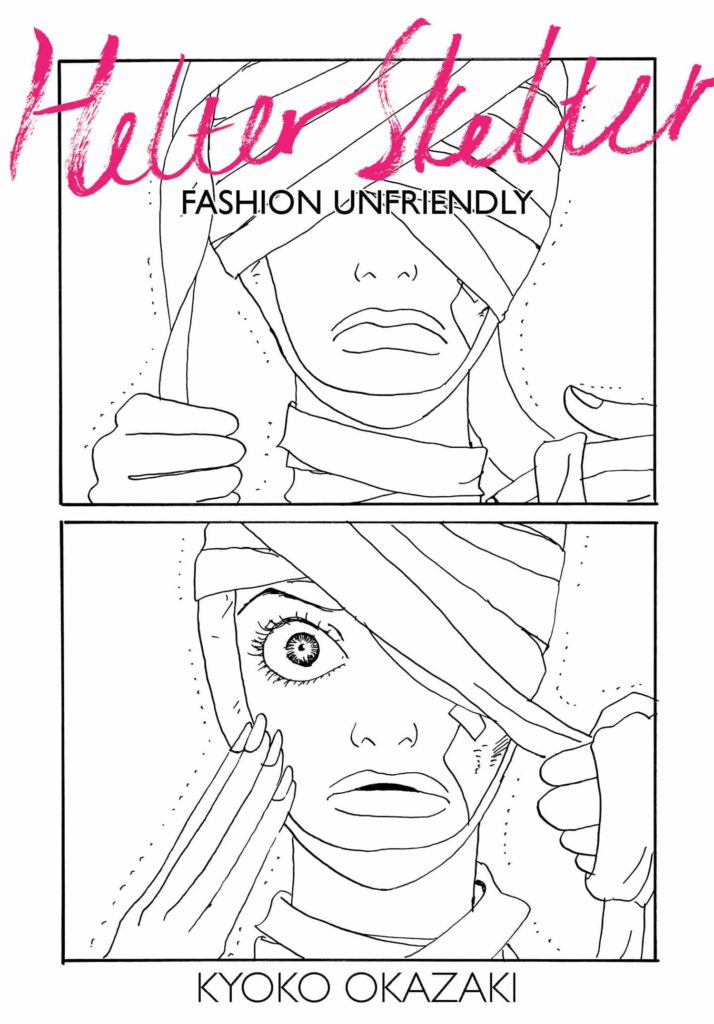
Helter Skelter functions expertly as social commentary on the price of beauty, and how far one will go to not only achieve it but also to keep it. What one perceives as happiness can be twisted away from them, but one will still do anything for it. In a take that explores the classic “be careful what you wish for” trope to levels of body horror mixed with high glam, Helter Skelter is a drama that is disturbing, yet mixed with enticing visuals.
Like a banana too ripe for eating, but perfect for banana bread, how much is too much is always subjective. While Liliko is the most extreme example, other characters’ psyches and temptations are also explored, lending a more complete cast to the society within. Motivations and mental health are examined, granting us full access to the character’s mentality. Liliko is also more than simply a one-note diva, lending credibility and depth to her character study.
That’s where the sweet spot of Helter Skelter truly lies: on the spectrum somewhere between Shuzo Oshimi’s Flowers of Evil and Ai Yazawa’s Nana. While admittedly closer to Flowers of Evil, part of its delicate ingenious is Kyoko Okazaki’s ability to somehow maintain Liliko’s likeability. In Flowers of Evil, one derives pleasure from hating all of the characters, but it can become exhausting when there is no one to root for. Nana is still a grounded, realistic drama, but with relatable characters that many would want to be friends with in real life. Despite the fact that Liliko has many awful machinations throughout the plot, Okazaki continually reveals her backstory in a way that keeps anchoring her, restoring a small piece of us that wants her to pull through and survive her tribulations.
In a high art portrayal of a breakdown, Helter Skelter is like reading a classy examination of a reality TV scenario. Fame, fashion, compelling characters that we love to hate, ones we hope will make it through unscathed, scandals, surprising twists: they’re all here. At 320 pages, it’s a one-volume story that’s perfect for an afternoon, making it ripe for a not-so-guilty pleasure binge.
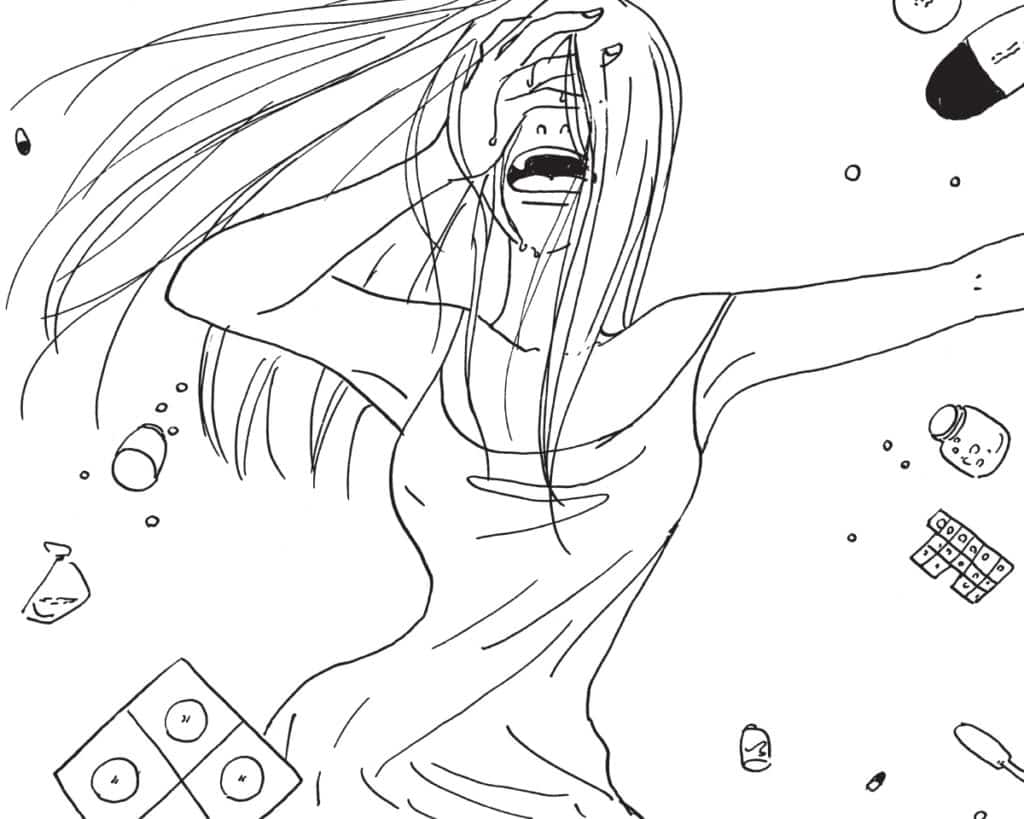
The content is mature, handling adult themes and images, such as sexuality, drug abuse, and suicide. Liliko uses her body as a commodity, trading it for what she wants and using it to advance her career. The art represents this without censoring but does not show any extreme detail. Please be aware of these topics should you choose to read it yourself.
For those who are fans of the film directed by Mika Ninagawa, most of the story is the same. However, there are still some twists or nuances in store for you that differ from the movie version. While the manga lacks the wardrobe that the film possesses, it was incredible to fall back into the same world and revisit the characters again. I highly recommend reading the source material if you’re a fan of the later versions.
If you’re in the market for a different kind of story that isn’t regular horror, but a dark drama with excellent character studies, social commentary, scandal, and adult themes, I would highly recommend Helter Skelter.
More Info and Links to purchase Helter Skelter: Fashion Unfriendly can be found on the Kodansha site
More Manga Reviews
At the tender age of four, Kanako Inuki was handed a shiny new five-yen coin. Promising the same allowance each month, her mother took her to a bookstore and let… Pygmalion is a gory horror manga consisting of three volumes released in 2015 and concluding in 2017, written and illustrated by Chihiro Watanabe. Watanabe is known as the creator of… Handsome Usahara Kunio has no shortage of women falling for him, as a competent career man with a well-tuned physique, all his coworkers are left wondering; why is this catch… While waiting for the release and review of the volume 5 and 6 of the manga Siren Rebirth, I thought it would be nice to focus on some previous manga… The horrors of war don’t just end once a soldier returns; in fact, one of the saddest aspects of global conflict is society’s lack of post-care for soldiers. Unfortunately, heroism… Hello Spookies! Class is in session! I’m here to let you know about a little J-Horror project brought to you by Junji Ito and Junji Inagawa. A lot of you…
Be Very Afraid of Kanako Inuki! (2022) Book Review | Cute Girls Doing Cruel Things

Pygmalion (2015) Manga Review – It’s All Greek To Me
I’m Not Meat (NSFW) Manga Review – Fighting Those Animalistic Desires

Forbidden Siren Manga Reviews (One-Shots): Demon’s Voice & Memory of the Mermaids
The Caterpillar (2009) Manga Review – Suehiro Maruo Adapts Edogowa Rampo

The Junji Ito Horror Project: Tales of Terror Retold
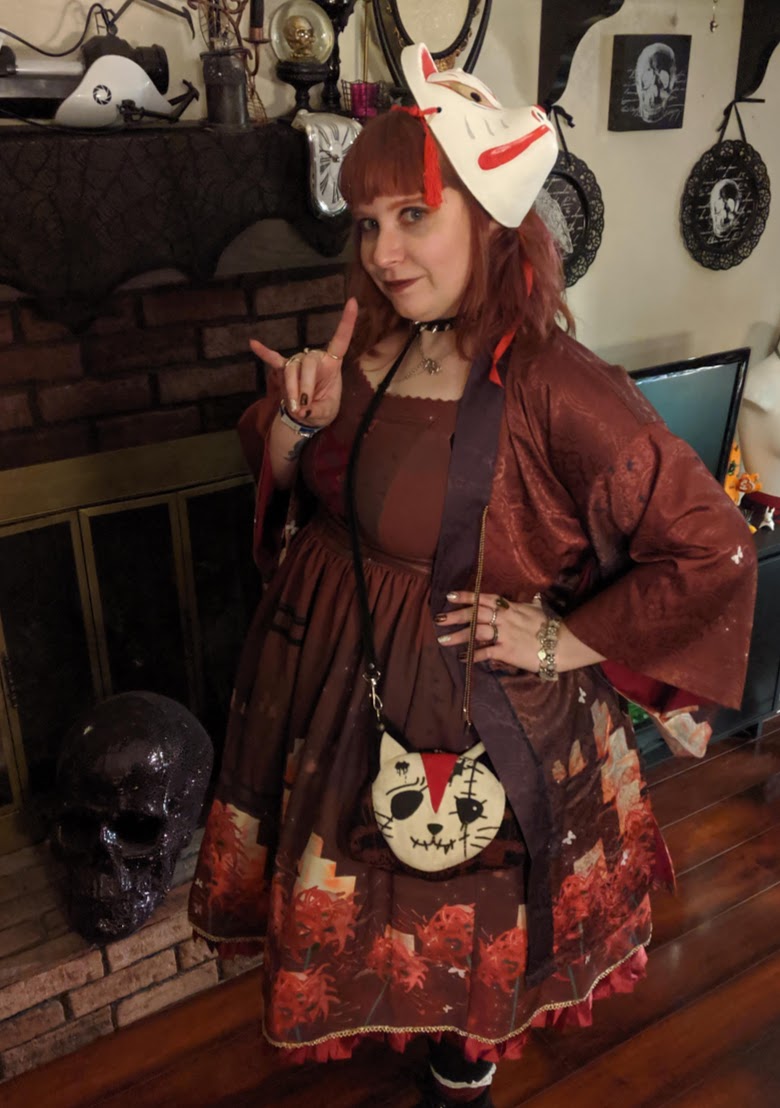
Hello, I’m Quinn. Saying I’m deeply into fashion and Japanese culture is an understatement. We’ve renovated entire rooms of our house to dedicate to my collections of lolita and other Japanese fashions. I enjoy balancing the cute with the macabre, and the more disturbing it is, the more I’ll enjoy it. Thus, my love for Asian horror and manga was born. Thank you for taking the time to read my writings. I look forward to discussing films and aesthethics with you!