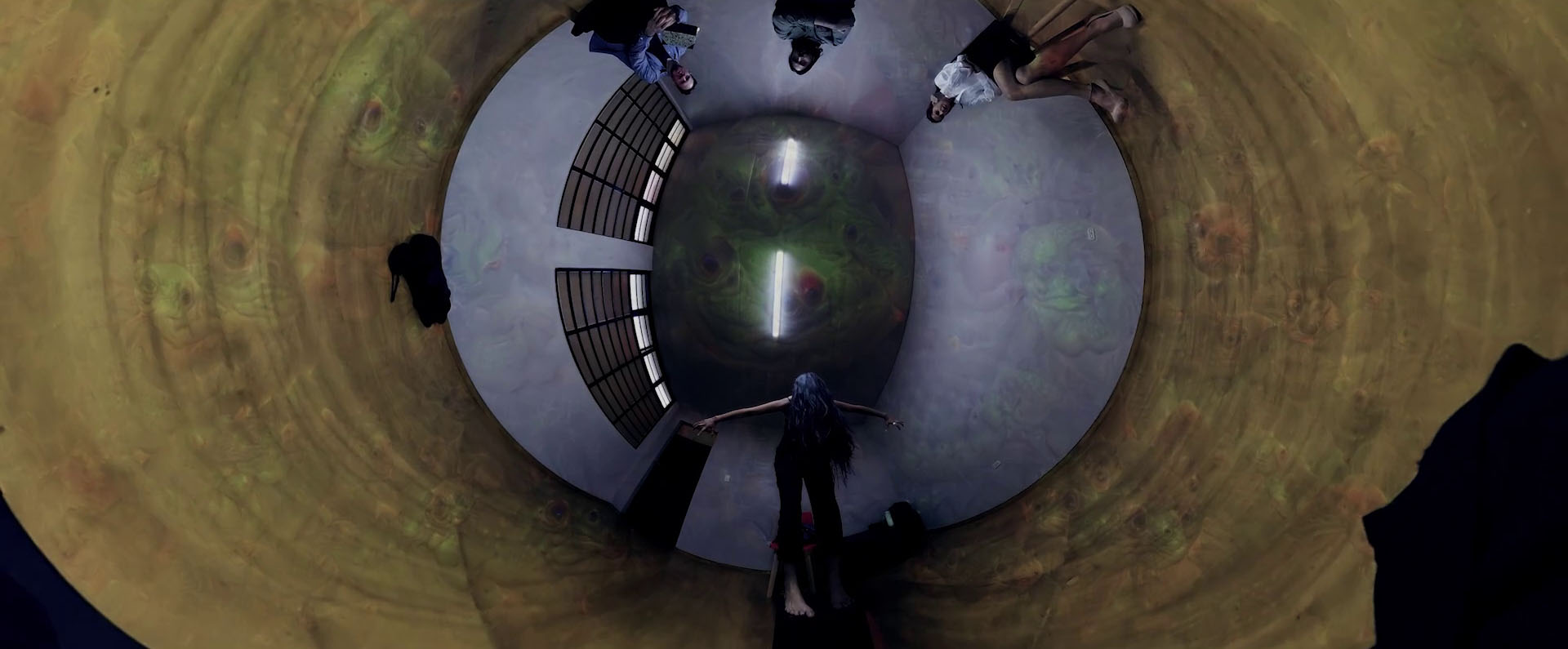





After purchasing a 360 camera, an aspiring filmmaker Nina Temich decides that she is going to follow her dream of being a film director. However, a trained dancer from an impoverished neighborhood does not necessarily allow for much abundance of opportunities. When luck strikes, and Nina finally lands an interview with a notable film company, the meeting does not go according to plan. After a traumatic experience, the young hopeful begins to lose her sense of reality and slowly succumb to deep darkness within.
Shot entirely with a 360-degree camera, David Torres’s Putrefixation explores New Mexico in dizzying detail, jumping between an experimental and traditional narrative. The film certainly finds success within both methodologies, but it is not without its shortcomings.
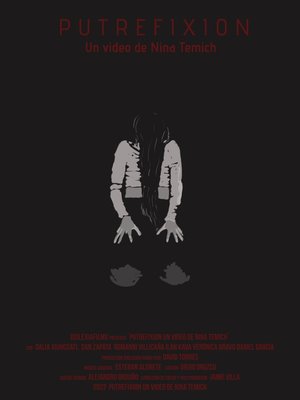
Where Putrefixation excels is in its tackling of social commentary, and the marginalization of Nina as an impoverished woman living in New Mexico. Full of life and very expressive, the young hopeful experience a harsh downfall after a chance interview for a position as director. The scene itself is unrealistic in both flow and requests made of her, yet it captures an intensity of severe judgment and ignorance by those in a position of power. Essentially, the trio interviewing Nina personally insult her and degradingly make her dance. The whole experience comes across as surreal and deeply upsetting, easily the most frightening event unfolding in the film.
At the same time, however, what makes the messaging so strong is its presentation as a traged, supported with the intensity of a strong character. The work does not demand empathy and instead builds it by way of intelligent script, character building, and emotive performance from the lead actress. The film does not take an easy or lazy route in order to present its message of systematic abuse.
Sadly, the film starts to lose steam as the horror element begins to kick in. This turn is closer to the end of the runtime, and although brief, it adds a slightly silly tone to the production. It is hard to talk without venturing into spoiler territory, but the conclusion and climax of the production are bound to be decisive among horror fans.
Visually is where the film begins to fold in on itself a bit with overindulgence in the predisposed experimentation. At times, the 360 camera work comes across as stunning, and the amount of editing going into making a film of this ilk is rather mind-boggling to consider. For the majority, the production has a gorgeous visual flair, often accompanied by a superb score and the talents of Nina as a dancer. However, the main problem here is excess and a few scenes where it would have been beneficial to pull away from the 360 angles.
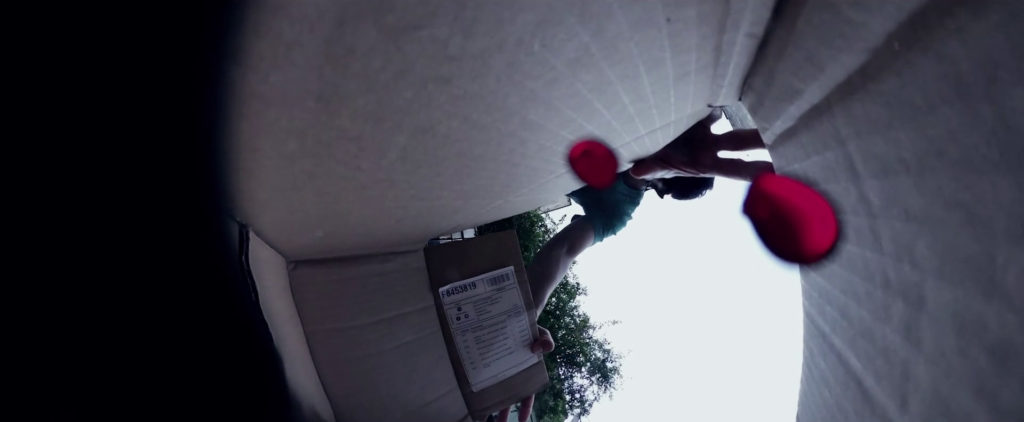
Notably, those who like “Found Footage”, but can still find them disorienting, are going to struggle… As someone who has watched hundreds of films in the subgenre, it was the closest I got to feeling ill due to a lack of familiarity. The use of 360 becomes excessive by the end of the Putrefixation, and even having a couple of scenes to help break it up would have been beneficial considering certain moments don’t need it.
The worst use of 360 is observed in the film’s closing act, which already suffers from being less profound than the plight of Nina to become acknowledged as a filmmaker, as the camera hovers around a mirrored room and context of the plot twist becomes drowned in the infinite reflections. If it was not for the intelligent script and previous proof of crafting unique visuals in the style, the ending sequence, both visually and narratively, would have completely hindered any enjoyment of the production.
The question is, is the world ready for a 360 degree found footage horror movie? I would argue that the answer is no, as Putrefixation is a well-executed horror film that could have stood on its own merit without reliance on an experimental filming style. At the same time, what was accomplished here is rather impressive considering the amount of editing and consideration for crafting such a story using unorthodox techniques.
It is difficult to predict how the audience will interpret and feel about the film given its peculiar approach, but regardless, it is worth experiencing for yourself. No matter how you look at it, Putrefixation is impressive in both its audacity and free form expressionism that will captivate a willing audience. Personally, I think the film is a bit too indulgent for its own good and that the 360-degree horror movie may never be a thing again, and maybe for valid reasons.
“Putrefixation: A Video of Nina Temich” is Screening as Part of the 2022 Unnamed Found Footage Line-up


More Film Reviews
0.0 MHz (2019) Movie Review – Possessive Horror from South Korea
Considering the renowned success of Parasite (2019), among many others, South Korean cinema has finally started to receive a recognition outside of Asia that has been mostly reserved for Japanese…

Three Dead Trick or Treaters (2016) Review – An Elegy for the Mad God of a Chaotic and Nihilistic Universe
This Halloween certainly offered up more spooky offerings than usual. Some of the terrible things involve ghastly treats for children, witch hunters looking for victims to torture and burn, and…

Evil Dead Rise (2023) Film Review – Maniacal Motherhood
The original electrifying Evil Dead burst onto the horror scene in 1981 and wrapped its spindly tendrils around the throat of passionate horror fans worldwide, keeping us on the edge…

#Chadgetstheaxe (2022) Film Review – Cancel Culture Gone Awry (Unnamed Footage Festival 666)
TikTok dances emanate eerily around you, a cacophony of booming cackles emitted from influencers as they forcefully push their latest merch (that was most likely made in some far-off, exploitative…

Return of the Living Dead (1985) Film Insight – Truth, Lies and More Brains
A film that begins by claiming everything we are about to see is based on true events, and ends with an imminent Apocalypse, puts the viewer in a strange…
The Strangers (2008) Film Review – Stranger Danger
The 2008 horror film The Strangers, written and directed by Bryan Bertino capitalizes on some of our most common fears: home invasion and random, unprovoked violence. It takes the minimalist,…