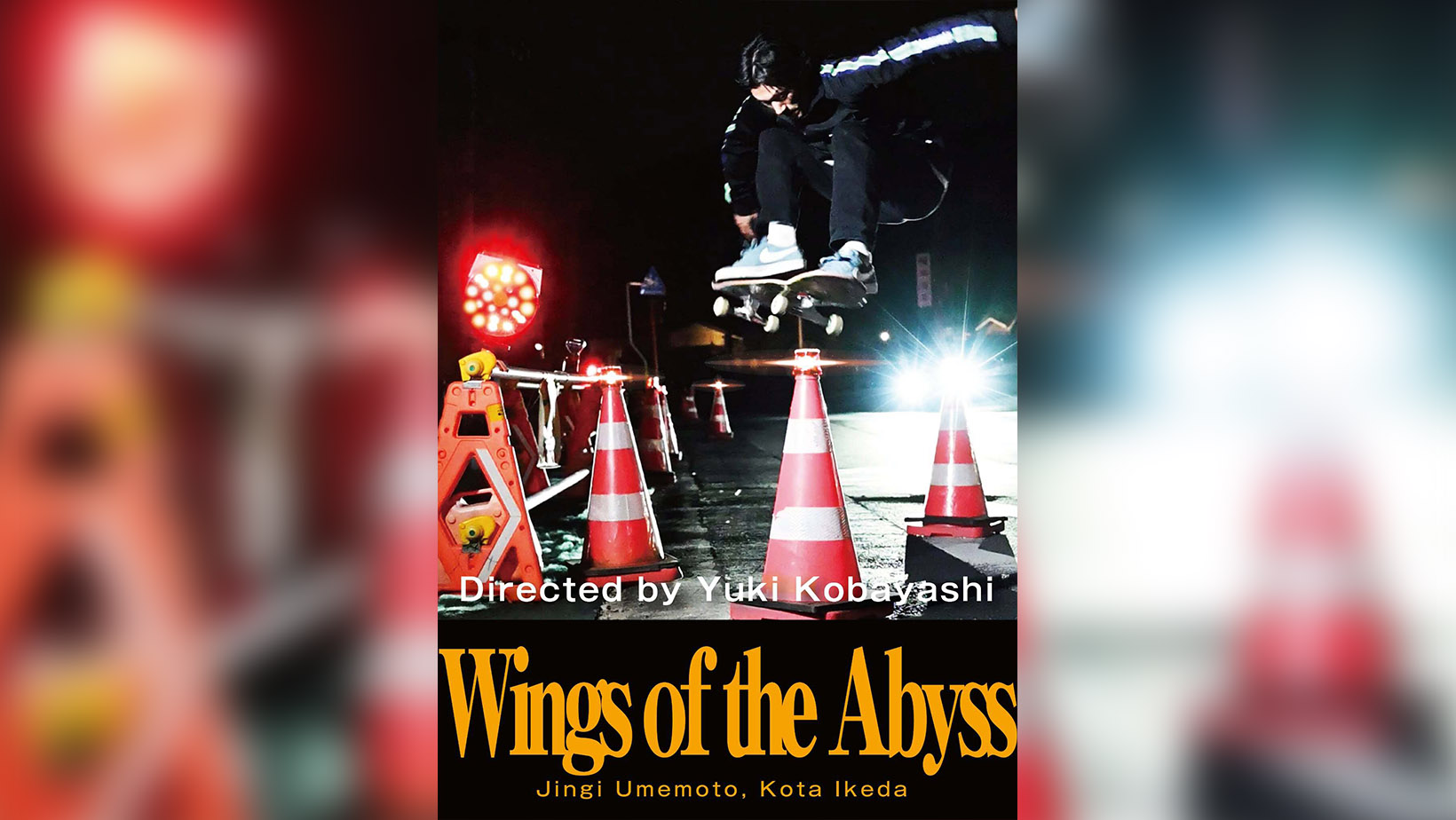





Wings of the Abyss is a 2025 Japanese crime thriller written and directed by Yuki Kobayashi. The director is known for the action thriller Kamikaze Cowboy (2015), the comedy-drama Death Row Family (2017), and the sci-fi action thriller Rise of the Machine Girls (2019).
A young intern, Jin, who loves skateboarding, struggles to balance his job and hobby. However, when he discovers that the company he works for is operated by a scammer who has vanished, he becomes a target for local yakuza seeking to reclaim their monetary losses.

Exploring themes of rebellion, counterculture, and the stresses of modern-day life, Wings of the Abyss strongly focuses on the human element of society, especially those seen to exist on the outskirts of social acceptability. While our group of protagonists is only interested in indulging in their shared hobby, the societal push-back received from the public far exceeds what the situation calls for–resulting in harassment ranging from verbal abuse to assault, like having a glass bottle smashed over Jin’s head. While this would seemingly be an exaggerated view of the country’s contempt for the sport, with the popularity of skating growing significantly since its feature in the 2020 Tokyo Olympics, the general detestation felt towards skaters has only strengthened since then.
Furthermore, as the narrative progresses from the light-hearted drama of its beginning to a kinetic crime thriller with the introduction of some key players. Both the group of yakuza eagerly hunting their money from Jin’s crooked boss, and the highly choreographed martial arts of the “white duo”–a pair of vigilantes who have taken it upon themselves to rid the streets of skaters through violence–plunges the audience into its elements of high-octane fight choreography and the murkey grey area of antisocial businesses.

Employing an impressive technical level of cinematography, Wings of the Abyss delivers an exceptional visual design that is prevalent throughout. Focusing on extended shots, many scenes are shot through dynamic, non-fixed angles–relying on panning, tilts, and dolly movement to frame each scene. This design adds a highly personable energy to the audience’s perspective, with the cameraman being an active part of the story rather than a passive observer–especially when using a skateboard as a dolly to keep along with the protagonists.
Furthermore, the film implements an atypical approach to framing. Featuring numerous high-angle shots of the protagonists, this elevated angle delivers the disdain Japanese society feels for those part of this counterculture are subject to. In addition, shots partially obscured by the foreground, such as chain link fences, create a purposeful barrier between the audience and protagonists, denoting them to outsiders looking in.
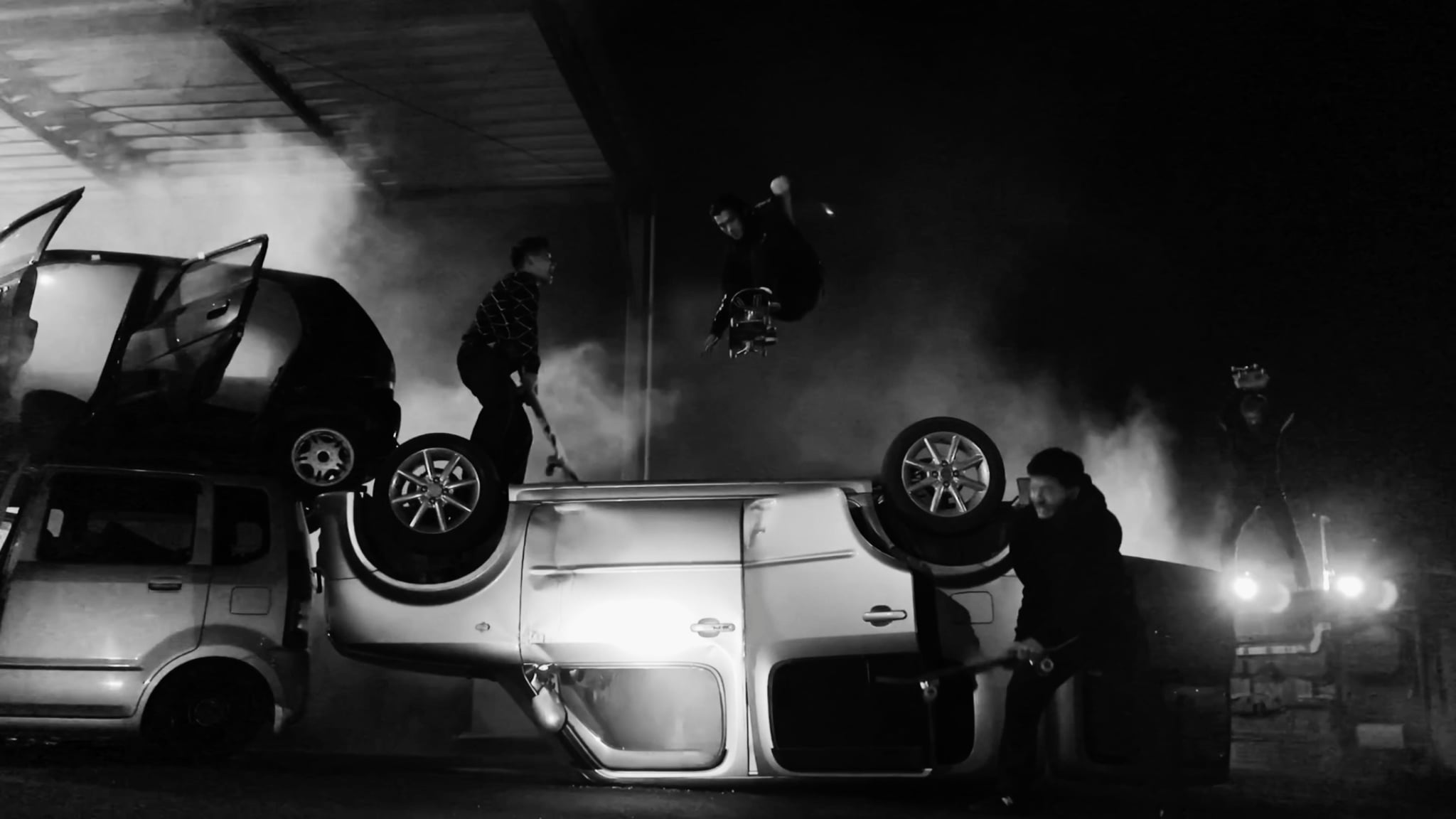
Featuring a diverse cast, the performances in the film feel natural throughout. The protagonists share an authentic friendship instead of appearing as a troupe of actors playing roles. Their camaraderie, showcased while street skating through inner-city Tokyo, effectively conveys the strong bond felt by the group to the audience. Furthermore, since skating is a significant element of the film, all tricks were performed by the actors themselves. Although they are not professional skaters, they still demonstrate notable talent.
Similar to director Shinji Sôma’s philosophy of “Humanity observing humanity”, Wings of the Abyss delivers a striking character study into the depths of counterculture, as well as provides a riveting blend of crime thriller and comedy drama. With fantastic performances from the entire cast, a technical level of cinematography, and excellent direction from Yuki Kobayashi, the film is an adroit take on modern-day rebellion in multiple forms.

More Film Reviews
Coming Home in the Dark (2021) Film Review – A Night Drive Straight into Hell
It feels like there is constant chatter online about the decline of the horror genre. Yet, for every hollow remake and safe studio engineered big-budget vehicle, there is a wealth…

Bleed With Me Film Review – Lets Make A Blood Pact
The breakdown of friendships into the realm of horror has always been a theme fascinating me; the amount of paranoia needed to turn an object of comfort into terror being…
The Eyes Below (2022) Film Review – They Are Watching You
When a journalist has the breaking story of a lifetime, he discovers all is not well. Not only is there the looming threat of powerful people who may squash him…

Evilenko (2004) Film Review – A Crime Horror Flick Ripped From The Headlines
Evilenko is a 2004 English-language Italian true crime horror/drama written and directed by David Grieco in his first feature-length film. Malcolm McDowell plays the Soviet Union’s most notorious serial killer,…

Winnie the Pooh: Blood and Honey (2023) Film Review – Poorly-Written Tripe
I’m all for enjoying bad films, in fact, some of my favourite films are schlocky B-movies from the 70s. However, I would always argue that these films, whilst terrible, always…

Malignant (2021) Film Review: Expect the Unexpected
***As a disclaimer, there are mild spoilers in this review, but I have tried to keep them to a minimum.*** Paralyzed by fear from shocking visions, a woman’s torment worsens…

Hey there, I’m Jim and I’m located in London, UK. I am a Writer and Managing Director here at Grimoire of Horror. A lifelong love of horror and writing has led me down this rabbit hole, allowing me to meet many amazing people and experience some truly original artwork. I specialise in world cinema, manga/graphic novels, and video games but will sometime traverse into the unknown in search of adventure.