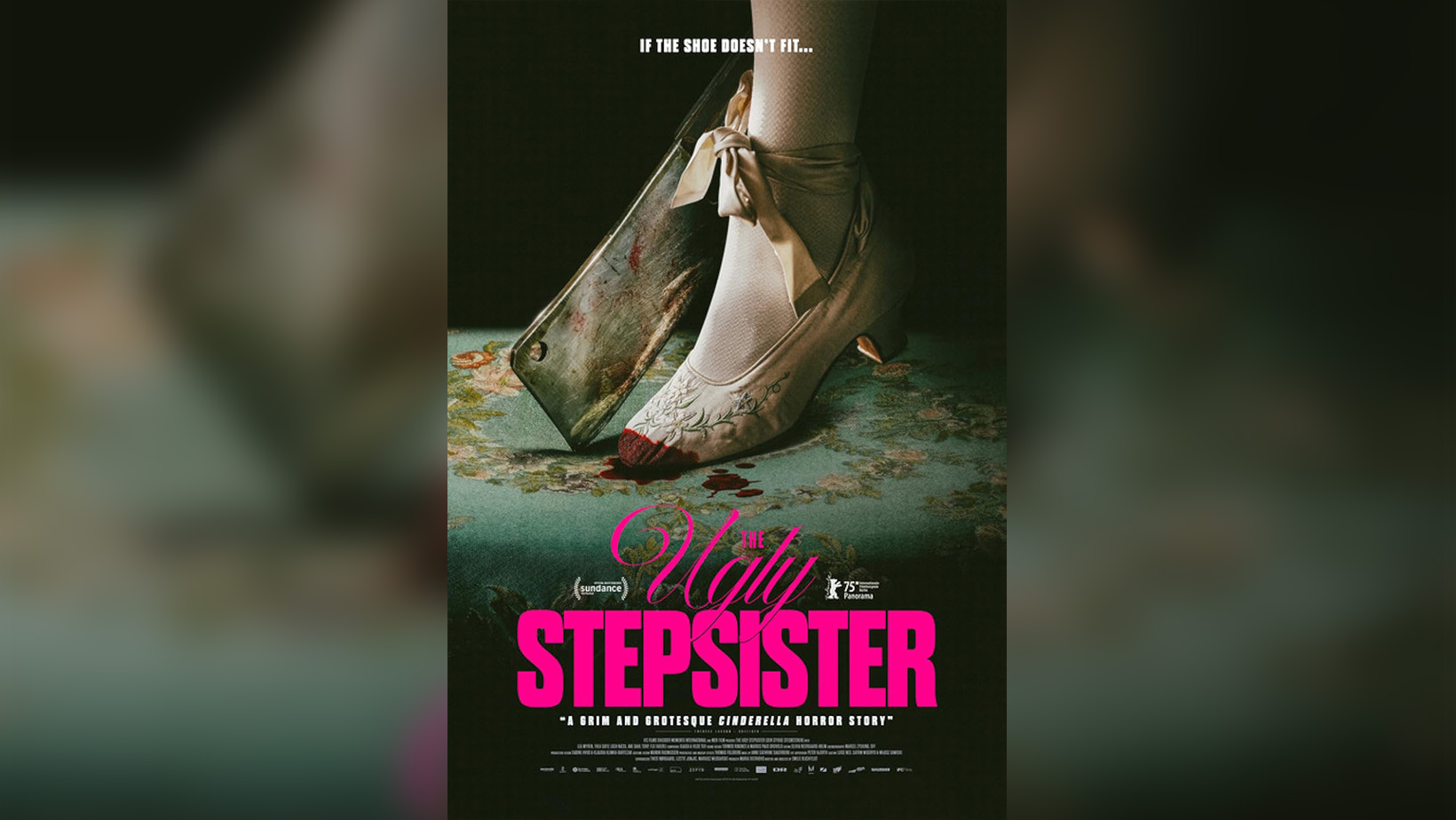





The Ugly Stepsister (2025) is Norwegian writer and director Emilie Blichfeldt’s debut feature that combines a reworked fairytale with stomach-churning body horror while satirising the appalling steps women must take when gaining a wealthy husband is the highest aspiration a woman could have.
This Cinderella tale is shown from the point of view of Elvira (Lea Myren), who, along with her younger sister Alma (Flo Fagerli) and their mother Rebekka (Ane Dahl Torp) move into their new Stepfather’s stately home, along with his only daughter Agnes (Thea Sofie Loch Naess). Following the untimely death of the patriarch, the female quartet discovers they are penniless, and attentions turn to marrying royalty, via the Royal Ball at the nearby Castle. So far, so fairytale-tastic.
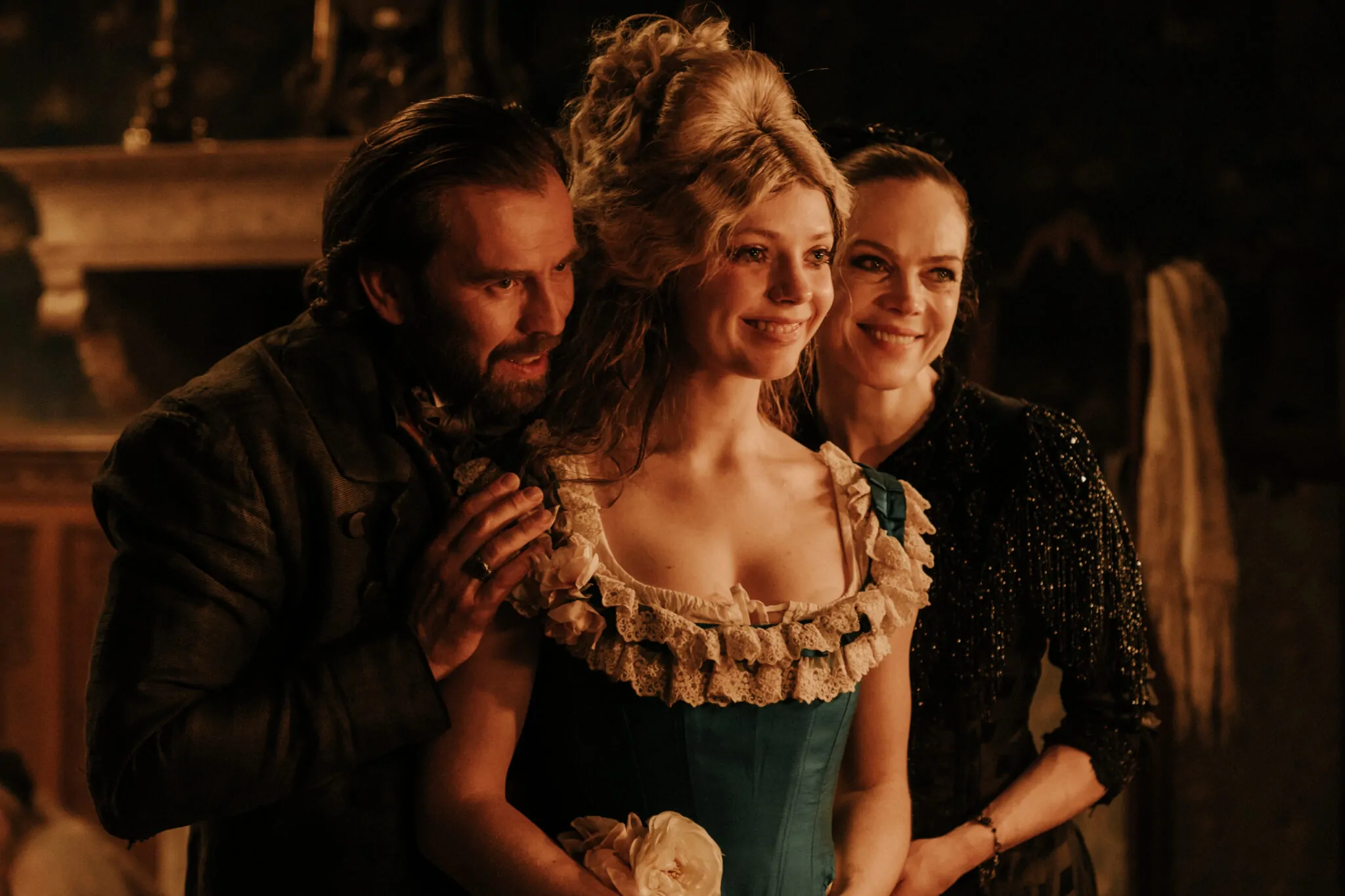
Not only does the film play with expectations by introducing the titular Stepsister to a world of medieval facial surgery and very questionable dietary suggestions, to become beautiful and entice the young Prince, but the stereotyped idea of rose tinted love is further distorted by Cinderella’s affections being fulfilled by someone inferior to her social standing. Elvira, being the one besotted with the Prince next door, believes herself to be experiencing true love, the likes of which fill the book of poetry from which she yearningly reads.
Elvira’s journey is not only physically torturous, but it also sees her initial wide-eyed naivete gradually eroded by both the barbaric beautification at the behest of her mother and by her slow realisation that more carnal elements underplay romantic interactions. Unlike the fairytale source material, the other stepsister is not involved in the hunt for the Prince as she’s believed to be too young, something which she wisely maintains to avoid the madness she witnesses unfolding with her sister.

Reminiscent of The Substance (2024) in its unflinchingly grotesque portrayal of a women buckling under the pressures the patriarchy has foisted upon them, The Ugly Stepsister is brilliantly shot combining the hazy candle lit interiors of a fantasised period piece with garish 80’s inspired dream sequences where almost neon pastels blur around the edges as though shot through a Vaseline smeared lens. The score combines period-appropriate harps and choral vocalising with retro synths, which continue to prop up the aesthetic from fairytale lethargy with hints of teenage pop sensibilities. Rolling timpani drums heighten the ensuing madness with recollection of Kubrick’s The Shining (1980), while the adolescent courtly exploits of such an overly romanticised era bring Bridgeton (2020) to mind.
However, the body horror will stick in the audience’s mind, as The Ugly Stepsister maintains a stilted absurdity that adds a much-needed comical sense to the exaggerated grotesquerie on show. The film begins with an amusingly awkward death, a rotting corpse, and then the popping of pimples before taking gradually larger steps into the arena of the painfully bilious, climaxing in an almost Exorcistic expulsion of one’s stomach contents. The scenes within the surgeon’s chair brought memories of the Gillian-esque medical practices in Brazil (1985) and Twelve Monkeys (1995), and the threat of ocular trauma would make Fulci squirm. The leering physical mutilation has its edges rounded off by the fairytale hyper realism of the film’s setting, where the blood and torture are exaggerated beyond concerns of sadism.

The Ugly Stepsister‘s sets and wardrobe are all garishly opulent and keep the audience well within the Brothers Grimm world, while the scenes shift from the absurd to the sublime with characters framed by blossoming flowers and pitch blackness, with all the classical drama of a Caravaggio masterpiece. The film’s star, Lea Myren, plays Elvira brilliantly, often silently conveying her journey from wide-eyed naive innocence to physical and mental derangement, lost to an obsession orchestrated by a sadistically warped mother and a misogynistic society.
More Film Reviews
Showing as part of the 2021 FrightFest lineup, King Knight marks the fifth feature length film of Richard Bates Jr. Reuniting with fan favorite actor Matthew Gray Gubler, who appeared… Ghost Lab is a supernatural Thai horror that has an extraordinary, unique story accompanied by a massive twist. However, it has an unnecessarily long run time of almost two hours!… Dorothea is a 2025 true crime thriller written and directed by Chad Ferrin. Best known for his recent flurry of horror thrillers, Chad is notable for creating Pig Killer (2022),… Italian Giallo cinema holds a special place among horror fans and cinephiles alike, myself included. Consequently, anytime a production tries to harken back to the era of black glove wielding… The Ghost Station is a 2022 South Korean horror thriller, written and directed by Yong-ki Jeong, with additional writing from Soyoung Lee, c, and Koji Shiraishi. Takahashi and Shiraishi are… To be the first at anything is always an exciting prospect, particularly when that label becomes exponentially less attainable with time. While there have been a few found-footage films to make…
King Knight (2021) Film Review – A Coven Comes Undone

Ghost Lab (2021) Film Review – A Scientific Ghost Horror from Thailand

Dorothea (2025) Film Review – Landlady From Hell

Nightmare Symphony (2020) Film Review – Visions of Giallo
![The Ghost Station (2022) Film Review [FrightFest]](https://www.grimoireofhorror.com/wp-content/uploads/2023/08/The-Ghost-Station10-365x180.jpg)
The Ghost Station (2022) Film Review [FrightFest]
Vazhiye (2022) Film Review – A Found Footage Horror First