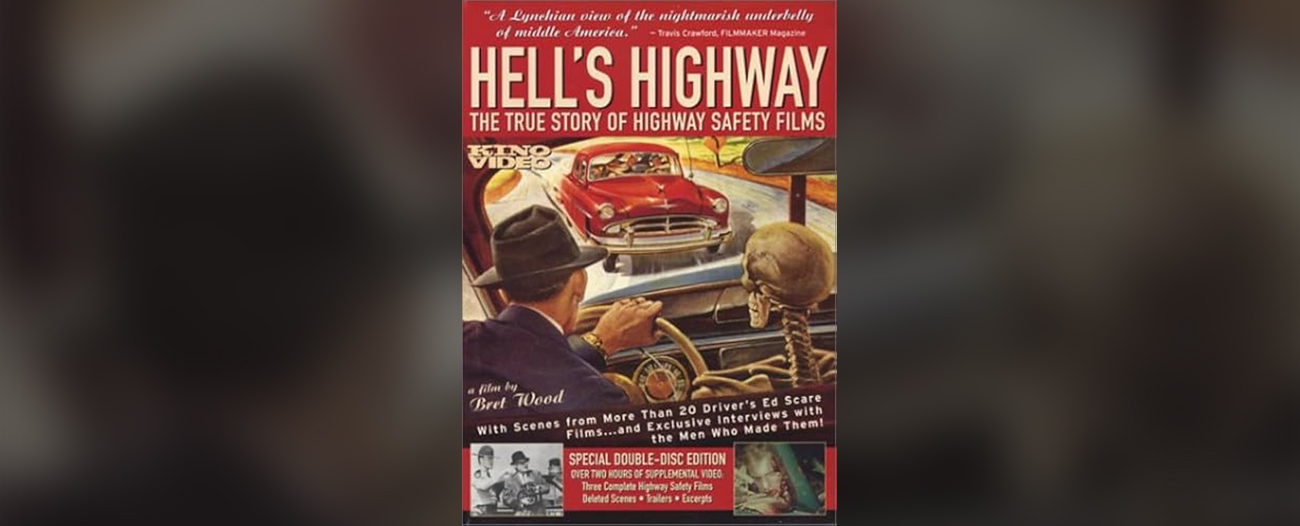





Remember the graphic stories you were told at high school assemblies meant to dissuade reckless driving? Maybe the stories were accompanied by crime scene photos or grainy school pictures of teens who were killed in drunk driving accidents. The stories were always told by someone involved in an accident somehow; a parent who lost their child, a friend who survived, a cop who attended the grisly scene. The gymnasium would be eerily quiet, the students a mixture of those who were horrified by the heartbreaking stories and those who were fascinated by the morbid pictures and descriptions of death. However disturbing and haunting you found those presentations, they pale in comparison to what came before them: government-funded highway safety films meant to scare young audiences into obeying the laws of the road. The 2003 shockumentary Hell’s Highway: The True Story of Highway Safety Films dives into those films, giving viewers a behind-the-scenes look at the rise, fall, and fallout of highway safety videos.
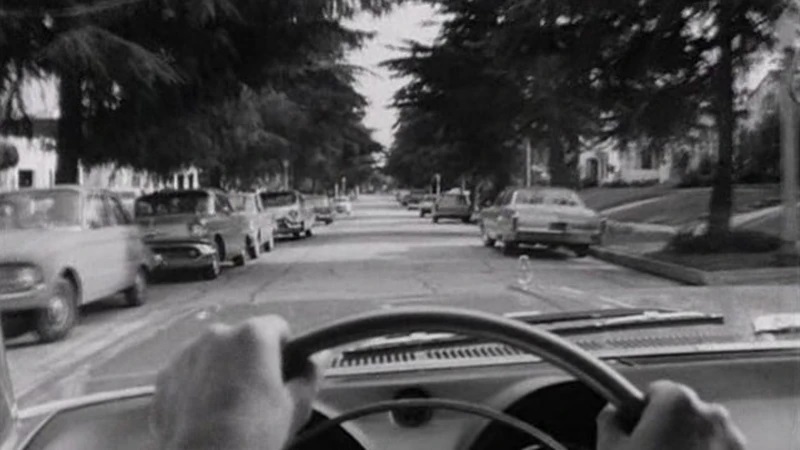
From the 1940s until the late 1980s, highway safety films were in schools and theatres all across North America. They featured terrifying statistics, ominous narration, dramatizations, and a plethora of actual footage taken at the scene of brutal traffic accidents, much of which also featured audio of victims’ pleas for help, screams, and last words. They were gory, gritty, and all too real. And then, they just vanished, becoming urban legends that few kids could recall having actually seen. But how effective were they? And why did they suddenly disappear? The bizarre and often disturbing history of the gruesome, PSA style movies starts and ends with the company that produced the most well-known of these movies, Highway Safety Films Inc. Equal parts historical retrospective and cultural examination, the documentary focuses mainly on this company in particular and covers the how and why such films were made and the lasting impact they had on generations of children.
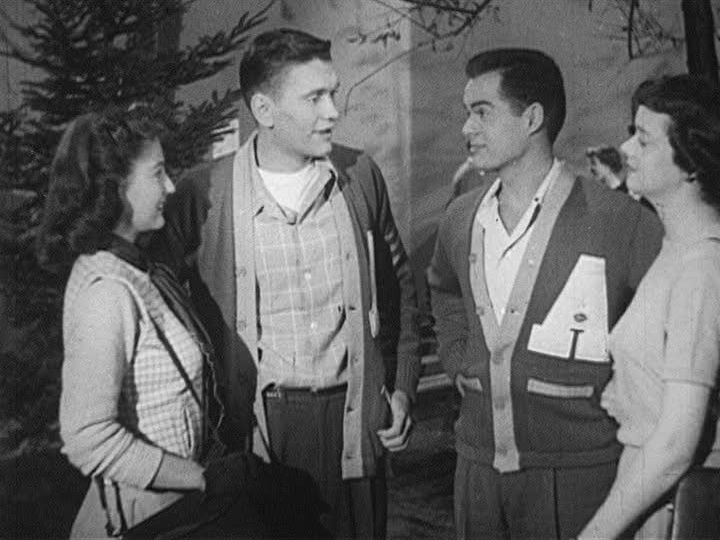
In the beginning, safe driving PSAs were mostly reenactments and dramatizations with over-the-top acting, stilted and unnatural dialogue, and ominous narration. One such film, “Last Date,” features a young Dick York as a daredevil teen who causes a fatal crash that costs him his life and leaves his girlfriend horribly disfigured in what the film refers to as “teenicide.” More tacky than scary, short films like these were often shown in theatres before feature films as a way to take advantage of a captive audience of teenagers. But when the cautionary tales like “Last Date” weren’t holding the attention of their teen demographic, Highway Safety Films Inc was born, determined to make young Americans take reckless driving seriously.
With kitschy titles like “Mechanized Death” or “Wheels of Tragedy,” one might assume that Highway Safety Films Inc’s offering would fall equally flat, but they had discovered a new way to captivate their audience. Amidst reenactments of crashes and doom-and-gloom narration that spouted statistics on vehicular fatalities, these new films showed actual photographs and footage of grisly car accidents, many of which Hell’s Highway: The True Story of Highway Safety Films utilizes to allow viewers to experience the shock of seeing such devastation firsthand. And it is extremely effective. No amount of slasher flicks, “Saw” sequels, or torture-porn type horror can prepare you for what it’s like to actually see someone’s last moments play out in front of you on 35mm film. But is this education or exploitation?
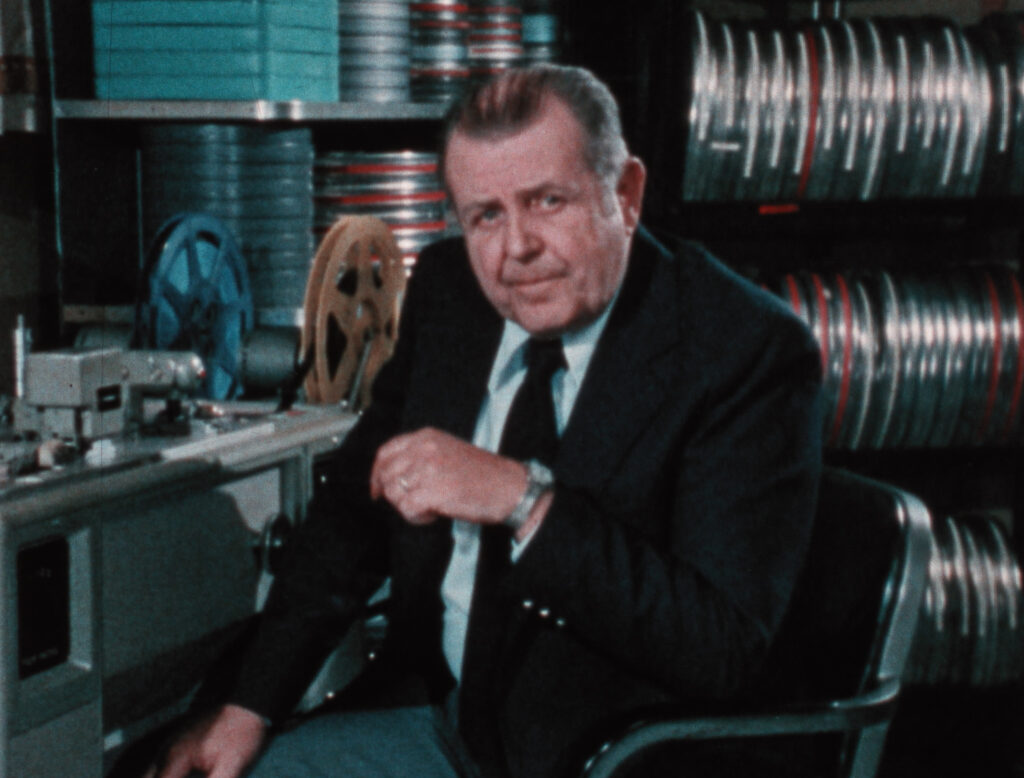
One of the documentary’s greatest strengths is its willingness to examine these films from multiple perspectives. Rather than simply revelling in their graphic content, it acknowledges how deeply traumatizing they could be for young audiences. Interviews with the filmmakers themselves are particularly compelling, as several reflect with surprising honesty on the unintended consequences of their work. They describe the callous and grave nature of the job of being sent out to film gruesome accidents, often reaching the scene before emergency services could begin working. It wasn’t uncommon to hear victims pleading for help as they lay trapped inside their crumpled vehicle. Their job wasn’t to help them, though. It was to document the horror and hopelessness so as to scare kids and teens into avoiding making the same mistakes. Arguably, it worked, though actual data on the effectiveness of these scare tactics is hard to find. One man recalls hearing stories of audience members fainting or vomiting while watching the films they made. Extreme reactions like these spurred the company on as they made it clear that the youth were paying attention. Looking back decades later, though, many former employees of Highway Safety Films Inc recognize that the educational value of these films may not have always justified the emotional toll they took on their viewers.
Hell’s Highway: The True Story of Highway Safety Films also explores how these films have evolved from educational tools into cult curiosities, often circulated online primarily for their shock value. When these films were deemed “too graphic” to be shown in schools, they essentially disappeared from the cultural consciousness, gaining an almost mythical status, as no one could locate the footage generations of teens claimed to have seen in school. They were urban legends, scary stories, rumors. Until, that is, they resurfaced decades later, being sold as novelties to show at parties or used as fodder for reaction videos or games of truth or dare. Now, these films are spoken about much in the same vein as exploitation films and torture-porn like “Faces of Death” or “Cannibal Holocaust.” It raises thoughtful questions about why audiences are drawn to them today and why they’ve become less about public safety and more about satisfying our fascination with graphic imagery.
Unfortunately, Hell’s Highway: The True Story of Highway Safety Films struggles to organize its wealth of fascinating material into a satisfying narrative. It frequently shifts between discussing the films themselves, profiling the people behind them, and exploring related productions without establishing a clear throughline. While it starts on the right foot by developing a timeline of the evolution of highway safety films, it veers off course by going off on a tangent about the other films Highway Safety Film Inc produced, namely films about child molestation or abduction. This then turns into an examination of HSF’s main players and their involvement in the company’s rise and downfall, culminating with a celebrity-endorsed fundraising event that ended up costing the company a great deal of money. None of these topics is uninteresting—in fact, each is compelling in its own right and deserves to be told more thoroughly—but the constant pivots make the documentary feel more like a collection of connected anecdotes than a cohesive story.
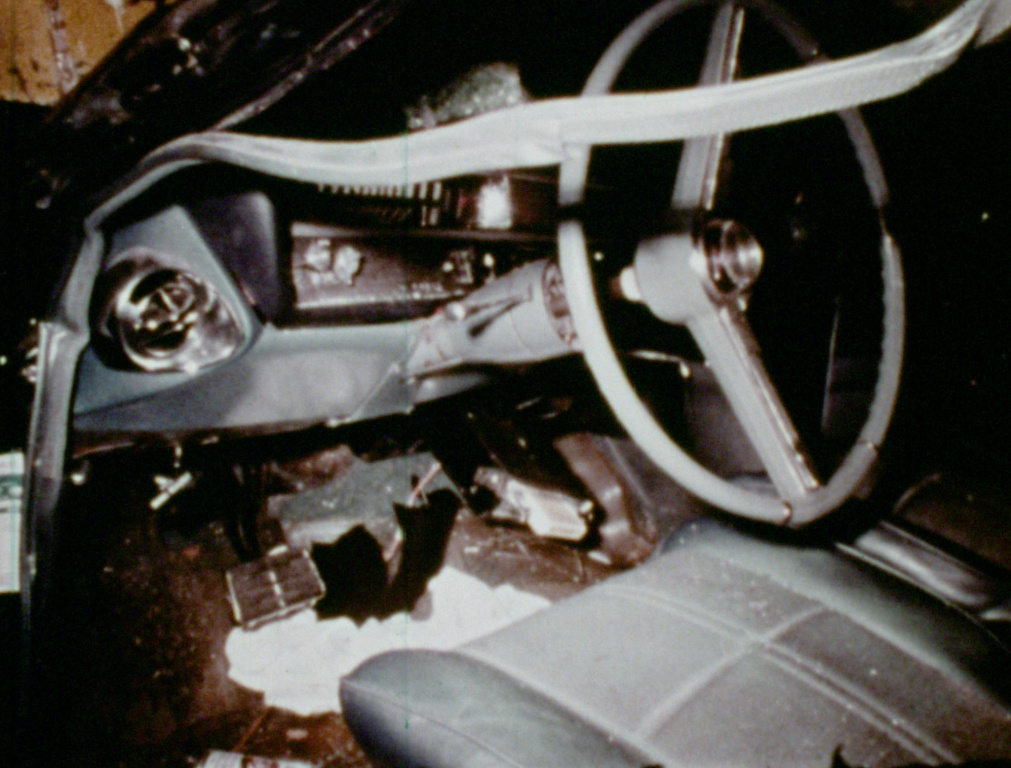
Even so, there’s enough here to keep fans of exploitation cinema, educational oddities, and horror-adjacent documentaries engaged. There are haunting photos, videos, and audio clips of death and destruction used almost gratuitously throughout the documentary, as well as bits and pieces of the ominous (if a bit cheesy) narration from the original PSAs. While a film this shocking will likely attract an audience largely due to its graphic and disturbing subject matter, Hell’s Highway: The True Story of Highway Safety Films is at its best when it looks beyond the grisly footage and asks whether the ends justified the means. Were these films effective enough to be worth the trauma they caused their audiences? And why do we still seek them out, even decades later? While its structure prevents it from reaching its full potential, it remains an insightful examination of a uniquely unsettling chapter of filmmaking history.

Hell’s Highway: The True Story of Highway Safety Films‘ 2K restoration is available to watch in theatres on August 5th
More Film Reviews

Room 203 (2022) Film Review: Friendship Brings Fresh Air to a Haunted Room
Inspired by Nanami Kamon’s original novel, Room 203 is Ben Jagger’s new film that explores one of the most memorable horror genre staples: the haunted property. This trope is always…

Female Harakiri: Glorious Death (1989) Film Review
Female Harakiri: Glorious Death is a 1989 Japanese ero guro/fetish gore film directed by Akio Fuji. Sitting alone in a darkened room, a kimono-clad former soldier commits seppuku. Setting a…

Men (2022) Film Review – They Will Not Stop
After the death of her partner, Harper takes what should be her perfectly peaceful escape to the countryside to recover. Only there’s something very wrong in the nearby woods, possibly…

Daddy’s Head (2024) Film Review- Grief Rears its Ugly Head
Taking grief to a deeply familiar level and revealing its relentless presence, Benjamin Barfoot delivers a sophomore feature that cements his status as one of the decade’s most promising horror…
Don’t Look Away (2023) Film Review – If You Thought Mannequins Were Creepy Before…
It Doesn’t Breathe…It Doesn’t Move…It Just Kills Don’t Look Away (2023) is the story of Frankie (Kelly Bastard) and her possible descent into madness after she accidentally strikes and kills…

Angels Fallen: Warriors of Peace (2024) Film Review – Zamani’s Next Installment in the Angels Fallen Universe
“Haunted by the war in Iraq, a depressed and faithless Gabriel is approached by the mysterious Balthazar, who recruits Gabriel to stop the evil Archangel Michael from raising an army…

As lover of cryptids, literature, and all things horror, I am so excited to be bringing my talents to the Grimoire of Horror. I am a librarian, avid gamer, TTRPG nerd, and a Mothman fangirl. I spent several years screening films for PRIMAA’s Canadian film festival Reel Shorts, and spent some time as an amateur horror filmmaker, competing in the Frantic 48 filmmaking challenge several years in a row. I love anything horror, from true crime to grindhouse to found footage and am especially interested in horror books and movies created by LGBTQIA2S+ and BIPOC as I think we have a fresh take on the genre and a fascinating perspective on what horror can be.