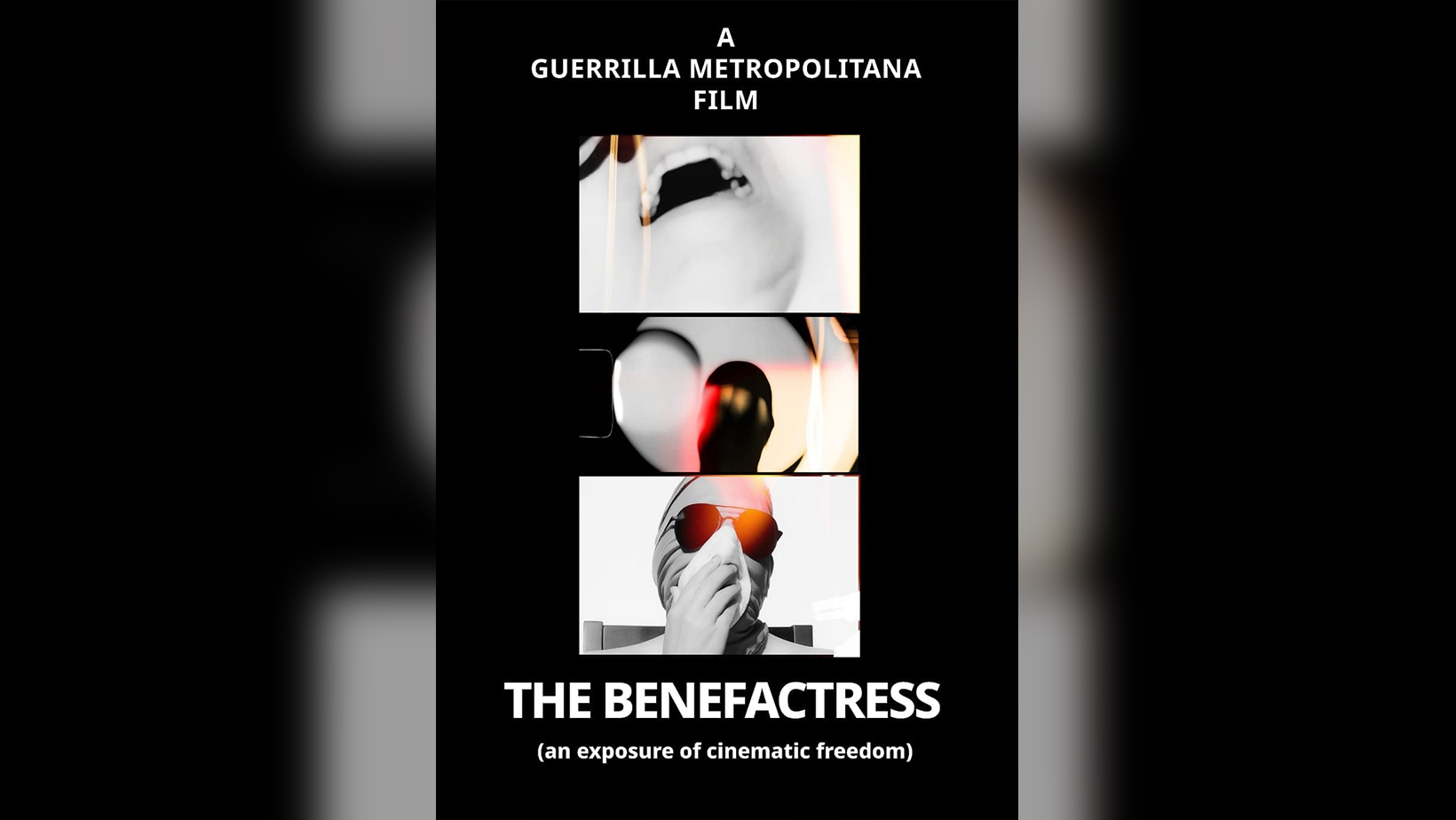





The Benefactress: An Exposure of Cinematic Freedom is a 2025 experimental/extreme horror film written and directed by London-based Italian filmmaker Guerrilla Metropolitana. Known for writing, directing, and starring in his work, Guerrilla is known for the short films Bits (2021), My Special Superhero – a visual subtext of madness and rejection (2021), The Baron and the Harpsichord (2021), Corporate Torment (it Burns Like Hell) (2025), as well as the feature length horror Darius (2023).
After the cult success of Dariuss, director Guerrilla Metropolitana is hired by a dying woman with a fake name and a powerful televangelist husband. Her one demand is to appear in the film via video link. What follows is a descent into cinematic depravity, as a seemingly virtuous charity worker becomes the face of a film driven not by art, but by obsession, control, and the twisted desires of an unseen patron. – IMDB
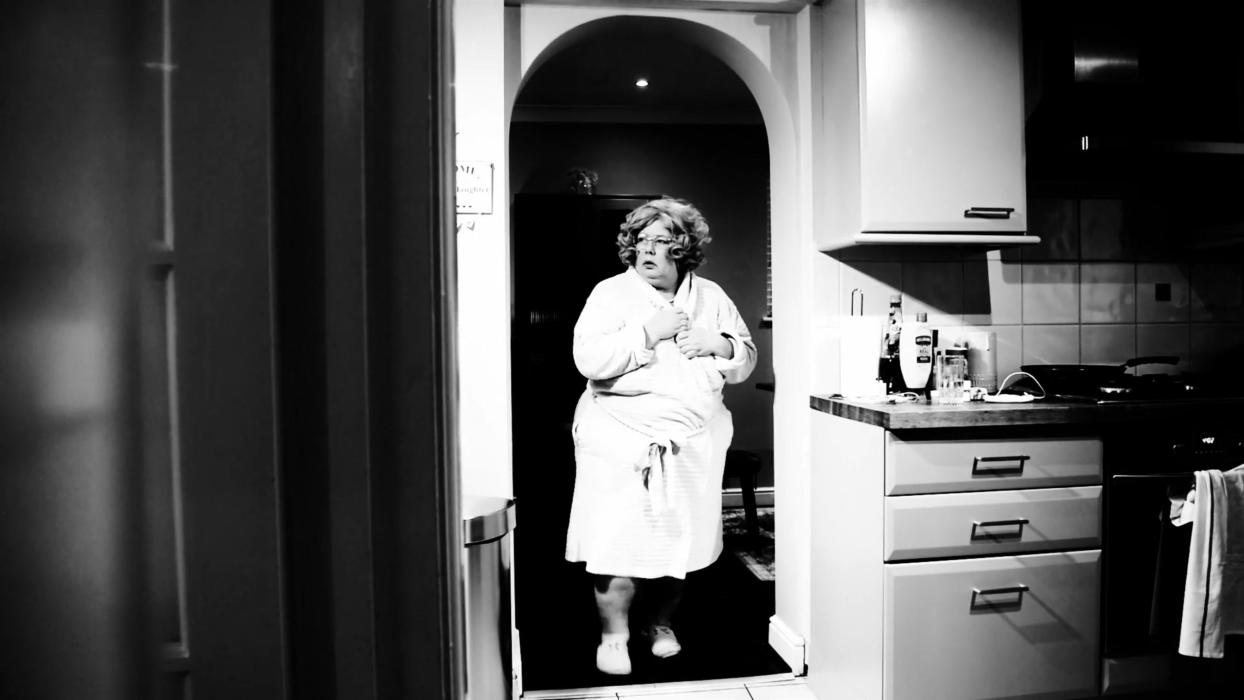
Delivered through an incredibly loose meta-narrative, The Benefactress: An Exposure of Cinematic Freedom is an avant-garde exploration of voyeurism in its most base form. The incessant debasing and sexual assault of the victim for the pleasure of the titular benefactress, Elektra McBride, as both a live stream attended by her and a recorded movie for her viewing pleasure afterwards, presents an unambiguous example of scopophilia.
As such, the film is undoubtedly meant for an audience of one, catering solely to the benefactress’s tastes. While there is an argument that the lack of a progressive narrative, or any tangible connection to traditional cinema, presents an elongated mess of awkward sex scenes, this is entirely intentional—designed to be an assault on the senses for the average moviegoer.
However, due to the nature of this highly experimental story (or lack thereof), The Benefactress: An Exposure of Cinematic Freedom suffers from serious pacing issues. While only 67 minutes in length, certain scenes begin to overstay their welcome quite early on—causing the film to languish around its midpoint.
Consisting of a blend of overly shaky handheld POV perspectives and some traditional static shots, the camera work plays a large part in the film’s design. Mostly representative of the director’s perspective (played by Guerrilla Metropolitana), the cinematography is as much a character in the film as the actors. Furthermore, numerous post-production effects have been added during editing. The addition of a faux 8mm film overlay over most of the sex scenes imbues a traditional feel of old-school stag films, short, silent, often illegal pornographic movies produced from the early 1900s to the late 1960s.
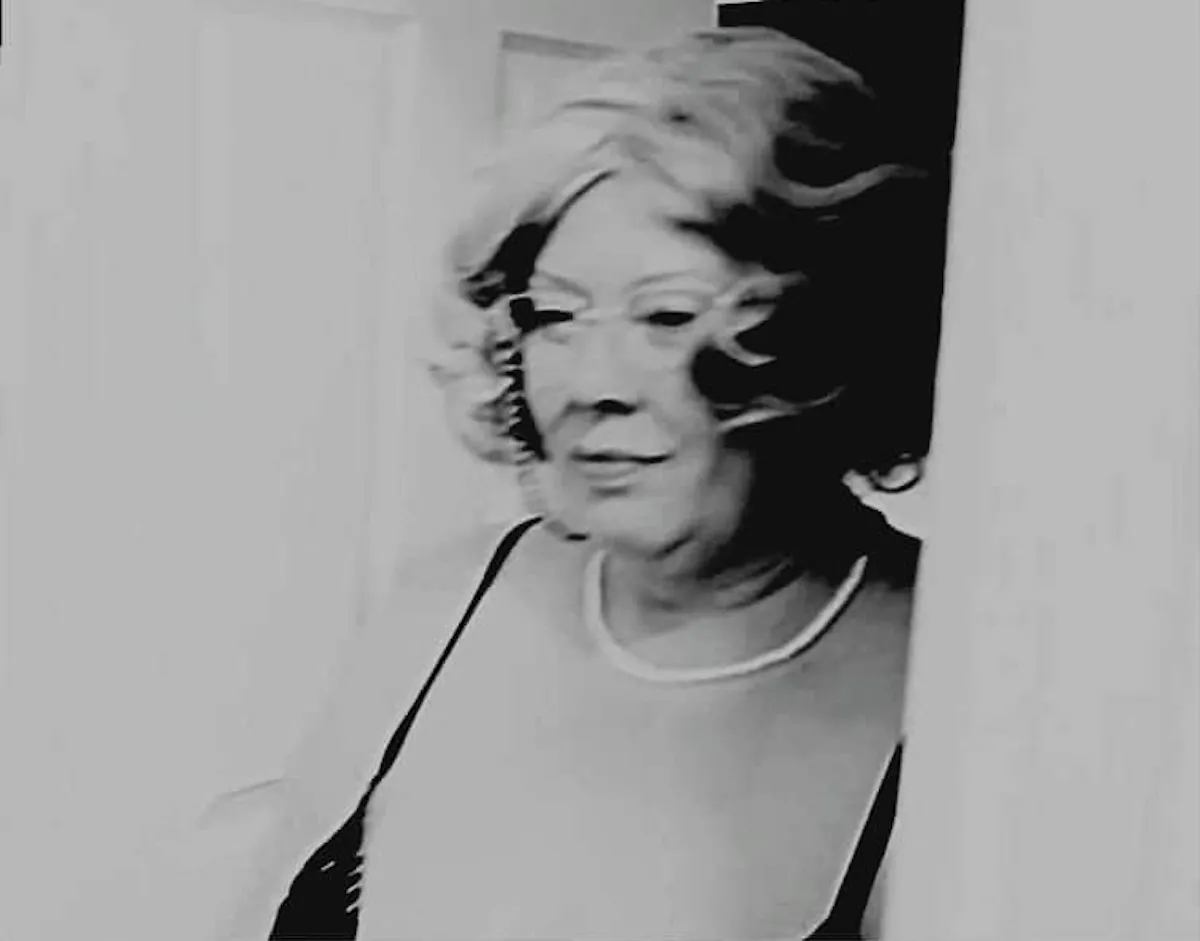
Additionally, numerous instances of ‘subliminal messaging’ are utilised during the film’s first half. Appearing for only a few frames, text relating to a scene, such as “Let’s shave her flower”, “She is Shaken” and “More Penetration” appear quick enough for them to be noticed, but not long enough to be discerned visually. Seemingly representing the director’s input/suggestion on what to do visually rather than verbally.
More of a sensory overload than a cinematic experience to be enjoyed, The Benefactress: An Exposure of Cinematic Freedom is a difficult film to categorise. While I understand and respect its artistic vision, its painfully slow pacing largely undercuts this aspect, making it hard to recommend to the average viewer. While there is undoubtedly an audience out there who would appreciate this type of film, it certainly isn’t the standard genre cinema fan—being a title of niche interest in the already esoteric genre of extreme cinema.
More Extreme Cinema
Splatter: Naked Blood is a 1996 extreme splatter horror film written by Taketoshi Watari and directed by Hisayasu Satô. Watari is known as a screenwriter and actor who worked closely… The Guyver is a 1991 American live-action tokusatsu sci-fi horror, written by Jon Purdy, and directed by Screaming Mad George and Steve Wang. The film is an adaptation of the… La Petite Mort II: Nasty Tapes is a 2014 splatter horror film, written and directed by Marcel Walz with additional writing from Annika Strauss. The film is a continuation of… Celebrating Japanese cult cinema, the Japan Film Fest Hamburg is gearing up for its 2021 season running from August 18th to September 1st. What has got us so excited for… Known for his recent, boundary-pushing entries in the extreme cinema genre, Jonathan Doe is a writer/director/producer most notable for his Erotic Grotesque Nonsense series of films, including Barf Bunny (2021),… We are happy to present our interview with Rob Jabbaz, director of The Sadness as an incredible debut. The Sadness has achieved all kinds of accolades throughout festival circuits and is…
Splatter: Naked Blood (1996) Film Review – Hisayasu Satō’s Magnum Opus

The Guyver (1991) Film Review – Early Western Anime Adaptation
La Petite Mort II: Nasty Tapes (2014) Film Review – Return to Maison de la Petite Mort

Japan Film Fest Hamburg 2021 – Embracing The Underground

An Interview with Jonathan Doe – The Putrid Prince of Extreme Cinema
Rob Jabbaz Interview – Director of The Sadness

Hey there, I’m Jim and I’m located in London, UK. I am a Writer and Managing Director here at Grimoire of Horror. A lifelong love of horror and writing has led me down this rabbit hole, allowing me to meet many amazing people and experience some truly original artwork. I specialise in world cinema, manga/graphic novels, and video games but will sometime traverse into the unknown in search of adventure.