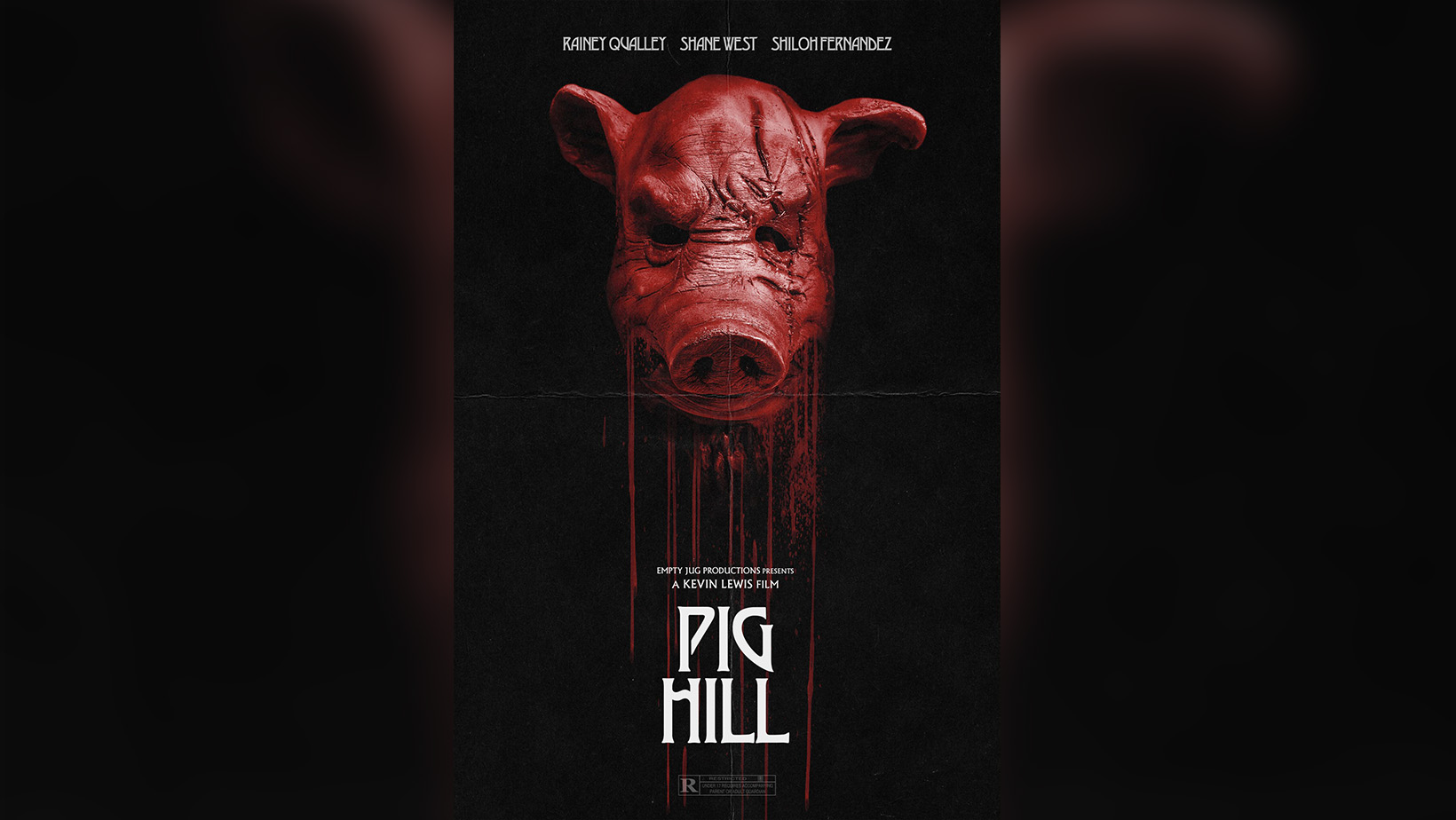





When you think of your home town you may find yourself fondly reminiscing about the idiosyncratic characters and stories only your community knows about: the derelict building at the end of the street known to house horrors beyond comprehension; the subterranean tunnel no one dares frequent at night lest the creatures of the sewers consume them; the ethereal and phantasmagoric spirit of a woman who is said to haunt the local cemetery. All towns have a story. All towns have an urban legend. Whether whispered between classmates or passed down generationally from brother to sister, these folklore tales have their roots in reinforcing a collective, community conscience and shaping a cultural identity.
The town of Meadville in Pennsylvania is no different, and the stories of the Pig People have permeated throughout their community, creating a sense of belonging by burying itself deep into the townspeople’s collective psyche. Historically, the urban legend tells of restless, cannibalistic Pig People spirits who roam Radio Tower Hill in search of their next victims. In reality, this urban legend is said to be based on the former existence of a leper’s hospice. The Pig People came to represent those suffering from facial deformity, a testament to the human mind’s ability to warp reality.
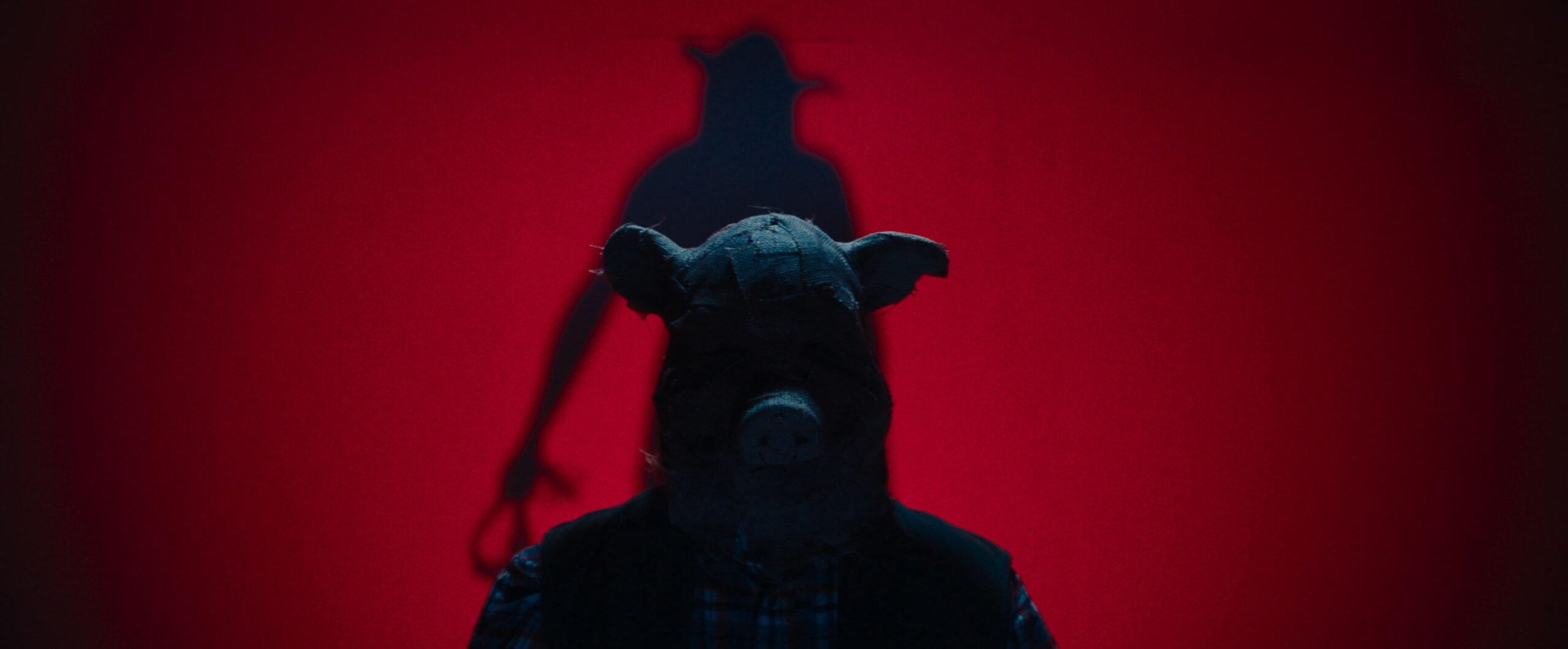
Carrying on this notorious fable in his film, Pig Hill (2025), director Kevin Lewis (previously known for Willy’s Wonderland) adapts Nancy Williams’s 2019 novel Pig to explore the impact visceral violence has upon a community and the consequences childhood trauma can have upon a person and, by extension, their family.
Pig Hill follows Carrie (Rainey Qualley), the strong-willed lead, as she explores the legend of Pig Hill for a book she is writing. Supported by her dedicated brother Chris (Shiloh Fernandez) and newfound friend Andy (Shane West), Carrie delves deeper into the mystery triggered by her increasing concern as the tenth woman goes missing in Meadville. However, her search for the missing women and their connection to the malformed spirits of Pig Hill takes her to psychological depths she never imagined, and a dangerous game of cat-and-mouse ensues.
The film begins as your typical murder mystery, serial killer slasher film, but takes a sharp, twisted detour during the climax when the depth and depravity of the legend are revealed and acts as a catalyst for Carrie to confront her past head-on. The use of visual distortions and camera switches from a stable shot to a handheld shot creates a hallucinogenic feel that serves to heighten Carrie’s own fractured mind as she starts to question her reality. As well as this, Pig Hill utilises bold, contrasting primary colours to underscore the tension and danger, helping to create what director Kevin Lewis has referred to as “a punk-rock fever dream mind trip of a movie”.
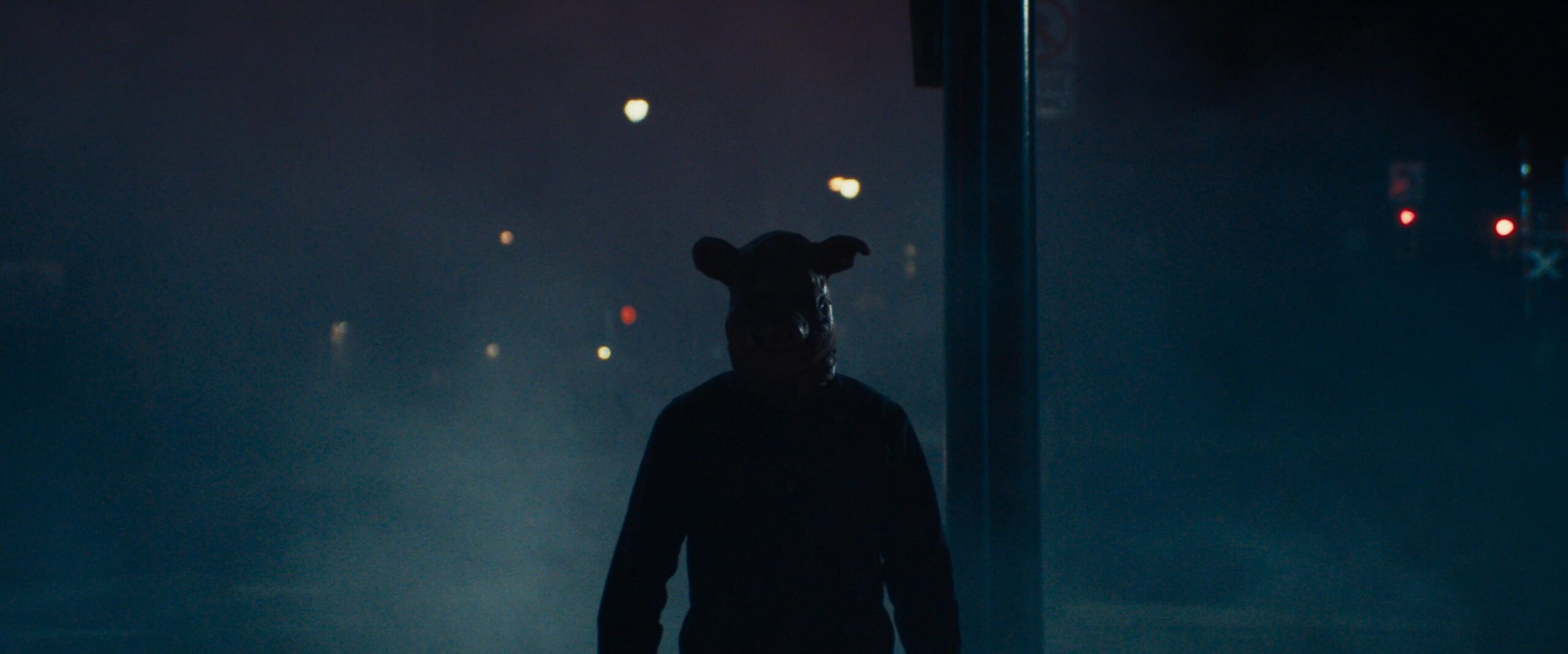
Splattered throughout are impressive moments of gore and horror that utilise classic special effects to create genuine shock. The urban legend of the Pig People is woven directly into these effects, with one particularly unsettling body horror sequence showing Carrie’s own body morphing into pig teats – a visceral representation of her fragmented psyche. The masks representing the notorious Pig Hill people are equally effective: gnarled, malformed, and sickly, they amplify the film’s sense of foreboding. Whilst the film doesn’t shy away from graphic violence that will satisfy horror fans, it notably restrains itself when depicting child abuse, avoiding visual sensationalisation of these traumatic scenes.
These carefully crafted horror elements serve a deeper purpose beyond mere shock value. Pig Hill subverts the expectations it initially creates and grapples with complex themes of trauma, childhood sexual assault, rape, and incest. The film’s exploration of generational trauma and incest evokes Greek tragedy, with revelations that shatter characters’ understanding of their reality, much like Oedipus’s devastating realisation about his own family – though here the victim rather than the perpetrator enacts the brutal gouging of eyes, finally reclaiming their power.
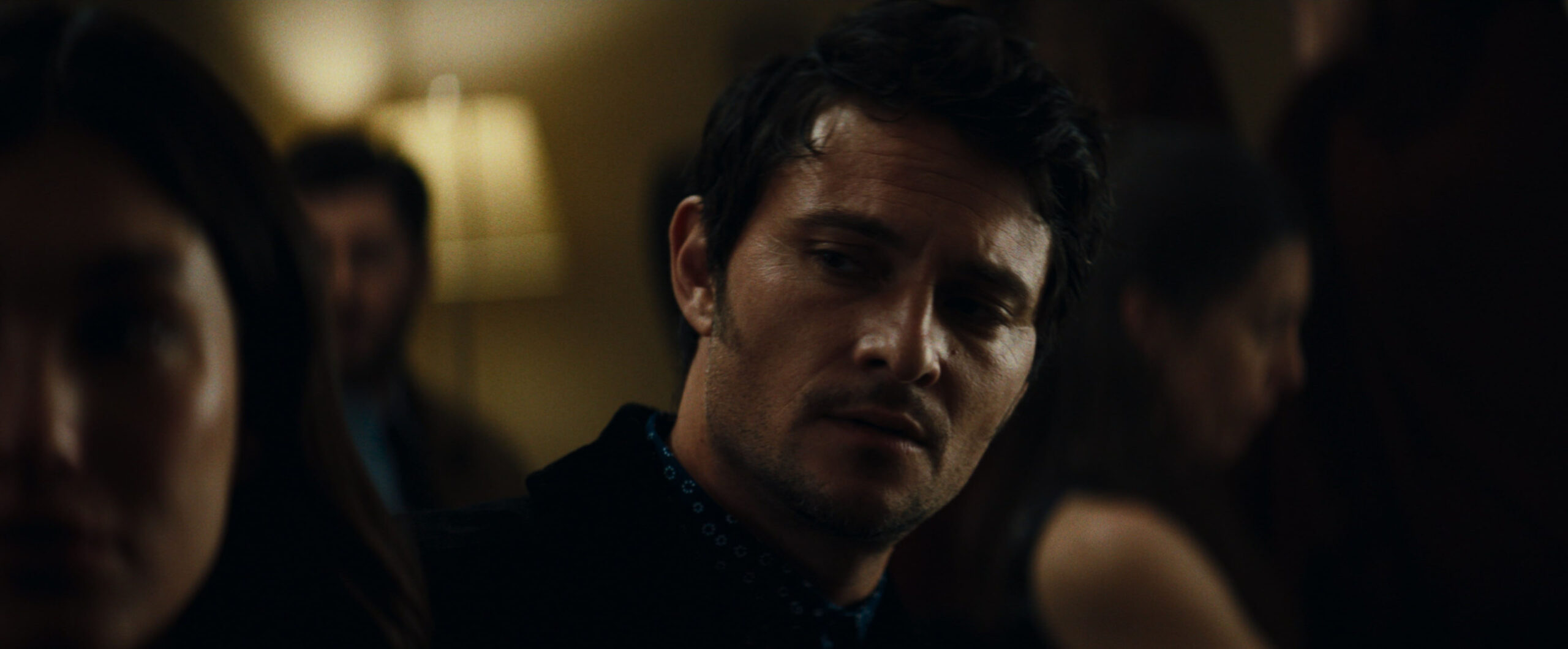
The performances anchor these heavy themes effectively. Qualley brings both vulnerability and determination to Carrie, whilst Fernandez’s portrayal of Chris is unnerving and evokes sympathy. The supporting cast injects welcome comedic relief, particularly through Jeff Monaham’s depiction of Reggie, a homeless man who befriends Carrie and supports her determination to solve the mystery of Pig Hill.
Overall, Pig Hill succeeds as both gritty horror entertainment and thoughtful trauma exploration. Whilst it begins with familiar serial killer tropes, the film’s evolution into a psychological study of generational abuse adds crucial depth and nuance. The local legend of Pig Hill becomes a lens through which to examine how communities and families perpetuate cycles of violence. Lewis has crafted a solid horror film that honours both the real-life folklore of Meadville and the psychological complexity of modern trauma narratives, proving that urban legends can carry profound emotional weight when handled with care.
We watched Pig Hill (2025) at this year’s FrightFest
More Film Festival Coverage
Visitors (Complete Edition) is a Japanese 2023 Splatter horror comedy, written and directed by Kenichi Ugana. Beginning his theatrical debut in 2016 with the “Gal film” Ganguro Gals Riot (2016),… Celebrating Japanese cult cinema, the Japan Film Fest Hamburg is gearing up for its 2021 season running from August 18th to September 1st. What has got us so excited for… I didn’t really have a whole lot going during my high school years. I went to class and did stupid hijinks with my friends, but I mostly just watched movies… Canadian writer/director Christopher Donaldson wants you to know that Ditched (2021) is supposed to be “that B-movie you accidentally missed in 1986”. Do not watch it hoping for a deep message… Back in 2014, Kiah and Tristan Roache-Turner’s Wyrmwood: Road of The Dead reinjected some much-needed vitality in the zombie movie genre by turning it on its head and coming up… Fright is a 2024 English period horror, written and directed by Warren Dudley. Beginning their career in film in 2005 with the comedy TV movie Come on You Chickens, Warren’s…![Visitors (Complete Edition) (2023) Film Review [Fantastic Fest]](https://www.grimoireofhorror.com/wp-content/uploads/2023/09/Visitors-Complete-Edition-cover-365x180.jpg)
Visitors (Complete Edition) (2023) Film Review [Fantastic Fest]
Japan Film Fest Hamburg 2021 – Embracing The Underground
Baby Assassins (2021) Film Review – Moe Moe Kyun!
Ditched (2021) Film Review – Canadian Gore Horror
Wyrmwood Apocalypse (2021) Movie Review – Me And My Zombie Comrades
![Fright (2024) Film Review – It’ll Be Alright on the Fright [Frightfest]](https://www.grimoireofhorror.com/wp-content/uploads/2024/08/Fright-365x180.jpg)
Fright (2024) Film Review – It’ll Be Alright on the Fright [Frightfest]